Worksheets
Chemistry A Review for Trimester Exam
Total questions: 83
Worksheet time: 1hrs 23mins
What is the smallest unit of matter? It is composed of protons and neutrons, held together in the nucleus, and electrons around the nucleus in different electron orbitals, which form an electron cloud.
cell
nucleus
atom
electron
What is a subatomic particle with a positive charge that is in the nucleus of an atom?
neutron
proton
electron
valence electron
What is a subatomic particle without an electric charge, located in the nucleus of an atom?
neutron
proton
electron
valence electron
What is a subatomic particle with a negative charge? It is found in the electron cloud surrounding the nucleus.
neutron
proton
electron
electron cloud
What is the center of an atom containing protons and neutrons?
nucleus
neutron
proton
electron cloud
What is the number of protons in the nucleus of an atom that determines the chemical properties of an atom?
mass number
atomic mass
atomic number
atomic symbol
What is the combined mass of all the protons and neutrons of an atom and is approximately equal to the number of protons and neutrons?
atomic mass
atomic number
subatomic particles
nucleus weight

The number 16 for the atomic element sulfur is the
ionic number
isotope
atomic mass
atomic number

How many protons does sulfur have?
32
16
48
12

How many electrons does sulfur have
16
32
48
12
The energy of movement is ___.
potential energy
kinetic energy
mechanical energy

How many neutrons are in an atom of carbon-14?
6
8
10
14

How many protons does this isotope of titanium have?
22
26
48
70
How many electrons are in an atom that has an atomic number of 34, an atomic mass of 74 and a charge of -2?
2
34
36
40

What charge does an atom have when it GAINS electrons?
Positive
Negative
Neutral
What is a representation of an ion?
Li
Na-22
O-2

What is the mass number of bromine?
35
45
80
79.904

How many neutrons does this bromine atom have?
35
45
80
What charge does an atom have when it GAINS electrons?
Positive
Negative
Neutral
What is a representation of an ion?
Li
Na-22
O-2
What is the mass number of bromine?
35
45
80
79.904
How many neutrons does this bromine atom have?
35
45
80

What type of atom is this?
Neutral atom
Cation
Anion
Isotope
What two particles determine the mass number?
Protons and electrons
Electrons and neutrons
Protons and neutrons

How many electrons does this magnesium ion have?
24
12
10
14
What does it change in an ion?
The number of electrons
The number of protons
The number of neutrons
What is the representation of an isotope?
N-3
Al+3
Si
P-33

How many neutrons does this Neon atom have?
21
11
10
12

What does it happen to this atom?
It LOSES electrons
It GAINS electrons
It GAINS protons
It LOSES protons

What type of atom is element C?
Normal atom
Ion
Isotope

What is the mass number of this element?
12
24
23
11

What is the mass number of this Neon atom?
10
11
21
20

What type of atom is this?
Normal Atom
Cation
Anion
Isotope

What is the atomic number of this element?
12
24
23
What does it change in an ion?
The number of electrons
The number of protons
The number of neutrons
Which of these has the smallest atomic radius?
K
Rb
Fr
Cs


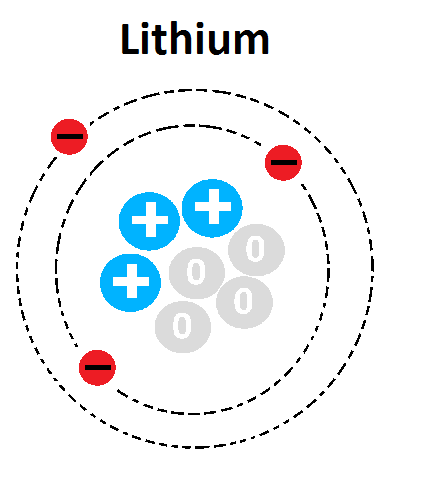


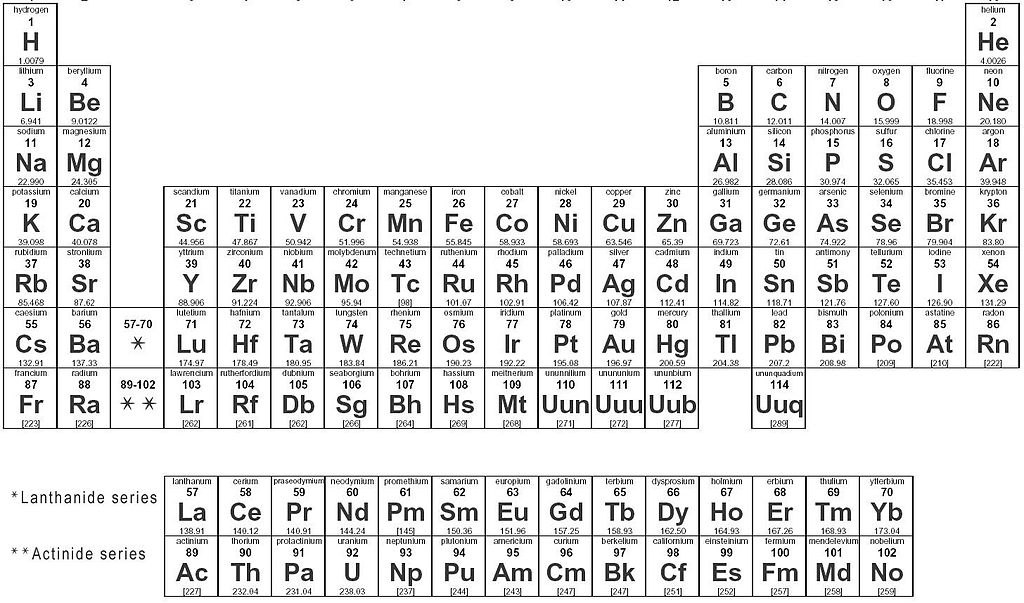


1s22s22p63s23p64s23d10

1s22s22p63s2
The chemical bond between a non-metal and another non-metal will be a ________ bond.
metal
ionic
covalent
polar
The chemical bond between a metal and a non-metal will be a _____ bond.
metal
ionic
covalent
polar
Beryllium and sulfur will form a ______ bond
ionic
covalent
metalloid
Sodium and Bromine will make a _____ bond.
ionic
covalent
metallic
MgO
ionic
covalent
metallic
If two fluorine atoms bond they will make a _____ bond.
ionic
covalent
metallic
Name the following ionic compound: MgSO4
magnesium (II) sulfide
magnesium sulfide
magnesium sulfate
magnesium (II) sulfate
Name the following compound: FeCl3
iron chloride
iron III chloride
iron II chloride
iron III chlorate
The formula for Magnesium phosphide is:
Mg3(PO4)2
MgP
MgPO4
Mg3P2
What is the compound formula for the ions Na+ and Cl- ?
Na2Cl4
NaCl
sodium chloride
Name the following covalent compound: N2O5
dinitrogen pentoxide
nitrous oxide
Name the following covalent compound: CO2
carbon dioxide
carbide oxygen
Nonmetals tend to
Lose electrons
Gain electrons
If I gain electrons I become
Same because I am balanced
Positive because I have added to my atom
Negative because I have added electrons
Equal because I have electrons
A chemical bond where electrons are gained/lost
Ionic bond
Covalent bond
James Bond
Polar bond
If my charge becomes 2+ what does that say about me?
I am stealing 2 electrons
I am losing 2 electrons
I am in period 2
My atomic number is 2