wayground logo

Free Printable Worksheets

NEW

Font size

S
M
L
XL
Worksheets

Unit 1 Atomic Structure Test Review

Total questions: 78

Worksheet time: 2hrs 56mins

Name
Class
Date
1.
Which atomic particle has a negative charge?
a)
proton
b)
neutron
c)
electron
d)
all of the above
2.
Which of these phrases best describes an atom?
a)
a positive nucleus surrounded by a hard negative shell
b)
a positive nucleus surrounded by a cloud of negative charges
c)
a hard sphere with postive and negative charges on the outside
d)
a negative nucleus surrounded by protons and neutrons
3.
What is true about an atom?
a)
Most of the space in an atom is taken up by the nucleus
b)
Atoms are mostly empty space
c)
Atoms have no mass
d)
Electrons have much more mass that protons or neutrons.
4.
The positively charged parts of an atom are the
a)
protons
b)
electron clouds
c)
neutrons
d)
electrons
5.
Matter that is made up on only one type of atom is called
a)
a compound
b)
a subatomic particle
c)
an element
d)
water
6.
The term "neutral" means
a)
having only a little bit of charge
b)
having a positive charge
c)
having a negative charge
d)
having no charge at all
7.

What is one way Neutrons are different from electrons?

a)

they both are negative

b)

neutrons have no charge, while electrons have a negative charge

c)

Both are in the nucleus( center of atom)

d)

Electrons are inside nucleus and neutrons are outside the nucleus.

8.

What is the atomic number?

a)

35

b)

18

c)

17

d)

52

9.

What is the atomic mass of Neon?

a)

10

b)

20

c)

30

10.

How many neutrons does calcium have?

a)

20

b)

40

c)

60

d)

0

11.

What is the atomic mass of Arsenic?

a)

33

b)

107

c)

75

12.
Where are the Electrons found in the structure of an atom?
a)
In the nucleus
b)
In spaces around the nucleus
13.
The subatomic particles in green are...
a)
Protons
b)
Neutrons
c)
Electrons
14.
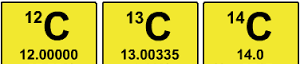
What do these isotopes of carbon all have in common?
a)
neutrons & mass number
b)
atomic number and neutrons
c)
atomic number and electrons
d)
protons, atomic number, and mass number
15.
How many neutrons does the isotope of lithium have?
a)
8
b)
3
c)
4
d)
5
16.
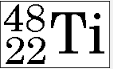
How many protons does this isotope of titanium have?
a)
48
b)
22
c)
26
d)
70
17.
What quantities vary between isotopes of an element?
a)
protons, electrons, and atomic mass
b)
protons, electrons, and atomic number
c)
neutrons and electrons
d)
neutrons and atomic mass
18.

How do you calculate mass number?

a)

Mass x percent

b)

Protons + Electrons

c)

Protons + Neutrons

d)

Neutrons + Protons + Electrons

19.
Which model of the atom proposed that atoms were positive spheres with negative electrons in them?
a)
Heliocentric Model
b)
Solid Sphere Model
c)
Plum Pudding Model
d)
Planetary Model
20.
The _____________ determines the identity of an object.
a)
# of Protons
b)
# of Electrons
c)
# of Neutrons
d)
Atomic Mass
21.
Calcium has three different isotopes. One has a mass of 35.00 amu; another has a mass of 41.00 amu; and another has a mass of 40.00 amu. Which isotope is the most abundant of the three?
a)
40.00 amu
b)
41.00 amu
c)
35.00 amu
d)
impossible to tell
22.
4.35% of all X atoms have a mass of 39.946 amu. 83.79% have a mass of 41.941 amu, 9.50% have a mass of 42.941 amu, and 2.36% have a mass of 43.939 amu. What is the average atomic mass of atom X?
a)
41.97 amu
b)
42.19 amu
c)
10.43 amu
d)
40.04 amu
23.
An element has two naturally occurring isotopes. One is 10.013 amu and is 19.9% abundant. The other is 11.01 amu and is 80.1% abundant. What is the average atomic mass? What element is it?
a)
9.012, Beryllium
b)
12.011, Carbon
c)
6.941, Lithium
d)
10.812, Boron
24.
What gases are in the unknown mixture?
a)
Gas B & Gas D
b)
Gas C & Gas B
c)
Gas A & Gas D
d)
Gas D & Gas C
25.
As the frequency of an electromagnetic wave increases, the amount of energy in that wave...
a)
increases.
b)
decreases.
c)
stays the same.
26.

What is nucleosynthesis?

a)

How the sun creates new hydrogen atoms out of dark matter

b)

How helium atoms are broken down by nuclear fission to produce hydrogen

c)

How a nucleus is produced during the big bang

d)

How new elements are created in stars by combining the nuclei of atoms

27.

The formation of large atomic nuclei from smaller atomic nuclei in the core of stars by nuclear fusion is called :

a)

nuclear fusion

b)

nucleosynthesis

c)

gravitational collapse

28.

Elements past iron on the periodic table form in what happens to very massive stars when they "die" in an event called a ___.

a)

nova

b)

supernova

c)

pulsar

29.
The formation of elements is known as _________.
a)
nucleotides
b)
Synthogenesis
c)
nuclear fission
d)
nucleosynthesis
30.
The two elements formed in Big Bang Nucleosynthesis where __________________.
a)
hydrogen and lithium
b)
hydrogen and helium
c)
hydrogen and oxygen
d)
helium and lithium
31.

The lowest possible energy state of an atom is the _______ state?

a)

empire

b)

excited

c)

ground

d)

neutral

e)

none of these

32.
What is an ion?
a)
A Charged Atom
b)
A Large Atom
c)
A Small Atom
d)
A Cute Atom
33.
An atom becomes _________ when it gains electrons.
a)
Positive
b)
Negative
c)
Neutral
d)
Invinsible
34.
An atom becomes _______ when it loses electrons.
a)
Positive
b)
Negative
c)
Neutral
d)
Invinsible
35.
Which particles change the charge in atoms when ions are formed?
a)
Protons
b)
Electrons
c)
Neutrons
d)
Kittens
36.
Ions are: 
a)
atoms with a positive or negative charge
b)
atoms with no charge
c)
atoms with ONLY a positive charge
d)
atoms with ONLY a negative charge
37.
an atom with atomic number 6 would have how many protons 
a)
6
b)
12
c)
3
d)
cannot be determined 
38.
the central region of an atom where its neutrons and protons are is its 
a)
nucleus 
b)
electron cloud
c)
core 
d)
center 
39.
True or False? Neutrons have a negative charge
a)
True
b)
False
40.
Particles in an atom that are neutral and have no charge are 
a)
negatrons 
b)
electrons 
c)
neutrons 
d)
protons 
41.
24.1% of all the isotopes of a an element have a mass of 75.23 amu, 48.7% have a mass of 74.61 amu, and 27.2% have a mass of 75.20 amu.
What is the average mass of this element?
a)
74.92 amu
b)
24.97 amu
c)
75.01 amu
d)
74.51 amu
42.
An element with 4.35% have a mass of 49.9461 amu, 83.79% have amass of 51.9405 amu, 9.50% have a mass of 52.9407 amu, and 2.36% have a mass of 53.9389amu.
a)
51.99 amu
b)
52.19 amu
c)
53.45 amu
d)
17.33 amu
43.

What are the steps for finding the Average Atomic Mass?

a)

1) write given mass, 2) write given %, 3) % to decimal, 4) Mass x abundance decimal 5) Add

b)

1) % to decimal, 2) write given %, 3)write given mass, 4) Mass x abundance decimal 5) Add

c)

1) write given mass, 2) write given %, 3) % to decimal, 4) Mass divided by abundance decimal 5) Add

d)

1) write given mass, 2) write given %, 3) % to decimal, 4) Mass x abundance decimal 5) Subtract

44.
Isotopes are atoms of the same element that have the same number of __________ but different number of __________ . Therefore, isotopes of the same element have different masses. 
a)
protons, neutrons
b)
protons, electrons
c)
neutrons, protons
d)
electrons, protons
45.
The  mass of an atom is located  in the ___________ and the volume of an atom is made of the ____________
a)
electron cloud, nucleus
b)
electron cloud, energy levels
c)
nucleus, electron cloud
d)
nucleus, neutrons
46.
Do the following atoms belong to the same element? Explain
       Aluminum-27
       An atom with 14 protons and 13 neutrons
a)
Yes because they have the same number of protons
b)
Yes because they have the same mass
c)
No because they have different number of protons
d)
No because they have different number of neutrons
47.
A neutral atom would become an ion that has a charge of 2+ by 
a)
Losing two protons
b)
Losing two neutrons
c)
Losing two electrons
48.
A neutral atom of the isotope 2612Mg would consist of
a)
12 protons, 26 neutrons, 26 electrons
b)
26 protons, 12 neutrons, 26 electrons
c)
26 protons, 14 neutrons, 14 electrons
d)
12 protons, 14 neutrons, 12 electrons
49.
If neutral copper atom (atomic number 29) becomes an ion that has a charge of 2+, how many electrons does the resulting ion have?
a)
27
b)
28
c)
29
d)
31
50.
Fluorine has an atomic number of 9. What can you conclude about an atom of fluorine from this fact?
a)
it has 9 protons
b)
it weighs 9 grams
c)
it has 9 electron shells
d)
it has a boiling point of 9 degree celsius
51.

The atomic mass of an element is the ___.

a)

average of the mass number and the atomic number for the element

b)

weighted average of the masses of the isotopes of the element

c)

total mass of the isotopes of the element

d)

total number of subatomic particles in the nucleus

52.

The atomic mass of an element depends upon the ___.

a)

relative abundance of protons in that element

b)

mass and relative abundance of each isotope of that element

c)

mass of each isotope of that element

d)

mass of each electron in that element

53.

Which of the following is necessary to calculate the atomic mass of an element?

a)

the atomic mass of carbon-12

b)

the atomic number of the element

c)

the relative masses of the element's protons and neutrons

d)

the masses of each isotope of the element

54.

Chlorine has two naturally occurring isotopes, Cl-35 and Cl-37, The atomic mass of chlorine is 35.45. Which of these two isotopes of chlorine is more abundant?

a)

Cl-35

b)

Cl-37

c)

Cannot be determined from the information provided.

55.

The box for an element from the periodic table is shown. Which is the atomic mass?

a)

A

b)

B

c)

C

d)

D

56.

The box for an element from the periodic table is shown. Which is the atomic number?

a)

A

b)

B

c)

C

d)

D

57.

What does the 1.0079 stand for?

a)

atomic number

b)

hydrogen

c)

atomic mass

d)

mass number

58.

No two elements are exactly the same. True or False?

a)

True

b)

False

59.

A certain photon of light has a wavelength of 4.22x10⁻⁷nm. What is the frequency? (f=c/λ)

a)
7.11x10¹⁴ Hz
b)
7.11Hz
c)
1.41x10⁻¹⁵
d)
-1.41x10¹⁵
60.
The blue section of the wave is measuring _________________.
a)
wavelength
b)
crest
c)
trough
d)
amplitude 
61.
What is a photon?
a)
When radiation burst through electric waves
b)
The emission of electrons from a metal caused by light striking the metal
c)
The rate at which a waves energy flows through a given unit of area.
d)
packets of electromagnetic energy
62.
Light behaves like both a particle and a ______.
a)
Mass
b)
Wave
c)
Current
63.

What does the letter 'h' represent in the formula E = hf?

a)
Planck's constant
b)
Hydrogen
c)
Energy
64.

What is the energy of a quantum of light with a frequency of 7.39x10¹⁴Hz.(E=Hf)

a)
4.88x10¹⁹
b)
4.88x10⁻¹⁹
c)
2.22x10²³
d)
2.22x10⁻²³
65.

Certain blue lights have a frequencey of 6.91x10¹⁴Hz. What is the wavelength? (λ=c/f)

a)
4.34x10²¹
b)
4.34x10⁻²¹
c)
4.34x10⁻⁷
d)
2.07x10²³
66.
What is the wavelength for a quantum of light with energy of 7.56x10⁻¹⁹J? (λ=hc/E) 
a)
2.62x10⁻⁷m
b)
2.62x10⁷m
c)
2.64x10-45m
d)
2.64x1045m
67.
The energy for a quantum of light is 2.84x10⁻¹⁹J. What is the wavelength. (λ=hc/E)
a)
6.97x10-45m
b)
6.97x1045m
c)
6.97x10⁻⁷m
d)
6.97x10⁷m
68.

What is the frequency of a light that has the Energy of 2.84x10⁻¹⁹. (f=E/h)

a)
4.30x10¹⁴Hz
b)
4.30x10⁻¹⁴Hz
c)
4.30x10-54Hz
d)
4.30x1054Hz
69.

What is the Energy of a blue light with the frequency of 6.91x10¹⁴Hz? (E=hf)

a)
4.56x1049J
b)
9.55x10-49J
c)
4.56x10⁻¹⁹J
d)
5.82x10¹⁹J
70.

What are spectral lines?

a)

Dark or bright lines in a spectrum that correspond to specific wavelengths of light emitted or absorbed by an atom or molecule.

b)

Lines that indicate the density of a liquid

c)

Lines that indicate the pressure of a gas

d)

Lines that indicate the temperature of a star

71.

What is emission spectra?

a)

The emission spectra is the unique pattern of light emitted by an atom or molecule when it transitions from a higher energy state to a lower energy state.

b)

The emission spectra is the process of converting light energy into heat energy by an atom or molecule.

c)

The emission spectra is the unique pattern of light emitted by an atom or molecule when it transitions from a lower energy state to a higher energy state.

d)

The emission spectra is the absorption of light by an atom or molecule when it transitions from a higher energy state to a lower energy state.

72.

How can flame tests be used to identify elements?

a)

By observing the color of the flame produced when the element is heated.

b)

By analyzing the sound produced when the element is heated.

c)

By measuring the temperature of the flame produced.

d)

By observing the texture of the flame produced when the element is heated.

73.

What is the principle behind flame tests?

a)

Different elements emit different colors of light when heated in a flame.

b)

Flame tests are used to measure the amount of oxygen in a flame.

c)

Flame tests are used to create fire.

d)

Flame tests are used to determine the temperature of a flame.

74.
Why are line emission spectra of elements called "atomic fingerprints"?
a)
They are all the same
b)
They are all unique
c)
They are all similar
d)
They all contain colored light
75.

The unknown emissions spectra belongs to the element

a)

Hydrogen

b)

Mercury

c)

Neon

d)

Sodium

76.

The unknown emissions spectra belongs to the element

a)

Hydrogen

b)

Mercury

c)

Neon

d)

Sodium

77.
What gases are in the unknown mixture?
a)
Gas B & Gas D
b)
Gas C & Gas B
c)
Gas A & Gas D
d)
Gas D & Gas C
78.
Which elements are in the unknown sample?
a)
A and B
b)
B and C
c)
A and D
d)
B and D