wayground logo

Free Printable Worksheets

Font size

S
M
L
XL
Worksheets

G11 EASE 2 REVIEW

Total questions: 80

Worksheet time: 2hrs 27mins

Name
Class
Date
1.
Question
a)
A
b)
B
c)
C
d)
D
2.
Question
a)
A
b)
B
c)
C
d)
D
3.
Question
a)
A
b)
B
c)
C
d)
D
4.
Question
a)
A
b)
B
c)
C
d)
D
5.
Question
a)
A
b)
B
c)
C
d)
D
6.
Question
a)
A
b)
B
c)
C
d)
D
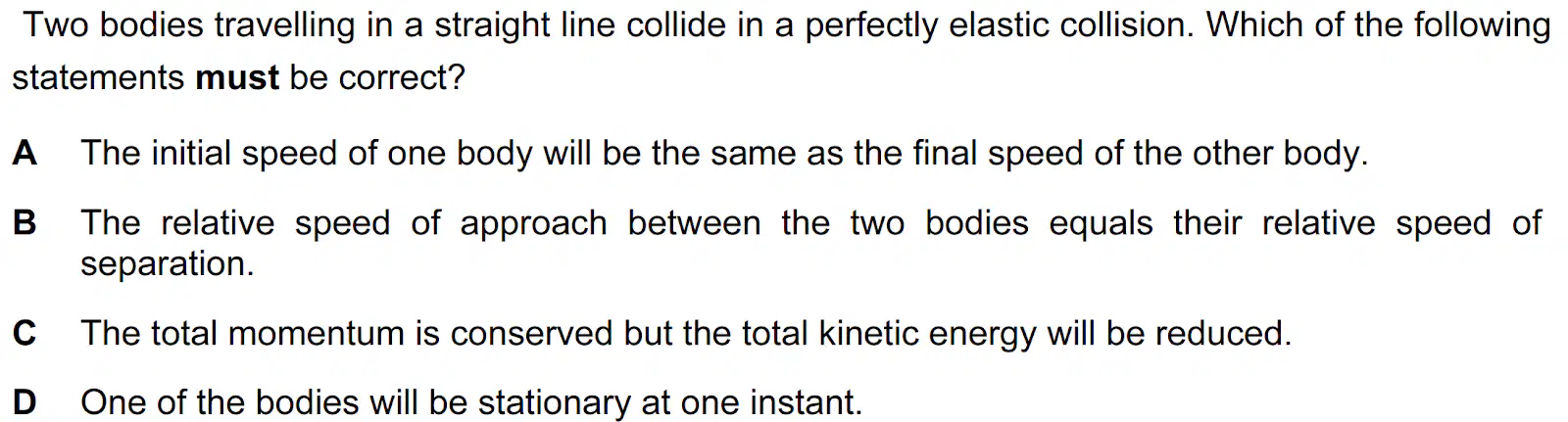
7.
Question
a)
A
b)
B
c)
C
d)
D
8.
Question
a)
A
b)
B
c)
C
d)
D
9.
Question
a)
A
b)
B
c)
C
d)
D
10.
Question
a)
A
b)
B
c)
C
d)
D
11.
Question
a)
A
b)
B
c)
C
d)
D
12.
Question
a)
A
b)
B
c)
C
d)
D
13.
Question
a)
A
b)
B
c)
C
d)
D
14.
Question
a)
A
b)
B
c)
C
d)
D
15.
Question
a)
A
b)
B
c)
C
d)
D
16.
Question
a)
A
b)
B
c)
C
d)
D
17.
Question
a)
A
b)
B
c)
C
d)
D
18.
Question
a)
A
b)
B
c)
C
d)
D
19.
Question
a)
A
b)
B
c)
C
d)
D
20.
Question
a)
A
b)
B
c)
C
d)
D
21.
Question
a)
A
b)
B
c)
C
d)
D
22.
Question
a)
A
b)
B
c)
C
d)
D
23.
Question
a)
A
b)
B
c)
C
d)
D
24.
Question
a)
A
b)
B
c)
C
d)
D
25.
Question
a)
A
b)
B
c)
C
d)
D
26.
Question
a)
A
b)
B
c)
C
d)
D
27.
Question
a)
A
b)
B
c)
C
d)
D
28.
Question How to solve
a)
A
b)
B
c)
C
d)
D
29.
Question
a)
A
b)
B
c)
C
d)
D
30.
Question
a)
A
b)
B
c)
C
d)
D
31.
Question
a)
A
b)
B
c)
C
d)
D
32.
Question
a)
A
b)
B
c)
C
d)
D
33.
Question
a)
A
b)
B
c)
C
d)
D
34.
Question
a)
A
b)
B
c)
C
d)
D
35.
Question
a)
A
b)
B
c)
C
d)
D
36.
Question
a)
A
b)
B
c)
C
d)
D
37.
Question
a)
A
b)
B
c)
C
d)
D
38.
Question
a)
A
b)
B
c)
C
d)
D
39.
Question
a)
A
b)
B
c)
C
d)
D
40.
Question 1 An iron sphere of radius 0.18m has mass 190kg. Calculate the density of iron.
4 lines
41.
Question 2
4 lines
42.
Question 3
4 lines
43.
Question 4
4 lines
44.
Question 5
4 lines
45.
Question 6
4 lines
46.
Question 7
4 lines
47.
Question 8
4 lines
48.
Question 9
4 lines
49.
Question 10
4 lines
50.
An iron sphere of radius 0.2 m has mass 170 kg. Estimate the density of iron.
a)
850 kg/m^3
b)
8500 kg/m^3
c)
1000 kg/m^3
d)
3500 kg/m^3
e)
5000 kg/m^3
51.
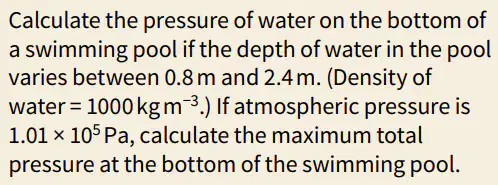
Calculate the pressure over atmospheric at a point 2 m below the surface of the water in a swimming pool. The density of water is 1000 kg/m^3. Take acceleration of gravity to be 10 m/s^2.
4 lines
52.
A cube of side 0.4 m floats in water with 0.8 m below the surface of the water. The density of water is 1000 kg/m^3. Calculate the pressure due to the water that acts upwards on the bottom surface of the cube. Take acceleration of gravity to be 10 m/s^2.
4 lines
53.
An elastic cord has an original length of 25 cm. When the cord is extended by applying a force at each end, the length of the cord becomes 40 cm for forces of 0.75N. Calculate the force constant of the cord.
a)
2.5 N/m
b)
5 N/m
c)
7.5 N/m
d)
25 N/m
e)
50 N/m
54.
A spring has a spring constant 60 N/m and is extended within the limit of proportionality by 2 cm. Calculate the elastic potential energy stored in the spring.
a)
60 J
b)
120 J
c)
0.006 J
d)
0.012 J
e)
0.024 J
55.
A rubber band has a force constant of 150 N/m. The work done in extending the band is 0.3 J. Calculate the extension of the band.
a)
40 cm
b)
20 cm
c)
10 cm
d)
6 cm
e)
3 cm
56.
A steel wire of diameter 1.0 mm and length 2 m is suspended from a fixed point and a mass of weight 50 N is suspended from its free end. The Young modulus of the material of the wire is 2.5 × 10^11 Pa. Assuming that the limit of proportionality of the wire is not exceeded, calculate the extension of the wire.
4 lines
57.
An elastic band of area of cross-section 2 mm^2 has an original length of 8 cm. When stretched by a force of 0.4 N, its length becomes 8.5 cm. Calculate the Young modulus of the elastic.
4 lines
58.
What is the number of oscillations per unit time of a point in a wave?
a)
Amplitude
b)
Intensity
c)
Wavelength
d)
Frequency
e)
Period
59.
Waves are hitting the side of a pier in a regular fashion. During 1 minute, 20 waves that hit the side of the pier. Calculate the period T of the waves during this time in seconds.
a)
0.05 s
b)
20 s
c)
0.3 s
d)
3 s
e)
12 s
60.
Which type of wave that need a substance (medium) through which to travel?
a)
a. mechanical wave
b)
b. electromagnetic wave
c)
c. longitudinal wave
d)
d. transverse wave
e)
e. light wave
61.
The sound wave has a frequency of 240 Hz. The wave speed of the sound is 360 m/s. Calculate the wavelength of the wave.
a)
a. 86400 m
b)
b. 600 m
c)
c. 120 m
d)
d. 15 m
e)
e. 1.5 m
62.
Sound is a mechanical wave that can be transmitted through a solid. Calculate the frequency of sound of wavelength 0.25 m that travels through steel at a speed of 5060 m/s
a)
a. 20240 Hz
b)
b. 1265 Hz
c)
c. 956 Hz
d)
d. 53 Hz
e)
e. 4.9 Hz
63.
Which is the best description for the relationship between intensity and amplitude?
a)
a. Intensity is proportional to the square of the amplitude.
b)
b. Intensity is proportional to the amplitude.
c)
c. Intensity is proportional to the square-root of the amplitude.
d)
d. Intensity is proportional to the half of the amplitude.
e)
e. Intensity is proportional to the triple of the amplitude.
64.
If the distance from a point source of sound is tripled, by what factor is the sound intensity changed?
a)
a. 1/9
b)
b. 1/3
c)
c. 3
d)
d. 9
e)
e. 18
65.
The change in direction of a wave due to a change in speed is ....
a)
a. reflection
b)
b. refraction
c)
c. interference
d)
d. diffraction
e)
e. polarisation
66.
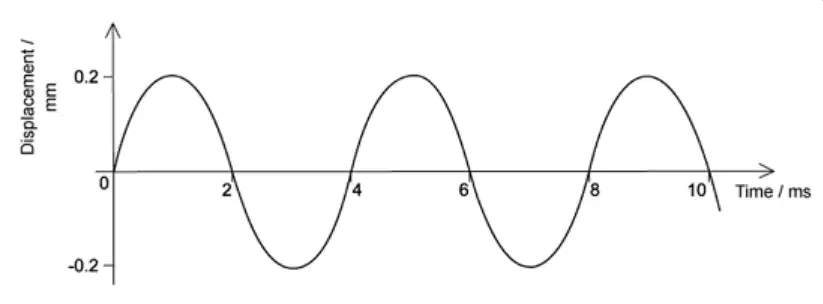
Sound travels with a speed of 330 m/s in air. The variation with time of the displacement of air particle due to a sound wave is shown below. What of the following statements about the wave is correct?
a)
a. the wavelength of the sound wave is 1.32 m
b)
b. the period of the sound wave is 10 ms
c)
c. the frequency of the wave is 500 Hz
d)
d. there are 5 wavelength form from the sound wave.
e)
e. the wavelength of the sound wave is 4 m
67.
A wave on a rope is travelling with speed of 0.5 m/s. If the period of the wave is 2 s, the wavelength is ....
a)
a. 0.25 m
b)
b. 0.5 m
c)
c. 1 m
d)
d. 2 m
e)
e. 4 m
68.

What is the direction of displacement of particles in longitudinal waves relative to the direction of energy propagation?

a)

Perpendicular

b)

Parallel

c)

Random

d)

None of the above

69.

Which of the following is evidence for the nature of transverse waves?

a)

Polarisation

b)

Reflection

c)

Refraction

d)

Diffraction

70.

Which of the following is NOT an example of a transverse wave?

a)

Polarised light

b)

Waves on a string

c)

Electromagnetic waves

d)

Sound waves

71.

What is the formula to calculate the speed of a wave?

a)

c = λf

b)

c = λ/f

c)

c = fλ

d)

c = f/λ

72.
What is the amplitude of a wave?
a)
it is the shortest distance between any two points in phase.
b)
it is the shortest distance between any two points not in phase.
c)
It is the maximum possible displacement of a point from its rest position.
d)
It is the minimum possible displacement of a point from its rest position.
73.

Number of waves passing a given point in a certain amount of time, measured in Hertz (Hz)

a)

wavelength

b)

frequency

c)

amplitude

d)

wave speed

74.
.
a)
A
b)
B
c)
C
d)
D
75.
.
a)
A
b)
B
c)
C
d)
D
76.
.
a)
A
b)
B
c)
C
d)
D
77.

A cyclist with mass of 50 kg. Its momentum is 1000 kgms-1. What is its velocity?

a)

50 000 kgms-1

b)

20 kgms-1

c)

200 kgms-1

d)

500 kgms-1

78.

An rugby ball of 1 kg moves with 10 ms-1 to the right. It hits a wall and bounces back with the same speed to the left What is the impulse?

a)

20 Ns to right

b)

0 Ns to the right

c)

20 Ns to the left

d)

0 Ns to the left

79.
Two football players with mass 75 kg and 100 kg run directly toward each other with speeds of 6 m/s and 8 m/s respectively. If they grab each other as they collide, the combined speed of the two players just after the collision would be:
a)
2 m/s 
b)
3.4 m/s 
c)
4.6 m/s 
d)
7.1 m/s
80.

If an object having a mass of 12 kg is acted upon by a force that causes its speed to increase from 5 m/s to 10 m/s, the impulse causing this change in speed is?

a)

1.1 kg m/s

b)

2.4 kg m/s

c)

60 kg m/s

d)

120 kg m/s