
 Worksheets
Rocky and Sandy Coasts
Total questions: 23
Worksheet time: 12mins
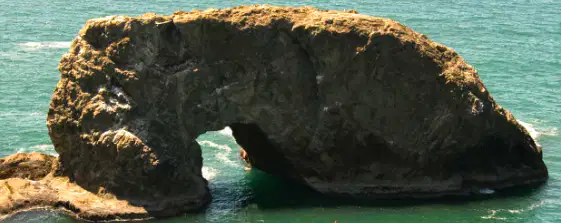
Which of the following is NOT true about this rocky formation?
the arch will probably get bigger over time
someday it could be 2 sea stacks or sea stumps
it was probably once connected a headland
it is probably done eroding
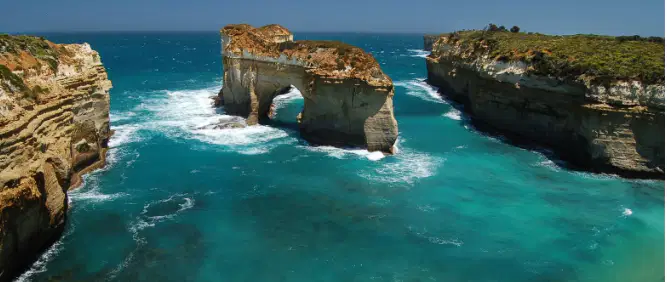
True or False: If the water is warm, there is likely kelp growing here.
True
False
Which of these species has the ability to drastically change the kelp forest, if its grazing pressure is too high?
sunflower star
sea urchins
sheepshead fish
The littoral zone is
below the low tide mark
above the high tide mark
in between the high and low marks
In which zone along a rocky coast are organisms exposed (out of the water) for the longest period of time?
splash zone
upper zone
lower zone
In which zone will anemones be present?
upper shore zone
lower shore zone
splash zone
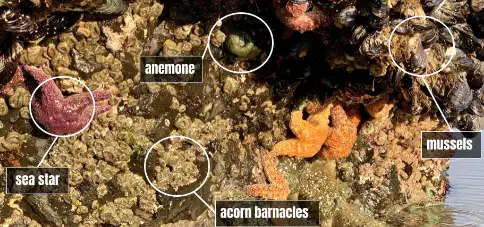
Which animal preys heavily on mussels?
sea stars
acorn barnacles
anemones
Which of the following is NOT a sessile organism that attaches itself to a hard substrate?
anemone
limpet
barnacle
bull kelp
mussel
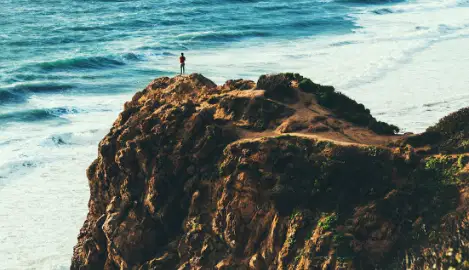
This headland remains while the rock around it has eroded away because
the rock is stronger
the rock is older
it was protected from erosional processes
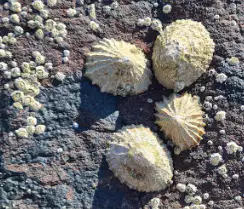
Which two types of animals are shown here?
mussels and abalone
chitons and anemones
barnacles and limpets
crabs and starfish
Which is the dominant kelp species along the California coast?

Bull kelp

Giant kelp

What is the stretch of sand shown in this photo called?
a headland
a sand bar
a tombolo
a sand spit
What type of ecosystem would you NOT expect to find in the estuary/lagoon behind a barrier island?
mangroves
mudflats
coral reef
seagrass bed
oyster reef
What creates longshore current?
Which way the rip current is moving
The direction that the majority of boats are moving in
The angle at which the swash washes onto the beach
The depth in the surf zone
What creates sand bars, sand spits, and tombolos?
slack currents
rip currents
ocean gyres
longshore currents
If winds coming from the west are causing the waves (swash) to hit the beach at an angle, then the longshore drift will be moving in which direction down the beach?
west
north
south
east
Which of the following is NOT TRUE of life on a beach?
the sand is always shifting
burrowing is a useful adaptation
some species must wait on the tide for a new meal
there is a lot of food available
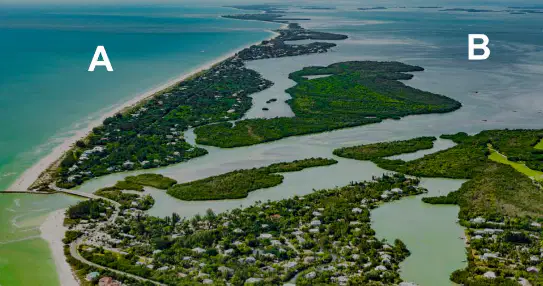
Which location is the estuary?
location A
location B
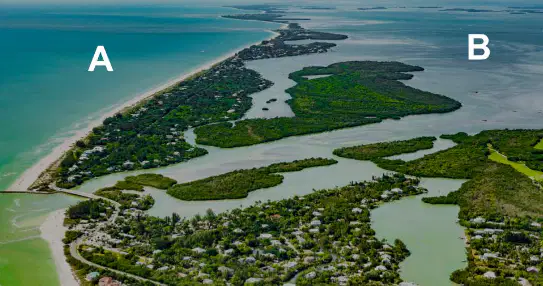
Which location would have the lower salinity?
Location A
Location B
Both locations have the same salinity
Salinity cannot be determined
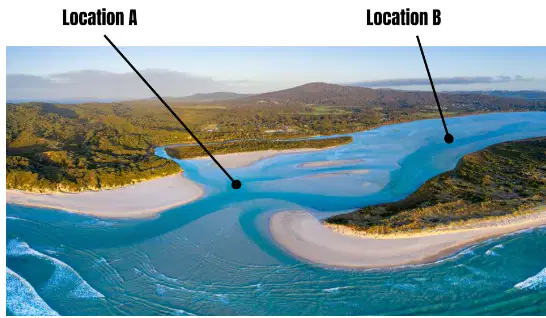
Which location would have the higher salinity?
location A
location B
Why don't mangroves or seagrasses grow along the beach?
the water is too salty
the water is too warm
the water is too deep
they cannot take root in the shifting sands
The perpendicular movement of water from waves down the slope of the beach, back into the water, is called
swash
backwash
tide
current
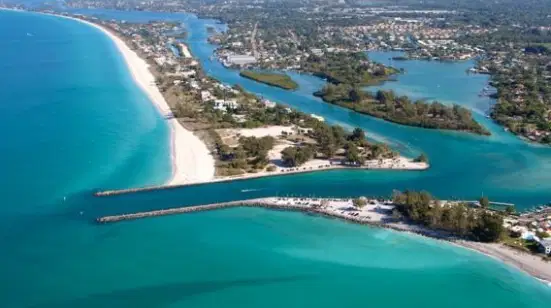
What is the reason for building a jetty?
It provides a place for boats to dock
It blocks dangerous flood tides from entering the estuary
It restores the eroded sediment on the beach
It blocks the longshore current from building sandbars that could block the pass

