
 Worksheets
AP BIOLOGY MIDTERM REVIEW 2024
Total questions: 68
Worksheet time: 45mins
Analyze the structural differences between carbohydrates and proteins and explain how these differences affect their biological functions.
Carbohydrates are composed of amino acids, while proteins are composed of monosaccharides.
Carbohydrates are primarily used for energy storage, while proteins serve as enzymes and structural components.
Carbohydrates have peptide bonds, while proteins have glycosidic linkages.
Carbohydrates and proteins have identical structures but different functions.
Evaluate the role of phospholipids in cell membrane dynamics and predict how a change in temperature might affect membrane fluidity.
Phospholipids form a rigid structure that is unaffected by temperature changes.
Increased temperature decreases membrane fluidity by solidifying phospholipids.
Phospholipids increase membrane fluidity at higher temperatures by becoming more fluid.
Temperature changes do not affect the fluidity of phospholipid membranes.
Design an experiment to determine the effect of pH on enzyme activity, specifically focusing on catalase.
Measure the rate of oxygen production at different pH levels using a spectrophotometer.
Use a thermometer to measure temperature changes in the reaction.
Vary the concentration of catalase and measure the rate of substrate consumption.
Change the enzyme concentration and observe the color change in the reaction.
Explain the strategic importance of ATP in cellular processes and how its structure enables its function.
ATP is a lipid that stores energy in its fatty acid chains.
ATP is a protein that catalyzes reactions by lowering activation energy.
ATP is a nucleotide that releases energy when its phosphate bonds are hydrolyzed.
ATP is a carbohydrate that stores energy in its glycosidic bonds.
Compare and contrast glycolysis and the citric acid cycle in terms of their roles in cellular respiration.
Both processes occur in the mitochondria and produce the same amount of ATP.
Glycolysis occurs in the cytoplasm and produces pyruvate, while the citric acid cycle occurs in the mitochondria and produces electron carriers.
Glycolysis and the citric acid cycle both directly produce large amounts of ATP.
Both processes require oxygen to proceed.
Discuss how the unique properties of water contribute to its role as a universal solvent in biological systems.
Water's nonpolar nature allows it to dissolve ionic compounds easily.
Water's high specific heat makes it an excellent solvent for nonpolar substances.
Water's polarity and hydrogen bonding enable it to dissolve a wide range of substances.
Water's low boiling point limits its ability to dissolve substances.
Evaluate the function of the endoplasmic reticulum in protein synthesis and transport within a cell.
The rough ER is involved in lipid synthesis, while the smooth ER is involved in protein synthesis.
The rough ER synthesizes proteins and transports them to the Golgi apparatus for modification.
The smooth ER is responsible for protein synthesis and transport to the nucleus.
The rough ER stores proteins for long-term use in the cell.
Analyze how changes in substrate concentration affect enzyme kinetics and predict the outcome when substrate concentration is significantly increased.
Enzyme activity decreases as substrate concentration increases due to competitive inhibition.
Enzyme activity remains constant regardless of substrate concentration.
Enzyme activity increases with substrate concentration until the enzyme becomes saturated.
Enzyme activity decreases with increased substrate concentration due to enzyme denaturation.
Design a model to illustrate the process of oxidative phosphorylation and its role in ATP production.
Oxidative phosphorylation occurs in the cytoplasm and involves the direct transfer of electrons to oxygen.
Oxidative phosphorylation involves the electron transport chain and chemiosmosis in the mitochondria to produce ATP.
Oxidative phosphorylation is a process that occurs in the chloroplasts during photosynthesis.
Oxidative phosphorylation directly converts glucose into ATP without intermediate steps.
Critically assess the role of the Golgi apparatus in modifying and packaging proteins for secretion.
The Golgi apparatus synthesizes proteins and lipids for cellular use.
The Golgi apparatus modifies proteins by adding carbohydrates and lipids, then packages them into vesicles for secretion.
The Golgi apparatus is responsible for DNA replication and repair.
The Golgi apparatus degrades proteins that are no longer needed by the cell.
Evaluate the impact of competitive and non-competitive inhibitors on enzyme activity and propose a method to distinguish between the two.
Competitive inhibitors bind to the active site, while non-competitive inhibitors bind to an allosteric site; measure changes in Km and Vmax to distinguish them.
Both types of inhibitors increase Km without affecting Vmax .
Competitive inhibitors decrease Vmax , while non-competitive inhibitors increase Km .
Non-competitive inhibitors bind to the active site, while competitive inhibitors bind to an allosteric site.
Analyze the role of the mitochondria in cellular respiration and predict the consequences of mitochondrial dysfunction on ATP production.
Mitochondria are involved in glycolysis and directly produce glucose.
Mitochondria are the site of the citric acid cycle and oxidative phosphorylation; dysfunction leads to reduced ATP production.
Mitochondria store ATP for long-term energy use in the cell.
Mitochondria are responsible for photosynthesis and oxygen production.
Discuss the significance of water's high specific heat capacity in maintaining homeostasis in living organisms.
Water's high specific heat allows it to rapidly change temperature, aiding in quick heat dissipation.
Water's high specific heat stabilizes temperature, allowing organisms to maintain a constant internal environment.
Water's high specific heat prevents it from dissolving polar substances.
Water's high specific heat is irrelevant to biological systems.
Evaluate the role of lysosomes in cellular digestion and waste removal, and predict the effects of lysosomal malfunction.
Lysosomes synthesize proteins and lipids for cellular use.
Lysosomes break down macromolecules and recycle cellular components; malfunction can lead to accumulation of waste.
Lysosomes are involved in DNA replication and repair.
Lysosomes store energy in the form of ATP.
Analyze the role of the cytoskeleton in maintaining cell shape and facilitating intracellular transport.
The cytoskeleton is involved in protein synthesis and energy production.
The cytoskeleton provides structural support and facilitates movement of organelles within the cell.
The cytoskeleton is responsible for DNA replication and repair.
The cytoskeleton stores nutrients for the cell.
Design an experiment to test the effect of temperature on the rate of cellular respiration in yeast.
Measure the rate of carbon dioxide production at different temperatures using a respirometer.
Use a spectrophotometer to measure changes in light absorption at different temperatures.
Vary the concentration of yeast and measure the rate of glucose consumption.
Change the pH of the solution and observe the color change in the reaction.
Discuss the role of aquaporins in regulating water movement across cell membranes and predict the effects of aquaporin malfunction.
Aquaporins are ion channels that regulate the movement of ions across cell membranes.
Aquaporins facilitate the rapid movement of water across cell membranes; malfunction can lead to impaired water balance.
Aquaporins are involved in protein synthesis and transport.
Aquaporins store water for long-term use in the cell.
Analyze the role of ribosomes in protein synthesis and predict the consequences of ribosomal dysfunction on cellular function.
Ribosomes are involved in lipid synthesis and energy production.
Ribosomes synthesize proteins by translating mRNA; dysfunction can lead to impaired protein production.
Ribosomes are responsible for DNA replication and repair.
Ribosomes store nutrients for the cell.
Evaluate the role of the nucleus in regulating cellular activities and predict the effects of nuclear dysfunction.
The nucleus is involved in protein synthesis and energy production.
The nucleus stores genetic information and regulates gene expression; dysfunction can lead to uncontrolled cell growth.
The nucleus is responsible for lipid synthesis and transport.
The nucleus stores nutrients for the cell.
Discuss the role of the cell membrane in maintaining homeostasis and predict the effects of membrane damage.
The cell membrane is involved in protein synthesis and energy production.
The cell membrane regulates the movement of substances in and out of the cell; damage can lead to loss of homeostasis.
The cell membrane is responsible for DNA replication and repair.
The cell membrane stores nutrients for the cell.
Analyze the role of peroxisomes in cellular metabolism and predict the consequences of peroxisomal dysfunction.
Peroxisomes are involved in protein synthesis and energy production.
Peroxisomes break down fatty acids and detoxify harmful substances; dysfunction can lead to accumulation of toxins.
Peroxisomes are responsible for DNA replication and repair.
Peroxisomes store nutrients for the cell.
Evaluate the role of the cytoplasm in cellular processes and predict the effects of cytoplasmic changes on cell function.
The cytoplasm is involved in protein synthesis and energy production.
The cytoplasm provides a medium for chemical reactions and organelle movement; changes can affect cellular metabolism.
The cytoplasm is responsible for DNA replication and repair.
The cytoplasm stores nutrients for the cell.
Discuss the role of the cell wall in plant cells and predict the effects of cell wall damage.
The cell wall is involved in protein synthesis and energy production.
The cell wall provides structural support and protection; damage can lead to loss of cell integrity.
The cell wall is responsible for DNA replication and repair.
The cell wall stores nutrients for the cell.
Analyze the role of vacuoles in plant cells and predict the consequences of vacuole malfunction.
Vacuoles are involved in protein synthesis and energy production.
Vacuoles store nutrients and waste products; malfunction can lead to impaired storage and waste removal.
Vacuoles are responsible for DNA replication and repair.
Vacuoles store genetic information for the cell.
Evaluate the role of the plasma membrane in cell signaling and predict the effects of membrane receptor dysfunction.
The plasma membrane is involved in protein synthesis and energy production.
The plasma membrane contains receptors for cell signaling; dysfunction can lead to impaired communication.
The plasma membrane is responsible for DNA replication and repair.
The plasma membrane stores nutrients for the cell.
Discuss the role of the extracellular matrix in tissue structure and predict the effects of matrix degradation.
The extracellular matrix is involved in protein synthesis and energy production.
The extracellular matrix provides structural support and regulates cell behavior; degradation can lead to tissue damage.
The extracellular matrix is responsible for DNA replication and repair.
The extracellular matrix stores nutrients for the cell.
Analyze the role of the cytosol in cellular metabolism and predict the consequences of changes in cytosolic composition.
The cytosol is involved in protein synthesis and energy production.
The cytosol is the site of metabolic reactions; changes can affect enzyme activity and metabolic pathways.
The cytosol is responsible for DNA replication and repair.
The cytosol stores nutrients for the cell.
What is the primary role of enzymes in biological reactions?
To provide nutrients to the substrates
To permanently change the structure of substrates
To decrease the activation energy needed for the reaction
To increase the temperature of the reaction environment
What is the function of the active site in an enzyme?
It is where the substrates bind and react
It stores extra substrates
It is only used for storage of ATP
It repels substrates to slow down the reaction
What property of enzymes allows them to be used repeatedly?
They are consumed by the reaction
They change shape permanently after each reaction
They are not altered by the reaction they catalyze
They bind permanently to substrates
How do enzymes typically affect the reactions they catalyze?
They increase the reaction rate
They decrease the reaction rate
They change the end products of the reaction
They have no effect on the reaction

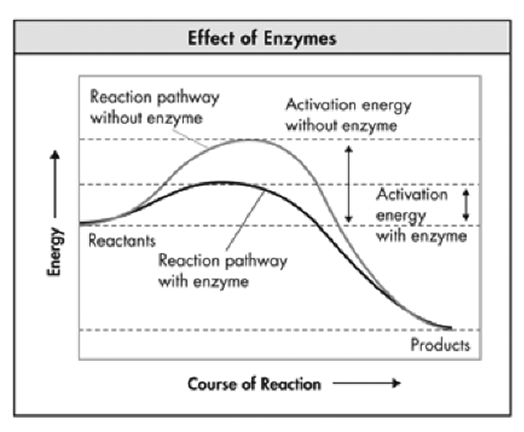
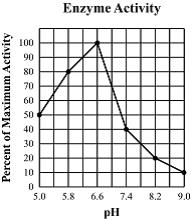
The graphs show the reaction rate for an enzyme across a range of temperatures and pH. Based on the data, this enzyme functions best at what temperature and pH?


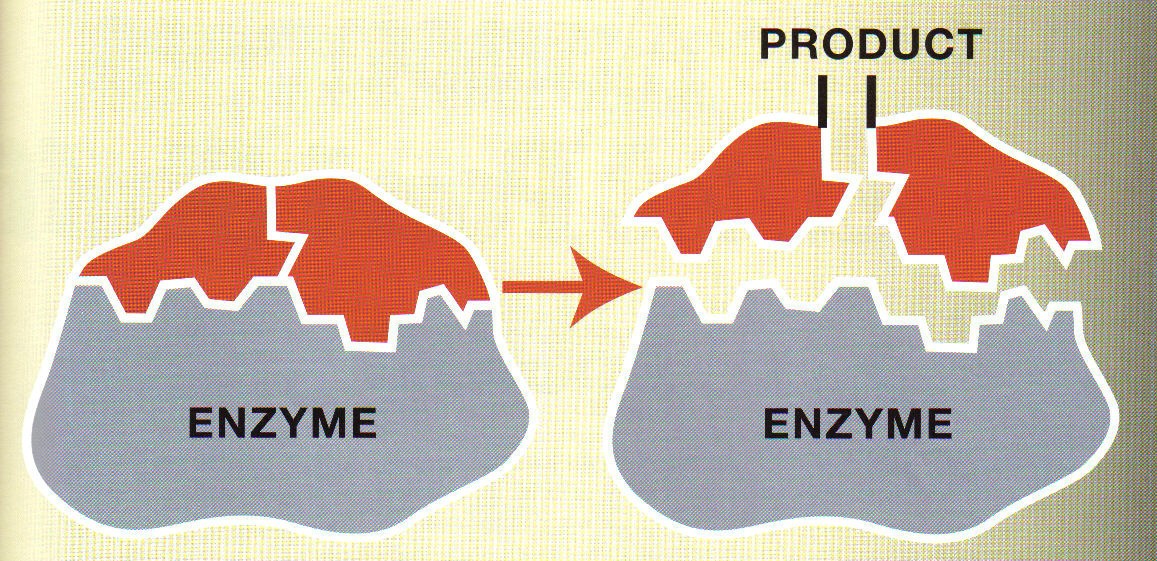
Molecules that bind to enzymes and enhance an enzyme's ability are called:
CoFactors
Competitive Inhibitors
Allosteric Inhibitors
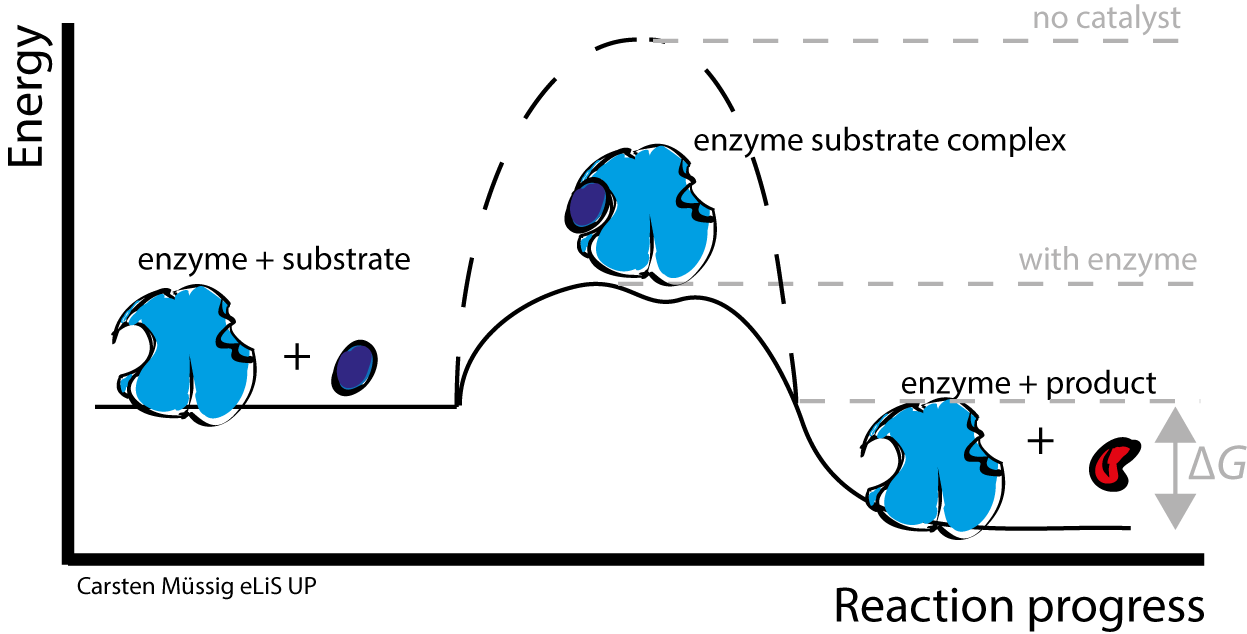
Which of the following elements is Not one of the six most common in living organisms?
carbon
oxygen
iron
nitrogen
hydrogen

Which protein structure involves the peptide bonds between amino acids?
primary
secondary
tertiary
quaternary
Which of the following biological macromolecules contains phosphorous?
Nucleic acids
Carbohydrates
Proteins
Lipids
Which protein involves R group bonding to form the final three dimensional structure?
primary
secondary
tertiary
quaternary
What determines the function of a protein?
The number of peptide bonds
The types of side chains
The protein’s specific structure
The tissue that produces the protein

Which of the following statements is/are true regarding the chemical reaction illustrated in the Figure?
It is a hydrolysis reaction.
It results in a peptide bond.
It joins two fatty acids together.

Which of the following is NOT a function of the Smooth Endoplasmic Reticulum?
protein synthesis
detoxifies harmful chemicals in the cell
storage and release of calcium ions.
synthesizes lipids and phospholipids
Which molecule cannot passively diffuse across a cell membrane?
Oxygen
H+ Ions
carbon dioxide
water
In what ways are chloroplasts and mitochondria alike?
They function to provide energy to the cell
They each contain their own DNA and ribosomes
They can both reproduce by splitting in half.
All of the above are correct for both
What is the term that describes when a cell expends energy to pump molecules across its membrane against their concentration gradients?
Facilitated diffusion
Passive transport
Osmosis
Active transport
What part of the cell membrane keeps the fluidity of the membrane?
phospholipid
cholesterol
integral proteins
glycoproteins

This dialysis tubing of glucose and starch is left in the water for 24 hours. Which of the following is possible?
there will be starch will be in the tubing and the water
there will be no glucose left in the tubing.
the water potential inside the bag, will be greater than the water
The bag will contain more water than it did in the original condition.
A plant cell loses its water to its surrounding environment. What type of solution is in the plant cell cytoplasm?
hypertonic
hypotonic
isotonic
none of the above

In eukaryotic cells, which organelle is a specialized vesicle containing hydrolytic enzymes that can break down old cell parts and food.
vacuole
mitochondria
golgi apparatus
nucleolus
lysosome
A researcher observes a cell from a adrenal gland under an electron mictoscope. Adrenal glands produce several type of steroid hormones. What should the researcher expect to see in the cell?
a high number of mitochondria
large prominent rough ER
large prominent smooth ER
a high number of centrioles
Tay–Sachs disease is a human genetic abnormality that results in cells accumulating and becoming clogged with very large, complex, and undigested lipids. Which cellular organelle must be involved in this condition?
the endoplasmic reticulum
the Golgi apparatus
the lysosome
mitochondrion
membrane–bound ribosomes


Which of the following statements are false?
Glycolysis does not require oxygen
Glycolysis is the first step in both anaerobic and aerobic respiration
Glycolysis occurs in the mitochondria
Glycolysis produces 2 ATP, 2 Pyruvates, and 2 NADH
What are the products of aerobic cellular respiration?
ATP
Carbon dioxide (CO2)
Water
All of the above
After strenuous exercise, a muscle cell would contain decreased amounts of ______ and increased amounts of ______ ____
glucose; ATP
ATP; glucose
oxygen; lactic acid
lactic acid; ATP
What process is found in both aerobic and anaerobic metabolism?
the Kreb's cycle
oxidative phosphorylation
the citric acid cycle
glycolysis
During chemiosmosis
H+ ions serve as the final electron acceptor
a concentration gradient is generated when H+ ions are passively transported from the matrix to the inner mitochondrial membrane
energy is released as H+ ions move freely across the mitochondrial membrane
ATP is synthesized when H+ ions move through a channel in ATP synthase
The main purpose of fermentation is to
produce oxygen
replenish NAD+ for glycolysis
replenish oxaloacetic acid for the Krebs cycle
produce ATP
It is possible for both prokaryotes and eukaryotes to perform glycolysis because it occurs in the _____________
mitochondrial matrix
inner membrane
cytoplasm
cell membrane
Anaerobic respiration yields about ______ ATP per glucose whereas aerobic respiration yields about _______ ATP per glucose.
38, 2
2, 38
2, 18
18, 2

