
 Worksheets
CHEM 1410 Exam 1-4 Review
Total questions: 80
Worksheet time: 20hrs 0mins
Select the answer that expresses the result of this calculation with the correct number of significant figures:
32.220 x 32.022
4.68
220.46
220
220.
220.5
The mass of a sample is 7.60x10⁻⁴kg. What is the mass in mg?
7.60x10⁶ mg
7.60x10² mg
7.60x10⁻¹ mg
7.60x10⁻¹⁰ mg
A volume of a sample is 5.98x10⁻² kL. How many mL is this?
5.98x101 mL
5.98x10⁻⁵ mL
5.98x10⁴ mL
5.98x10⁻⁸ mL
Which of the following represents a chemical change to a substance?
creating table salt from solid sodium and chlorine gas
freezing popsicles
boiling water
chopping firewood
The density of silver is 10.5g/cm^3. What is the mass of a cube of silver measuring 2.62 cm by 4.87 cm by 8.91 cm?
172 g
1190 g
0.923 g
10.8 g

What is the average atomic mass of an element with the following isotopic abundances:
68.06 amu
67.25 amu
68.00 amu
68.93 amu
How many neutrons are present in an atom of hydrogen-3?
1
not enough information
0
2

A neutral atom of ^ has
4 protons, 15 neutrons, and 4 electrons
4 protons, 4 neutrons, and 4 electrons
11 protons, 7 neutrons, and 11 electrons
4 protons, 7 neutrons, and 4 electrons
Oxygen is in which family/group?
the chalcogens
the alkali metal
the pnictogens
the halogens
What is the third element down in the alkaline earths?
bromine
sodium
calcium
argon
How many atoms are in 0.734 mol of scandium (Sc)?
6.022x10²³ atoms Sc
5.81x10²³ atoms Sc
1.22x10⁻²⁴ atoms Sc
4.42x10²³ atoms Sc
A bar of silver has a mass of 283.4 grams. How many moles of silver are in one silver bar?
2.626 moles
1.439 moles
0.09264 moles
56.68 moles
An antacid tablet contains 3.56×10²² atoms of calcium. How many grams of calcium are present?
0.059 g
1.43x1024 g
40.1 g
2.37 g
Which of the following frequencies corresponds to light with the longest wavelength?
9.12 × 10¹² s-1
4.12 x 10¹³ s-1
3.00 x 10¹³ s-1
3.20 x 10⁹ s-1
Select the region of the electromagnetic spectrum that is highest in energy.
microwaves
gamma rays
ultraviolet waves
visible light
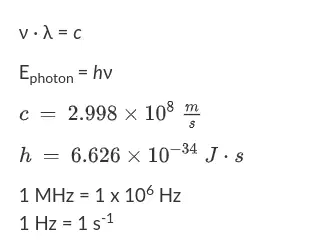
A household microwave emits radiation with a wavelength of 12.0 cm. Find the frequency (in MHz) of this wave.
2.50 x 10³ MHz
4.00 x 10⁻¹⁶ MHz
4.00 x 10⁻¹⁰ MHz
2.50 x 10¹⁰ MHz
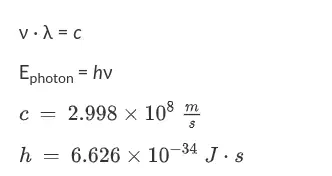
What is the wavelength, in nm, of radiation with an energy of 3.371 x 10⁻¹⁹ J?
589.2 nm
744.5 nm
152.5 nm
170.0 nm
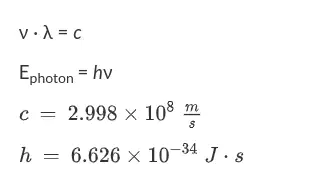
What is the energy of one photon at 462 nm?
2.33 x 10¹⁸ J
4.30 x 10⁻²⁸ J
4.30 x 10⁻¹⁹ J
6.49 x 10¹⁴ J
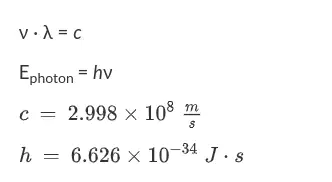
What is the energy of one mole of photons at 725 nm?
2.47 x 10⁻¹⁹ J/mol
4.14 x 10¹⁴ J/mol
1.65 x 10⁻⁴ J/mol
1.65 x 10⁵ J/mol
Which of the following is not a valid set of quantum numbers for an electron
[n, l, ml, ms] ?
[4, 3, 2, 1]
[3, 0, 0, -1/2]
[3, 2, 1, +1/2]
[2, 1, -1, +1/2]
What is the full electron configuration for bromine?
1s22s22p1
1s22s22p63s23p64s23d104p2
1s22s22p63s23p64s23d104p5
1s22s22p63s23p64s24p5
Which orbital diagram represents the ground state of oxygen?




Rank the atoms according to increasing ionization energy (i.e. least to most).
P < As < K < Cs
As < P < Cs < K
K < Cs < P < As
Cs < K < As < P
What is the formula for phosphorus trichloride?
P3Cl3
PClO4
PCl
PCl3
What is the name of FeS?
iron(I) sulfate
iron sulfide
iron(II) sulfide
iron(II) sulfate
What is the formula that can form between potassium and oxygen?
P2O
KO
K2O
PO2
What is the mass in grams of 0.586 mol of aluminum oxide, Al2O3 ?
59.8 g
0.586 g
102. g
173.9 g
Which of the following statements about empirical formulas are TRUE:
I. Empirical formulas are the smallest possible whole number ratio of atoms in a compound.
II. The empirical formula and molecular formula cannot be the same ratio.
III. Different molecular formulas cannot have the same empirical formula.
IV. The empirical formulas of benzene (C6H6) and acetylene (C2H2) are the same.
I, II, IV
II, III
II, III
I, IV
Hydroxylamine nitrate contains 29.17% N, 4.20% H, and 66.63% O by mass. How many grams of nitrogen are present in a sample weighing 197 g?
29.2 g
57.5 g
100. g
4.12 g
A compound is 24.78% C, 2.08 % H, and 73.14% Cl. What is the empirical formula?
CHCl3
CHCl
CH3Cl
C2H5Cl
The empirical formula of a compound was determined to be SO2. The experimental molar mass was determined to be 125±5 g mol-1. What is the molecular formula?
SO2
S3O6
S2O4
SO4

How is the following Lewis dot symbol incorrect:
The Lewis dot symbol is drawn correctly.
There are too many valence electrons present.
The charge should be -1.
There are not enough valence electrons present.
How many lone pairs does NH3 have?
0
2
1
3
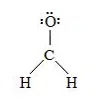
Consider the following structure. As it is drawn, what is the formal charge on carbon?
-2
-1
0
+1
Which bond would you expect to have the highest bond energy (i.e., the strongest bond)?
All of the bonds would have the same energy, because they are all bonds between nitrogen atoms.
the N=N bond in N2H2
the N-N bond in N2H4
the N≡N bond in N2
Rank the following according to increasing bond polarity (i.e. least polar to most polar).
Si-Si < Si-S < Si-P < Si-Cl
Si-Cl < Si-S < Si-P < Si-Si
Si-Si < Si-P < Si-S < Si-Cl
Si-S < Si-Si < Si-P < Si-Cl
What is the electron domain geometry for CO2?
linear
trigonal bipyramidal
trigonal planar
tetrahedral
What is the electron domain geometry and molecular geometry for XeF4?
tetrahedral; tetrahedral
tetrahedral; square planar
square planar; square planar
octahedral; square planar
Which of the following molecules would you expect to have sp3 hybrid orbitals around the central atom?
SF4
NH4+
CO2
BF3
Which of the following is a non-polar molecule?
BF3
H2O
NF3
CH2Cl2
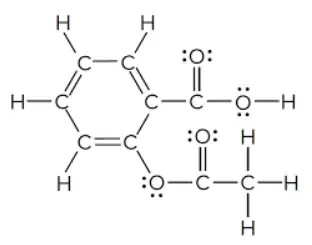
The structure of Aspirin is shown below. How many sigma bonds and pi bonds are present?
21 sigma bonds, 10 pi bonds
26 sigma bonds, 5 pi bonds
21 sigma bonds, 5 pi bonds
16 sigma bonds, 5 pi bonds
Balance the following reaction. What is the stoichiometric coefficient for CO2?
_____ C8H6O4 + _____ O2 ⟶ _____ H2O + _____ CO2
8
3
16
2
Balance the following reaction. What is the stoichiometric coefficient for C8H6O4?
_____ C8H6O4 + _____ O2 ⟶ _____ H2O + _____ CO2
6
2
1
15
Considering the following chemical reaction: 4 Al(s) + 3 O2(g) ⟶ 2 Al2O3. Which of the following statements are false?
The reaction of 1 mole of Al will produce 1/4 mole of Al2O3.
The reaction of one mole of aluminum requires 3/4 mole of oxygen gas to completely react with it.
The reaction of 26.98 g of aluminum will produce 0.5 mole of Al2O3.
In order to produce 101.96 grams of aluminum oxide, you must begin with 1.5 moles of O2.
Consider the following chemical reaction: N2 + 3 H2 ⟶ 2 NH3. Which of the following statements is false?
The reaction of three moles of hydrogen gas will produce 17.04 g of ammonia.
The reaction of one mole of H2 will produce 2/3 moles of NH3.
The reaction of two moles of N2 will produce four moles of NH3.
The reaction of 28.02 g of nitrogen gas will produce 2 moles of ammonia.
Consider the following balanced reaction. If you begin with 25.00 grams of H2 and 10.00 grams of Cl2, which is the limiting reactant and how much HCl will be formed?
H2 + Cl2 ⟶ 2 HCl
Cl2; 5.142 g of HCl
Cl2; 10.28 g of HCl
H2; 361.0 g of HCl
H2; 24.75 g of HCl
Consider the following equation describing the reaction of 5.4 grams of boron with 6.7 grams of oxygen gas (O2) to form diboron trioxide:
4 B(s) + 3 O2(g) ⟶ 2 B2O3
What is the excess reactant, and how much of that excess reactant remains, in grams?
Boron is excess; 2.4 g of boron remain
Oxygen is excess; 2.4 g of oxygen remain
Boron is excess; 3.0 g of boron remain
Oxygen is excess; 3.0 g of oxygen remain
For the reaction 4 Al(s) + 3 O2 (g) ⟶2 Al2O3 (s), when 2.5 moles of Al are reacted with 6 moles of O2, 0.7 mol of Al2O3 is experimentally produced. What is the percent yield for this reaction?
35%
28%
70%
56%
Determine the percent yield when 28.16 g of CO2 are experimentally formed from the reaction of 4.000 moles of O2 and excess C8H18 , according to the following reaction:
2 C8H18 + 25 O2 ⟶ 16 CO2 + 18 H2O
20.00 %
25.00 %
12.50 %
50.00 %
All of the following are soluble in water except
AgI
Ca(OH)2
AgNO3
CuSO4
All of the following compounds are insoluble except
PbSO4
Hg2Cl2
MgSO4
CuCO3
Select the correct set of (unbalanced) products for the following reaction:
Na2CO3 (aq) + CuCl2 (aq) ⟶
CuCO3 (s) + Na (s) + Cl2 (g)
Cu (s) + CO2 (g) + NaO (aq) + Cl2 (g)
CuCO3 (aq) + NaCl (aq)
CuCO3 (s) + NaCl (aq)
Give the total ionic equation for the reaction (if any) that occurs when aqueous solutions of lithium sulfide and copper(II) nitrate are mixed.
2 Li+ (aq) + S2- (aq) + Cu2+ (aq) + 2 NO3- (aq) ⟶ CuS (s) + 2 Li+ (aq) + 2 NO3- (aq)
Li+ (aq) + S2- (aq) + Cu2+ (aq) + NO3- (aq) ⟶ CuS (s) + LiNO3 (aq)
Li+ (aq) + SO42- (aq) + Cu2+ (aq) + NO3- (aq) ⟶ CuS (s) + Li+ (aq) + NO3- (aq)
Li+ (aq) + S- (aq) + Cu2+ (aq) + NO3- (aq) ⟶ CuS (s) + LiNO3 (aq)
Give the net ionic equation for the reaction (if any) that occurs when aqueous solutions of sodium chloride and lead(II) nitrate are mixed.
2 Na+ (aq) + 2 NO3- (aq) ⟶ 2 NaNO3 (s)
2 Na+ (aq) + 2 Cl- (aq) + Pb2+ (aq) + 2 NO3- (aq) ⟶ PbCl2 (s) + 2 Na+ (aq) + 2 NO3- (aq)
Pb2+ (aq) + 2 Cl- (aq) ⟶ PbCl2 (s)
No reaction occurs.
What is the oxidation number of carbon in CO32-?
+6
0
-2
+4
What is the oxidation state of phosphorus in H3PO4?
-3
0
+5
-2
Identify the elements in the following redox reaction:
2 K + F2 ⟶ 2 KF
oxidized: KF; reduced: F2
oxidized: F2; reduced: K
oxidized: K; reduced: F2
oxidized: F2; reduced: KF
What is the concentration of the solution that results from 0.405 mol Ca(NO3)2 dissolved in 650.0 mL of water?
9.96x10⁻³ M
0.623 M
263 M
6.23x10⁻⁴ M
How many grams are required to make 250.0 mL of a 0.5655 M solution of sodium sulfate, Na2SO4? (MM = 142.04 g mol-1)
62.79 g
20.08 g
141.38 g
2.262 g
What volume of solution (in mL) is needed to dilute a 2.0 M HI solution to make 75.0 mL of a 0.10 M solution?
4.92x10⁻⁴ mL
10.0 mL
59.0 mL
3.75 mL
Convert 712 mmHg to pressure in atmospheres (atm).
7.50 atm
0.937 atm
712 atm
1.07 atm
Which of the following defines an exothermic process?
A process in which heat is released from the system, decreasing the energy of the system
A process in which heat is absorbed into the system, so the energy of the system increases
Consider a system of expanding gases that does 986 J of work to push back a piston (surroundings), and loses 362 J of heat to the surroundings. What is the change in energy of this system?
+624 J
-624 J
-1348 J
+1348 J

Which process is shown in the following enthalpy diagram:
endothermic; H2O(g) ⟶ H2O(l) + 40.7 kJ
endothermic; H2O(g) + 40.7 kJ⟶ H2O(l)
exothermic; H2O(g) ⟶ H2O(l) + 40.7 kJ
exothermic; H2O(g) + 40.7 kJ⟶ H2O(l)
How much heat (in kJ) is needed to raise the temperature of 20.0 g of water from 25.0∘C to 88.0∘C? (c = 4.184 J g-1 ∘C-1)
4.908 kJ
7.364 kJ
5.272 kJ
2.092 kJ
140.0 g of metal at 24.0∘C has 632 J of heat added to it. The metal's specific heat is 0.105 J g-1 ∘C-1. What is its final temperature?
67.0∘C
43.0∘C
-19.0∘C
24.6∘C
Nitromethane (CH3NO2), sometimes used as a fuel for drag racing, burns according to the following reaction:
4 CH3NO2 (l) + 7 O2 (g) → 4 CO2 (g) + 6 H2O (g) + 4 NO2 (g) ∆H = – 2441.6 kJ
How much heat is released by burning 125.0 g of nitromethane (MM = 61.04 g/mol)?
- 2441.6 kJ
1250. kJ
610.4 kJ
- 4.657x10⁶ kJ
Given the following thermochemical equations, determine the enthalpy of reaction (ΔHrxn) for the reaction:
CS2(l) + 3 O2(g) ⟶ CO2(g) + 2 SO2(g) ΔHrxn = ?
(1) C(s) + O2(g) ⟶ CO2(g) ΔH∘= -393.5 kJ
(2) S(s) + O2(g) ⟶ SO2(g) ΔH∘= -296.8 kJ
(3) C(s) + 2 S(s)⟶ CS2(l) ΔH∘=+87.9 kJ
-2150 kJ
-602.4 kJ
-1075 kJ
-778.2 kJ
Which of the following represents a formation equation for C8H10N4O2(s)?
8 C(gr) + 10 H2(g) + 4 N2(g) + 2 O2(g) ⟶ C8H10N4O2(s)
8 C(gr) + 5 H2(g) + 2 N2(g) + O2(g) ⟶ C8H10N4O2(s)
8 C(s) + 5 H2(g) + 2 N2(g) + O2(g) ⟶ C8H10N4O2(s)
C8H10N4O2(s) ⟶ 8 C(gr) + 5 H2(g) + 2 N2(g) + O2(g)

Given the following table of data, calculate/determine the enthalpy of reaction (ΔHrxn) for the combustion of ethane:
2 C2H6(g) + 7 O2(g) ⟶ 4 CO2(g) + 6 H2O(l) ΔHrxn = ?
-3119 kJ
-1359 kJ
-3459 kJ
-764.3 kJ

Given the tabulated bond enthalpies, estimate the enthalpy of reaction (ΔHrxn) for the combustion of methane:
CH4(g) + 2 O2(g) ⟶ CO2(g) + 2 H2O(g) ΔHrxn= ?
-808 kJ
+6092 kJ
+808 kJ
-1798 kJ
What is the temperature, in ∘C, of a sample of 0.986 mol of He if it occupies 406 mL at 1.86x10⁴ torr?
1 atm = 760 torr, R = 0.0821 L atm mol-1 K-1
123∘C
396∘C
-150.∘C
1.22x10⁵ ∘C
If 0.173 moles of Ar occupies 240. mL at 120.∘C , what is the pressure (in torr)?
1 atm = 760 torr, R = 0.0821 L atm mol-1 K-1
17.7 torr
23.3 torr
5400 torr
1.77x10⁴ torr
What volume (in mL) will a sample of F2 gas occupy in a syringe at 5.5 atm, if the gas initially has a volume of 25.0 mL at 1.2 atm?
11 mL
17 mL
3.8 mL
5.5 mL
A sample of N2 gas occupied a volume of 656 mL when held at 10.2 atm. What pressure (in torr) will need to be exerted on the gas in order to decrease the volume to 125 mL?
4.07x10⁴ torr
53.5 torr
8.04x10³ torr
1.48x10³ torr
What is the density (in g/L) of CO2 gas at 373.15 K and 5.24 atm?
MM (CO2) = 44.01 g mol-1
R = 0.0821 L atm mol-1 K-1
0.133 g/L
536 g/L
1.85x10⁻³ g/L
7.53 g/L
Calculate the molar mass of a gas if 5.6 g occupies 0.95 L at 325 K and 2.4 atm.
65.9 g/mol
0.0855 g/mol
0.00335 g/mol
11.7 g/mol
Consider the following (incomplete) reaction. How many L of carbon dioxide can be produced at 325 K and 1.12 atm, if you begin with 10.89 g of glucose (C6H12O6)? (You do not need to balance it.)
C6H12O6 ⟶ 2 C5H5OH (l) + 2 CO2 (g)
CO2, MM = 44.01 g mol-1
C6H12O6, MM = 180.2 g mol-1
2.88 L
1.44 L
259 L
5.32 L
A mixture of 100.0 g of Ne and 100.0 g of Ar have a total pressure of 1.60 atm. What is the partial pressure of Ar?
0.537 atm
0.336 atm
0.800 atm
0.744 atm
A mixture of He, Ne, and Ar has a pressure of 26.2 bar at 28.0∘C. The partial pressure of He is 4.50 bar and the partial pressure of Ar is 3.07 bar. Calculate the mole fraction and partial pressure of Ne.
pNe = 4.50 bar; χNe = 0.280
pNe = 18.6 bar; χNe = 0.711
pNe = 18.6 bar; χNe = 0.117
Not enough information

