
 Worksheets
Objects in the Solar System 7.9A Review
Total questions: 35
Worksheet time: 18mins
What is the Kuiper belt?
A region of space beyond Neptune filled with icy bodies
A type of asteroid found between Mars and Jupiter
A large planet in the outer solar system
A cloud of gas surrounding the Sun
Which of the following is a characteristic of a comet?
It is a rocky body orbiting between Mars and Jupiter
It is a small, icy body that develops a tail when near the Sun
It is a large planet with rings
It is a star at the center of the solar system
What is an asteroid?
A large planet with a thick atmosphere
A small rocky body orbiting the Sun, mostly found between Mars and Jupiter
A type of star in the solar system
A gaseous cloud surrounding the Earth
Which of the following statements correctly describes the Sun? Select ALL that apply.
The Sun is a medium-sized star located at the center of the solar system.
The Sun is composed of helium and hydrogen.
The Sun moves through space, orbiting the center of the Milky Way galaxy.
The Sun's gravity is crucial for keeping the planets in their orbits.
The Sun is stationary and does not move relative to other stars in the galaxy.
What does the Latin word "sol" mean?
Moon
Star
Sun
Planet
How many planets are in our solar system?
Seven
Eight
Nine
Ten
Which of the following is NOT part of our solar system?
Comets
Dwarf planets
Black holes
Asteroids
What is the Sun's role in the solar system?
It is a planet that orbits Earth.
It is an average-sized star at the center of the solar system.
It is a moon that orbits Mars.
It is a comet passing through the solar system.
What does the Sun's gravity do?
It pushes objects away from the solar system.
It keeps all objects in the solar system in orbit.
It has no effect on the solar system.
It only affects the Earth.
What type of energy does the Sun supply that is essential for life on Earth?
Nuclear energy
Electrical energy
Light and heat
Sound energy
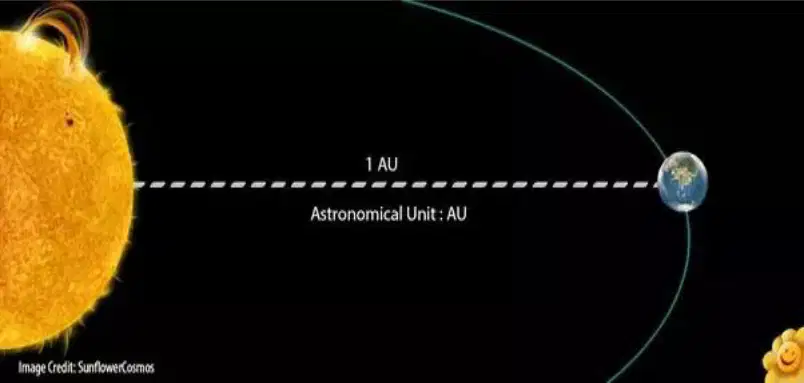
What is the astronomical unit (AU) used for?
Measuring time within the solar system
Measuring distance within the solar system
Measuring temperature within the solar system
Measuring mass within the solar system
What is the average distance of one astronomical unit (AU)?
150,000 km
1,500,000 km
150,000,000 km
1,500,000,000 km
What keeps objects orbiting in the solar system?
Gravity
Orbit
Earth
Smallest
What do all planets in the solar system do around the sun?
Orbit
Gravity
Largest
A star
What is the largest object in the solar system?
The Sun
Earth
A star
Smallest
An AU is the distance from the sun to which planet?
Earth
Mars
Jupiter
Venus
What are the objects of the inner solar system?
The Sun, Mercury, Venus, Earth, and Mars
The Sun, Jupiter, Saturn, Uranus, and Neptune
The Sun, Earth, Mars, Jupiter, and Saturn
The Sun, Venus, Earth, Neptune, and Pluto
Which planets are considered small and rocky in the inner solar system?
Mercury, Venus, Earth, and Mars
Jupiter, Saturn, Uranus, and Neptune
Earth, Mars, Jupiter, and Saturn
Venus, Earth, Neptune, and Pluto
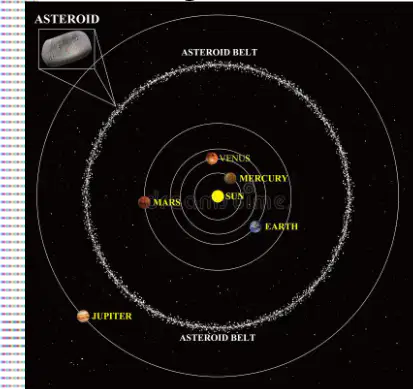
Where is the asteroid belt located?
Between Earth and Mars
Between Mars and Jupiter
Between Jupiter and Saturn
Between Venus and Earth
What is the largest object in the asteroid belt?
Vesta
Pallas
Ceres
Hygiea
What type of bodies does the asteroid belt contain?
Gaseous bodies
Icy bodies
Small, rocky bodies
Liquid bodies
What is a common origin for many meteors?
The Kuiper Belt
The Oort Cloud
The asteroid belt
The Sun
Which of the following is a characteristic of terrestrial planets?
Composed of gas
Thick atmospheres
Composed of rock
Larger, more massive planets
Which planets are considered terrestrial planets?
Jupiter, Saturn, Uranus, Neptune
Mercury, Venus, Earth, Mars
Pluto, Eris, Haumea, Makemake
Earth, Jupiter, Saturn, Neptune
How do terrestrial planets compare in size and mass to other planets?
Larger and more massive
Smaller and less massive
Same size and mass
Larger but less massive
Which planets are considered terrestrial planets?
Jupiter, Saturn, Uranus, and Neptune
Mercury, Venus, Earth, and Mars
Pluto, Eris, Ceres, and Makemake
Venus, Jupiter, Saturn, and Neptune
What is the location of terrestrial planets in the solar system?
Farthest from the Sun
Closest to the Sun
In the asteroid belt
Beyond Neptune
What is one of the movements of terrestrial planets?
Orbit the Moon
Orbit the Sun
Stay stationary
Move randomly
What is another movement characteristic of terrestrial planets?
Rotate on their axes
Spin around the Moon
Move in a straight line
Stay still
Which planet has the largest diameter among the inner solar system objects?
Mercury
Venus
Earth
Mars
What is the mean temperature on Venus?
167°C
464°C
15°C
-65°C
How many moons does Mars have?
0
1
2
3
Which planet has the shortest orbit around the Sun in Earth days?
Mercury
Venus
Earth
Mars
What is the distance from the Sun to Earth in astronomical units (AU)?
0.39 AU
0.72 AU
1 AU
1.52 AU
Why do astronomers know more about the inner planets than other objects in the solar system?
The inner planets are made of different materials.
The inner planets are much closer to Earth.
The inner planets are larger than other planets.
The inner planets have more moons.

