
 Worksheets
AC2.43 Taps Quiz 1
Total questions: 20
Worksheet time: 10mins
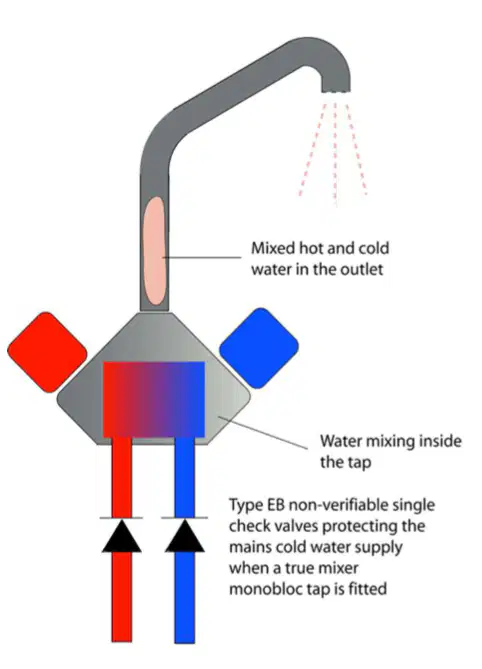
What do true mixer taps allow?
Mixing of hot and cold water inside the tap body
Only hot water flow
Only cold water flow
Separate flow of hot and cold water
Under which regulations is the cross connection between fluid category 1 and fluid category 2 not allowed?
Water Supply Regulations 1999
Environmental Protection Act 1990
Clean Water Act 1972
Health and Safety Regulations 2005
What type of device must protect both hot and cold supplies in true mixer taps?
EA/EB backflow prevention device
Pressure regulator
Water filter
Temperature gauge
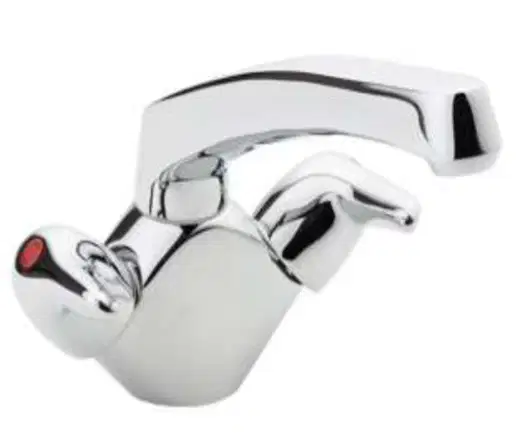
What is a key feature of bi-flow mixer taps?
They mix hot and cold water before it reaches the spout.
They require backflow protection.
They are essentially two taps within a single tap body.
They only supply cold water.
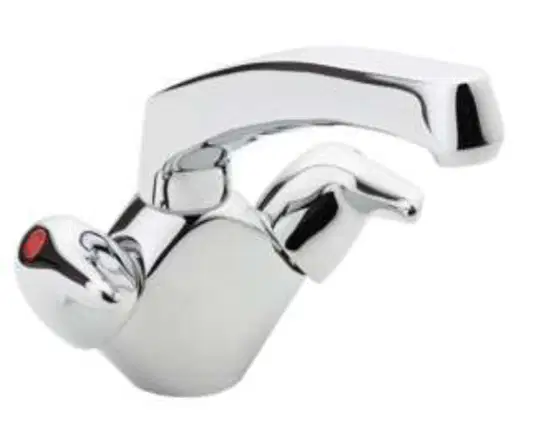
Why do bi-flow mixer taps not require backflow protection?
Because they mix water before it reaches the spout.
Because the hot and cold water supplies do not mix until they emerge from the spout.
Because they only supply hot water.
Because they have a built-in filter.
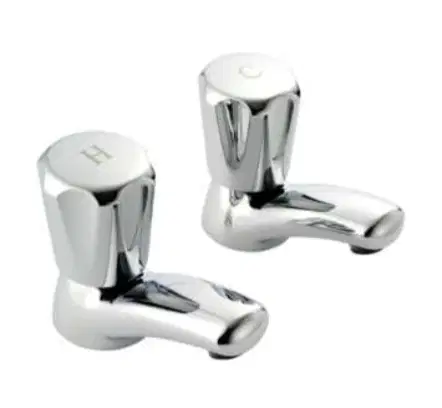
What sizes of male BSP tails are available for pillar taps?
1/4” and 1/2”
1/2” and 3/4”
3/4” and 1”
1” and 1 1/4”
What is the purpose of the AUK2 airgap in pillar taps?
To increase water pressure
To prevent water overflow
To provide an airgap at the appliance
To reduce water temperature
Where should the outlet of the tap be positioned in relation to the spill-over level of the appliance?
Lower than the spill-over level
At the same level as the spill-over
Higher than the spill-over level
Below the appliance
What is the primary design purpose of high neck pillar taps?
For use in garden hoses
For use on kitchen sinks
For use in swimming pools
For use in bathtubs
What fluid category is the AUK3 air gap suitable for?
Fluid category 1
Fluid category 3
Fluid category 5
Fluid category 7
Where is it mandatory to have a high neck pillar tap with an AUK3 air gap?
In residential bathrooms
In garden ponds
In health care facility sinks
In swimming pool showers
Where are bib taps predominantly used?
In residential kitchens
In conjunction with Belfast sinks and cleaners sinks
In outdoor gardens
In swimming pools
What is a common requirement for the use of bib taps in certain facilities?
AUK3 air gap
High water pressure
Low water temperature
Solar power
How are bib taps typically fixed to the wall?
With adhesive tape
Using back-plate elbows
With nails
Using magnets
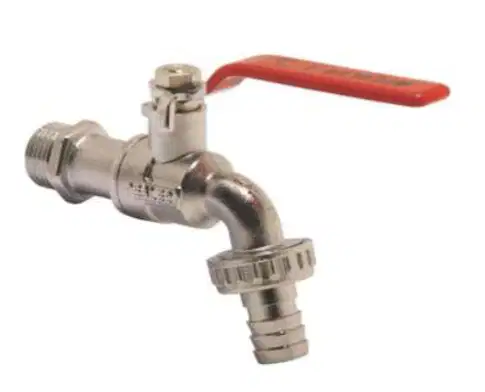
What is a key feature of hose union bib taps that allows for easy connection of a garden hose?
Smooth spout
Threaded hose connection
Built-in filter
Adjustable spout length
Hose union bib taps must be protected by which type of device?
Water softener
Pressure regulator
EC/ED backflow prevention device
Flow restrictor
What fluid category risk are hose union bib taps regarded as?
Fluid category 1
Fluid category 2
Fluid category 3
Fluid category 4
What are stop valves designed for?
Isolation of high/mains pressure cold water supplies
Use in hot water systems
Increasing water pressure
Filtering impurities from water
Why should stop valves not be used on low-pressure cold water supplies?
They increase water pressure
Their design restricts the smooth flow of water
They are too expensive
They are designed for hot water systems
Are stop taps suitable for hot water systems?
Yes, they are ideal
No, they are not suitable
Yes, but only in certain conditions
No, they are only for gas systems

