wayground logo

Free Printable Worksheets

Font size

S
M
L
XL
Worksheets

Government Final Exam 24-25

Total questions: 118

Worksheet time: 59mins

Name
Class
Date
1.
The US Constitution lays out how elections will be run.
a)
True
b)
False
2.

Who is responsible for overseeing the election process in a county?

a)

Clerk

b)

Auditor

c)

Sheriff

d)

Coroner

3.

Who is chosen through the electoral college system in the United States?

a)

the President

b)

Members of Congress

c)

State Legislators

d)

the Vice President

4.
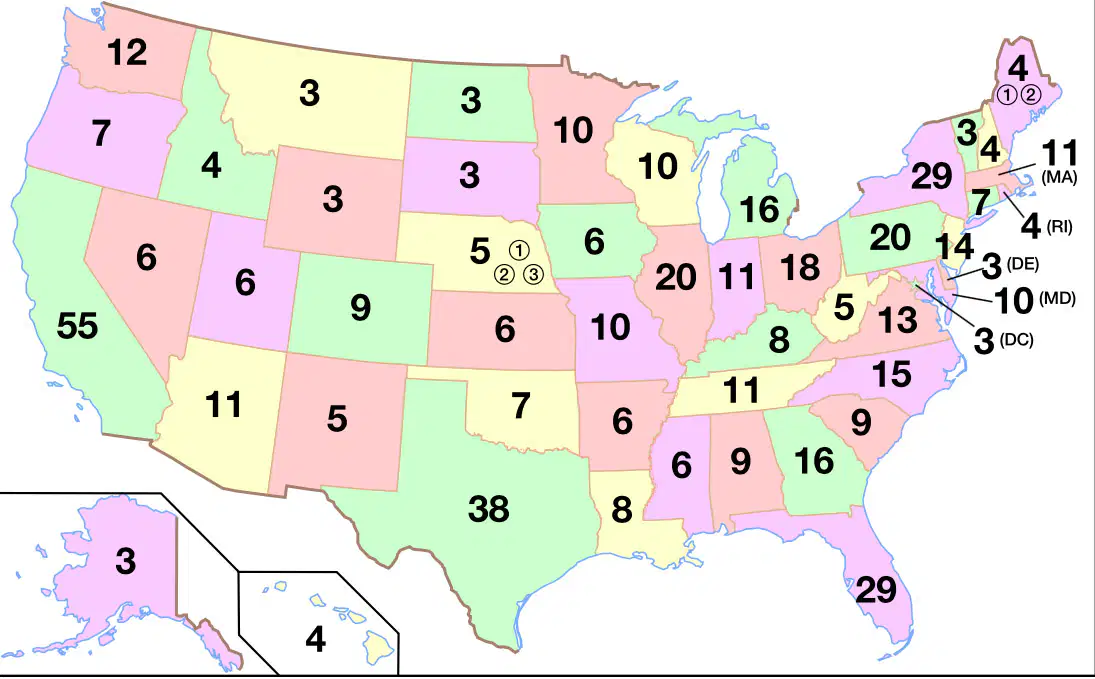
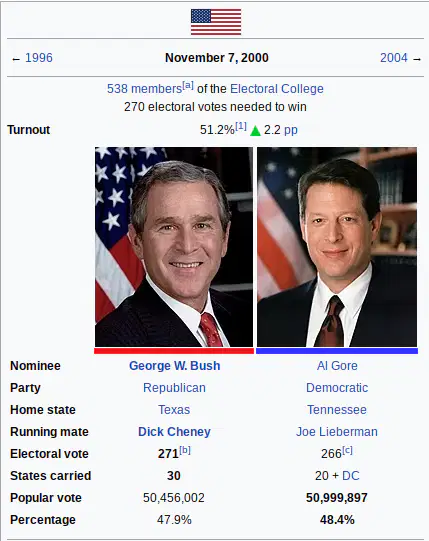
There are 538 electors in the electoral college. Barring anything out of the ordinary, how many must a candidate receive in order to become President?
a)
270
b)
269
c)
538
d)
312
5.
Who actually gets to decide who will become the next President?
a)
The American People
b)
The Electors
c)
Congress
d)
The Supreme Court
6.

Do states have uniform voting laws and regulations?

a)

Yes

b)

No

7.
The process by which a party decides who their candidate for office will be. (hint, it happens in the spring)
a)
General Election
b)
Primary Election
c)
Early Voting
d)
Absentee Voting
8.
What is the MINIMUM number of states needed to win the electoral college?
a)
9
b)
11
c)
12
d)
14
9.
IN GENERAL, which of the following statements tends to be true about people who consider themselves "Liberal"
a)
They believe that Liberty or Freedom are their most important rights
b)
They want the government to take a "hands off" approach to running the country
c)
They believe that the government can help solve problems
d)
They tend to identify as Republican
10.
Which of these has the greatest impact on your political ideology?
a)
Level of Education
b)
Gender
c)
Wealth/Poverty
d)
Family
11.
If you are "Conservative", that means that you are conservative on every issue.
a)
True
b)
False
12.
What is "straight ticket voting"?
a)
Where a person votes for President and leaves the rest of the ballot blank
b)
Where a voter selects a box that automatically allows them to vote only for one party
c)
Where a voter picks different parties based on what candidate they think is best.
d)
When a voter is forced to guess on a number of races because they didn't do any research
13.
Define political parties.
a)
Groups of people with SIMILAR ideas about how the government should be run
b)
Republicans and Democrats
c)
A person who is running for President of the United States
d)
A group of people who protest to try and get things changed.
14.
A political party's official stance on a single issue is called a(n) _______________
a)
platform
b)
plank
c)
amendment
d)
belief
15.
A political party's official stance on all issues combined is called a(n) _______________
a)
platform
b)
plank
c)
amendment
d)
belief
16.

The two primary political parties in the United States today are the Whigs and the Tories.

a)

True

b)

False

17.
Currently, the most popular 3rd party in Indiana and America in general is the ________________ Party
a)
Libertarian
b)
Green
c)
Constitution
d)
American Socialist
e)
Australian Motoring Enthusiasts
18.
An example of a single-issue party would be:
a)
Libertarian Party
b)
Anti-Immigrant Party
c)
Communist Party
d)
Republican Party
19.
The United States Constitution lays out the rules for how the government is supposed to operate, but the original Constitution leaves out which of the following things?
a)
The 3 Branches of Government
b)
It doesn't tell who is responsible for making laws
c)
It doesn't lay out citizens' rights and freedoms
d)
It doesn't allow for amendments
20.

Which of the following best describes the purpose of an amendment?

a)

To make a formal change or addition to a legal document.

b)

To summarize the main points of a legal document.

c)

To create a new legal document from scratch.

d)

To repeal an existing law entirely.

21.
Why did the Framers of the Constitution purposefully make it such a difficult process to add an amendment to the Constitution
a)
To ensure stability and broad consensus before making changes to the Constitution.
b)
To allow for quick changes in response to public opinion.
c)
To limit the power of the federal government.
d)
To make it easier for states to propose amendments.
22.
How many amendments are there in total?
a)
26
b)
27
c)
28
d)
29
23.
This amendment gives Americans the freedom of Speech
a)
1st Amendment
b)
2nd Amendment
c)
3rd Amendment
d)
4th Amendment
e)
5th Amendment
24.
This amendment gives Americans the freedom to vote no matter their race.
a)
15th Amendment
b)
1st Amendment
c)
2nd Amendment
d)
3rd Amendment
e)
4th Amendment
25.
This amendment gives Americans the right to not have their personal property searched illegally
a)
4th Amendment
b)
1st Amendment
c)
2nd Amendment
d)
3rd Amendment
e)
5th Amendment
26.
This amendment gives Americans the freedom to assemble
a)
1st Amendment
b)
2nd Amendment
c)
3rd Amendment
d)
4th Amendment
e)
5th Amendment
27.
This amendment allows Americans to vote at the age of 18.
a)
26th Amendment
b)
1st Amendment
c)
2nd Amendment
d)
3rd Amendment
e)
4th Amendment
28.
This amendment allows Americans to keep and use weapons.
a)
2nd Amendment
b)
1st Amendment
c)
3rd Amendment
d)
4th Amendment
e)
5th Amendment
29.
This amendment ensures that Americans cannot be put on trial twice for the same crime.
a)
5th Amendment
b)
1st Amendment
c)
2nd Amendment
d)
3rd Amendment
e)
4th Amendment
30.
This amendment says that the President cannot serve more than 2 terms in office.
a)
22nd Amendment
b)
1st Amendment
c)
2nd Amendment
d)
3rd Amendment
e)
4th Amendment
31.
This amendment gives Americans the right to practice whatever religion they choose.
a)
1st Amendment
b)
2nd Amendment
c)
3rd Amendment
d)
4th Amendment
e)
5th Amendment
32.
This amendment ensures that no cruel or unusual punishments will be handed down by a judge.
a)
8th Amendment
b)
1st Amendment
c)
2nd Amendment
d)
3rd Amendment
e)
4th Amendment
33.
This amendment ensures that the military cannot force American citizens to quarter soldiers
a)
3rd Amendment
b)
1st Amendment
c)
2nd Amendment
d)
4th Amendment
e)
5th Amendment
34.
This amendment gives American women the right to vote.
a)
19th Amendment
b)
1st Amendment
c)
2nd Amendment
d)
3rd Amendment
e)
4th Amendment
35.
This amendment gives Americans the right to not be slaves.
a)
13th Amendment
b)
1st Amendment
c)
2nd Amendment
d)
3rd Amendment
e)
4th Amendment
36.
This amendment gives Americans the freedom of press
a)
1st Amendment
b)
2nd Amendment
c)
3rd Amendment
d)
4th Amendment
e)
5th Amendment
37.
This amendment gives Americans the right to petition the government
a)
1st Amendment
b)
2nd Amendment
c)
3rd Amendment
d)
4th Amendment
e)
5th Amendment
38.
The First 10 Amendments to the Constitution are called the ____________________________
a)
Bill of Rights
b)
First Ten Articles
c)
Rights of the People
d)
Constitutional Amendments
39.

Who is in charge of creating state laws?

a)

Sheriff

b)

State Senator

c)

Treasurer

d)

City Council

40.
Which of these best describes the job of the County Commissioners?
a)
Supervising and maintaining public roads and properties
b)
Identifying the deceased
c)
Collecting Taxes
d)
Maintaining public properties like cemetaries
41.
In 2000, George Bush defeated Al Gore for President, despite the fact that Gore received over 500,000 more votes than Bush. Explain...
4 lines
42.
Think back to the NY Times article that we read about Political Polarization. How might social media be contributing to this phenomenon?
4 lines
43.
Which of these is the "best" definition of government based on what we have learned in class?
a)
A set of rules and institutions that people set up so that they can function together in a unified society
b)
How power is distributed in a society
c)
Society's plan for how a person will behave and act in the instances that they are confronted with lawbreaking.
d)
The ruling power of a country
44.
Define sovereignty
4 lines
45.
Which of these is the "best" definition of politics based on what we have learned in class?
a)
A set of rules and institutions that people set up so that they can function together in a unified society
b)
How power is distributed in a government
c)
Society's plan for how a person will behave and act in the instances that they are confronted with lawbreaking.
d)
The ruling power of a country
46.

Is it true that all nations have a form of governance?

a)

True

b)

False

47.

Most people think that voting is the only way in which people can participate in government, but as we saw in the notes and Crash Course video, the most important thing you can do is to (a)  

48.
Why is it important for a government to maintain social order within a society?
4 lines
49.

Explore the significance of governments providing public services. Why is it important for governments to offer services to the public, and how does this contribute to the overall welfare of society?

4 lines
50.
Which of the 4 purposes of government do speed limits fall under?
a)
Maintain Social Order
b)
Provide Public Services
c)
Provide for National Security and Common Defense
d)
Provide for and Control the Economic System
51.
Which of the 4 purposes of government is it when the government prints more money?
a)
Maintain Social Order
b)
Provide Public Services
c)
Provide for National Security and Common Defense
d)
Provide for and Control the Economic System
52.

What purpose of government is being fulfilled when laws are enacted to prohibit theft?

a)

Maintain Social Order

b)

Provide Public Services

c)

Provide for National Security and Common Defense

d)

Provide for and Control the Economic System

53.
Which of the 4 purposes of government is it when they provide a low income family with medical care?
a)
Maintain Social Order
b)
Provide Public Services
c)
Provide for National Security and Common Defense
d)
Provide for and Control the Economic System
54.

What purpose of government is being fulfilled when they establish a national defense system?

a)

Maintain Social Order

b)

Provide Public Services

c)

Provide for National Security and Common Defense

d)

Provide for and Control the Economic System

55.
Governments can be divided up into 2 systems. What are those 2 systems called?
4 lines
56.

In a (a)   the government is elected by the people.

57.

Which form of government typically involves a hereditary succession of leadership?

a)

Monarchy

b)

Oligarchy

c)

Federal Republic

d)

Autocracy

e)

Parliamentary Democracy

58.
What kind of government is rule by a few?
a)
Oligarchy
b)
Direct Democracy
c)
Republic
d)
Dictatorship
e)
Monarchy
59.
What kind of government is it where everyone votes on every issue?
a)
Direct Democracy
b)
Republic
c)
Dictatorship
d)
Monarchy
e)
Theocracy
60.
What kind of government is it where one person rules through force?
a)
Dictatorship
b)
Direct Democracy
c)
Republic
d)
Monarchy
e)
Theocracy
61.
What kind of government is it where the people elect officials to run the country?
a)
Republic
b)
Direct Democracy
c)
Dictatorship
d)
Monarchy
e)
Theocracy
62.
What kind of government is it where the government is run by a religious group?
a)
Theocracy
b)
Direct Democracy
c)
Republic
d)
Dictatorship
e)
Monarchy
63.
Which of these is NOT on of the 6 big ideas of the constitution?
a)
Democratic Government
b)
Popular Sovereignty
c)
Checks and Balances
d)
Separation of Power
e)
Federalism
64.
What would Eastern Hancock's version of a constitution be?
a)
School Handbook
b)
Joy, Connection, Growth, Success
c)
Mr. Barton and Dr. Philhower
d)
The School Board
65.

What does "popular sovereignty" mean?

4 lines
66.
How do checks and balances prevent one branch of government from becoming too powerful?
4 lines
67.

Discuss the main weaknesses of the Articles of Confederation?

4 lines
68.
What does it mean that we have bicameral legislature?
a)
It means that our government is made up of 2 parties: Republicans and Democrats
b)
It means that Congress is divided into 2 houses: The House and the Senate
c)
It means that power is split 2 ways: Between the President and Congress
d)
It means that we have elections every 2 years.
69.
Our founding fathers intended for ____________________ to be the most powerful part of our government.
a)
the legislative branch
b)
the executive branch
c)
the judicial branch
d)
the President
e)
the state governments
70.
How many representatives does each state get?
a)
1
b)
2
c)
Its based on population
d)
5
71.
Most bills originate in the Senate?
a)
True
b)
False
72.
Other than lawmaking, the other main job of the Senate is to confirm presidential appointments. (AKA they are the "watchdog" over the president)
a)
True
b)
False
73.
How long is a Senator's term in office?
a)
2 years
b)
4 years
c)
6 years
d)
8 years
74.
How long is a Representative's term in office?
a)
2 years
b)
4 years
c)
6 years
d)
8 years
75.
What is a filibuster?
4 lines
76.
Which house of Congress would a filibuster take place in?
a)
House of Representatives
b)
Senate
c)
President
d)
It can happen anywhere
77.

What is the frequency of conducting a national census in our country?

a)

Every 5 years

b)

Every 10 years

c)

Every 15 years

d)

Every 8 years

78.

What is the official term for counting the number of people in a country?

a)

Quorum

b)

Gerrymandering

c)

Census

d)

Redistricting

79.

What is it called when politicians draw congressional districts to benefit a particular political party.

(a)  

80.
What is a bill?
a)
A proposed law
b)
A law that has been vetoes
c)
A law that has been overturned over time
d)
A letter to a Congressman
81.
All laws start...
a)
In the Senate
b)
In the House of Representatives
c)
As an idea
d)
At the start/finish line
82.
The 2nd step of the lawmaking process is...
a)
To send the bill to a Congressional Committee
b)
Send the bill to the House/Senate floor to be voted on
c)
Send the bill to the other house to start the process over
d)
Send the bill to the President
83.
The 3rd Step of the lawmaking process is:
a)
send it to the House/Senate floor for a vote
b)
send it to the Congressional committee
c)
Send it to the other house
d)
A legislator comes up with an idea and writes a bill
84.
The 4th step of the lawmaking process is:
a)
Send the bill to the other house to repeat the process
b)
Send the bill to the House/Senate floor for a vote
c)
Send the bill to a Congressional Committee
d)
Send the bill to the President
85.
The 5th step of the lawmaking process is:
a)
Send it to the President
b)
Send it to the other house to repeat the process
c)
Send it to the Senate floor for a vote
d)
A legislator comes up with an idea
86.
Which of the following is NOT one of the President's options when a bill comes to him?
a)
Sign it
b)
Veto it
c)
Do Nothing
d)
Ask them to start the process over with different wording in the law
87.
What is the difference between a bill and a law?
4 lines
88.
What city does our federal legislative branch meet?
a)
Washington DC
b)
New York City
c)
Indianapolis
d)
Philadelphia
89.
What city does our state legislative branch meet?
a)
Washington DC
b)
New York City
c)
Indianapolis
d)
Philadelphia
90.

In order to run for President, you must be at least (a)   years old

91.
In order to run for President, you must have lived in the US for at least the last _____ years?
a)
5
b)
14
c)
21
d)
Your whole life
92.
You must be a natural born US citizen to run for President
a)
True
b)
False
93.
The President serves a ______ year term.
a)
2
b)
4
c)
6
d)
8
94.
The President does NOT have any "checks" over the judicial branch.
a)
True
b)
False
95.
What is the maximum number of terms that a President can serve?
a)
1
b)
2
c)
3
d)
Unlimited
96.

What is the group of advisors called that help the President execute his jobs?

(a)  

97.
Which of the following is NOT one of the President's Executive Cabinet Departments?
a)
Department of Energy
b)
Department of Homeland Security
c)
Department of Agriculture
d)
Department of Arts and Entertainment
98.
Explain what an executive order is
4 lines
99.
The power of the Presidency has increased over time
a)
True
b)
False
100.

Who is the head of the Executive Branch at the state level? (I'm looking for the job title, not the person's name)

(a)  

101.

What is the name of the sysem that we use for electing the President?

(a)  

102.
Which amendment limits the President to serving 2 terms?
a)
10
b)
22
c)
26
d)
27
103.

The main purpose of the Judicial Branch is to (a)   laws

104.

If you are found guilty in a lower court, you have the opportunity to (a)   to a higher court.

105.
What is the highest court in the land called?
a)
Superior Court
b)
Trial Court
c)
Supreme Court
d)
District Court
106.

What is the authority to interpret the Constitution and invalidate laws that conflict with it?

a)

Judicial Restraint

b)

Judicial Review

c)

Judicial Activism

d)

Appeal

107.

What is the total number of justices serving on the U.S. Supreme Court?

a)

7

b)

9

c)

11

d)

13

108.
True or False: The Supreme Court is looking for whether or not you a guilty.
a)
True
b)
False
109.

When the Supreme Court makes a decision it sets a (a)   for future cases.

110.

What is the duration of service for a Justice on the Supreme Court?

a)

2 years

b)

4 years

c)

6 years

d)

Lifetime appointment

111.

Which of the following is not a type of opinion issued by the Supreme Court?

a)

Majority Opinion

b)

Dissenting Opinion

c)

Concurring Opinion

d)

Subjective Opinion

112.

If you are caught stealing, you will be tried in a _______ court

a)

Criminal

b)

Civil

113.
The first court that you go to where they decide if you are guilty or innocent is the __________
a)
Trial Court
b)
Appeals Court
c)
Supreme Court
d)
Tax Court
114.
If you are found guilty in the first court, you have the opportunity to take it to the next level to see if they made a mistake. This 2nd court is called the ___________
a)
Trial Court
b)
Appeals Court
c)
Supreme Court
d)
Tax Court
115.
If the 2nd court still says that no mistake was made, then you might have the opportunity to appeal one final time to the ______________
a)
Trial Court
b)
Appeals Court
c)
Supreme Court
d)
Tax Court
116.
What does it mean when an appeals court "affirms" a case?
a)
They overturn the original decision
b)
They let the original decision stand
c)
They reverse the original decision
d)
They remand it back to the trial court and start over.
117.

Who is responsible for nominating a Justice to the Supreme Court?

a)

the President

b)

the Senate

c)

Congress

d)

the Chief Justice

118.

Who must confirm the appointment of a Supreme Court Justice?

a)

the House of Representatives

b)

the Senate

c)

the President

d)

the Supreme Court