
NEW
Font size
 Worksheets
CFB Biology U6 DNA and Mitosis
Total questions: 21
Worksheet time: 11mins
If the cell cyle is disrupted and cell division is uncontrolled and rapid (fast), this disease can occur.
Cancer
Heart Disease
Diabetes
Kidney Disease
If the cell cyle is disrupted and cell division is uncontrolled and rapid (fast), the cells will form a mass called a ____________.
Tumor
Nucleus
Mitosis
Chromosome

What is happening in the image?
Mitosis
DNA replication
Metaphase
Cytokinesis
In which phase does this occur?
Mitosis
S Phase
Metaphase
Anaphase

In which phase/s does the cell divide into two identical daughter cells?
Interphase
S Phase
Metaphase and Anaphase
Mitosis and Cytokinesis
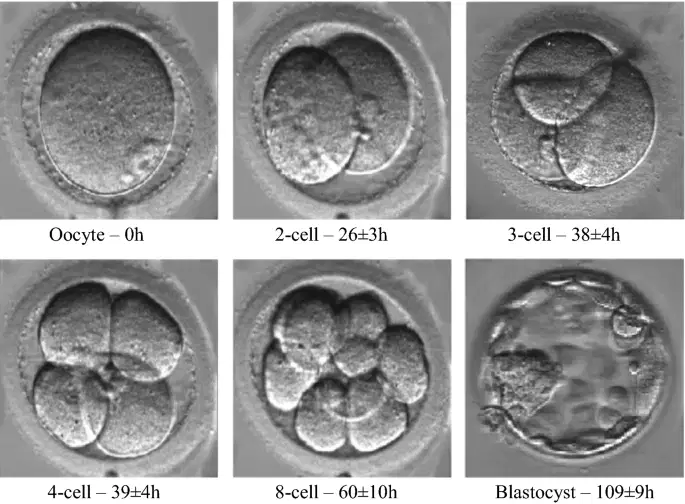
In an organism's infant stages, how is mitosis primarily helpful?
it makes the cells much larger so the organism is larger
it replaces damaged cells with new cells
it allows for specific tissues and organs to grow and develop
it replaces old cells with new cells

What is the base pair rule for DNA?
A-T
C-G
A-G
T-C
G-T
C-A
It varies with each individual
If the parent cell (original cell) has 26 chromosomes, how many would each daughter cell have after mitosis?
52
13
no way to tell
26

in which stage of the cell cycle will the DNA make a copy of itself?
M
S
G1
G2
What is cancer?
C. A type of viral infection
B. Uncontrolled growth of abnormal cells in the body
D. A condition caused by lack of sleep
A. A term for a large group of diseases caused by bacteria

DNA is the complete set of genetic instructions for an organism. How are the instructions determined?
by the sequence (order) of the base pairs
by how many of each base pair there are
by the size of the base pairs
by the percentage of the base pairs

Where in the cell does DNA replication occur?
ribosomes
cell membrane
nucleus
cytoplasm
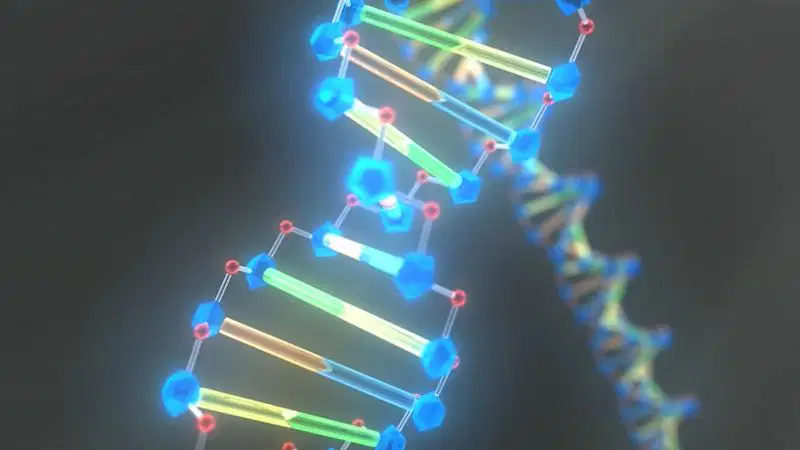
Find the complimentary bases for this DNA strand: TCG CAA
AGC GTT
AGC GAA
CGC ATT
AAC GAA

Mitosis results in ______.
two identical daughter cells
one identical daughter cell
four diverse daughter cells
multiple diverse daughter cells

DNA is made of repeating units of these.
amino acids
nucleotides
polysaccharides
mitosis chains
A is...
phosphate
pentose sugar
nitrogenous base
base pair
B is...
phosphate
pentose sugar
nitrogenous base
base pair
C is...
phosphate
pentose sugar
nitrogenous base
base pair

What is this? Where is it in the cell? What does it contain?
RNA, nucleus, proteins
DNA, ribosome, proteins
DNA, nucleus, genetic information
RNA, cell membrane, phospholipids

The diagram below represents the cell cycle. When cells leave the cell cycle, they exit during G phase and then enter G phase, a resting 1 0 period. Most normal cells can leave G phase and reenter the cell cycle at G phase before 0 1 entering S phase. Cancer cells are different because they cannot enter G phase and are likely 0 to do which of the following?
Fail to complete S phase
Mutate during G phase
Repeat the cell cycle continuously
Die after completing mitosis

