
 Worksheets
WLDGEO Midterm '24
Total questions: 128
Worksheet time: 1hrs 4mins
Name
Class
Date
1.
What large rainforest is in South America?
a)
The Amazon rainforest
b)
Congo rainforest
c)
Nile rainforest
2.
The largest island in Europe is
a)
Great Britain
b)
Iceland
c)
Sicily
d)
Denmark
3.
This country has lakes in the south that are connected by canals.
a)
Greenland
b)
England
c)
Denmark
d)
Sweden
4.
This region is known as the land of the Midnight Sun.
a)
Penines
b)
Scandinavia
c)
British Isles
d)
Emerald Isles
5.
Between Great Britain and ______ lies the choppy Irish Sea.
a)
Scotland
b)
Netherlands
c)
Spain
d)
Ireland
6.
This country is known to have one of the cleanest environments in the world.
a)
Norway
b)
Finland
c)
Denmark
d)
Ireland
7.
The waters in this country are geothermally heated to provide hot springs and energy for the country.
a)
Scotland
b)
Ireland
c)
Finland
d)
Iceland
8.
Which of the following is not a part of the United Kingdom?
a)
Scotland
b)
England
c)
Ireland
d)
Wales
9.
The United Kingdom is made up of England, Wales, _____, and Northern Ireland.
a)
Ireland
b)
Scotland
c)
Luxembourg
d)
Belgium
10.
Iceland sits astride the American and ______ tectonic plates.
a)
Iceland
b)
Arctic
c)
North Atlantic
d)
Eurasian
11.
Parts of Scandinavia lie above the ______, where the sun never sets for two months in the summer.
a)
North Pole
b)
Greenland
c)
Arctic Circle
d)
Iceland
12.
______ is very geologically active, with thirty volcano systems.
a)
Greenland
b)
Norway
c)
Sweden
d)
Iceland
13.
The ______ moderates the climates of Northern Europe.
a)
Gulf Stream
b)
Mediterranean Current
c)
North Atlantic Drift
d)
Siberian High
14.
Denmark has a strait called the ______ that effectively cuts the country into two parts.
a)
Great Belt
b)
Oresund Strait
c)
Kattegat
d)
Little Belt
15.
Tundra covers much of Iceland and ______.
a)
Greenland
b)
Sweden
c)
Finland
d)
Norway
16.
What is the largest city in Sweden?
a)
Malmo
b)
Stockholm
c)
Gothenburg
d)
Uppsala
17.
What geological process caused the formation of mountains in Northern Europe?
a)
Erosion of ancient glaciers
b)
Volcanic activity in the region
c)
Sedimentary deposition over time
d)
Tectonic plate collision and uplift
18.
The Andes Mountains form the longest mountain range in the world.
a)
True
b)
False
19.
Brazil is the only Portuguese-speaking country in the Western Hemisphere.
a)
True
b)
False
20.
The highest waterfall in the world is
a)
Angel Falls.
b)
Niagara Falls.
c)
Victoria Falls.
d)
Devil Falls.
21.
This country nationalized its industries in the 2000s.
a)
Paraguay
b)
Colombia
c)
Argentina
d)
Venezuela
22.
Roughly 60 percent of the world’s supply of this product comes from South America.
a)
cattle
b)
coffee
c)
rice
d)
wheat
23.
What is the second largest religious group in South America?
a)
unaffiliated
b)
Protestant Evangelical
c)
Roman Catholic
d)
Buddhist
24.
This term is used to describe Latin culture.
a)
multiactive
b)
high-context
c)
dull
d)
low-context
25.
This desert is considered the world’s driest desert.
a)
The Sahara Desert
b)
The Gobi Desert
c)
The Atacama Desert
d)
The Patagonian Desert
26.
What is a sudden illegal seizure of the power of government?
a)
democracy
b)
junta
c)
coup d'etat
d)
voting
27.
A major canal that connects the Atlantic and Pacific Oceans for shipping is located in this country.
a)
Honduras
b)
Panama
c)
Mexico
d)
Guatemala
28.
Someone who lives illegally in an unoccupied building or on unused land is known as a
a)
squatter.
b)
migrant.
c)
illegal.
d)
maquiladora.
29.
People of mixed Spanish and Indian ancestry are
a)
Creoles.
b)
mulattoes.
c)
Sandinistas.
d)
mestizos.
30.
Manufacturing plants in Northern Mexico that are owned by foreign companies are called
a)
mestizos.
b)
mulattoes.
c)
maquiladoras.
d)
Morenos.
31.
What city is the financial center of Mexico?
a)
Mexico City
b)
Mexicalli
c)
Tampico
d)
Acapulco
32.
Though Mexico has a high birthrate, it has a very meager growth rate and a negative net migration rate.
a)
True
b)
False
33.
Maquiladoras are of mixed Indian and Spanish descent.
a)
True
b)
False
34.
A squatter is someone who lives illegally in an unoccupied building or on unused land.
a)
True
b)
False
35.
Air contaminated with various chemicals produces acid rain.
a)
True
b)
False
36.
What is the most popular religion in Mexico?
a)
Catholicism
b)
Protestantism
c)
Hinduism
d)
Islam
37.
Narrow land bridge that connects two larger landmasses
a)
isthmus
b)
basin
c)
escarpment
d)
cliff
38.
_____ is a grain grown in Peru that is noted for its high vitamin content.
a)
Quinoa
b)
Cacao
c)
Barley
d)
Flax
39.
Process in which various chemicals in upper layers of soil are dissolved and carried to lower layers and, in some cases, to groundwater.
a)
trafficking
b)
multiactive
c)
leaching
d)
carnival
40.
What is the second largest religious group in South America?
a)
Protestant Evangelical
b)
Roman Catholic
c)
Muslim
d)
Buddhist
41.
Who introduced free-market reforms in Chile?
a)
Vicente Fox
b)
Augusto Pinochet
c)
Simón Bolívar
d)
Dom Pedro
42.
What two countries are responsible for colonizing South America?
a)
Spain and France
b)
Spain and Portugal
c)
Portugal and England
d)
England and France
43.
Which country in has the fastest growing economy in South America?
a)
Venezuela
b)
Peru
c)
Uruguay
d)
Brazil
44.
Who runs the executive branch in Canada’s political system?
a)
the premier
b)
the prime minister
c)
the pope
d)
the president
45.
Canada’s political divisions are called
a)
states.
b)
provinces.
c)
districts.
d)
regions.
46.
The point beyond which trees cannot grow is called
a)
the tundraline.
b)
the rockline.
c)
the timberline.
d)
the shrubline.
47.
Canada has a
a)
mixed economy.
b)
socialist economy.
c)
command economy.
d)
traditional economy.
48.
Who represents the British monarch in Parliament?
a)
the premier
b)
the president
c)
the governor general
d)
the prime minister
49.
What are the natural resources of Canada?
a)
Gold, oil, and timber
b)
Coal, diamonds, and wheat
c)
Silver, copper, and rice
d)
Iron, gas, and cotton
50.
How many physical regions does Canada have?
a)
Five
b)
Seven
c)
Ten
d)
Three
51.
Which ocean is located to the north of Canada?
a)
Atlantic Ocean
b)
Pacific Ocean
c)
Indian Ocean
d)
Arctic Ocean
52.
What is the capital city of Canada?
a)
Toronto
b)
Vancouver
c)
Ottawa
d)
Montreal
53.
What percentage of the world's fresh water does Canada hold?
a)
10 percent
b)
20 percent
c)
30 percent
d)
40 percent
54.
Who pays the doctors in Canada?
a)
the government
b)
the patient
c)
the insurance company
d)
no one
55.
Which mountain range forms the western continental divide in the United States?
a)
Appalachian Mountains
b)
Sierra Nevada
c)
Rocky Mountains
d)
Cascade Range
56.
What is the longest river in the United States?
a)
Mississippi River
b)
Colorado River
c)
Missouri River
d)
Ohio River
57.
What is the primary cause of the diverse landforms in the United States?
a)
Human activity
b)
Plate tectonics
c)
Deforestation
d)
Global warming
58.
What is an aquifer?
a)
A type of mountain range
b)
A large body of surface water
c)
An underground layer of water-bearing rock or sediment
d)
A type of weather pattern
59.
Where is the Great Basin located?
a)
Between the Rocky Mountains and the Sierra Nevada
b)
East of the Appalachian Mountains
c)
Along the Gulf Coast
d)
In the center of the Great Plains
60.
Which of the following is a characteristic of the Great Plains?
a)
High mountain peaks
b)
Dense forests
c)
Vast grasslands
d)
Numerous large lakes
61.
Which region of the United States is known for its volcanic activity?
a)
The Coastal Plains
b)
The Piedmont
c)
The Pacific Mountain Ranges
d)
The Central Plains
62.
How does the United States manage its natural resources?
a)
By prohibiting all resource extraction
b)
By trading excess resources for those it lacks
c)
By importing all necessary resources
d)
By relying solely on renewable resources
63.
What formed the Pacific, Rocky, and Appalachian mountain ranges?
a)
erosion
b)
volcanoes
c)
eutrophication
d)
plate tectonics
64.
What term refers to an underground layer of water-bearing rock or sediment from which groundwater can be extracted?
a)
headwater
b)
delta
c)
aquifer
d)
tributary
65.
About 82 percent of Americans live in
a)
rural areas.
b)
suburbs.
c)
homeless shelters.
d)
urban areas.
66.
Which of the following is not one of America’s core values?
a)
unity
b)
freedom
c)
individualism
d)
equality
67.
The United States government is a federal republic rather than a pure democracy.
a)
True
b)
False
68.
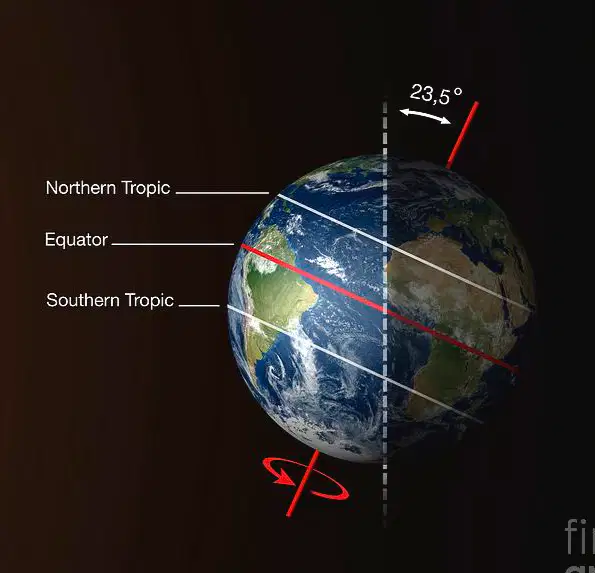
The Earth's _______ is an imaginary line that goes from the North Pole to the South Pole.
a)
axis
b)
orbit
c)
solar eclipse
69.
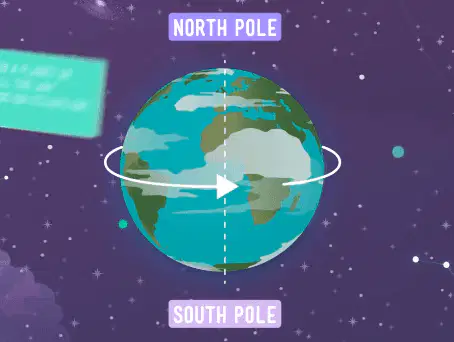
The spinning movement of the Earth about its axis is called the Earth's _____
a)
rotation
b)
revolution
c)
axial tilt
d)
orbit
70.
The condition of the atmosphere at a given time and place
a)
weather
b)
orographic
c)
climate
d)
front
71.
Explain how the Coriolis effect influences weather patterns.
a)
It causes winds to blow in a straight line
b)
It deflects the path of winds and ocean currents
c)
It has no impact on weather patterns
d)
It only affects weather at the equator
72.
What is any large region where distinct populations of plants and animals are found living together called?
a)
Climate
b)
Biome
c)
Weather
d)
Latitude
73.
The point at which the length of day and night are approximately equal all over the planet for an instant is known as the
a)
rotation.
b)
revolution.
c)
solstice.
d)
equinox.
74.
How does language primarily contribute to cultural transmission?
a)
Through written records
b)
As the main vehicle for transmitting culture
c)
By facilitating international trade
d)
Through non-verbal communication
75.
How does population distribution differ from population density?
a)
Distribution focuses on patterns, density on numbers
b)
Distribution is rural, density is urban
c)
Distribution is national, density is regional
d)
They are synonymous terms
76.
Which economic system attempts to blend free-market principles with tight government regulations?
a)
Pure capitalism
b)
Socialism
c)
Mixed economy
d)
Communism
77.
In the context of international trade, what do 'exports' specifically refer to?
a)
Goods imported from other countries
b)
Services provided to foreign nations
c)
Primary and secondary goods shipped to other countries
d)
Financial investments in foreign markets
78.
How do high-context cultures primarily communicate?
a)
Through explicit verbal messages
b)
Relying on implied and nonverbal cues
c)
Using written documents
d)
Via technological means
79.
What term describes a culture that exhibits both high and low context characteristics?
a)
Hybrid culture
b)
Multi-active culture
c)
Fusion culture
d)
Bi-contextual culture
80.
According to the text, what is considered the foundation of society?
a)
Government
b)
Education system
c)
Economy
d)
The family
81.
What field of study focuses on human populations?
a)
Anthropology
b)
Sociology
c)
Demography
d)
Geography
82.
How can one country influence its neighboring countries, according to the text?
a)
Through cultural exchange, economic sanctions, and diplomacy
b)
By foreign aid, foreign trade, and threats of war
c)
Via social media, tourism, and educational programs
d)
Through environmental policies, technological advancements, and sports
83.
What is the most important form of communication in low-context cultures?
a)
Body language
b)
Verbal communication (words)
c)
Written communication
d)
Symbolic gestures
84.
What is diplomacy in the context of international relations?
a)
The art of negotiating agreements between nations
b)
The process of declaring war
c)
The study of foreign cultures
d)
The management of domestic policies
85.
Which language family is described as the most prominent in the text?
a)
Sino-Tibetan
b)
Afro-Asiatic
c)
Indo-European
d)
Austro-Asiatic
86.
What field of study examines how individuals and countries make decisions about resource use?
a)
Sociology
b)
Psychology
c)
Political Science
d)
Economics
87.
In economic terms, what does 'capital' refer to?
a)
Human labor force
b)
Government regulations
c)
Money and equipment for business operations
d)
Natural resources
88.
What term describes a large group with a common history, language, and strong sense of identity?
a)
State
b)
Country
c)
Society
d)
Nation
89.
According to the text, what is the primary vehicle of globalization?
a)
Government policies
b)
International trade
c)
Technology
d)
Cultural exchange
90.
What approach is suggested as best for balancing environmental preservation and resource use?
a)
Activist group control
b)
Central government control
c)
Democratic control
d)
Local government control
91.
Which factor has the greatest influence on a region's climate?
a)
Latitude
b)
Longitude
c)
Elevation
d)
Ocean currents
92.
What role do ocean currents play in regulating global climate?
a)
They transport heat from equatorial regions to higher latitudes
b)
They create areas of high and low atmospheric pressure
c)
They determine the direction of prevailing winds
d)
They control the Earth's rotational speed
93.
How does the hydrologic cycle contribute to weather patterns?
a)
It regulates the distribution of water in various forms across the planet
b)
It determines the Earth's rotational axis
c)
It controls the speed of ocean currents
d)
It influences the Earth's revolution around the sun
94.
How do air masses contribute to weather patterns?
a)
They create boundaries where different weather conditions meet
b)
They determine the Earth's rotational speed
c)
They control the intensity of solar radiation
d)
They regulate the planet's magnetic field
95.
What is the relationship between latitude and the amount of solar energy received?
a)
Lower latitudes receive more direct sunlight year-round
b)
Higher latitudes receive more consistent sunlight
c)
Latitude has no impact on solar energy received
d)
All latitudes receive equal amounts of solar energy annually
96.
How does the Earth's revolution affect climate patterns?
a)
It causes seasonal variations in temperature and daylight
b)
It alters the planet's rotational axis
c)
It changes the direction of ocean currents
d)
It impacts the strength of the Coriolis effect
97.
What role do biomes play in the Earth's climate system?
a)
They represent distinct ecological communities adapted to specific climatic conditions
b)
They control global wind patterns
c)
They determine the Earth's axial tilt
d)
They regulate ocean current directions
98.
How does atmospheric pressure influence weather patterns?
a)
It creates areas of rising and sinking air, affecting wind and precipitation
b)
It determines the Earth's rotational speed
c)
It controls the intensity of solar radiation
d)
It regulates the planet's magnetic field
99.
What is the significance of the dew point in weather forecasting?
a)
It indicates when water vapor will condense into liquid water
b)
It determines the direction of prevailing winds
c)
It controls the Earth's axial tilt
d)
It regulates ocean current temperatures
100.
What is the primary difference between weather and climate?
a)
Climate represents long-term average conditions, while weather describes short-term variations
b)
Weather is global, while climate is local
c)
Climate changes rapidly, while weather remains constant
d)
Weather affects large areas, while climate impacts small regions
101.
How does orographic precipitation form?
a)
When air is forced to rise over mountains, cooling and condensing
b)
When cold and warm fronts collide
c)
When ocean currents meet land masses
d)
When the Earth's axis tilts towards the sun
102.
What is the primary cause of the earth's seasons?
a)
The tilt of the Earth's axis as it revolves around the sun
b)
Variations in the Earth's distance from the sun
c)
Changes in the Earth's rotational speed
d)
Fluctuations in solar activity
103.
What is the significance of the 23.5° tilt of the Earth's axis?
a)
It causes seasonal variations in solar energy received at different latitudes
b)
It determines the speed of the Earth's rotation
c)
It controls the direction of ocean currents
d)
It regulates the strength of the planet's magnetic field
104.
The prime meridian passes through which location?
a)
Paris, France
b)
Greenwich, England
c)
New York, USA
d)
Cairo, Egypt
105.
The word geography means "written description".
a)
True
b)
False
106.
What is the imaginary line that divides the earth into Northern and Southern Hemispheres?
a)
Prime Meridian
b)
Equator
c)
Tropic of Capricorn
d)
International Date Line
107.
What imaginary lines run east and west around the earth?
a)
Latitude
b)
Longitude
c)
Equator
d)
Meridians
108.
What imaginary lines run north and south around the earth?
a)
Latitude
b)
Longitude
c)
Equator
d)
Tropics
109.
What verse is cited when discussing the Creation Mandate?
a)
Genesis 1:31
b)
Genesis 1:22
c)
Genesis 1:28
d)
Genesis 2:12
110.
The customs and habits of a group of people are known as what?
a)
Culture
b)
Society
c)
Environment
d)
Geography
111.
The two main branches of geography are which of the following?
a)
Cultural and physical geography
b)
Human and physical geography
c)
Regional and systematic geography
d)
Urban and rural geography
112.
What type of map is most useful for showing wide regions?
a)
Physical map
b)
Thematic map
c)
Planar map
d)
Cylindrical map
113.
To determine the distance between two places on a map, you should look for the map’s what?
a)
Legend
b)
Scale
c)
Key
d)
Compass
114.
What term refers to the height and depth of land features?
a)
Geography
b)
Relief
c)
Projection
d)
Altitude
115.
Lines that separate colors on a relief map are known as what?
a)
Contour lines
b)
Latitude lines
c)
Longitude lines
d)
Meridians
116.
What box explains what various symbols on a map stand for?
a)
Title
b)
Scale
c)
Legend
d)
Key
117.
The twelve strips that cover a globe are known as what?
a)
Projections
b)
Parallels
c)
Goress
d)
Sections
118.
The view that all cultures are equally good is known as what?
a)
Determinism
b)
Multiculturalism
c)
Environmentalism
d)
Ethnocentrism
119.
Which of the following is NOT a type of map distortion?
a)
Area
b)
Distance
c)
Grid
d)
Shape
120.
What is the term for the method used to show the earth’s round surface on a flat map?
a)
Map projection
b)
Time zone
c)
Thematic map
d)
Great circle
121.
The three layers of the earth’s surface are the crust, the outer core, and the inner core. True or False?
a)
True
b)
False
122.
What term refers to deep cracks in the earth’s surface where two pieces of land have moved in different directions?
a)
Fissures
b)
Faults
c)
Craters
d)
Rifts
123.
What term is used for rivers that “feed” other rivers?
a)
Rivers
b)
Tributaries
c)
Estuaries
d)
Confluences
124.
What term refers to the breakdown of rocks by water, plant roots, and temperature changes?
a)
Erosion
b)
Weathering
c)
Decomposition
d)
Sedimentation
125.
What process created the fjords?
a)
Erosion
b)
Glaciation
c)
Sedimentation
d)
Weathering
126.
What is the molten rock in the earth’s mantle called?
a)
Lava
b)
Magma
c)
Rock
d)
Sediment
127.
What is the process by which the relatively thin and dense oceanic crust slides down and under the more massive continental crust?
a)
Erosion
b)
Subduction
c)
Drift
d)
Faulting
128.
What is the natural removal of small pieces of rock or soil called?
a)
Erosion
b)
Weathering
c)
Deposition
d)
Sedimentation
100 %

