
 Worksheets
Fundamentals of Problem Solving EXAM
Total questions: 45
Worksheet time: 23mins
What is the first step in generating solutions to a problem?
Gather a team to brainstorm ideas.
Analyze the outcomes of previous solutions.
Define the problem clearly.
Identify potential solutions immediately.
Which technique is commonly used for brainstorming solutions?
SWOT analysis
Fishbone diagram
Mind mapping
Brainstorming sessions
What is the importance of considering multiple perspectives when generating solutions?
It limits the range of possible solutions.
It enhances creativity and leads to more effective solutions.
It reduces the time spent on problem-solving.
It simplifies the decision-making process.
How can you prioritize solutions when evaluating alternatives?
Identify criteria, assign weights, evaluate alternatives, calculate scores, and rank them.
Ignore feedback from stakeholders
Focus only on the most expensive option
Choose randomly without criteria
What criteria should be used to evaluate the feasibility of a solution?
Brand recognition
User interface design
Technical viability, cost-effectiveness, time constraints, resource availability, stakeholder acceptance, alignment with organizational goals.
Market popularity
What is a SWOT analysis and how is it used in evaluating alternatives?
A SWOT analysis focuses solely on market trends and consumer behavior.
A SWOT analysis is a tool for evaluating Strengths, Weaknesses, Opportunities, and Threats to inform decision-making.
A SWOT analysis is a method for calculating return on investment.
A SWOT analysis is a financial report used to track profits and losses.
What role does creativity play in generating solutions?
Creativity hinders the development of solutions.
Creativity is irrelevant in problem-solving processes.
Creativity only complicates the solution generation.
Creativity plays a crucial role in generating innovative and effective solutions.
What is the significance of stakeholder feedback in the solution implementation process?
Stakeholder feedback ensures solutions meet needs, identifies issues early, and enhances collaboration.
Stakeholder feedback is irrelevant to solution success.
Stakeholder feedback is only necessary after implementation.
Feedback from stakeholders only complicates the process.
What are the key components of a successful implementation plan?
Team building activities
Budget allocation only
Key components include objectives, resources, timelines, responsibilities, and evaluation metrics.
Market analysis reports
How can you ensure that all team members are aligned during implementation?
Focus solely on individual tasks without collaboration.
Implement a strict hierarchy without feedback.
Establish clear communication and regular check-ins.
Limit communication to only written updates.
What methods can be used to test a solution after implementation?
Feature brainstorming
Documentation analysis
Code review
Unit testing, integration testing, system testing, user acceptance testing, performance testing, regression testing.
Why is it important to validate a solution before full-scale implementation?
It is unnecessary to validate a solution before implementation.
It is important to validate a solution to identify issues and ensure effectiveness before full-scale implementation.
Full-scale implementation guarantees success without validation.
Validation is only needed for large projects, not small ones.
What are common pitfalls to avoid during the testing phase?
Testing only the happy path
Relying solely on automated tests
Inadequate test coverage, lack of clear requirements, insufficient time for testing, ignoring edge cases, poor communication, and failing to document results.
Overly detailed test cases
How can you measure the success of a solution after it has been implemented?
Measuring success through employee satisfaction surveys only
Success can be measured through KPIs, user feedback, and data analysis.
Evaluating success based on the number of meetings held
Determining success by the amount of time spent on the project
What is the role of continuous improvement in problem solving?
Continuous improvement is only necessary for large organizations.
Continuous improvement eliminates the need for problem solving altogether.
Continuous improvement focuses solely on reducing costs.
Continuous improvement enhances problem solving by promoting ongoing evaluation and incremental enhancements.
What is the first step in problem solving?
Analyze the outcomes of solutions.
Define the problem.
Identify potential solutions.
Implement a solution immediately.
How can you effectively identify a problem?
Ignore the symptoms and jump to conclusions
Rely solely on past experiences without context
Ask leading questions to confirm biases
Gather information, observe symptoms, ask clarifying questions, and analyze context.
What are some common signs that indicate a problem exists?
Unusual behavior, persistent issues, lack of communication, missed deadlines, decreased performance.
Increased collaboration
Improved morale
Frequent meetings
Why is it important to define the problem clearly?
A clear problem definition is only relevant for large organizations.
Defining the problem clearly is unnecessary for effective solutions.
It is important to define the problem clearly to confuse the team.
It is important to define the problem clearly to ensure a common understanding and to develop effective solutions.
What techniques can be used to analyze a problem?
Time management techniques
Customer feedback analysis
Data entry errors
Root cause analysis, SWOT analysis, brainstorming, 5 Whys, fishbone diagrams.
How do you differentiate between a symptom and a root cause?
A symptom indicates a problem; a root cause is the underlying reason for that problem.
A symptom can be ignored; a root cause must be addressed immediately.
A symptom is a temporary condition; a root cause is a permanent state.
A symptom is always a physical ailment; a root cause is a mental issue.
What role does gathering information play in problem identification?
Gathering information is crucial for accurately identifying the nature and scope of a problem.
Information gathering complicates the problem-solving process.
Identifying problems does not require any information.
Gathering information is irrelevant to problem identification.
What is a requirement in the context of problem solving?
A suggestion that may help in solving a problem.
An optional step in the problem-solving process.
A tool used to analyze the problem.
A condition or criterion that must be met to solve a problem.
How can you prioritize requirements when analyzing a problem?
Ignore stakeholder feedback and focus on personal preferences.
Assess importance, feasibility, and urgency; use prioritization techniques.
Prioritize all requirements equally without considering their impact.
Select requirements based solely on team members' opinions.
What methods can be used to validate requirements?
Methods to validate requirements include reviews, inspections, prototyping, testing, and traceability analysis.
User feedback sessions
Market analysis and research
Surveys and questionnaires
Why is stakeholder input important in analyzing requirements?
Stakeholder input is only necessary for budget considerations.
Stakeholder input is irrelevant as it complicates the requirements process.
Stakeholder input is important because it ensures that all needs and expectations are considered, leading to better alignment and quality of requirements.
Stakeholder input is important solely for compliance with regulations.
What is the impact of poorly defined requirements on problem solving?
Clear requirements lead to wasted resources and misaligned objectives.
Poorly defined requirements hinder effective problem solving by causing miscommunication, wasted resources, and misaligned objectives.
Poorly defined requirements improve communication and clarity.
Well-defined requirements always guarantee successful problem solving.
How can brainstorming help in identifying problems?
Brainstorming is a solitary activity that limits input from others.
Brainstorming is only effective for generating new ideas, not for identifying problems.
Brainstorming helps in identifying problems by fostering open dialogue and diverse perspectives, revealing underlying issues.
Brainstorming leads to confusion and does not clarify issues.
What tools can assist in analyzing the requirements of a problem?
Requirement gathering techniques, modeling tools, and software tools.
Coding standards and practices
Data visualization techniques
Project management frameworks
How does critical thinking contribute to effective problem solving?
Critical thinking contributes to effective problem solving by promoting analysis, evaluation, and consideration of diverse perspectives.
Critical thinking leads to impulsive decision-making.
Critical thinking is primarily focused on memorizing facts.
Critical thinking discourages collaboration among team members.
#include <iostream.h>
Comment
Preprocessor directives
Standard header file
Main Function
Block of Function
The C++ standard library traditionally declare their standard functions in header files
Comment
Preprocessor directives
Standard header file
Main Function
Block of Function
int main ()
Comment
Preprocessor directives
Standard header file
Main Function
Block of Function
{
}
Comment
Preprocessor directives
Standard header file
Main Function
Block of Function
cout<<"please enter the radius for the circle : ";
Identifiers
Reserved word
statement
if / while / do
Identifiers
Reserved word
statement
!=
Equal to
not equal to
>
less than or equal
greater than
greater than or equal
less than
>=
less than or equal
greater than
greater than or equal
less than
<
less than or equal
greater than
greater than or equal
less than
<=
less than or equal
greater than
greater than or equal
less than
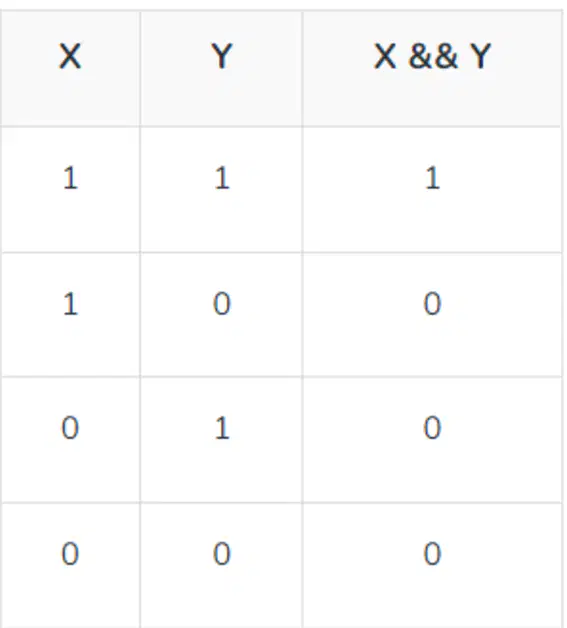
The logical AND operator (&&) returns true only if both operands are ______
return
zero
false
non-zero

The logical OR operator returns true if any one of the operands is ______
return
zero
false
non-zero
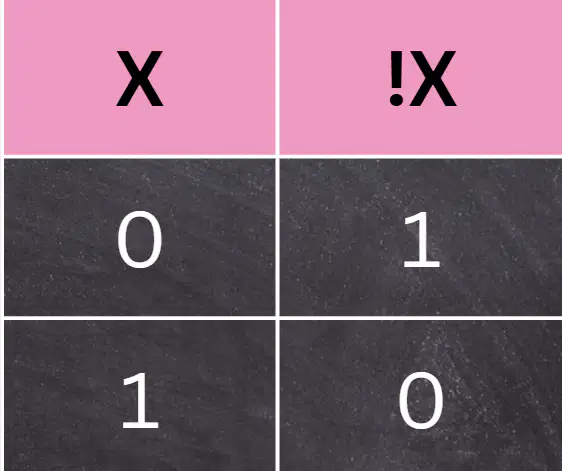
If the given operand is true then the logical NOT operator will make it ______
return
zero
false
non-zero
// finding area of circle
Comment
Preprocessor directives
Standard header file
Main Function
Block of Function

