
 Worksheets
1st Semester 5th Grade Science Review
Total questions: 108
Worksheet time: 9hrs 0mins
What is melting?
a change from liquid to solid
a change of smell
a change from solid to liquid
a change of amount of solute
Dissolving requires heat.
true
false
What things can be dissolved?


What is the definition of dissolve?
A phase of matter with a definite shape and volume
Describes how hot or cold something is
A phase of matter that has a definite volume and takes the shape of its container
Anything that has mass and takes up space
When a substance is evenly distributed throughout another substance
Which of the following statements describes how solids interact with water? Select all that apply.
All solids will dissolve in water
Some solids will dissolve in water and others will not
Temperature affects how quickly a solid dissolves in water
The amount of water in a glass affects how quickly a solid will dissolve
Which of the following liquids would NOT mix with water?
Vegetable oil
Food coloring
Maple syrup
Vinegar
The hotter the water, the _______ a solid will dissolve.
faster
slower


Which process would you use to separate a solid that has dissolved in a liquid solution. The solution is heated or left uncovered until the liquid turns to gas and leave the solid behind.
Evaporation
Magnetic Attraction
Filtration
Floatation
Sifting
Which of the following is an example of a physical change?
Water freezing into ice.
A piece of wood burning.
A toy car rusting.
Zinc producing hydrogen gas when mixed with water.
What does it mean when there is a physical change?
Matter has changed from one substance into another.
Matter has changed on the molecular level.
A new substance has been formed.
Matter has changed size, shape or form.
What is melting?
a change from liquid to solid
a change of smell
a change from solid to liquid
a change of amount of solute
What causes objects to melt?
cold
heat
sound
stirring
Dissolving requires heat.
true
false
Butter on hot mashed potatoes is an example of:
dissolving
melting
boiling
freezing
Sugar in iced tea melts
true
false
What things can be dissolved?
What is the definition of dissolve?
A phase of matter with a definite shape and volume
Describes how hot or cold something is
A phase of matter that has a definite volume and takes the shape of its container
Anything that has mass and takes up space
When a substance is evenly distributed throughout another substance
What is the definition of solid?
A phase of matter with a definite shape and volume
Describes how hot or cold something is
A phase of matter that has a definite volume and takes the shape of its container
Anything that has mass and takes up space
When a substance is evenly distributed throughout another substance
What is the definition of liquid?
A phase of matter with a definite shape and volume
Describes how hot or cold something is
A phase of matter that has a definite volume and takes the shape of its container
Anything that has mass and takes up space
When a substance is evenly distributed throughout another substance
What is the definition of temperature?
A phase of matter with a definite shape and volume
Describes how hot or cold something is
A phase of matter that has a definite volume and takes the shape of its container
Anything that has mass and takes up space
When a substance is evenly distributed throughout another substance
Which of the following would dissolve in water? Select all that apply.
Metal fork
Candy Cane
Salt
Wooden Block
A sugar cube would dissolve the fastest in which of the following glasses?
A glass of room temperature water
A glass of ice water
A glass of boiling water
A sugar cube would dissolve in the same amount of time in any of the glasses
Which of the following statements describes how solids interact with water? Select all that apply.
All solids will dissolve in water
Some solids will dissolve in water and others will not
Temperature affects how quickly a solid dissolves in water
The amount of water in a glass affects how quickly a solid will dissolve
Which of the following liquids would NOT mix with water?
Vegetable oil
Food coloring
Maple syrup
Vinegar
The hotter the water, the _______ a solid will dissolve.
faster
slower

Where on the graph are phase changes taking place?
1
2
3
4
5

Is the substance gaining or losing energy?
Gaining
Losing
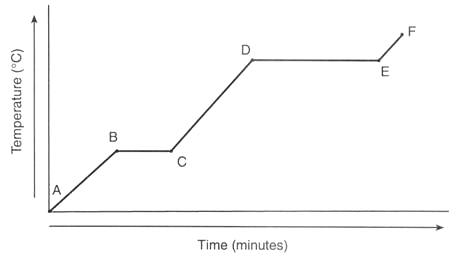
What is happening to the particles in the substance between points D and E?
Melting
Freezing
Vaporizing
Sublimating
What is happening to the particles in the substance between points A and B?
Melting
Freezing
Speeding Up
Slowing Down

You decide to blow bubbles (soapy WATER) outside on a snowy day. Which answer BEST explains what has happened to the molecule ARRANGEMENT of the WATER?
The WATER molecule ARRANGEMENT has become CLOSER.
The WATER molecule ARRANGEMENT has become FARTHER APART, forming rings.
The WATER molecule ARRANGEMENT has become CLOSER, forming squares.

You have decided to start sealing all your letters with glittery wax because you are so "cool". Which answer BEST explains what you must do to make the SOLID wax a LIQUID?
In order to make the SOLID wax a LIQUID you must ADD HEAT ENERGY by putting the wax in the FREEZER.
In order to make the SOLID wax a LIQUID you must ADD HEAT ENERGY by putting the wax over a FLAME.
In order to make the SOLID wax a LIQUID you must REMOVE HEAT ENERGY by putting the wax in an OVEN.

You have dropped your popsicle and are watching it become a LIQUID. Which answer BEST explains what PHASE CHANGE has occurred AND how the molecule MOVEMENT has changed?
The PHASE CHANGE that has occurred is CONDENSATION and the molecule MOVEMENT has become FASTER.
The PHASE CHANGE that has occurred is EVAPORATION and the molecule MOVEMENT has become SLOWER.
The PHASE CHANGE that has occurred is MELTNG and the molecule MOVEMENT has become FASTER.

You are drinking a cold drink on a hot day when you notice LIQUID water has collected on the can. Which answer BEST explains what PHASE CHANGE has occurred AND how the molecule ARRANGEMENT has changed?
The PHASE CHANGE that has occurred is CONDENSATION and the molecule ARRANGEMENT has become CLOSER.
The PHASE CHANGE that has occurred is FREEZING and the molecule ARRANGEMENT has become CLOSER.
The PHASE CHANGE that has occurred is EVAPORATION and the molecule MOVEMENT has become FASTER.

You are relaxing on some grass when you notice LIQUID water droplets have begun to seemingly disappear off the grass leaves. Which answer BEST explains what PHASE CHANGE has occurred AND how the molecule ARRANGEMENT has changed?
The PHASE CHANGE that has occurred is EVAPORATION and the molecule ARRANGEMENT has become FARTHER APART.
The PHASE CHANGE that has occurred is FREEZING and the molecule ARRANGEMENT has become CLOSER.
The PHASE CHANGE that has occurred is MELTING and the molecule MOVEMENT has become FASTER.

You watch your science teacher put a balloon in a bowl of liquid nitrogen and see the balloon has shrunk like a raisin. Which answer BEST explains how you know if HEAT ENERGY been ADDED or REMOVED.
HEAT ENERGY has been ADDED. I know this because the balloon has become LARGER meaning the molecule ARRANGEMENT is FARTHER APART.
HEAT ENERGY has been REMOVED. I know this because the balloon has become SMALLER meaning the molecule ARRANGEMENT is CLOSER.
HEAT ENERGY has actually stayed the SAME. I know this because the balloon has NOT CHANGED meaning the molecule ARRANGEMENT is also NOT CHANGED.

Your teacher asks your group to discuss HOW molecule MOVEMENT and molecule ARRANGEMENT in a GAS is DIFFERENT than in a LIQUID. Each of your group members shares their answer. Decide who has the BEST answer.
Villette says molecule MOVEMENT in a GAS is FASTER and the molecule ARRANGEMENT is FARTHER APART than a LIQUID.
Vivian says molecule MOVEMENT in a GAS is SLOWER and the molecule ARRANGEMENT is FARTHER APART than a LIQUID.
Griselda says molecule MOVEMENT in a GAS is FASTER and the molecule ARRANGEMENT is CLOSER than a LIQUID.

Your teacher asks your group to discuss HOW molecule MOVEMENT and molecule ARRANGEMENT in a LIQUID is DIFFERENT than in a SOLID. Each of your group members shares their answer. Decide who has the BEST answer.
Zachary says molecule MOVEMENT in a LIQUID is SLOWER and the molecule ARRANGEMENT is FARTHER APART than a SOLID.
Miguel says molecule MOVEMENT in a LIQUID is SLOWER and the molecule ARRANGEMENT is CLOSER than a SOLID.
Julian says molecule MOVEMENT in a LIQUID is FASTER and the molecule ARRANGEMENT is FARTHER APART than a SOLID.
What is melting?
a change from liquid to solid
a change of smell
a change from solid to liquid
a change of amount of solute
Which materials in our lab melted?
margarine, bananas, rocks
margarine, ice, wax
margarine, and a chocolate chip
the rock
What causes objects to melt?
cold
heat
sound
stirring
Could the rock melt?
Yes, rocks melt in the rock cycle deep in the earth
No, rocks cannot melt
Which answers are true?
ice melts into water at 0 degrees Celsius
chocolate melts at about 45 degrees Celsius
a pebble will melt at 1000 degrees Celsius
a nice day is around 0 degrees Celsius
Dissolving is an interaction between:
the conservation of matter and time
two (or more) substances: a solute and solvent
solids and liquids
temperature of a solid and the air
Melting is a change in a ____________ __________from solid to liquid.
single substance
single atom
single mixture
celsius and fahrenheit
The drought-stopper worked because
it was magic
there was a water bottle in the box
there was a clever hamster in the box
there was a clever siphon in the box
Dissolving requires heat.
true
false
Butter on hot mashed potatoes is an example of:
dissolving
melting
boiling
freezing
Sugar in iced tea melts
true
false
A liquid changing to a solid, is what phase change?
Evaporation
Freezing
Condensation
Melting
Condensation is when a...
liquid changes to a solid
solid changes to a liquid
Liquid changes to a gas
gas changing to a solid
Melting is when a...
liquid changes to a solid
solid changes to a gas
gas changes to a liquid
solid changes to a liquid
The main source of thermal energy comes from?
Microwave
Lamp
Stove
The sun
What happens to particles as they change from a liquid to a gas?
Particles begin to slow down and get closer together
Particles begin to get faster and get further apart
Particle begin to go medium speed and start to slide past each other
None of the above
Which phase changes require thermal energy?
Evaporation and Freezing
Freeing and Melting
Melting and Evaporation
Condensation and Freezing
Which to phase changes do not require thermal energy?
Freezing and Melting
Melting and Evaporation
Condensation and Freezing
Freezing and Evaporation
Evaporation is when a...
Liquid changes into a Solid
Solid changes into a Gas
Liquid changes into a Gas
Solid changes into a Liquid
Freezing is when a ...
Solid changes into a Liquid
Liquid changes into a Solid
Gas changes into a Liquid
Liquid changes into gas
What happens to particles when thermal energy is added?
Particles slow down and get closer together
Particles get faster and get farther apart
Particles stay the same and nothing changes
None of the above
anything that has mass and takes up space
atoms
molecules
matter
weight
has a definite volume and a definite shape
gas
liquid
solid
has a definite volume but no definite shape
gas
liquid
solid
has no definite volume and no definite shape
gas
liquid
solid
takes on both the shape and volume of its container
gas
liquid
solid
Particles in a ___________move rapidly in all directions.
gas
liquid
solid
Particles in a ___________are closely locked & vibrate in place.
gas
liquid
solid
Particles in a ___________move freely past one another.
gas
liquid
solid
change of state from solid to liquid
condensation
sublimation
melting
evaporation
freezing
change of state from liquid to solid
condensation
sublimation
melting
evaporation
freezing
change of state from liquid to gas
condensation
sublimation
deposition
evaporation
freezing
change of state from solid to gas
condensation
sublimation
deposition
evaporation
freezing
change of state from gas to a liquid
condensation
sublimation
deposition
evaporation
freezing
change of state from gas to a solid
condensation
sublimation
deposition
evaporation
freezing

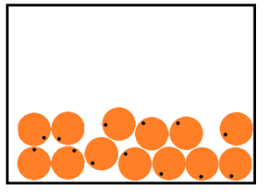
Are these particles in a gas, liquid, or solid?
gas
liquid
solid

Are these particles in a gas, liquid, or solid?
gas
liquid
solid

