
 Worksheets
Fall Semester Science Review
Total questions: 110
Worksheet time: 4hrs 40mins
When you are adding thermal energy (heat) to matter (like water) it causes the particles (atoms) to-
move faster & farther apart.
move slower & farther apart.
move faster & closer together.
move slower & closer together.

The amount of matter something contains is called _____.
volume
mass
density
measurement
Match the changing states of matter.

condensation

evaporation

melting

freezing

How many grams of OXYGEN would be needed to show conservation of mass in the example below?
(a)
According to the (a) , in a chemical reaction, you start and end with the same amount of (b) .

List the objects from smallest to largest mass.
mechanical pencil
cereal bowl
doll
laptop
If ice is placed inside a refrigerator it will-
melt into a gas.
melt into water.
become water vapor.
Which list includes examples of only solutions?
fruit salad, jello and lemonade
lemonade, sugar water, and salt water
tea, lemonade and cookie dough
m&m's and tea

A (a) is a tool is used for separating solids from other solids.

A (a) allows liquids to pass through it, while very small solids remain behind.

A (a) is a combination of two or more substances where each keep their own properties.
Sugar cubes are being dissolved in a beaker of water. Which of the following changes would help the sugar dissolve faster?
Freezing the solution
Heating up the solution
Add more sugar cubes
Add larger sugar cubes

If I added 27 grams of salt to water and separated the solution with a hot plate, what amount of salt would be left behind?
20 grams
0 grams
27 grams
10 grams
Match the following scientific instruments.

filter

sieve

hot plate

funnel

container
Match the following scientific tools with the physical property of matter it will be based on.

temperature
(evaporation)

size
(big particles stay on top)

density

mass
Select the two liquids with the lighter density.
Identify the solute, solvent, and solution.
solute
solvent
solution
Select all the items that are buoyant (float).


Select all the solutions.


For an investigation Shirley put 100 mL of water at room temperature into each of three beakers. Then Shirley added a coin to Beaker R, 3g of powdered drink mix to Beaker S, and 10 mL of lamp oil to Beaker T. She then stirred the contents of the beakers and then left them sitting on a lab table for 5 minutes. Which diagram show what Shirley most likely observed in each of the beakers after 5 minutes?


Some people add sugar to their hot tea. Which property of the sugar remains the same when the sugar is in the tea solution?
The taste of the sugar remains the same.
The size of the sugar crystals remains the same,
The color of the sugar remains the same.
The texture of the sugar remains the same.
Draw a picture of the tug-of-war teams. Label where each team is pulling. Use arrows to represent the direction of the force each team applies.


_____ is the force between the players' shoes and the ground that helps them pull.
Friction
Push
Tension
Gravity
Pull
(a) is the force between the players' shoes and the ground that helps them pull.
Identify the different forces taking place in this tug-of-war.

If the boys used an applied force of 100 Newtons (N), while the girls used an applied force of 50 Newtons (N), what is difference in net force?
Team 1 pulls with 700 Newtons (N), and Team 2 pulls with 700 Newtons (N). The difference in net force is _____.

The forces acting on the cart are (a) , causing the cart to move to the (b) _

The forces acting on the cart are (a) , causing the cart to (b) __

Which form of energy is produced when a guitar string vibrates?
sound energy
electrical energy
thermal energy
light energy

Which form of energy is produced when a lamp is TURNED ON?
Sound energy
Electrical energy
Mechanical energy
Light energy

When Jeanmarco & Lian rub their hands together and they become warm, the type of energy transformation that occurs is (a) .
Electrical to thermal
Chemical to mechanical
Light to thermal
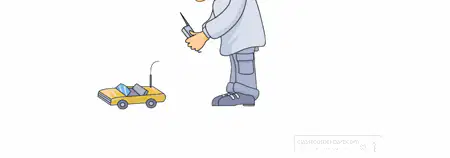
Juan & Allison are playing with a battery-powered toy car. Describe the energy transformations that occurs when the toy car moves.
Chemical energy in the battery is transformed into mechanical energy to move the car.
Thermal energy in the battery is transformed into light energy to move the car.
Electrical energy in the battery is transformed into sound energy to move the car.
Light energy in the battery is transformed into chemical energy to move the car.

What is the energy transformation?
Mechanical to Kinetic to Sound
Mechanical to Electrical to Light
Electrical to Thermal to Mechanical
Kinetic to Sound to Potential
Identify the parts to this simple circuit.
Electricity is the movement of (a) .
If switch #1 closed which light bulbs will turn on?
If switches #2 & #3 closed which light bulbs will turn on?
1. Identify (draw a happy or sad face) whether the switches are opened or closed.
2. Trace all the paths that the electrons will follow in this parallel circuit.

If switch 2 is (a) and switches 1, 3, & 4 are CLOSED, then the (b) will function.
If switch 1, 2, & 4 are CLOSED, but switch 3 is OPEN, select the loads that will function.
Match the appropriate scientific vocabulary.

conductors

insulators

switch

open circuit

closed circuit
Identify the parts of this parallel circuit.
Reorder the energy transformations for a flashlight.

chemical energy

electrical energy

light energy

thermal energy
If swich 1 is OPEN & switch 2 is CLOSED, identify the loads that will turn on.
If swich 1 is CLOSED & switch 2 is OPEN, identify the loads that will turn on.
Match the following examples of tranparent, translucent, & opaque.

transparent

translucent
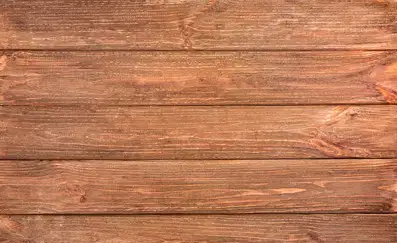
opaque
Categorize the following items that either reflect, refract, or absorb.

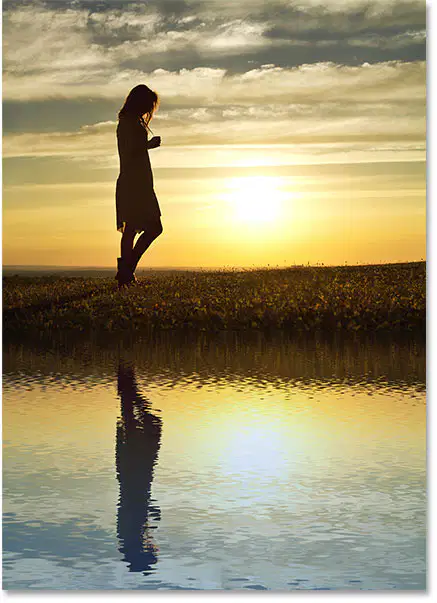
water
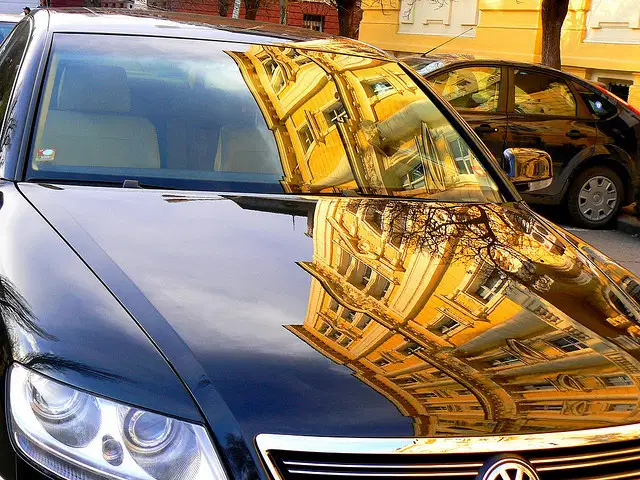
shiny car

asphalt


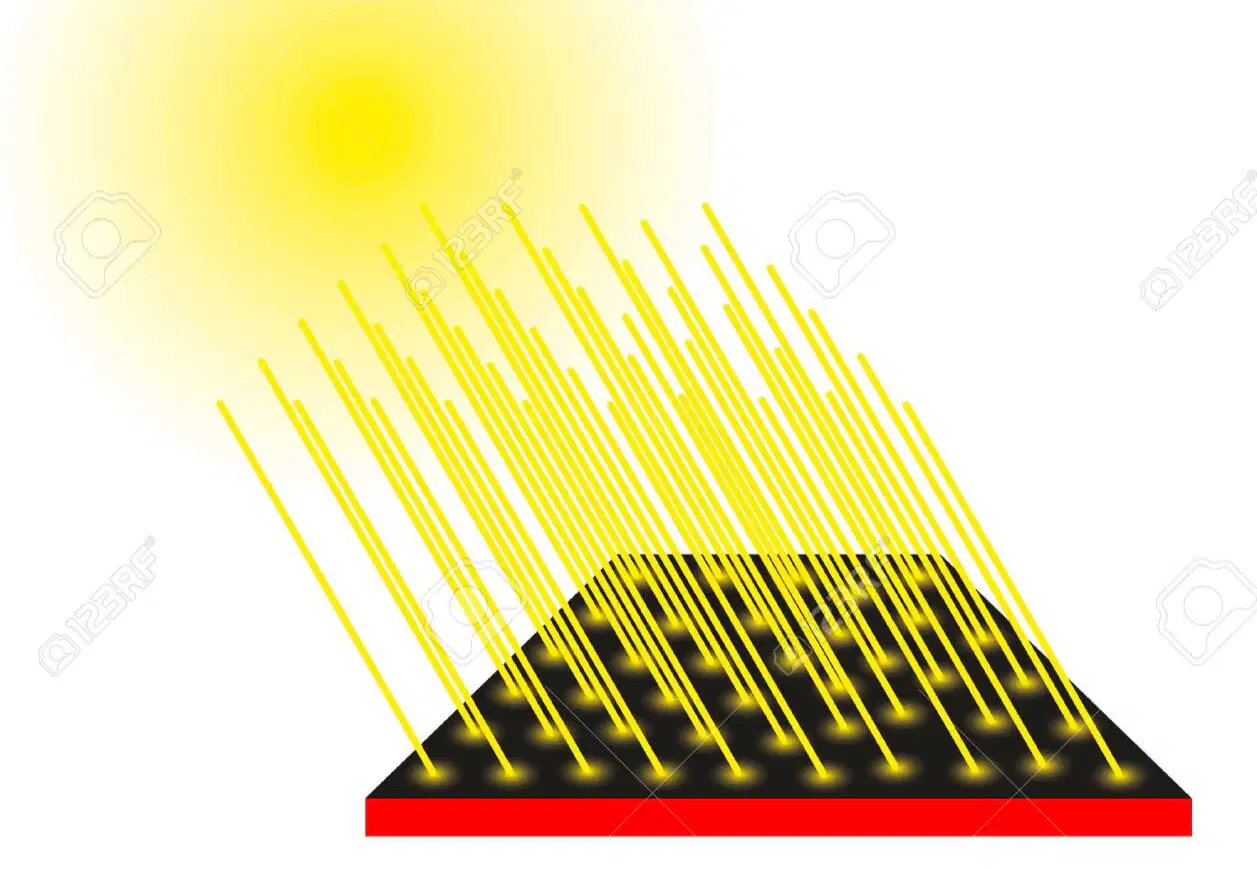
road

prescription glasses

When light enters water (a medium) it bends and changes direction, this is called (a) .

What is shown in the image below?
The force needed to push a swing
The path light takes when it is refracted
The flow of an electrical current
The path light takes when it is reflected
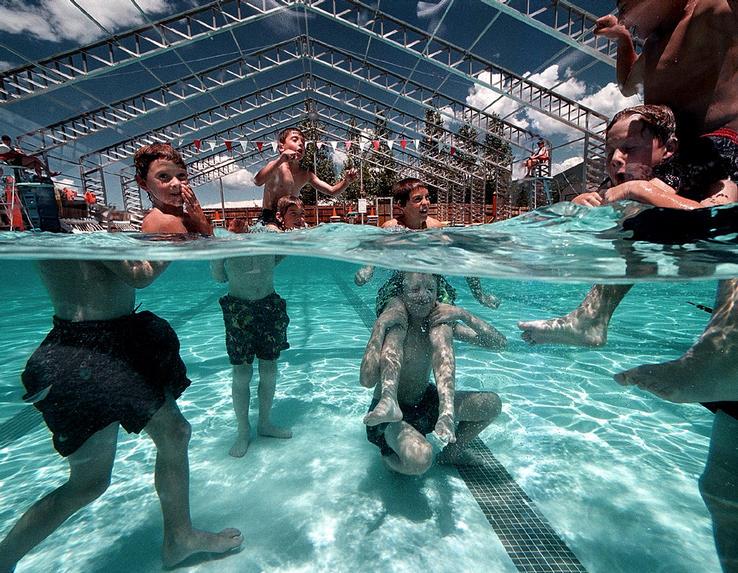

A museum director wants to focus a laser's beam on a mineral sample.
Which diagram shows the position of a mirror that will direct the laser's light to the mineral sample of display?


Draw a line that shows the proper reflection of the laser as it bounces off the mirror to the mineral sample.


When light enters water (a medium) it bends and changes direction, this is called (a) .
Match the following examples of refraction, reflection, & absorption.

refraction (bends light)

reflection (bounces light)

absorption / absorb (traps light)
Categorize the following items that either reflect, refract, or absorb.

microscope

magnifying glass

prism

mirror

sunglasses

black shirt

the moon

solar panels

asphalt road
The movement of Earth around the sun is called an (a) .
Every 24 hours the Earth makes one complete spin on its axis is called (a) --
rotation
revolution
orbit
equator
Orbit is the (a) one (b) takes as it (c) around another object.
Match the following.

equator

axis

rotation

orbit

hemisphere
Label the Earth.

Earth's orbit lasts (a) days.
It takes the Earth (a) hours to complete one full rotation.
The sun appears to rise in the (a) and set in the (b) .

9. Does your shadow appear longer at sunrise noon, or sunset?
sunrise
noon
sunset

Earth's (a) is responsible for making the stars appear to move across the sky at night.

A sundial uses _______ and shadows to mark the time of day.
water
sunlight
wind
stars
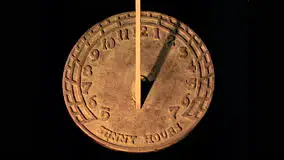
Based on this sundial, the approximate time is ___.
.
12pm
2pm
6pm
7pm

Which phase of the Moon occurs when the Moon is between the Earth and the Sun?
(a)

It takes approximately (a) days for the Moon to complete one cycle of phases.

Design an experiment to observe & record the phases of the Moon over a month. Put the steps to conduct this experiment in the correct chronological order.
Gather your scientific tools: notebook, & pen (optional telescope or binoculars).
Observe the Moon every night,
Record the date & phase.
Compare the observations & data over a month.

The moon appears lit because it (a) the sun's light.
How many days does it approximately take for the Moon to complete one cycle of phases?
7 days
14 days
21 days
28.5 days

By using a (a) you can (b) the next phase of the (c) .
The Moon appears to change shape throughout the month because-
the Moon is rotating on its axis.
the Earth is rotating on its axis.
of the changing positions of the Moon, Earth, and Sun.
.he Moon's surface is changing.

Sun

Earth

Moon
Reorder the following moon phases INCREASING in size...

new moon (0%)

waxing crescent (25%)

first quarter (50%)

waxing crescent (75%)

full moon (100%)
Correctly label the Moon Phases on this diagram.
First Quarter
New Moon
Full Moon

Which picture of the moon comes next in the pattern?


Mercury is the (a) planet while Jupiter is the (b) planet.
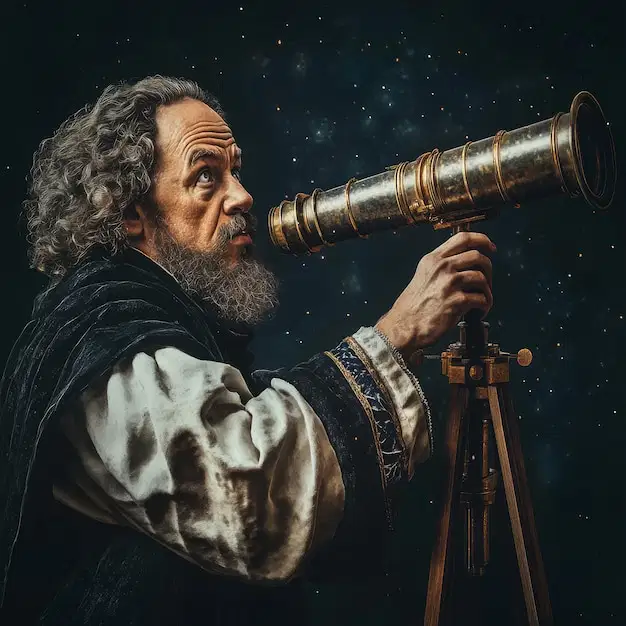
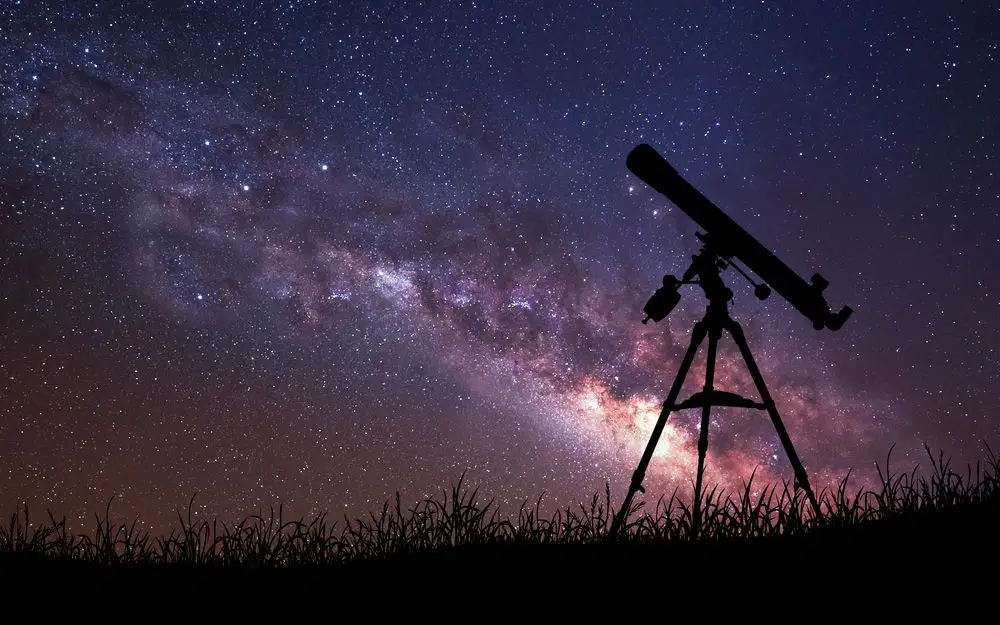
In the early 1600s, the astronomer Galileo used a telescope to make observations of the planets in our solar system like Mercury & Venus.
Arrange our solar system in the correct chronological order.

the Sun
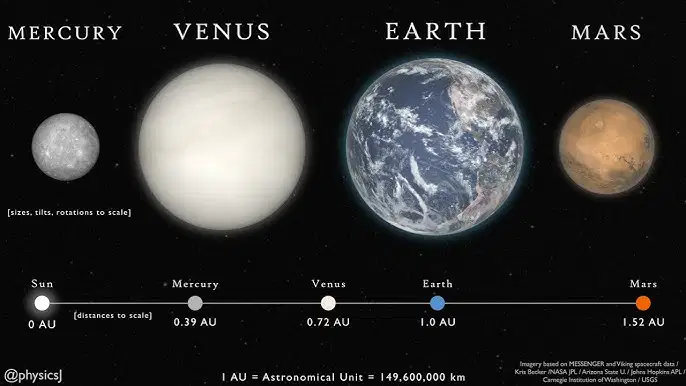
the inner planets
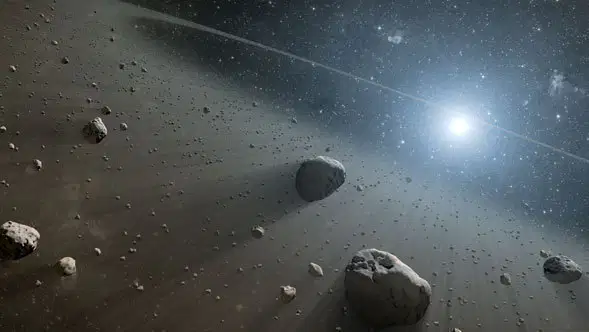
the asteroid belt

the outer planets
Sophia went outside one evening and saw a full moon. About how many days later can she expect to see the next third quarter moon?
7 days
15 days
22 days
30 days

The pictures show a sidewalk at three different times on the same day. The changes were caused by the weather.
Which table best describes the changes that most likely occurred (happened) between 6:00 A.M. and noon?


This diagram shows of the stages in the water cycle. Which of these observations would most likely be seen at Stage N?
runoff
condensation
transpiration
This diagram shows of the stages in the water cycle. Which of these observations would most likely be seen at Stage L?
runoff
transpiration
condensation
The diagram shows stages in the water cycle. Label Stage N and Stage L.
Condensation
Runoff
Conduction
Solution

The diagram shows where water can be found during different stages of the water cycle. What should be added to the diagram to better explain the water cycle?
Soil to trap water from runoff.
The sun to provide energy for evaporation.
Rocks to release thermal energy.
Plants to add oxygen to the atmosphere.

This photograph shows a beach on a partly sunny day. Which of the following is an interaction between the SUN and the OCEAN that results in clouds forming near the beach?
Energy from the sun causes precipitation over the ocean.
Energy from the sun causes water to evaporate from the ocean.
Light from the sun reflects off the surface of the ocean.
Light from the sun decreases the amount of water vapor in the air over the ocean.
Select all the types of precipitation.

rain

snow

fog

hail
The process of (a) in the water cycle is when (b) (c) and changes into (d) droplets.

What is water that flows in rivers and streams into the oceans and lakes?
(a)
Identify the various processes of the water cycle.
What is the primary energy source that drives the Earth’s water cycle between the atmosphere, oceans, and land?
Wind
Sunlight
Ocean currents
Rotation of Earth
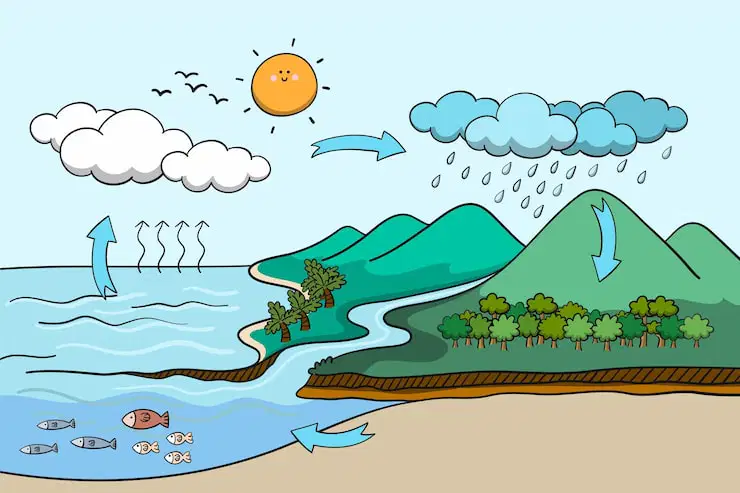
Arrange the water cycle in chronological order starting with the sun's role...
evaporation / transpiration
condensation
precipitation
runoff
accumulation
Match the following picture with the energy PRODUCED.

mechanical

sound

electrical

light

thermal
Mechanical energy is caused by (a)
Thermal energy is caused by (b)
Sound energy is caused by (c)
Which of the following images represents heat energy from the sun being absorbed into the atmosphere?

What number?
10
15
2

What number?
7
9
14

What number?
6
12
9

Class


What is the signed term?
Good Morning
Good Afternoon
Good Night

What is the signed term?
Good Morning
Good Afternoon
Good Night

What is the signed term?
Good Morning
Good Afternoon
Good Night

teach
thank you
yes
toilet/restroom

Choose the correct answer.
gold
purple
yellow
green

Choose the correct answer.
color
orange
multi-color
grey

Choose the correct answer.
blue
green
yellow
purple

Which season is being signed?
winter
summer
spring
fall / autumn

Which season is being signed?
summer
fall
spring
winter

