
 Worksheets
Pre-assessment Test - Stage 1 Pre-IG Science
Total questions: 110
Worksheet time: 1hrs 11mins


What is meant by this symbol?
Poison
Flammable
Explosive
Irritant

Example of material that has this symbol. (choose 2)
Ammonia
Concentrated sulphuric acid
Concentrated alkali
Engine oil

Which of the following is NOT toxic?
Mercury
Bromine
Sodium
Asbestos

Which of the following are flammable? Choose 2)
Methane
Petrol
Chloroform
Sodium

Which of the following is NOT an example based on the hazardous symbol?
Sodium
Magnesium
Benzoyl peroxide
Petrol
Always _________ your hands before and after an experiment.
wash
wipe
rub
lick
Read all _______ before beginning the experiment.
Instruction
manual
textbook
sign
Always wear _______ when working with chemicals, burners or any substances that may hurt your eyes. (choose 2)
Safety glass
Safety goggles
spectacles
Swimming goggles
Never touch, _________ or smell any chemical.
taste
keep
throw
put
Which of the following shows safety precautions in the laboratory? (Choose 3)


What is the hazardous symbol shown?
Irritant
Harmful
Radioactive
Explosive

Which of the following is NOT an example of a radioactive substance?
Plutonium
Uranium
Radium
Sulphur
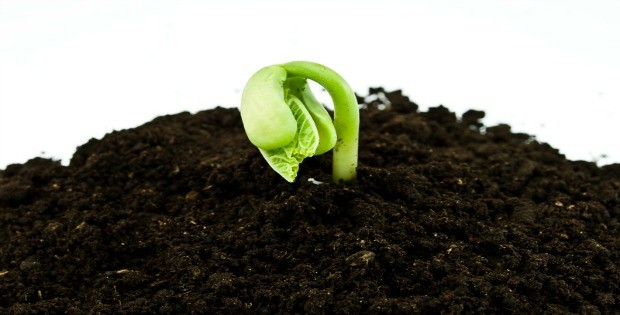
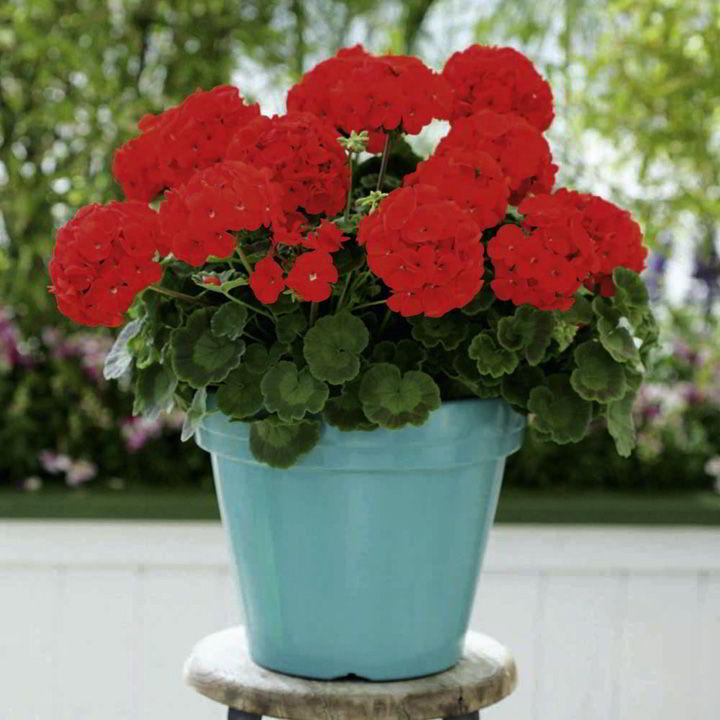
Susan said, “If I fertilize my geranium plants, then they will have more flowers.”
recognize a problem
test the hypothesis with an experiment
form a hypothesis
draw conclusions
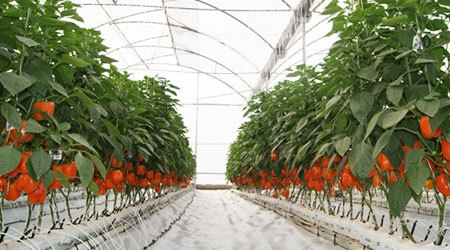
Bob read about growing plants in water. He wanted to know how plants could grow without soil.
coming up with a question
test the hypothesis with an experiment
form a hypothesis
draw conclusions
Surrounds the plant cell and maintains the cell shape and structure.
Cell wall
Cell membrane
Nucleus
Ribosome
Makes food for the plant cell.
Ribosome
nucleus
chloroplast
cytoplasm
The "powerhouse" of the cell; breaks down food to make energy for the cell.
organelles
cell
mitochondria
cytoplasm
Storage space for water, wastes, food, and other cellular material
mitochondria
cell membrane
cell wall
vacuoles
What two jobs does the nucleus have?
Breaks down proteins
Makes cell laws
Animal cells don't have a nucleus
Stores the cell's DNA
Where are the ribosomes attached in a cell?
Smooth ER
Cell Membrane
Mitochondria
Rough ER
The basic unit of structure and function in living things.
cell
cell wall
plant cell
cell membrane
Packages and transmits cellular materials throughout the cell.
golgi bodies
plant cell
endoplasmic reticulum
organelles


Which order of a plant life cycle is CORRECT?
Seed -> seedling
-> flower -> seed release
Seed -> seedling
-> seed release
-> flower
Flower -> seedling
-> seed release -> seed
Seedling -> seed release -> flower
-> seed
Which part of the plant makes food using the process of photosynthesis?
Roots
Stem
Leaves
Fruit
Which of the following parts of the plant does NOT contribute to making new plants?
Fruit
Flowers
Seeds
Stem
Which is the part of plant that absorbs water and nutrients?
Roots
Stem
Leaves
Flowers
Xylem and phloem are called __________.
non-vascular tissue
vascular tissue
smooth tissue
supporting tissue
A plant can be split into 2 parts: shoot system and root system. True or False?
(a)
What does xylem carry up the stem?
Water only
Water and nutrients
Nutrients
None of the above
Which of the following are the main conducting vessels of the xylem?
Tracheid
Companion cells
Sieve cells
Phloem

The type of root system shown on the diagram is __________.
Fibrous
Taproot
Buttress root
None of the above
Which of the following is NOT a function of the roots?
Anchor plants in soil
absorb water and nutrients
store food
undergo photosynthesis
What help to reduce erosion of soil?
Water
Taproot
Fibrous roots
Stem
____________ transports food made in the leaves throughout the vascular system of the plant.
Phloem
Xylem
Root
Stem
Organelles are organized by............ .
organelles
cells
molecules
atoms
............. possess a characteristic structure
.
atoms
organelles
cells
molecules
All life functions are
carried out by...........in unicellular organisms.
two cells
many cells
multicells
single cell
Organs are organized into............ .
cells
tissues
systems
organisms
........... are simplest level of organization.
organisms
organs
molecules
cells
Which type of cell has a nucleus?
prokaryote
eukaryote
both prokaryotes and eukaryotes
neither prokaryotes nor eukaryotes
The structure found in ALL cells that encloses a cell from the outside is the...
cytosol/cytoplasm
cell wall
endoplasmic reticulum
plasma/cell membrane
Plants have this structure that allows them to carry out photosynthesis...
mitochondria
golgi bodies
chloroplasts
chromosomes
Due to having fewer items in the cell, ____ are usually smaller.
prokaryotes
eukaryotes
colonial organisms
multicellular organisms
Where are the ribosomes made?
nucleus
nucleolus
cytoplasm/cytosol
rough endoplasmic reticulum
Which do the cells of an E. coli bacterium and an elephant have in common?
ribosomes to assemble proteins
mitochondria to produce energy
chloroplast found in the vacuole
chromosomes located in the cytoplasm
An organelle must be...
surrounded by a membrane
able to leave a cell
made up of carbohydrates
able to contain DNA
The function of the nucleus is to...
make the cell bigger
make proteins
surround and protect the cell
surround and protect the DNA
Some cells have a rigid ____ outside of the membrane for even more support.
cell wall
cytoskeleton
golgi body
cytoplasm


Carbon dioxide, nitrogen, oxygen, and hydrogen are this state of matter at room temperature.
Solid
Liquid
Gas
Plasma
If I add heat to a solid, how will the motion of the particles be affected?
They will move slower
They will stop moving
They will move faster
They will move to a different container
Diffusion is the movement of molecules from an area of _____ concentration to an ______ concentration
High, low
Low, high
Low, low
High, high
An example of diffusion is
CO2 and O2 exchange in the lungs
Glucose transport
Na+ / K+ Pumps
Exocytosis

water moves from high to low water potential

Identify the method of separation
Sedimentation
Decantation
Filtration
Distillation
Butter is separated from milk by
Sedimentation
Filtration
Churning
Decantation
Threshing is done by
Beating
Machine
Bullocks
All of these

Identify the process shown
Evaporation
Condensation
Filtration
Distillation
The property which forms the basis of sieving
Difference in the shape
Difference in the weight
Difference in the size
Difference in colour
A mixture of mustard oil and Kerosene oil can be separated by
Sedimentation
Separating funnel
Filtration
Distillation
The process of separating a pure substance in the form of crystals from its hot saturated solution by cooling is called
Crystallization
Filtration
Sedimentation
Decantation

What does the C represent?
atomic mass
atomic number
element name
chemical symbol

What does the 6 represent?
atomic mass
atomic number
element name
chemical symbol

What does 12.011 represent?
atomic mass
atomic number
element name
chemical symbol
The Modern Periodic Table of Elements is arranged by
atomic mass
atomic number
valence electrons
number of isotopes
Which group of the periodic table is composed of inert (not reactive) gases?
answer choices
alkali metals
alkaline earth metals
halogens
noble gases
True or False: The reactivity of metals tends to decrease as you move from left to right across the periodic table.
True
False
Name this group: These metals are the most reactive.


Which of the following could be properties of nonmetals?
Poor electrical conductivity
Poor thermal conductivity
Dullness
Brittleness
Combining substances to form new substances is called
Chemical reaction
Physical reaction
Exothermic reaction
Endothermic reaction
Reaction where heat is released.
Chemical reaction
Physical reaction
Exothermic reaction
Endothermic reaction
Put these in order from smallest to largest
Electron
Compound
Atom
Electron
Atom
Compound
Atom
Compound
Electron
Compound
Atom
Electron
What are the three types of elements?
Metals - Noble gases - Alkali metals
Solid - Liquid - Gas
Metals - Non-metals - Metalloids
Water - Hydrogen - Oxygen
A bond where electron(s) are shared:
Ionic bond
Covalent bond
Synthetic bond
James bond
A bond where electron(s) are stolen:
Ionic bond
Covalent bond
Synthetic bond
James bond
What is the conservation of matter?
A place to preserve wildlife
A non-liberal person
Matter cannot be created or destroyed
An object at rest stays at rest unless acted upon by an unbalanced force

Energy from the sun is known as.........
hydroelectric energy
geothermal energy
Radiant energy
wind energy

The turkey is being cooked in the oven by _____ Energy.
Thermal
Solar
Electrical
None

Moving electrons is an example of which form of energy?
Thermal energy
Electrical energy
Chemical energy
Mechanical energy
What type of energy is stored in the bonds between atoms
Electrical energy
Thermal energy
Kinetic energy
Chemical energy

What kind of energy is being shown in the picture?
Light
Gravitational
Potential
Kinetic

As the ball is dropped, the potential energy decreases while the kinetic energy increases however the amount of energy stays the same.
True
False
What is changed to increase the potential energy of an object being dropped?
Temperature
Gravity
Height
Volume

How does energy change?
The cart has more kinetic energy at the top than when it is going down the hill.
The cart has potential energy at the top while kinetic energy increases going down.
The cart has potential energy that is lost going down the hill.
The cart has kinetic energy at the top of the hill and no potential energy.

Before fruit falls from a tree, how does energy flow?
Potential - Kinetic - Sound
Light - Kinetic - Heat
Potential - Sound - Heat
Solar - Kinetic - Heat

Which type of energy is showing the greatest at the jumper's position?
Mechanical
Kinetic
Potential
Applied

Where does kinetic energy transfer to potential energy?
1 to 2
2 to 3
4 to 5
none

