wayground logo

Free Printable Worksheets

NEW

Font size

S
M
L
XL
Worksheets

G7 DC2 revision

Total questions: 54

Worksheet time: 2hrs 36mins

Name
Class
Date
1.
Nonmetals occur to the ________of the dark zig-zag on the periodic table. 
a)
A. right
b)
B. middle
c)
C. left
2.
What element in Group 1 is not a metal but a nonmetal?
a)
Helium
b)
Lithium
c)
Hydrogen
d)
Oxygen
3.
Which of these is a property of metals?
a)
It's malleable
b)
It can't conduct electricity
c)
They are used in food
d)
It's very brittle
4.
How do metals differ from nonmetals?
a)
metals are shiny, nonmetals are dull
b)
metals are good insulators, nonmetals are good conductors
c)
metals are powdery
d)
nonmetals are shiny
5.

Which color on the image of the periodic table corresponds with the halogens.

a)

red

b)

black

c)

blue

d)

orange

6.

Which color on the image of the periodic table corresponds with the noble gases.

a)

red

b)

black

c)

blue

d)

orange

7.

Which color on the image of the periodic table corresponds with the transition metals.

a)

red

b)

black

c)

blue

d)

orange

8.

What are the vertical columns on the periodic table called?

a)

Groups

b)

Periods

c)

Elements

d)

Valence electrons

9.
The atomic number of this pictured element is
a)
28
b)
58.6934
c)
Ni
d)
Nickel
10.
What is the atomic mass of Neon?
a)
10
b)
30
c)
10.18
d)
20.18
11.
How many protons are in this element?
a)
79
b)
196
c)
117
d)
Cannot be determined
12.

What group does Lithium (Li) belong to?

a)

1

b)

2

c)

3

d)

4

13.
The atomic number tells you what?
a)
number of electrons
b)
number of protons
c)
number of neutrons
d)
both electrons and protons in an atom.
14.

a)

Ro

b)

Rd

c)

Rn

d)

Ra

15.

a)

H

b)

He

c)

Hm

d)

Hl

16.

a)

No

b)

Ni

c)

N

d)

Ne

17.
Boiling
a)
liquid to gas
b)
gas to solid
c)
gas to liquid
d)
solid to liquid
18.

This is an example of particles in a _____.

a)

solid

b)

liquid

c)

gas

19.

1. When ice melts. Its particles

a)

gain energy and begin to move

b)

lose energy and begin to move

c)

move far apart and gain energy

d)

close together and lose energy

20.

In which state of matter are the particles least able to move?

a)

A

b)

B

c)

C

21.

Which model represents gas?

a)

A

b)

B

c)

C

22.

A substance has a melting point of 218oC and a boiling point of 1132oC. What state would it be in at 1300oC?

a)

Solid

b)

Liquid

c)

Gas

23.

A substance has a melting point of 38oC and a boiling point of 112oC. What state would it be in at 45oC?

a)

Solid

b)

Liquid

c)

Gas

24.

A substance has a melting point of 38oC and a boiling point of 112oC. What state would it be in at room temperature?

a)

Solid

b)

Liquid

c)

Gas

25.

According to the provided graph, which element has the lowest melting and boiling points?

a)

Fluorine

b)

Bromine

26.
What change of state does this pot show?
a)
Boiling
b)
Condensation
c)
Freezing
d)
Melting
27.
Which of the following occurs when a liquid becomes a gas?
a)
the particles slow down
b)
the particles beak away from one another
c)
the particles move closer together
28.
How do the particles of matter move as the matter changes state in the diagram?
a)
The particles released energy and move as matter changed state?
b)
The particles released energy and moved more quickly.
c)
The particles gained energy and moved more slowly.
d)
The particles gained energy and moved more quickly.
29.

A gas

a)

has a definite shape but no definite volume

b)

has a definite volume but no definite shape

c)

has fast-moving particles

d)

none of the above

30.
Subatomic particle with a charge of 0
a)
neutron
b)
proton
c)
electron
d)
quark
31.

Subatomic particles with a negative charge

a)

Electrons

b)

Neutrons

c)

Protons

d)

Quarks

32.
Subatomic particles with a positive charge
a)
neutrons
b)
atomic mass
c)
protons
d)
isotopes
33.
What is the atomic mass of "F"
a)
9
b)
18
c)
17
d)
19
34.
How many electrons does potassium K contain? (click to see image)
a)
19
b)
39
c)
20
d)
40
35.
What element is represented in this Bohr Model? 
a)
Carbon
b)
Hydrogen
c)
Aluminum
d)
Lithium
36.
Complete the missing label on the diagram.
a)
Neutron
b)
Centre
c)
Nucleus
d)
Sub atomic particle
37.
How many electrons does this picture show?
a)
4
b)
5
c)
6
d)
3
38.
How many electrons does Sodium have?
a)
11
b)
23
c)
12
39.

An atom has four protons and five neutrons. Its atomic number is:

a)

4

b)

5

c)

9

d)

20

40.

An atom has 35 protons, 44 neutrons and 35 electrons. It is an atom of:

a)

bromine.

b)

ruthenium.

c)

gold.

d)

chlorine.

41.
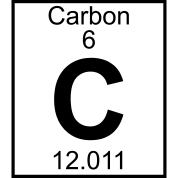
What does the C represent?
a)
atomic mass
b)
atomic number
c)
element name
d)
chemical symbol 
42.

What is the nucleon number of this atom?

a)

2

b)

3

c)

4

d)

7

43.

Y atom has 3 protons and 4 neutrons and 3 electrons. what is its nucleon number?

a)

3

b)

4

c)

7

d)

6

44.

Which atomic model has a dense and positively charged center (nucleus) inside the atom

a)

plum pudding model

b)

nucleus model

c)

solid sphere model

45.

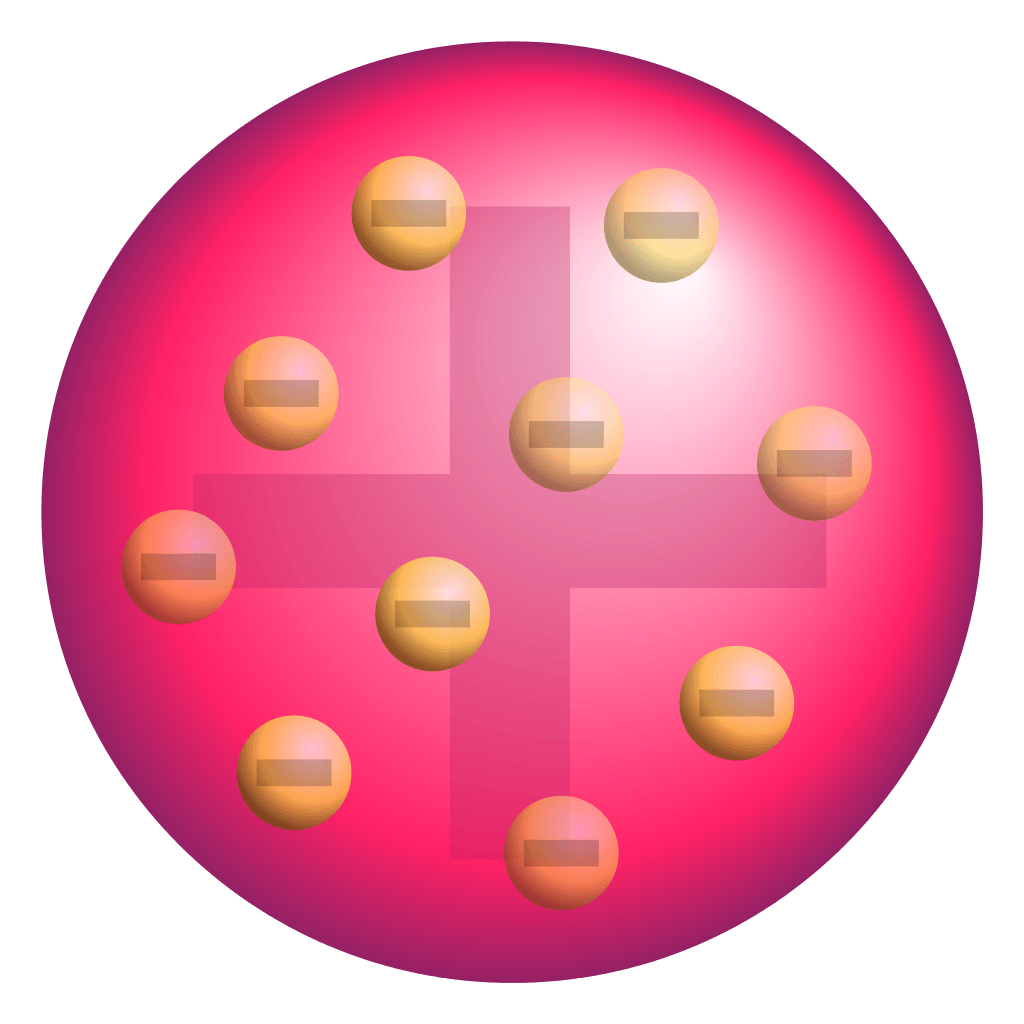
Which atomic model contains positive fluid and with electrons floating in?

a)

plum pudding model

b)

nucleus model

c)

solid sphere model

46.

Group 1, Period 2

a)

Lithium

b)

Berylium

c)

Magnesium

d)

Oxygen

47.

Group 0, period 1

a)

Hydrogen

b)

Oxygen

c)

Helium

d)

Neon

48.
a)

Transition Metals

b)

Inner Transition Metals

c)

Metals

d)

Metalloids

49.

Which picture shows that metals are malleable?

a)
b)
c)
d)
50.
Sulfur
a)
Metal
b)
Nonmetal
51.

The ability to make wires

a)

Ductility

b)

Malleability

c)

Thermal conductivity

d)

Luster

52.

The ability to changes shapes

a)

Thermal conductivity

b)

Malleability

c)

Electric conductivity

d)

Ductility

53.
Rutherford’s experiment determined that the nucleus of an atom is tiny, dense and  ______ charged. 
a)
neutrally
b)
negatively
c)
positively
54.

Which of the following can best describe plum pudding model in the picture?

a)

no electrons in the atom

b)

atom is a fluid with negative charge

c)

electrons floating in the fluid

d)

there is a nucleus in the center of atom