
 Worksheets
Biology 2: Semester 1 Final Exam REVIEW (Introduction-Animals)
Total questions: 109
Worksheet time: 55mins
Name
Class
Date
1.
Chordates include fish, amphibians, reptiles, birds, and mammals.
a)
True
b)
False
2.
All chordates are vertebrates.
a)
True
b)
False
3.
Animals that are endothermic have a metabolic rate and level of activity that depend on the outside temperature.
a)
True
b)
False
4.
There are 3 subphylums included in the phylum chordata. 2 of the 3 subphylums include animals with a backbone.
a)
True
b)
False
5.
Vertebrates reproduce both asexually and sexually.
a)
True
b)
False
6.
Chordates occupy habitats in water (Fresh and marine), terrestrial, and aerial, and can be found everywhere from the poles to the equator.
a)
True
b)
False
7.
The cranium is the part of a vertebrate endoskeleton that encloses and protects the limb girdles.
a)
True
b)
False
8.
Ovipary is the mode of reproduction in which eggs are laid and embryos develop outside the mother’s body.
a)
True
b)
False
9.
Aquatic species generally have internal fertilization, whereas terrestrial species usually have external fertilization.
a)
True
b)
False
10.
When comparing a reptile and a mammal both of the SAME size, the reptile would require more food because it needs energy to maintain its internal body temperature.
a)
True
b)
False
11.
In terms of vertebrate evolution, a bony skeleton appeared before an endoskeleton made of cartilage.
a)
True
b)
False
12.
Vertebrate immune systems are said to be adaptive. This means that the immune system CANNOT learn as it is introduced to new pathogens.
a)
True
b)
False
13.
While inside their mother's pouch, marsupials get nourishment through an UMBILICAL CORD.
a)
True
b)
False
14.
Therian mammals are mammals that have the addition of a uterus and a vagina in the female reproductive system. Of the 3 mammalian groups, only Placental mammals are also therian mammals.
a)
True
b)
False
15.
Pros and cons reproductive strategies of placental, marsupial, and monotremes are mostly opposites of each other. Placental mammals make up the largest group of all mammals, because their pro helps ensure that the greatest number of their offspring will survive to reproduce.
a)
True
b)
False
16.
A general characteristic of ALL mammals is that the mother gives birth to live young.
a)
True
b)
False
17.
The class Mammalia is divided into three subgroups based on REPRODUCTIVE METHODS.
a)
True
b)
False
18.
90% of all mammals are placental mammals.
a)
True
b)
False
19.
Mammalian teeth are different from all other animals, in the fact that they have 4 distinct types of teeth, including molars, incisors, canines, and premolars.
a)
True
b)
False
20.
The combination of the millions of alveoli, a diaphragm, and a 3 chambered heart, a mammals body is highly adapted for efficiently transporting the maximum amount of oxygen to the body cells.
a)
True
b)
False
21.
Fused collarbones and a large, keeled breastbone are adaptations that enable birds to breathe efficiently.
a)
True
b)
False
22.
Wings are modified front legs that are adaptations for flight.
a)
True
b)
False
23.
Birds are located on every continent EXCEPT Antarctica, because they are endothermic and would not be able to survive the cold temperatures.
a)
True
b)
False
24.
The gizzard of a bird contains stones the bird has swallowed and makes up for the bird not having teeth.
a)
True
b)
False
25.
All birds can fly.
a)
True
b)
False
26.
Both diurnal and nocturnal raptors have a sharp, hooked beak and strong legs with clawed feet.
a)
True
b)
False
27.
Birds probably evolved from a group of bipedal dinosaurs.
a)
True
b)
False
28.
Down feathers are used for help in flight.
a)
True
b)
False
29.
Feathers are made of keratin, just like scales, hair, and horns of other animals.
a)
True
b)
False
30.
The keel is a large extension of the sternum, that allows for the bird's pectoralis muscles to have an attachment place.
a)
True
b)
False
31.
Scales of reptiles are made of a protein called Keratin.
a)
True
b)
False
32.
Reptiles are endotherms.
a)
True
b)
False
33.
Reptiles cannot breath through their skin because their scales are watertight to avoid excess water loss.
a)
True
b)
False
34.
The allantois is a necessary adaptation in amniotic eggs for elimination of water.
a)
True
b)
False
35.
In turtles, the ribs are fused to the carapace.
a)
True
b)
False
36.
The diaphragm is a sheet-like muscle below the lungs that controls breathing.
a)
True
b)
False
37.
The scales of reptiles only help to protect them from injury.
a)
True
b)
False
38.
All living things normally have the ability to reproduce.
a)
True
b)
False
39.
Natural selection depends on some living things producing more offspring than others do.
a)
True
b)
False
40.
Competition is a relationship between organisms that need the same resources.
a)
True
b)
False
41.
Charles Darwin presented his theory of evolution without any evidence to support it.
a)
True
b)
False
42.
The more distant the relationship between two related species, the farther back in time they shared a common ancestor.
a)
True
b)
False
43.
Organisms in the domain Archaea are multicellular
a)
True
b)
False
44.
What type of reproduction is characterized by the development and nourishment of an embryo within the mother’s body?
a)
Ovovivipary
b)
Vivipary
c)
Vertebrate Reproduction
d)
Ovipary
45.
Vertebrates have _____ reproduction.
a)
Ovovivipary
b)
Vivipary
c)
Ovipary
d)
All of the Above
46.
Which of the following characteristics would you NOT find in a chordate?
a)
3 embryonic cell layers
b)
Complete digestive system
c)
Open circulatory system
d)
Bilateral symmetry
47.
Vertebrates mainly reproduce
a)
By cloning
b)
Asexually
c)
Sexually
d)
By buddng
48.
Which of the following classes of vertebrates include organisms that are ectothermic, have skin covered with scales, and lay amniotic eggs.
a)
amphibians
b)
reptiles
c)
birds
d)
mammals
49.
A fossil was found that shows a primitive animal, who was endothermic, that had 4 limbs in which 2 were modified to wings, and had a set of lungs. Which of the classes of vertebrates should this new organism be included in?
a)
amphibians
b)
reptiles
c)
birds
d)
mammals
50.
Which of the following classes of vertebrates include organisms that are endothermic, have skin covered with hair, and produce milk through mammary glands.
a)
amphibians
b)
reptiles
c)
birds
d)
mammals
51.
In which group of mammals are the young born live and then they immediately move to the mother's pouch to continue development
a)
marsupial
b)
monotreme
c)
placental
d)
primate
52.
Which characteristic below is NOT a characteristic of mammals?
a)
having millions of alveoli
b)
three small bones in the jaw
c)
having hair or fur
d)
All of the above are mammalian characteristics
53.
Which structure has likely been damaged if the developing fetus is unable to obtain adequate nutrients and oxygen from its mother?
a)
heart
b)
kidney
c)
ovary
d)
placenta
54.
What is the primary purpose of sweat glands?
a)
regulate body temperature
b)
regulate water balance
c)
remove wastes
d)
remove toxins
55.
What structure do monotremes have that neither the placental mammals or marsupials have?
a)
uterus
b)
vagina
c)
cloaca
d)
ovaries
56.

The following picture shows how a mammals hair can best be used for which of the following?
a)
insulation
b)
signaling
c)
sensory device
d)
waterproofing
57.
Which of these is a primary function of hair?
a)
insulation
b)
gestation
c)
excretion
d)
respiration
58.
Which of these mammals' milk would likely contain the greatest percent of fat?
a)
monkey
b)
rabbit
c)
tiger
d)
whale
59.
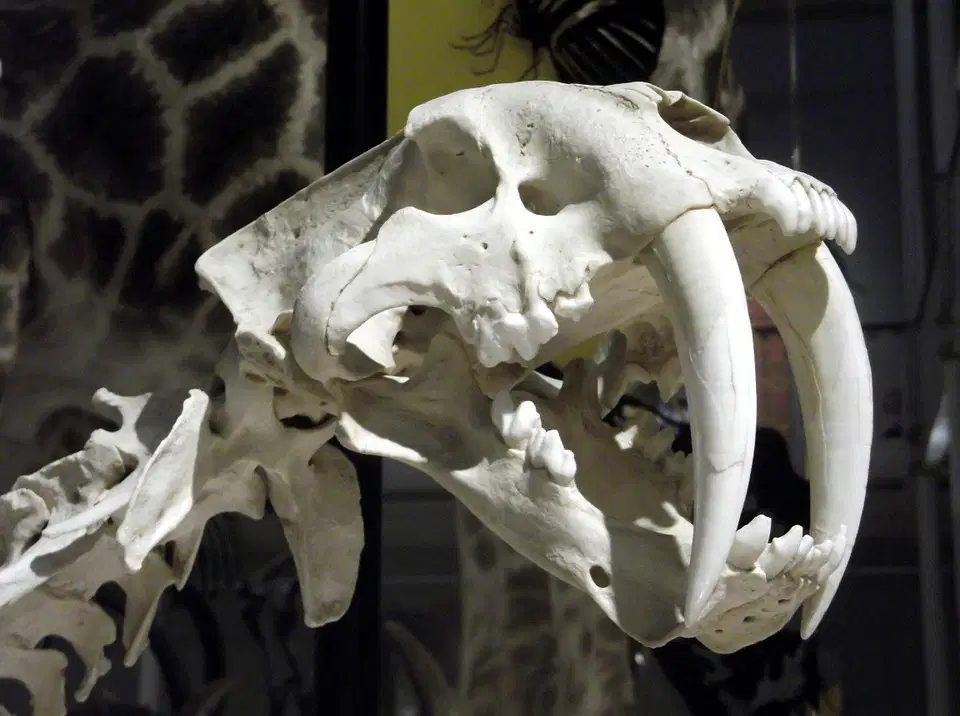
The following skull is best suited for an animal that has what type of diet?
a)
herbivore
b)
carnivore
c)
omnivore
d)
insectivore
60.

The following skull is best suited for an animal that has what type of diet?
a)
herbivore
b)
carnivore
c)
omnivore
d)
insectivore
61.
Which set of adaptations enable birds to fly?
a)
ectothermy, feathers, and lightweight bones
b)
endothermy, feathers, and lightweight bones
c)
ectothermy, feathers, and solid bones
d)
endothermy, feathers, and solid bones
62.
This habit birds practice involves rubbing their feathers with oil using their beaks.
a)
getting ready for a bird date
b)
grooming
c)
preening
d)
molting
63.
What are the 2 uses of bird feathers?
a)
grooming and flight
b)
warmth and grooming
c)
fighting and warmth
d)
flight and warmth
64.
What physical feature helps determine the diet of the bird?
a)
feet
b)
beak
c)
feathers
d)
sternum
65.
Which of the following organs is NOT present in birds
a)
crop
b)
cloaca
c)
intestine
d)
urinary bladder
66.
___________ depend on parents for several weeks; hatch blind, naked & helpless
a)
precocial young
b)
flight feathers
c)
altricial young
d)
down feathers
67.
The crop is responsible for __________
a)
storing food
b)
grinding food
c)
egg production
d)
breathing
68.
The gizzard is a part of the digestive system that _________________
a)
stores food
b)
grinds food
c)
absorbs food
d)
releases indigestible food
69.
What is the function of a birds anterior & posterior sacs?
a)
digestive and excretory systems
b)
stability during flight
c)
storing air to keep the lungs constantly filled
d)
to allow for more lift during flight
70.
What does a bird's digestive system include?
a)
crop and gizzard
b)
stomach and teeth
c)
beak and stomach
d)
crop and stomach
71.
Birds and reptiles both have amniotic eggs. How do the eggs compare?
a)
They both have a hard shell.
b)
They both have a leatherlike shell.
c)
The eggs of reptiles have a leatherlike shell and the eggs of birds have a hard shell.
d)
The eggs of birds have a leatherlike shell and the eggs of reptiles have a hard shell.
72.
Why are pet owners advised that they can give their dogs beef bones to chew, but they should never give them chicken bones?
a)
Chicken bones do not have sufficient nutrition.
b)
Chicken bones contain too much calcium for the digestive system.
c)
Chicken bones are known to carry more diseases than beef bones.
d)
Chicken bones are hollow and can splinter and choke the dogs.
73.
How are the bones of birds adapted to give them the ability to fly?
a)
they are solid and strong
b)
they are solid and flexible
c)
they are filled with air and strong
d)
they are filled with liquid and strong
74.
Which of the following animals can be active in cold climates?
a)
birds
b)
crocodiles
c)
lizards
d)
snakes
75.
Which is the best explanation for why a lizard eats less than a similar-sized bird?
a)
Reptile eggs require less energy to produce than bird eggs.
b)
Bird feathers reduce energy loss.
c)
Ectothermic reptiles do not require energy to generate heat.
d)
Reptiles do not grow as quickly as birds.
76.
Penguins have evolved solid bones, unlike other birds that have hollow bones filled with air. Since penguins do not fly, they have no particular reason to have hollow bones like other birds, but given what you know about the penguins’ habits, what might be an advantage of solid bones?
a)
they assist in retaining heat
b)
they reduce buoyancy while diving
c)
they allow the penguin to run faster
d)
they provide an extra energy source
77.
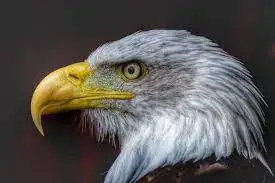
What type of food does this bird eat, based off its beak?
a)
Fish
b)
Fruit
c)
Nectar
d)
Small Mammals
78.
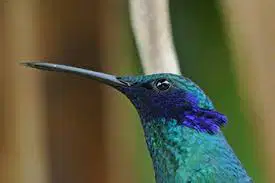
What type of food does this bird eat, based off its beak?
a)
Fish
b)
Fruit
c)
Nectar
d)
Small Mammals
79.
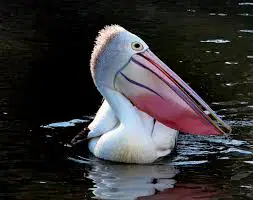
What type of food does this bird eat, based off its beak?
a)
Fish
b)
Fruit
c)
Nectar
d)
Small Mammals
80.
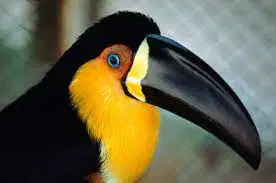
What type of food does this bird eat, based off its beak?
a)
Fish
b)
Fruit
c)
Nectar
d)
Small Mammals
81.
Which of the following is not a way in which reptiles can hear?
a)
Tympanic membrane
b)
Jaw bone vibrations
c)
Ear
d)
All of the above
82.
Which of the following are extinction risks for reptiles
a)
All of the above
b)
Habitat Loss
c)
Over-hunting
d)
Introduction of exotic species
e)
Only A and B
83.
In reptiles, fertilization occurs within the ____.
a)
tubes
b)
cloaca
c)
ureter
d)
ovary
84.
Which of the following are roles of the amniotic egg?
a)
To protect and nourish the embryo.
b)
To keep the embryo moist and safe.
c)
To provide the embryo with a food source.
d)
All of the above
85.
What is one benefit to reptiles of having an amniotic egg?
a)
Their egg does not require oxygen.
b)
They can have external fertilization.
c)
Their eggs are protected by Jacobsen’s organs.
d)
They do not have to return to the water to reproduce.
86.
What is the essential adaptive value of the amniotic egg?
a)
additional layers of protection against toxins
b)
a shell that protects the embryo from damage
c)
the presence of yolk as a food source
d)
an embryo surrounded by its own watery environment
87.
Yellowstone Park is located in the northern Rocky Mountains in the western United States. Because of Yellowstone’s cool, dry conditions, there are only six species of reptiles found there, and there is only one lizard, the Sagebrush Lizard. In Yellowstone, where might you look for this lizard?
a)
on mountain ridges
b)
in mountain meadows
c)
near lakes in the craters of old volcanoes
d)
in geyser basins and hydrothermal areas
88.
Rather than urea or ammonia, the nitrogenous wastes of reptiles are excreted as ___________.
a)
urine
b)
uric acid
c)
urea
d)
feces
89.
Which of the following is/are a reptile?
a)
Crocodile
b)
Snake
c)
Alligator
d)
All of the above
90.

What is the structure labeled A?
a)
Embryo
b)
Allantois
c)
Amnion
d)
Chorion
e)
Yolk Sac
91.

What is the structure labeled B?
a)
Amnion
b)
Allantois
c)
Chorion
d)
Embryo
e)
Yolk Sac
92.

What is the structure labeled C?
a)
Chorion
b)
Allantois
c)
Amnion
d)
Embryo
e)
Yolk Sac
93.

What is the structure labeled D?
a)
Yolk Sac
b)
Allantois
c)
Amnion
d)
Chorion
e)
Embryo
94.

What is the structure labeled E?
a)
Shell
b)
Allantois
c)
Amnion
d)
Chorion
e)
Embryo
95.

What is the structure labeled G?
a)
Allantois
b)
Amnion
c)
Chorion
d)
Embryo
e)
Yolk Sac
96.
Human beings normally have many bacteria living in their
intestines. The bacteria get what they need from the
human digestive tract. In return, they make vitamins that
the human body needs. This relationship between human
beings and bacteria is an example of
a)
symbiosis
b)
competition
c)
reproduction
d)
biodiversity
97.
To be classified as a living thing, an object must be able to
a)
make its own food
b)
grow and develop
c)
move on its own
d)
do all of the above
98.
What process gives rise to offspring?
a)
metabolism
b)
reproduction
c)
homeostasis
d)
growth and development
99.
Which theory states that the characteristics of organisms are controlled by inherited pieces of DNA?
a)
cell theory
b)
evolutionary theory
c)
gene theory
d)
homeostasis
100.
Which of the following is not one of the main unifying principles of biology?
a)
mitosis
b)
cell theory
c)
evolution
d)
homeostasis
101.
Living things interact with other organisms in order to survive. This is called __________
a)
interactive inderpendence
b)
survival-independence
c)
interdependence
d)
independence
102.
Organisms compete for which of the following resources...
a)
food
b)
water
c)
space
d)
all of the above
103.
The binomial nomenclature for lion is known as Panthera leo. Which taxa does leo represent?
a)
species
b)
genus
c)
family
d)
kingdom
104.
Which process explains how some members of a species pass on advantageous traits because they are better suited or adapted to their environment?
a)
symbiosis
b)
interdependence
c)
natural selection
d)
adaptation
105.
What taxon is the largest most inclusive group
a)
class
b)
family
c)
kingdom
d)
domain
106.
A group of related organisms that includes an ancestor and all of its descendants is called a(n)
a)
order
b)
kingdom
c)
clade
d)
phylogenetic tree
107.
What type of cell are organisms from the Archaea and Bacteria domains?
a)
plant
b)
animal
c)
prokaryotic
d)
eukaryotic
108.
Domain ______________ includes all eukaryotic organisms, including single-celled and multicellular organisms.
a)
Bacteria
b)
Archaea
c)
Eukarya
109.
What are the kingdoms that make up the domain Eukarya?
a)
Bacteria, Plantae, Fungi, Animalia
b)
Protista, Plantae, Fungi, Archaea
c)
Protista, Plantae, Fungi, Animalia
d)
Plantae, Fungi, Animalia
100 %

