
 Worksheets
Italian Renaissance in the 15th Century
Total questions: 27
Worksheet time: 17mins
In which of the following the most recognisable elements of Alberti's works (invisible columns and triumph arcs) can be seen?

Basilica of San Andrea

Tempio Malatestiano

Palazzo Medici

Cathedral of Santa Maria del Fior
Why is Michelozzo's Palazzo Medici an excellent example of Renaissance palaces?

Interior inspired by Classical ideals

Uses Alberti's invisible columns
Use of subtle elements
Brunelleschi is well known for using simple forms, harmony, proportions and mathematical structures, but also strong lines. Which of the following were designed by him?

Foundling Hospital

Cathedral of Santa Maria del Fiore

Pazzi Chapel

Santa Maria Novella
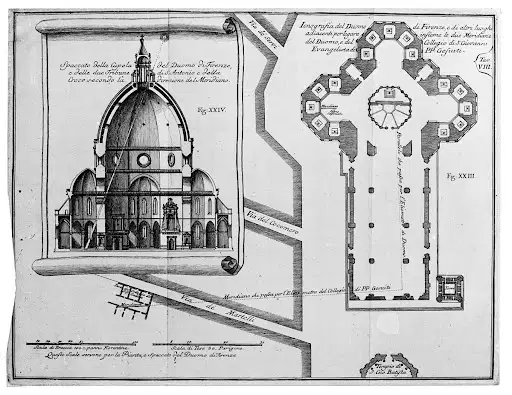
What makes Brunelleschi’s Duomo Cathedral in Florence so revolutionary?
Created an inner dome that supported the outer dome
Used an oval shaped dome instead of a semi-circle
Utilised invisible structures connecting the inner and outer dome
Made use of the invisible columns on the reinforced the octagonal structure below
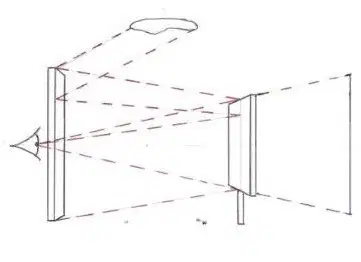
Brunelleschi is also known for his experiment with perspective, he helped to consolidate this as one of the main techniques developed in the Renaissance.
True
False
Which of the following is Ghiberti's iconic Eastern Door of the Baptistery (Porta del Paradiso)?


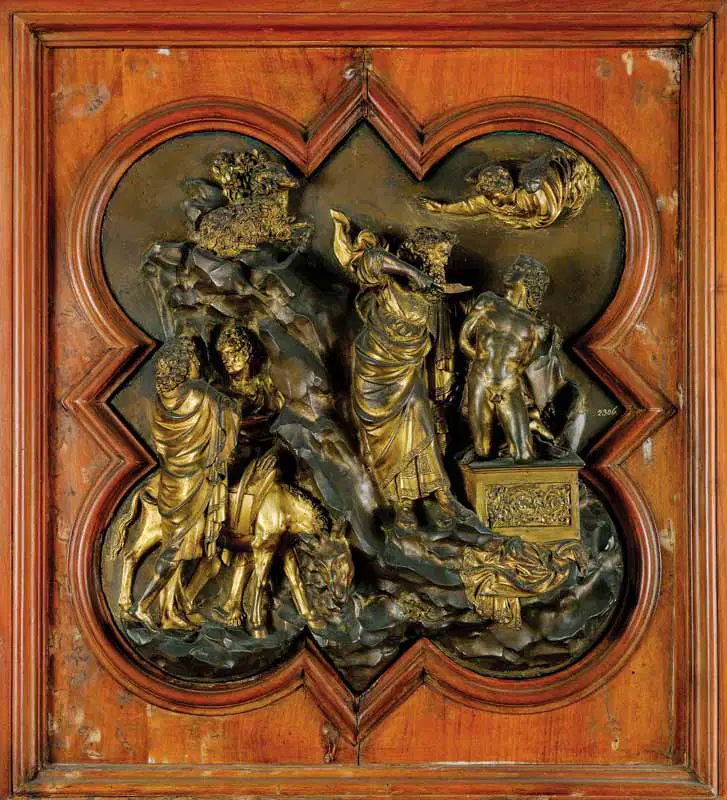
Select the correct description of this artwork.
Sacrifice of Isaac, Lorenzo Ghiberti
Sacrifice of Isaac, Filippo Brunelleschi
Which of the following artworks by Donatello displays the technique called Rilievo Schiacciato?

Madonna delle nuvole

Tabernacolo eucaristico

Delivery of the Keys to St Peter...

David
Which of the following artworks by Donatello demonstrates his high domain in balancing sculptures' weight?

David

Equestrian Statue of Gattamelata

David

Penitent Magdalene
Masaccio is one of the pioneers of renaissance techniques, especially perspective, which was his greatest achievement. Select which of the following artworks belong to him.

The Holy Trinity

The Tribute Money

Crucifixion of St Peter

The Expulsion of Adam and Eve

The Feast of Herod
Which paintings belong to Fra Angelico?
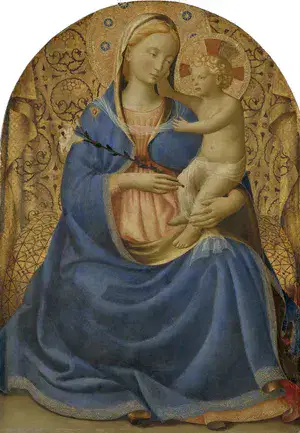
Madonna of Humility
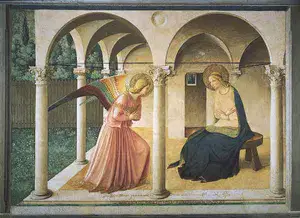
The Annunciation
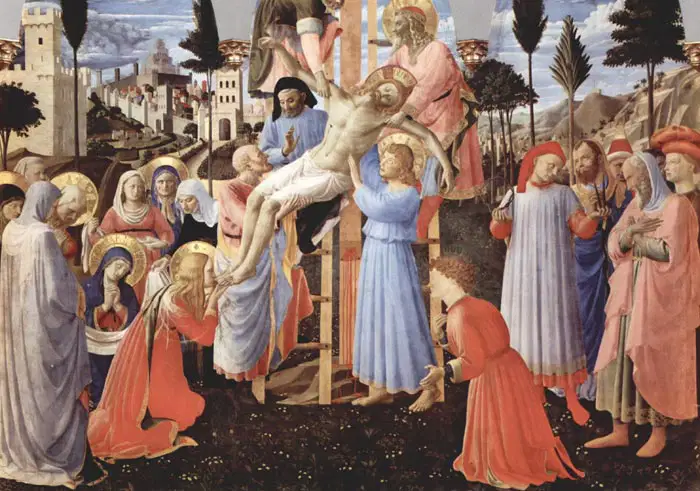
Deposition from the Cross
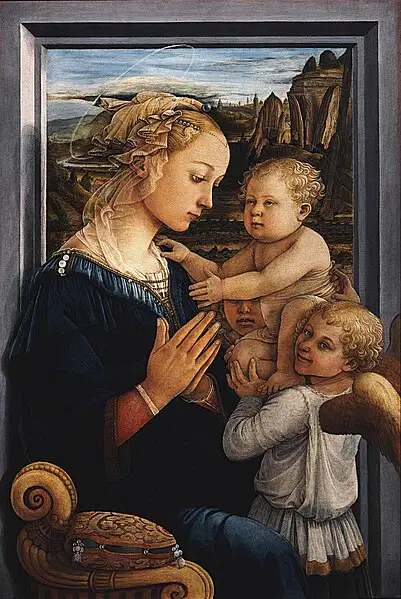
Madonna and Child with two Angels
Which paintings belong to Fra Filippo Lippi?

The Annunciation
The Annunciation

The Nativity
Madonna and Child with two Angels
Which paintings belong to Benozzo Gozzoli?
The Annunciation
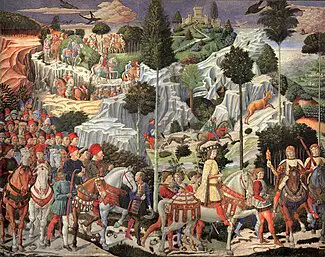
Journey of the Magi
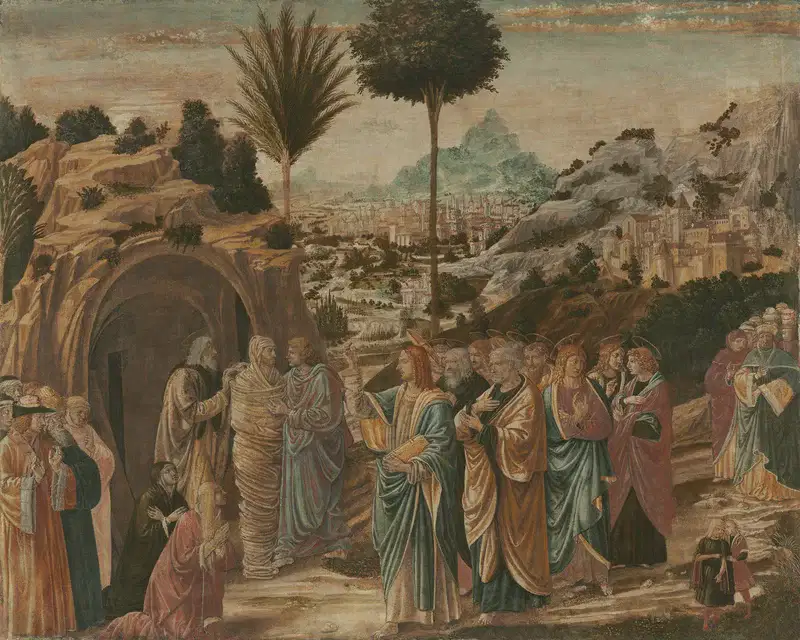
The Raising of Lazarus

Saints with Kneeling Donors
In some of his compositions, figures are arranged hierarchically according to their importance, with larger figures representing more significant individuals, a convention inherited from Gothic art. This is what sets Fra Angelico apart from Filippo Lippi and Benozzo Gozzoli.
True
False
What are the main characteristics of Fra Angelico, Fra Filippo Lippi and Benozzo Gozzoli’s paintings?
Raise of greater emphasis on naturalistic figures and the use of linear perspective
Growing interest in classical motifs and themes
Compositions that create a sense of depth and spatial coherence
Incorporates intricate decorative elements and patterns, inherited from the Gothic style
Religious themes and iconography
In Fra Filippo Lippi's paintings, religious scenes are often set in familiar domestic interiors, making the divine more accessible. Is this what sets him apart from Fra Angelico and Benozzo Gozzoli?
True
False
Compared to Fra Angelico and Fra Filippo Lippi, Benozzo Gozzoli's use of landscapes are rather poor and lack naturalism.
True
False
Who are the three artists who experimented on different aspects of perspective in the Renaissance period called Manera Secca?
Uccello, Piero della Francesca and Mantegna
Fra Angelico’s, Filippo Lippi’s and Benozzo Gozzoli
Botticelli, Masolino and Ghirlandaio
Donatello, Verrocchio and Masaccio
Uccello focused on using subtle elements to give an impression of perspective on both subject and background.
True
False
Piero della Francesca worked only on the depth of field, coming up with paintings that have amazing perspective, but unidimensional scenes.
True
False
Mantegna didn't care about the limits of perspective distortion on a real setting and how to replicate them on paintings.
True
False
These artworks together kind of represent a ying yang idea. While one was still mostly relying on Gothic's style of naturalistic paintings without perspective, the other work represents the new values that started to appear in the Renaissance.
The above statement is TRUE for which pair of paintings?
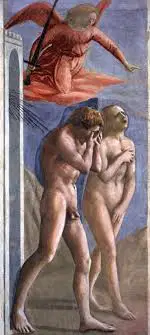
Expulsion from The Garden of Eden, Masaccio

Temptation of Adam and Eve, Masolino
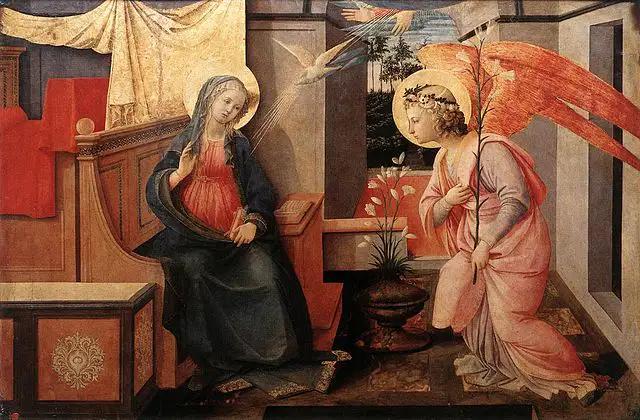
The Annunciation, Fra Filippo Lippi

The Annunciation, Fra Angelico
Which of the following is a painting done by Uccello?
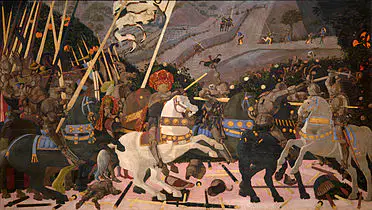
Niccolò Mauruzi da Tolentino at the Battle of San Romano
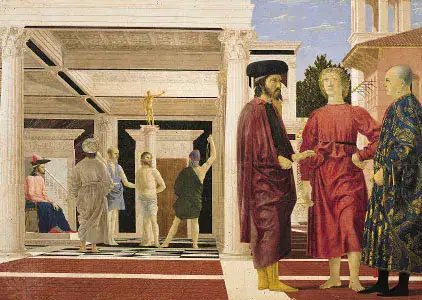
The Flagellation of Christ

The lamentation over the dead Christ
Which of the following is a painting done by Piero della Francesca?
Niccolò Mauruzi da Tolentino at the Battle of San Romano
The Flagellation of Christ
The lamentation over the dead Christ
Which of the following is a painting done by Mantegna?
Niccolò Mauruzi da Tolentino at the Battle of San Romano
The Flagellation of Christ
The lamentation over the dead Christ

Palazzo Ducale Oculus
Which of the following are Sandro Boticelli's artworks?
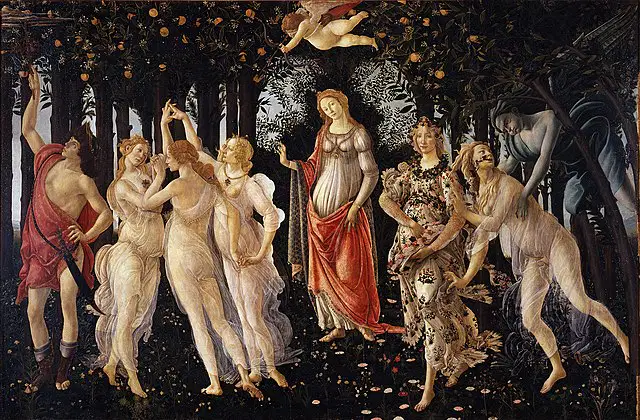
Primavera
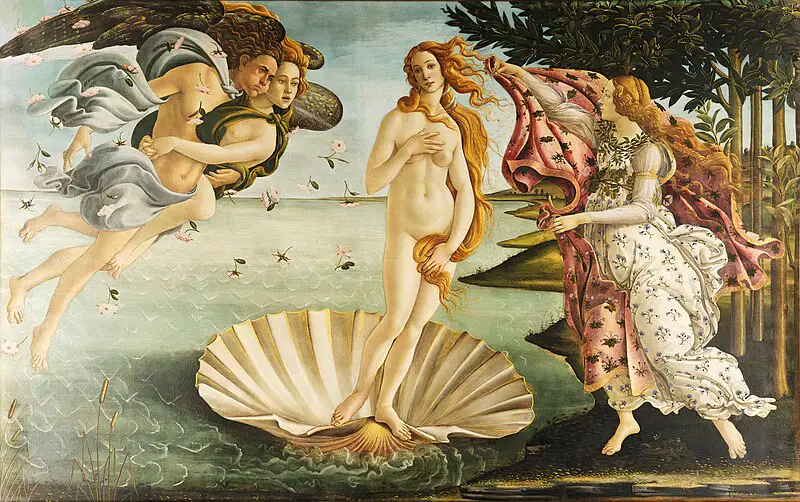
The Birth of Venus
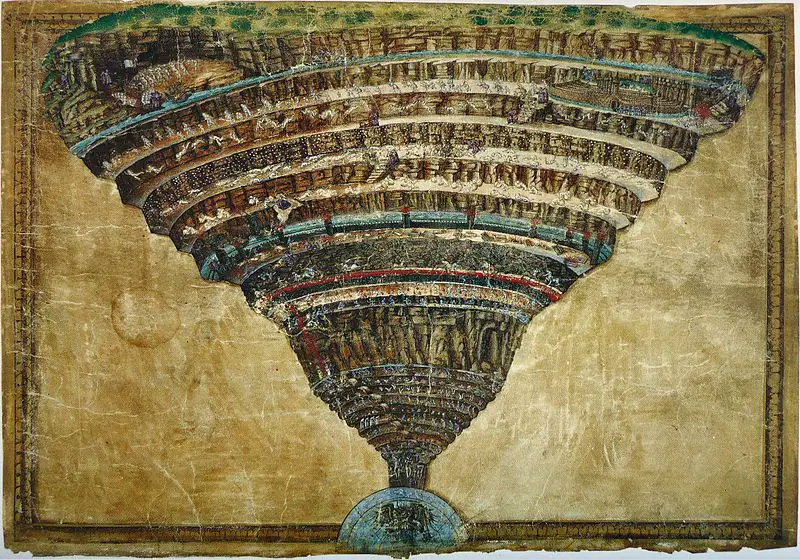
Chart of Hell
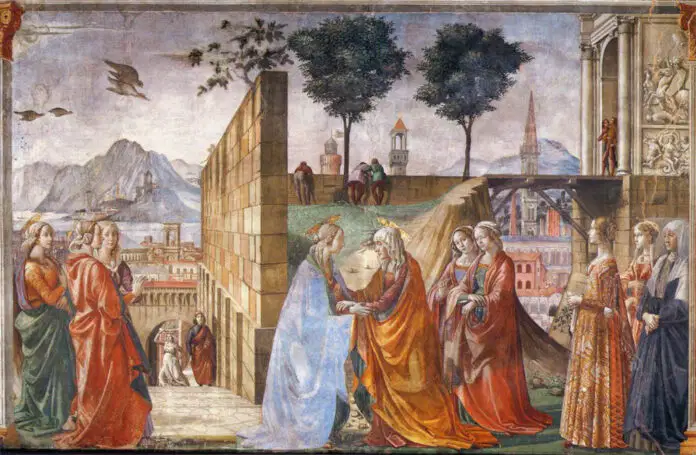
Visitation
The New Generation in Venice were heavily inspired by the Netherlandish 14th Century's style. Just like them, they're very realistic, but they take a step forward on the perspective aspect of the paintings.
Which painters is this statement talking about?

Domenico Ghirlandaio, Adoration of the Shepherds

Hugo van der Goes
(Portinari Altarpiece)

Andrea Botticelli
(Primavera)
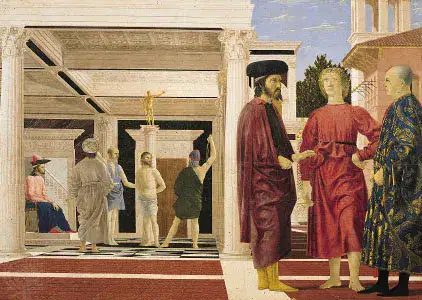
Piero della Francesca
(The Flagellation of Christ)

