
 Worksheets
Final review Env Sci DC creek
Total questions: 18
Worksheet time: 9mins
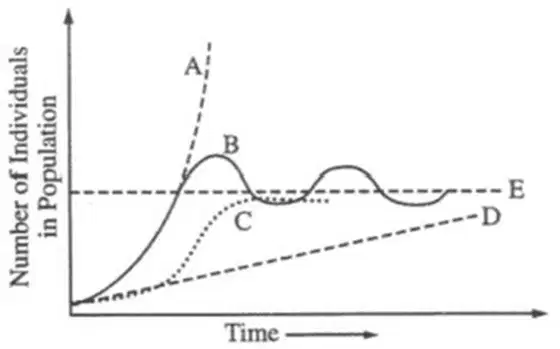
Which marked letter on the graph above represents the biotic potential of the species?
A
B
C
E
Which of the following best exemplifies global collaboration for a sustainable environment?
The Montreal Protocol
The Antarctic Treaty of 1961
The Clean Air Act of 1972
CERCLA (Superfund)

Which of the lettered choices in the soil profile above represents the region with the greatest concentration of organic material?
A
B
C
D
E
Which of the following will result in accelerated eutrophication when introduced into streams, lakes, and bays?
nitrates
bacteria and viruses
herbicides
acid wastes and salts
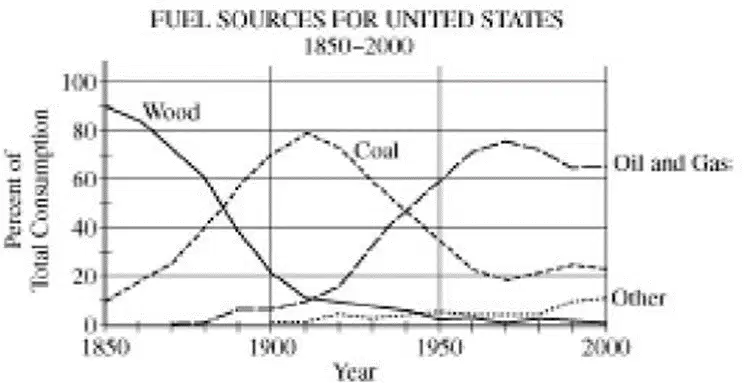
For the next question refer to the graph showing the percent contribution of major fuel sources that have supplied energy for the United States for the past 150 years. The category labeled “Other” includes nuclear power, hydroelectricity, solar and wind power, and other alternative sources of energy.
Nuclear power is a component of the line labeled “Other” in the graph. Why is it impossible for nuclear energy to completely replace oil and gas in the future?
Nuclear power can supply electricity, but it cannot replace other uses of oil and gas.
At the current rate of consumption, there is only enough uranium to last for fifteen more years.
Nuclear power is unacceptable to the public, so they will not allow it.
Nuclear energy is too costly for general use.
Nuclear waste contributes more to global climate change than do oil and gas.
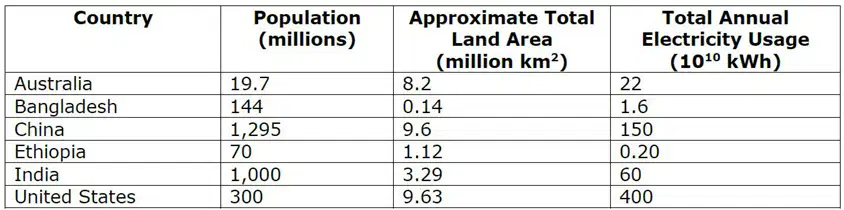
The country with the highest population density is______
Australia
Bangladesh
China
Ethiopia
The United States
Ecosystems achieve sustainability through -
making life forms more complex by reversing the Second Law of Thermodynamics.
recycling solar energy through biogeochemical cycles.
use of one-way solar energy flow and efficient recycling of nutrients.
use of renewable solar energy and one-way flow of nutrients.
making life forms less complex by reversing the First Law of Thermodynamics.
Which of the following inter-species relationships is best exemplified by Atlantic Puffins nesting abandoned Rabbit burrows?
Mutualism
Amensalism
Predation
Commensalism
Parasitism
When could high rates of species extinction caused by human activities have taken place?
At the end of the Permian period
All of these
During recent times
At the end of the Cretaceous period
Which of the following identifies the two factors thought to be the most harmful to biodiversity?
Depletion of the ozone layer and oil drilling
Global warming and decline in fisheries
Changes in climate and proliferation of endemic species
Destruction of habitat and invasion by non-native species
Acid deposition and increased use of fertilizers for agriculture
An environmentally sustainable society
does not degrade its natural capital
provides its population with adequate and equitable access resources
does not compromise access of future generations to basic needs
all of these
lives off its natural income of renewable resources
Fragmenting one large park or preserve into many small parks with human habitation in between them is most likely to lead to which of the following?
stabilization of microclimates
increase in population size of top carnivores
increase in gene flow within species
decrease in the proportion of edge habitat
reduction in species diversity
Some specialist species provide early signs that ecosystems are changed or damaged. What are these species called?
indicator species
non-native species
endemic species
keystone species
foundation species
Which of the following would most likely have the greatest positive impact on the quality of the natural environment worldwide?
increased agricultural production on marginal desert lands
increased reliance on food from ocean ecosystems
stabilization or reduction of the size of the human population
increased life expectancy in more developed nations
discovery of new reserves of fossil fuel in coastal areas
When lions and leopards live in the same area, lions take mostly larger animals as prey and leopards take smaller ones to avoid direct competition. This is referred to as
commensalism
mutualism
predator-prey competition
symbiosis
resource partitioning
Which of the following practices would have the biggest impact on achieving global sustainability?
Using fuel-efficient vehicles
Replanting deforested areas
Developing ecotourism venues
Reducing human population size
Recycling aluminum cans
Brown pelicans are fish-eating birds. As a result of an El Niño event, the population of brown pelicans in southern California declines. Which of the following best explains the relationship between the El Niño event and the population decline?
Warmer ocean temperatures can cause fish to move to colder water farther from pelican nest sites.
Lower sea surface heights can result in pelican nest sites being isolated too far from their food supply in the ocean.
The female reproductive tract of birds does not function at the lower water temperatures of El Niño
Male pelicans get disoriented due to the lack of moisture and fail to return to the nest with food.
Predatory seal populations increase dramatically due to decreased rainfall.

