
 Worksheets
Hawaiian History Final
Total questions: 60
Worksheet time: 2hrs 30mins
Who was Pā‘ao and what was his significance in Hawaiian history?
A master navigator who brought new religious practices from Tahiti including human sacrifice
The first king of Hawaii
A legendary warrior from Maui
A local chief who opposed foreign influence
What was the primary achievement of ‘Umi-a-Liloa?
Building the first heiau
Unifying the island of Hawaii under his rule
Establishing trade with Europeans
Creating the kapu system
In Hawaiian mythology, Kāne was known as:
The god of the ocean and sea life
The god of war and human sacrifice
The god of creation and fresh water
The god of agriculture and farming
Kanaloa is traditionally associated with:
Mountains and volcanoes
The underworld, deep seas, and traditional navigation
The wind and storms
Healing and medicine
Kūka‘ilimoku was particularly important to:
Fishermen and sailors
Farmers and craftsmen
Women and children
Warriors and chiefs
Lonoikamakahiki was famous for:
His skill in astronomical navigation
His military conquests
His peaceful reign and his associations with the Lono religion and Makahiki ceremony
His resistance against European influence
The ‘Aikapu system primarily:
Regulated fishing practices
Determined land ownership
Governs social interactions and eating practices
Established trading protocols
The significance of January 18, 1778 was:
The unification of the Hawaiian islands
The arrival of Captain James Cook
The arrival of the Elanora
The arrival of the Thaddeus
Kalaniopuʻu was known for:
Meeting Captain Cook as the ruler of Hawaii Island and for being the uncle of Kamehameha.
Abolishing the kapu system
Building the first European-style fort
Discovering the Naha stone
Kīwalaʻō's reign ended due to:
Natural causes
European diseases
A peaceful transition of power
His demise at the battle of Mokuʻōhai at the hands of Keʻeaumoku.
Alapaʻi's relationship with Kamehameha I was:
Defined by his attempt to pinch of the wauke shoot and kill an infant Kamehameha.
Trained him in warfare
Raised and protected him
Challenged him for power
Captain George Vancouver:
Brought the first cattle to Hawaii and was an ally of Kamehameha the great
Established the first sugar plantation
Led the first whaling expedition
Introduced slavery
The Naha stone was significant because:
It marked ancient burial grounds
It was used for religious ceremonies
It proved Kamehameha's destiny that he would be the one to Unite the Hawaiian islands
It marked territorial boundaries
Kekūhaupiʻo was famous as:
The first sacrifice at Puʻu Koholā heiau
Kamehameha's warrior trainer from Keʻei
A religious leader
A master navigator
Puʻu Koholā heiau was built:
To honor the god Lono
To fulfill a prophecy by Kapoukahi that if built Kamehameha would conquer all the Hawaiian islands.
As a burial temple
To mark territorial boundaries
Ke‘eaumoku was significant as:
A master canoe builder
A prophet and priest of Kaua‘i
A Kona chief who supported Kamehameha and was the father of Ka‘ahumanu
The first Christian convert
Ka‘ahumanu's most significant role was:
Breaking the kapu system
Leading military campaigns
Establishing trade routes
Preserving ancient traditions
The Battle of Kuamo‘o was fought over:
Land rights
The abolition of the kapu system
Succession rights
Trading privileges
Kepaniwai is remembered as:
A sacred burial ground
The site of a major battle in Maui in which Kamehameha‘s forces defeated Kalanikapule
A peace treaty location
A religious ceremony site
Ka lele a ka ‘anae refers to:
A famous battle fought in Maui where the warriors bodies dammed the river.
A military strategy
A prophecy about Kamehameha
A famous battle fought on O‘ahu in 1795 where O‘ahu warriors were driven off the Pali lookout
Who was Keōuakū‘ahu‘ula?
A British naval commander
The last independent chief of Ka‘ū who was sacrificed at Pu‘u Koholā heiau
The last chief of Kaua‘i that was never conquered by Kamehameha.
A French diplomat
What is the Kānāwai Māmalahoe?
A traditional Hawaiian dance
A sacred burial ground
The Law of the Splintered Paddle
A type of Hawaiian weapon
The lei niho palaoa was:
A ceremonial feast
A type of Hawaiian medicine
A royal necklace made of human hair and whale tooth ivory.
A traditional battle formation
John Young was significant in Hawaiian history because he:
Served as military advisor to Kamehameha I
Was the first Christian missionary
Discovered the islands
Led the overthrow of the monarchy
Liholiho is better known as:
King Lunalilo
Kamehameha III
Kamehameha II
King Kalākaua
Nahi‘ena‘ena was:
A type of traditional ceremony
A sacred mountain
The sister of Kamehameha III
A foreign diplomat
What significant role did Kauikeaouli play in the Hawaiian kingdom?
He wrote the first constitution of Hawai‘i in 1840
He helped create the first Public school system in Hawaii
Declared He aupuni palapala ko‘u (I have an educated nation)
All of the above
Keōpūolani was important because she:
Led the resistance against Americans
Was the highest ranking wife of Kamehameha I
Signed the first constitution
Negotiated with foreign powers
Gun Boat diplomacy refers to:
A peace treaty signing
Traditional Hawaiian warfare
The use of military threat in the 19th century by western powers to achieve goals and concessions from less powerful nations.
A type of naval vessel used to scare missionaries
Which event occurred on November 28, 1843?
The Great Mahele began
Britain and France recognized Hawaiian independence
The overthrow of the monarchy
The arrival of missionaries
Hiram Bingham was significant because he:
Was a foreign diplomat
Led the Hawaiian army
Was an influential missionary that led the first Calvinist missionary group to Hawaii.
Signed the Great Mahele
Lord George Paulet is known for:
A park in Honolulu named in his honor
Supporting Hawaiian independence
A British Naval captain who overthrew Kauikeaouli and occupied Hawaii for over five months.
Creating the first Hawaiian dictionary
July 31, 1843 is significant because:
The monarchy was overthrown
Hawaiian sovereignty was restored after an investigation by admiral Richard Thomas
The first missionaries arrived
The Great Mahele was enacted
Imperialism affected Hawaii through:
Cultural preservation efforts
Economic independence
Foreign political control and a push to modernize and westernize the government
Traditional governance
Pauli Ka‘ōleiokū was:
A royal advisor to Pauahi
A son of Kamehameha I who is the ancestor of Bernice Pauahi Bishop
A foreign diplomat
A Christian convert
January 17, 1893 marks:
The overthrow of the Hawaiian monarchy
The arrival of Captain Cook
The unification of the islands
The signing of the first constitution
Timoteo Ha‘alilio served as:
A military commander
A religious leader
A Hawaiian diplomat that helped secure formal recognition of the Hawaiian Kingdom along with William Richards and Sir George Simpson
A foreign diplomat
All is true about Lahainaluna except:
It started as a seminary school.
It has a big L located above the school.
It is the oldest school in Hawaii established in 1831
It is located in Kula.
Keōpūolani is buried at.
Pu'u koholā
Waine'e cemetary
Mauna ala
Mauna kea
What is the meaning of "Ua mau ke ea o ka ‘āina i ka pono"?
The stars guide our way
The sovereignty of the land is forever in its true and proper condition.
The ocean connects all islands
The wisdom of the ancestors lives on
What significant event occured on December 19, 1831
The first Hawaiian language newspaper was published.
The first Christian missionaries arrived
The birth of our founder Bernice Pauahi Bishop
The first Hawaiian constituion was signed
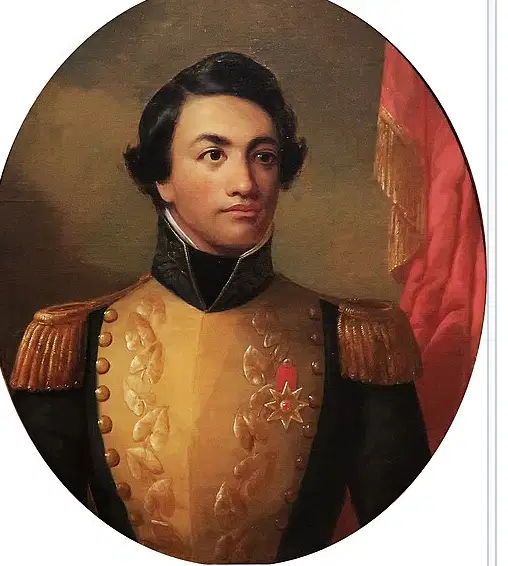
Who is this important ali'i that brought the Hawaiian Kingdom into the modern era with the first constitution.
Liholiho
Kauikeaouli
Kapaʻakea
Lot Kapuaiwa

Who is this important ali'i?
Kauikeaouli
Kapaʻakea
Alexander Liholiho
Liholiho
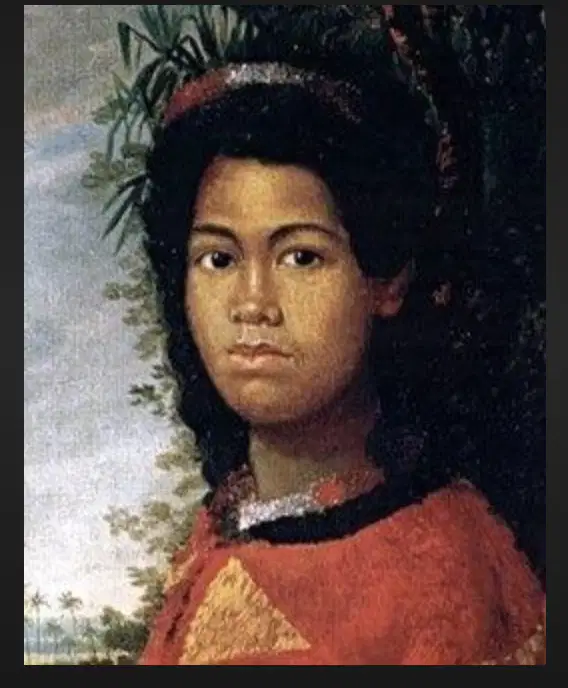
Who is this important ali'i?
Kīna'u
Pauahi
Liliuokalani
Nahi'ena'ena

ʻO wai kēia mau aliʻi.
ʻO liholiho lāua ʻo Tamamalu.
ʻO Boki lāua ʻo Liliha
ʻO Boki lāua ʻo Liholiho
ʻO Kamehameha lāua ʻo Keopuolani.

Who is this important ali'i who was a favorite wife of Kamehameha and became the first Kūhina nui in the Kingdom of Hawai'i.
Kīnaʻu
Kaʻahumanu
Kekauluohi
Namahana
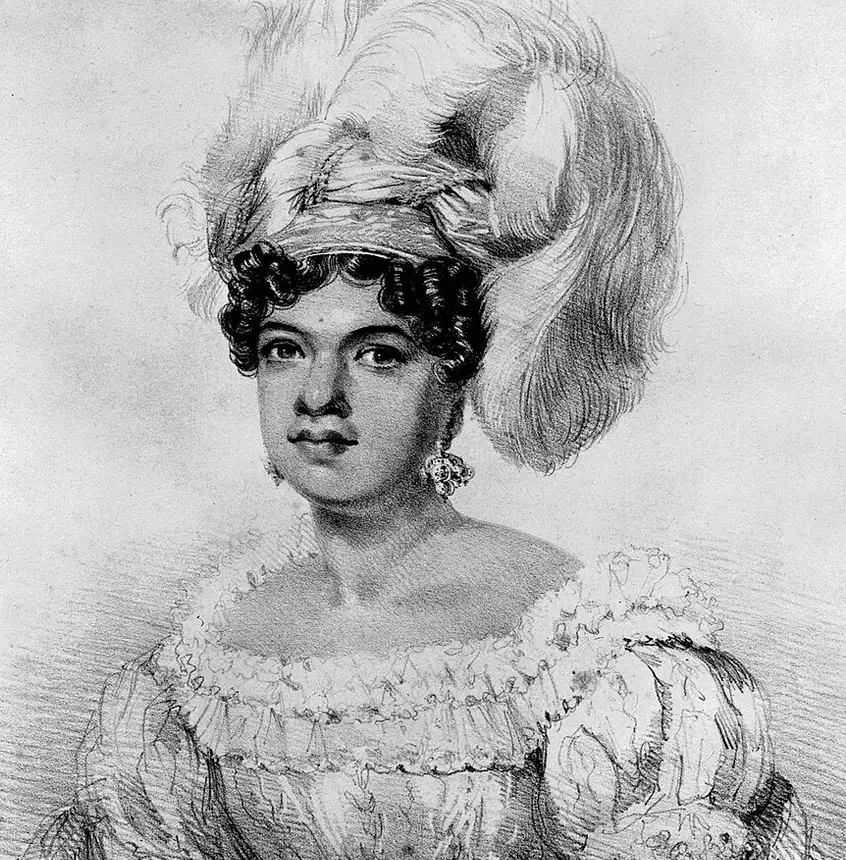
Who is this important ali'i who died of measles while on a trip to London?
Queen Emma
Bernice Pauahi Bishop
Tamamalu
Nahiʻenaʻena

Who is this important ali'i that led the battle against Kekuaokalani at the battle of Kuamo'o?
Kauikeaouli
Kalanimoku
Liholiho
Boki
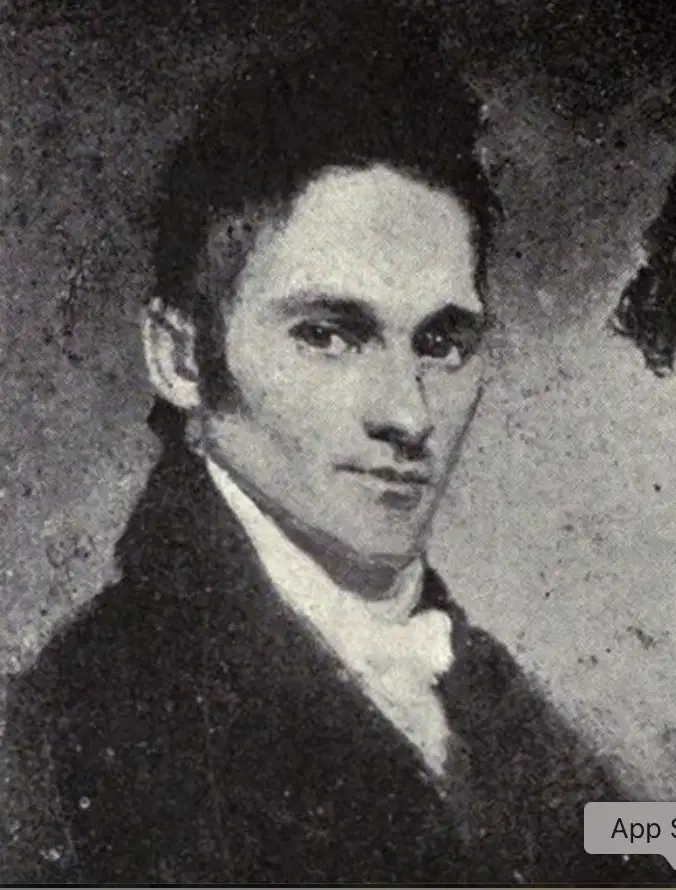
Who is the first missionary that arrived in 1820 after the fall of the kapu system.
Ka'ahumanu
Henry 'Ōpūkaha'ia
Lorrin Thurston
Hiram Bingham

ʻO wai kēia aliʻi?
Kamehameha I
Kamehameha II
Kaʻiana
Kalanimōkū
Who was the first ruler to unite all the Hawaiian Islands under a single kingdom?
Kaʻahumanu
Kauikeaouli
Kamehameha I
Liholiho
All is true about Liholiho except
He free ate with his mother and stepmother in Kailua Kona.
He sailed away to London with his wife to strengthen ties with England
He alllowed the first missionaries into Hawai'i on a probationary basis.
He converted to Christianity.
Which Hawaiian chief is credited with training Kamehameha I in the art of warfare?
Kekūhaupiʻo
Ke‘eaumoku
Kaʻiana
Kalaniopuʻu
All is true about Ke'ōpūolani except.
She did not want Liholiho to break the kapu.
She was the highest ranking ali'i under the kapu system.
The first kapu food she took part in was eating of coconuts.
She was the first to break the kapu on eating.
Which Hawaiian chief is credited with breaking the kapu system alongside Kaʻahumanu?
Kamehameha II (Liholiho)
Kauikeaouli
Kamehameha I
Keōuakū‘ahu‘ula
Kauikeaouli famously said. "The Hawaiian nation is an educated nation, the _____ man is my man."
proud
thrifty
greedy
righteous
All is true of Kekuaokalani except.
He was a brother of Liholiho.
He died alongside his wife Manono at the battle of Kuamo'o.
He wanted the kapu system to be put back into place.
He led the battle against the free eaters. ('ainoa)
Kauikeaouli was born in
Pu'ukoholā, Kawaihae
Hana, Maui
Keauhou
Kailua,kona
Kauikeaouli was raised by..
Ke'ōpūolani
Ka'ahumanu
Kīna'u
Ka'ikioewa and Kapihe
The Bishop museum was built to fulfill a promise by _______ to house the treasures of the Kamehameha families of Ruth, Emma, and Pauahi.
Kauikeaouli
Lot Kapuaiwa
Charles reed Bishop
King Kalākaua

