wayground logo

Free Printable Worksheets

NEW

Font size

S
M
L
XL
Worksheets

Chemistry Semester Assessment

Total questions: 55

Worksheet time: 2hrs 58mins

Name
Class
Date
1.
After completing an experiment, all chemical wastes should be
a)
dumped down sink
b)
taken home
c)
thrown in trash
d)
disposed of according to teacher's directions
2.

When you finish working with chemicals, biological specimens, etc., always

a)

treat your hands with skin lotion.

b)

wash your hands thoroughly with soap and water.

c)

wipe your hands on a towel.

d)

wipe your hands on your clothes.

3.

Inferences use ______________ to form opinions/explanations.

a)

singing

b)

evidence

c)

magnifying glasses

4.
Reacts with Acid: Chemical or Physical Property
a)
Chemical Property
b)
Physical Property
5.
Solubility (dissolves): Chemical or Physical Property
a)
Chemical Property
b)
Physical Property
6.
Water is an example of:
a)
compound
b)
element
c)
solution
7.
This picture represents which of the following?
a)
element
b)
compound
c)
mixture
8.
This picture represents which of the following?
a)
element
b)
compound
c)
mixture
9.
One of the signs of a chemical reaction taking place is:
a)
Bubbles are produced 
b)
Reactants are not combining
c)
Products are not forming
d)
Color is not changing
10.
Which of the following describes a precipitate?
a)
a liquid forms when a block of metal is heated
b)
a solid forms when one liquid is poured into another
c)
a gas forms when a solid is placed in a liquid
d)
bubbles form when an acid is poured on a rock
11.
Which of the following is NOT a characteristic of most metals?
a)
Brittle
b)
Good conductor
c)
Ductile
d)
Malleable
12.
Which of these grouping of elements could have the characteristic of luster (shiny)?
a)
Metal
b)
Nonmetal
c)
metalloids
d)
Both metals and metalloids
13.
The table shows the classification and physical state of four elements.Which element most likely has a shiny luster?
a)
Cobalt
b)
Arsenic
c)
Hydrogen
d)
Carbon
14.

Mendeleev left spaces in his periodic table for elements that hadn't been discovered yet.

a)

true

b)

false

15.

What is the atomic nucleus?

a)

The atomic nucleus is the central part of an atom that contains protons and neutrons.

b)

The atomic nucleus is a region in space where atoms are formed.

c)

The atomic nucleus is the outermost part of an atom that contains electrons.

d)

The atomic nucleus is a type of subatomic particle.

16.

Atoms of the same element which have a different number of neutrons are called _________________.

a)

ions

b)

isotopes

c)

quarks

d)

molecules

17.

How many neutrons does C-14 [atomic #6] contain? (tap to enlarge the image)

a)

6

b)

7

c)

14

d)

8

18.
In the modern periodic table elements are arranged by:
a)
atomic mass
b)
atomic number
c)
valence electrons
d)
number of isotopes
19.

The horizontal rows of the periodic table are called

a)
elements
b)
periods
c)
columns
d)
groups
20.

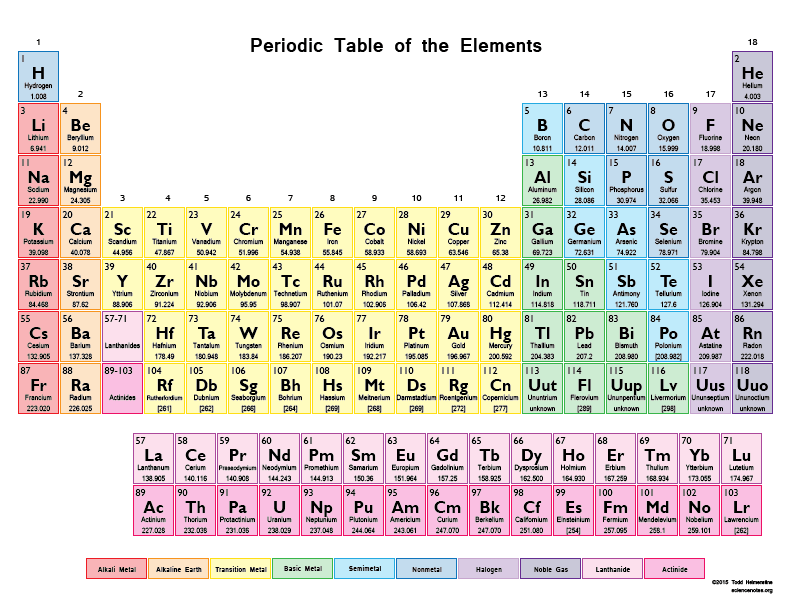
The chemical formula for hydrogen gas

a)

H2

b)

c)

21.

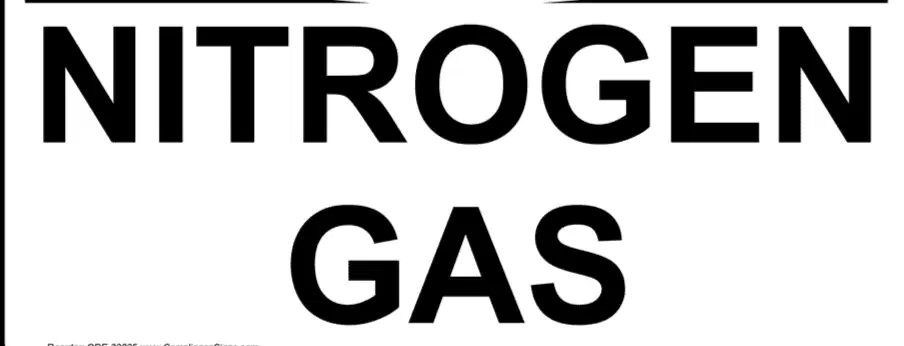
The chemical formula for nitrogen gas

a)

N2

b)

c)

22.

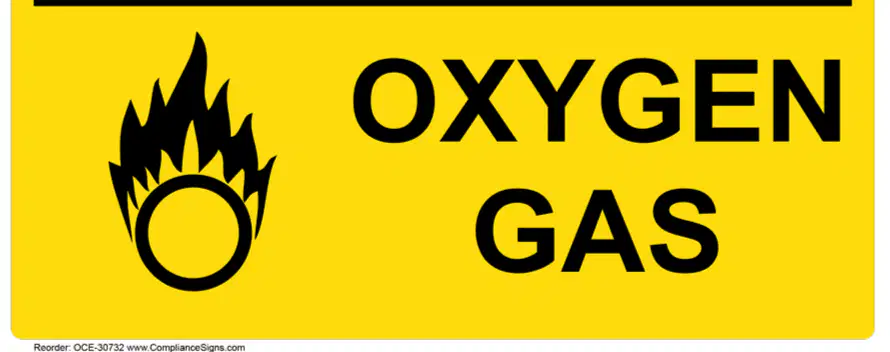
The chemical formula for oxygen gas

a)

O2

b)

c)

23.

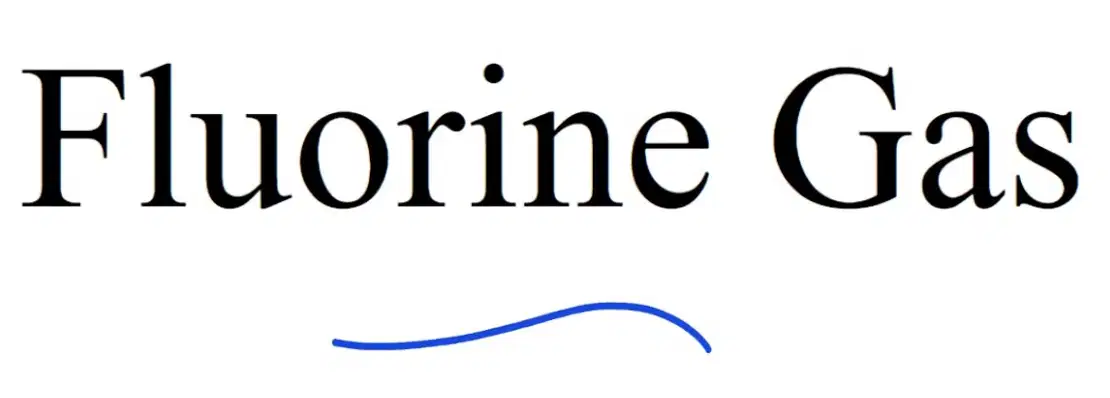
The chemical formula for fluorine gas

a)

F2

b)

c)

24.

Which of the following are completely unreactive

a)

Metals

b)

Noble gasses

c)

Non-metals

d)

Halogens

25.
If an element has 3 valence electrons, what charge will likely form on its ion ?  Hint:  It will lose those electrons.  What happens to the charge when it loses 3 electrons?
a)
+3
b)
+5
c)
-3
d)
-5
26.
What is the charge of an atom that has gained one electron?
a)
-1
b)
-2
c)
+1
d)
+2
27.
Ionic compounds form because _______ charges attract.
a)
opposite
b)
like
28.

What is the correct name for KNO3?

a)

Potassium nitrate

b)

Potassium nitrite

c)

Potassium nitride

d)

Potassium nitrogen oxide

29.

What is the chemical formula for Copper (I) sulfate?

a)

CuSO4

b)

Cu(SO4)2

c)

Cu2SO4

d)

Cu2(SO4)2

30.

What is the formula for Magnesium chloride?

a)

MgCl

b)

Mg2Cl

c)

MgCl2

d)

Mg2Cl3

31.

In what type of solution is water always the solvent?

a)

aqueous solution

b)

homogeneous solution

c)

heterogeneous solution

d)

mixtures

32.

Which of the following is ammonium?

a)

NH4+

b)

NO3-

c)

NO2-

d)

MnO4-

33.

What is the name of the compound Sc(OH)3?

a)

Scandium (III) hydroxide

b)

Scandium (I) hydroxide

c)

Scandium (II) hydroxide

d)

Scandium hydroxide

34.

What type of reaction is this?

a)

Combination (or Synthesis)

b)

Single replacement

c)

Double replacement

d)

Decomposition

35.

Which type of reaction is shown?

a)

Combustion

b)

Combination (or Synthesis)

c)

Decomposition

d)

Double replacement

36.

To balance this equation, what coefficient must be written in the blue box?

a)

1

b)

2

c)

3

d)

4

37.

Which type of reaction is shown?

a)

Single replacement

b)

Double replacement

c)

Combustion

d)

Decomposition

38.
Alpha particles.....
a)
a) are positively charged.
b)
b) consist of two protons and four neutrons.
c)
c) can penetrate any thickness of matter
d)
d) All of the above 
39.
During beta decay, a nucleus .... 
a)
gives up two protons and two neutrons.
b)
  maintains the same number of protons and neutrons.
c)
  loses a proton and gains a neutron.
d)
gains a proton and loses a neutron. 
40.

Solve the nuclear decay reaction:

a)
b)
c)
d)
41.

finish the equation


18173Ta --> ____ + 18174W

a)

42He

b)

0-1e

c)

y

42.

Solve this equation.

85209At = ___ + 24He

a)

83205Bi

b)

86209Rn

c)

81207Tl

d)

85208At

43.
Barium-122 has a half-life of 2 minutes. A fresh sample weighing 80 g was obtained. If it takes 10 minutes to set up an experiment using barium-122, how much barium-122 will be left when the experiment begins?
a)
0.25g
b)
2.5g
c)
25g
d)
80g
44.
If the half-life of uranium-232 is 70 years, how many half-lives will it take for 10 g of it to be reduced to 1.25 g?
a)
1 half-life
b)
2 half-lives
c)
3 half-lives
d)
4 half-lives
45.

The % of the parent isotope remaining after 1 Half Life.

a)

50%

b)

25%

c)

12.5%

d)

6.25%

46.

How does a manufacturer get a thin coating of another metal on the outside of a coin?

a)

Electroplating

b)

Paintin

c)

Pyrometallurgy

47.

___ Uses electric current for the production of metals and alloys.

a)

Pyrometallurgy

b)

Hydrometallurgy

c)

Electrometallurgy

48.

___ Involves high temperature processes where chemical reactions take place.

a)

Pyrometallurgy

b)

Hydrometallurgy

c)

Electrometallurgy

49.

Which metal is more reactive than calcium?

a)

magnesium

b)

potassium

c)

silver

d)

aluminum

50.

Will silver react with magnesium chloride solution?

a)

yes

b)

no

51.

Will this reaction happen if solid copper is dipped into a solution of zinc nitrate?

a)

Yes

b)

No

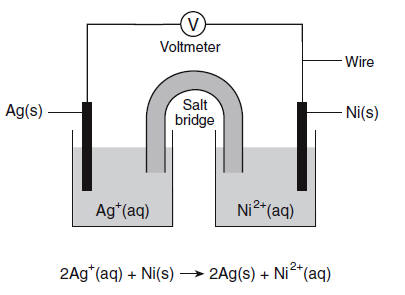
52.
What reaction occurs at the anode?
a)
Ag+ + e- →Ag
b)
Ag → Ag+ + e-
c)
Ni2+ + 2e- → Ni
d)
Ni → Ni2+ + 2e-
53.
What element is being Oxidized?
a)
N
b)
H
c)
O
d)
S
54.
What coefficient would Fe+2 have in the following reaction?
___ Al + ___ Fe+2 → ___ Al+3 + ___ Fe

a)
1
b)
2
c)
3
d)
6
55.
Which of the following half reactions correctly represents a reduction half reaction?
a)
Fe →Fe2+ + 2e-
b)
Pb4+ + 2e- →Pb2+
c)
2O-2 →O2 + 4e-
d)
Fe + 3e- →Fe3+