
 Worksheets
Biology 1st Semester Review
Total questions: 55
Worksheet time: 34mins
What do both prokaryotic and eukaryotic cells contain?
membrane-bound organelles
linear chromosomes
cytoplasm
a nucleus
Which molecules are joined together to make proteins?
fatty acids
nucleic acids
amino acids
acetic acids
Match the organelle to its description.
Proteins are made on these small structures.
Ribosomes
Controls all activity in the cell (the brain) and stores DNA
Nucleus
The fluid that fills the cell and
keeps the organelles in place
Cytoplasm
Power plant of the cell. They
create energy called ATP.
Mitochondrian
Outer lining the cells.
Controls what goes
in and out.
Cell Membrane
Plant cells are able to produce their own food. This process happens in which structure?
cell wall
chloroplast
mitochondrion
vacuole

These diagrams show a variety of cells from the same organism. How can cells from the same organism have such different shapes and functions?
As each cell differentiates, the DNA changes so that each type of cell has different DNA once it reaches maturity.
Mutations in the cells' nuclei lead to new combinations of DNA, resulting in different shapes and functions in the different types of cells.
During differentiation, different parts of the DNA in each type of cell are activated, resulting in the different structure and function of the cells.
During differentiation, different types of cells produce proteins which destroy the nonactive DNA, leading to cell specialization.
Which statement best explains why animals are considered heterotrophic?
They are able to produce food through the process of photosynthesis.
They are able to produce food through the process of respiration.
They are able to obtain nutrients by decomposing plant and animal tissue.
They are able to obtain nutrients by consuming other organisms or their products.
Which word equation best represents the process of cellular respiration?
carbon dioxide + glucose --> oxygen + water
carbon dioxide + water --> glucose + oxygen
glucose + oxygen ---> carbon dioxide + water
oxygen + water ---> carbon dioxide + glucose
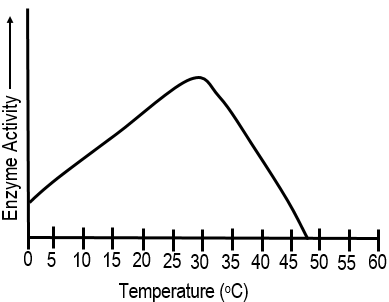
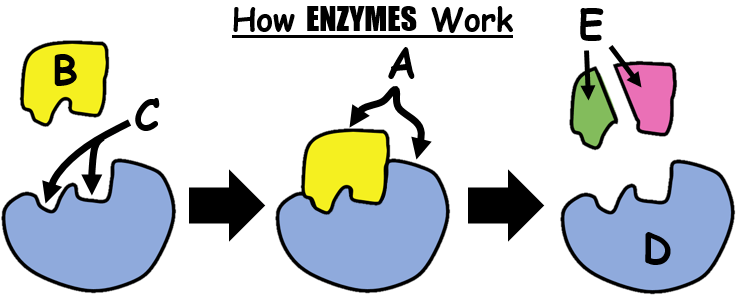
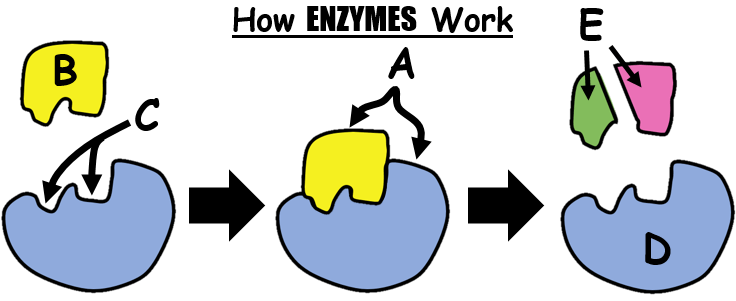
Which best explains why the rate of a biochemical reaction decreases at high temperatures?
The activation energy increases.
The shape of the enzyme changes.
The enzyme-substrate complex forms.
The bonds between substrates are broken.
A contractile vacuole helps protists eliminate excess liquid. This is a "pumping" process which reduces pressure inside the cell and prevents the cell from bursting. What is most likely the source of energy for this process?
DNA
lipids
ATP
ribosomes
Which molecules are joined together to make proteins?
fatty acids
nucleic acids
amino acids
acetic acids
Which of the following is permitted in the lab?
chewing gum
eating
drinking
none of these
Horseplay, practical jokes, or pranks in the classrooms are
always against the rules
okay
not dangerous
okay if you are working alone
A testable statement that leads to scientific investigation based on prior knowledge is known as:
theory
experiment
observation
hypothesis
What would the INDEPENDENT variable be in an experiment testing which types of paper airplane goes the furthest?
the height of the plane's flight path
the type of paper airplane
the distance of each plane's flight
the flight pattern of each plane when thrown
What makes up cell membranes, waxy coverings, and is secondary energy storage?
Carbohydrates
Proteins
Nucleic acids
Lipids
Which of the following are the main source of energy?
Carbohydrates
Lipids
Proteins
Nucleic acids
What happens to an enzyme if the pH or temperature is too high?
Nothing happens
The enzyme changes shape
The enzyme works faster
More product is made
What are the reactants of photosynthesis?
carbon dioxide and oxygen
water and oxygen
carbon dioxide and water
water and glucose

Which type of cell is shown in the picture?
(a)
When placed in a hypertonic solution, a cell will
Diffuse
Shrink
Swell
Stay the same
In what type of cell would you find a chloroplast?
Prokaryotic
Animal
Plant
Fungus
Eukaryotic cells
Have a nucleus and organelles
Do not have a nucleus and organelles
Divide very quickly
Make up only single celled organisms
Facilitated diffusion is a type of active transport.
True
False
Cell theory states that
Organisms are the basic unit of life
Both cells and organisms are the basic units of life
The questions of the basic unit of life are too abstract to answer
None of the above
Plants have a large ______________ for storing water.
mitochondria
nucleus
vacuole
golgi body

If a cell is 30% salt and the solution the cell is in is 10% salt ...
water will move into the cell.
water will move out of the cell.
The cell will shrink.
Water will not move.
This type of solution has a higher amount of solute.
Hypertonic
Hypotonic
Isotonic
Osmotonic
These types of cells do not have a nucleus.
Eukaryotic
Prokaryotic
Plant
Animal
If an organism is found to have ribosomes, this organism ...
could be prokaryotic or eukaryotic.
is definitely prokaryotic.
is definitely eukaryotic.
is not living.
Cells that contain a nucleus and other membrane bound organelles are called:
Prokaryotic
Eukaryotic
Simple
Bacteria

The study of life
Biodiversity
Biology
Biomolecules
DOG RACE

