
 Worksheets
TIMO 1
Total questions: 135
Worksheet time: 1hrs 18mins
What type of skills are included in basic science process skills?
Collecting and processing data
Designing research
Classifying
Creating a graph
Which of the following is NOT a basic science process skill?
Communicating
Creating a data table
Predicting
Observing
How do science process skills help elementary students?
By making learning more abstract
By facilitating the discovery of concepts
By allowing them to memorize information
By focusing on individual learning styles
Which of the following is a characteristic of elementary science process skills?
They focus on memorization
They are only theoretical
They discourage experimentation
They encourage hands-on learning
What is the role of concrete examples in teaching science process skills?
They confuse students
They are unnecessary
They help students relate to abstract concepts
They complicate understanding
Which of the following is a method to assess science process skills?
Standardized testing
Multiple-choice quizzes only
Rote memorization tests
Observation of student interactions
What is the significance of developing a hypothesis in science process skills?
It is not important
It limits creativity
It focuses on memorization
It helps in planning investigations
What should teachers consider when determining teaching methods for science process skills?
Only the students' grades
The pairs of process skills and concepts
The availability of technology
The length of the school year
Which of the following is an example of integrated science process skills?
Summarizing
Creating a graph
Observing
Asking questions
What is the ultimate goal of teaching science process skills in elementary school?
To focus solely on theoretical knowledge
To prepare students for standardized tests
To discourage independent thinking
To equip students to form their own concepts
Heat is a form of _______.
fuel
matter
electricity
energy
Instrument that can be used to measure how hot or cold an object is ...
dynamometer
anemometer
thermometer
The biggest heat source for our planet is the ______________________.
Earth
fire
Moon
Sun
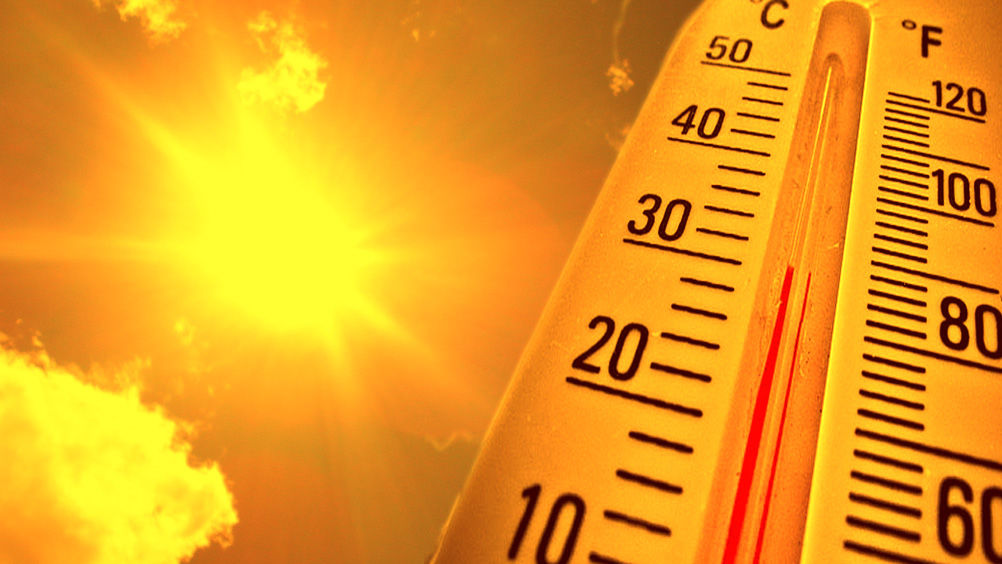
How is temperature related to heat?
Temperature is a measure of the heat of an object.
Heat causes a change in the temperature of an object.
Raising the temperature causes the heat of an object to increase.
Temperature and heat are two different ways to measure the same thing.
What is temperature scales that used to measure temperature?
Grams
Celsius
Meter
How does heat travel?
Heat travels from a hot place to a cold place.
Heat travels from a cold place to a hot place.
Heat travels in a straight line.
What is a conductor?
a material that allow heat pass through easily
a material that do not allow heat pass through easily
a material that turns cold when heated
a tool for measuring temperature
Which of these is a better conductor?


George holds an ice cube in his hand. As he squeezes the ice, it begins to melt. Which of the following best explains why this happens?
George absorbs heat from the ice.
Heat moves from George's hand into the cube and warms it.
Cold moves from the ice onto George’s hand as it melts.
George releases cold to the ice.
Debbie's mother has different types of pots in her kitchen. Many of them are made of copper and aluminum. Some are made of glass. Which of the following is the best reason why the pots are made of these materials?
They are able to stop the flow of heat.
They are good insulators of heat.
They keep the same amount of heat.
They are good conductors of heat.
Heat travels from cooler objects to warmer objects.
True
False
Which of the following is NOT a heat source?


The pan is made of iron. The handle is NOT too hot to touch. What might the pan's handle be made of?
copper
aluminum
wood
iron
Which of these is good conductor?
cloth glove
plastic foam cup
rubber glove
aluminum can

The spoon placed in a cup of hot water becomes hot after sometime because ___________.
the spoon loses heat to the hot water
the spoon gains heat from the hot water
heat flows from the spoon to the water
heat flow from the surrounding to the spoon
Adhiya placed a bottle of cold milk into a cup of hot water. The cold milk becomes hotter after a while. Which one of the following explain this?
The cup loses heat to the hot water.
The bottle of cold milk gains heat from the cup.
The bottle of cold milk loses heat to the hot water.
The bottle of cold milk gains heat from the hot water.

Rahma got an ice cream from her mom. The ice cream melts under the sun because the ice cream ___________.
gains heat from the sun
loses heat to the sun
cannot withstand the heat from the sun
produce too much heat
Heat loss causes matter to ________. Heat gain causes matter to ________.
contract . expand
expand . contract
stay . change
change . stay
Which of the following is NOT a heat source?
What is Earth's main heat source?


Which shows the use of heat?


Which shows the use of heat?


Yes or No. We use heat to dry our clothes.


Yes or No. We use heat when we sweep the floor.

Yes or No. We use heat when we cook food.

Yes or No. We use heat when read a book.

Yes or No. A book is a source of heat.

Yes or No. A hair dryer is a source of heat.
The energy that makes things warm.
light energy
heat energy
sound energy
stored energy
Most of the energy we use on Earth originally came from . . . .
the moon
the equator
the sun
the earth
The sources of heat energy:
friction of objects
vibrating object
burning fuels
the sun
These electrical appliances produce heat energy:
a radio
a microwave
an iron
a fan
When fuels are burnt, the stored energy was changed into . . . .
heat energy
light energy
sound energy
movement energy

The picture shows you that a _____________ produces heat energy.
geothermal
movement
sun
friction
We can feel the temperature of an object by using . . . .
sense of sight
sense of smell
sense of touch
sense of sound
A thermometer measures temperature in . . . .
Metre
litre
0C
cm2
To measure the temperature we need to use . . . .
temperature
thermometer
decibel meter
metre
If an object loses heat, its temperature . . . .
increases
decreases
If an object gains heat, its temperature . . . .
increases
decreases
Conduction is a heat transfer via . . . .
solid
liquid
gas
Which picture that shows you heat radiation?


Think about a pan of water sitting on an electric stove. The stove is then turned on to high.
How is heat transferred from the stove to the pan?
radiation
convection
conduction
Which material would make the best insulator?
aluminum
rubber
iron
glass
Heat energy moves from a __________________ object to a _________________ object.
bigger, smaller
smaller, bigger
cooler, warmer
warmer, cooler
Global winds flow from east to west and west to east. This is an example of . . . .
conduction
convection
radiation
The material that good conducting of heat is called . . . .
conductor
insulator
operator
protractor

Look at the picture. The conductor is shown by letter . . . .
A
B
C
These are insulator:
rubber
aluminum
paper
plastic
iron
Heat is a form of _____________.
cycle
energy
diversity
Object that gives off heat is called _______________ of heat.
sources
places
things
________________ is to measure how hot or how cold something is.
tempreture
temparature
temperature
Unit of measurement for temperature.
millilitres
kilometres
kilograms
degree Celcius
_____________ heat is needed if we want to increase the temperature.
more
less
little
Things get colder = ____________ heat
loses
gains
Heat always travels from _______________________________.
a colder place to a hotter place until both places reach the same temperature.
a hotter place to a colder place until both places reach the same temperature.
Solid, liquid and gas ___________ when it gains heat.
contract
expand
Metals are ____________ conductor of heat.
best
good
better
Plastic is a _____________ conductor of heat.
poor
bad
- Below are the examples of liquid, EXCEPT...
a glass of milk
cooking oil
mineral water
coffee

What state of matter does this picture show?
liquid
gas
solid
matter

When you heat (memanaskan) water it turns into a (berubah menjadi) ....
liquid
solid
gas
matter

When water vapour (uap air) gets cold, it turns to a ....
liquid
solid
gas
matter
We can measure VOLUME in ....
kilograms
litres
meters
grams

The process shown in the picture is called...
melting
freezing
boiling
condensation
.... is the change of state from a solid to a liquid
melting
boiling
condensation
freezing
The boiling point (titik didih) of water is .... celcius
100
110
120
130
The freezing point (titik beku) of water is .... celcius
-20
-10
0
10
The melting point (titik leleh) is the temperature at which a solid becomes a liquid when ....
heated
cooled
freezed
evaporated
Which one of the following is a solid?
milk
steam
cheese
juice
Which of the following is a property of a liquid?
It takes the shape of the container you choose.
It does not have a definite mass.
It has a definite shape.
It does not have a definite volume.
What does all matter have?
liquid
ice
mass
air
Which form of matter does not take the shape of a container you put it in?
gas
solid
air
atom
What would cause a liquid to turn into a solid?
pouring it into a container
heating it until it boils
cooling it until it freezes
keeping its temperature the same

This dog doll is ... .
liquid
gas
atom
solid

This waterfall is ... .
solid
liquid
atom
gas

This steam is ... .
atom
liquid
gas
solid

Eggs are made of ...
milk
cheese
matter
yogurt
Example of a solid that can be mixed with a liquid, except ... .
coffee with water
salt with water
oatmeal with milk
oil with water
What is anything that takes up space and has mass?
freezing
volume
melting
matter
What properties are used to identify the objects?
weight, color, height
shape, mass, weight
weight, color, volume
color, shape, size
What is an example of a solid turning into another state of matter?
sharpening the pencil
breaking a chair into pieces
ice melting
tearing a piece of paper
What are the three major states of matter?
solid, liquid and wood
solid, liquid and gas
solid, iron and gas
metal, wood and paper
When a liquid changes into a solid, what is it called?
water cycle
heat energy
melt
freeze
1. The smallest unit of life is …………………
plant
cell
energy
Some living things are made up of only one cell. They are called ……organism.
unicellular
multicellular
intercellular
Some living things are made up of more than one cell. They are called ……organism.
intercellular
multicellular
unicellular
1. We need to use …………….to help us observe cells.
camera
microscope
seismograph
Here are the examples of multicellular organisms, except..
Bird
Bacteria
Apple tree
Our body has …………..kind of cells, such as blood cells, cheek cells, etc.
same
similar
different
Most plants and animals are …………..organisms.
multicellular
unicellular
single cellular
Bacteria, yeast and paramaecium are …………………….organism.
unicellular
more than cellular
multicellular

Look at the picture above. It is a unicellular organism. It can be found everywhere – in air, water and on land. It is …………..
yeast
bacteria
blood cell

Look at the picture above. These cells can be found in our body. They are….
algae
red blood cell
nerve cell
The _____________ controls the activity of the cell.
mitochondrion
cell membrane
cytoplasm
nucleus
Which is only a part of a plant cell?
mitochondrion
chloroplast
cell membrane
chromosome
What is true of all living things?
they have tissue
they can move
they use energy
they change shape

This is a
animal cell
plant cell
tissue
flower
What tool will you use to see a cell?
telescope
microscope
glasses
hand lens
Which cell has a large vacuole to store water and food.
animal cells
plant cells
both
Which cell have nucleus
animal cell
plant cell
both

Which type of cell?
animal cell
plant cell
both
This part of the plant cell has chlorophyll and make food for the plant cell
cell wall
chloroplast
cytoplasm
nucleus
The cell membrane is on the OUTSIDE of which cell?
animal cell
plant cell
both
The 2nd nearest planet from the Sun in our solar system is __________
Venus
Mars
Earth
Mercury
Which of the following is inccorect ?
The Sun produces light
The Earth is bigger than the Moon
The Earth has one man-made satellite
The Moon revolves around the Earth
Sun is a ____________ in our solar system.
Planet
Satellite
Asteroid
Star
Day and Night is the result of the _________ .
Moon moving around the Earth
Earth rotating its own axis
Earth moving around the Sun
Moon blocking the Sun
Earth’s atmosphere has __________ to protect living things from harmful Ultraviolet rays of Sun.
natural satellite
ozone layer
axis line
man-made satellite
Which of statement below is false?
Earth’s position from the Sun makes the Earth gets enough heat and light
Earth’s atmosphere is suitable to support life
Earth has enough water
Earth has a ring around it
Which of these planets as known as morning and evening star__________.
Mercury
Venus
Mars
Saturn
Which of these planets as known as the smallest planet in solar system?
Jupiter
Venus
Mercury
Mars
The movement of Earth around the sun is called____________.
rotation
axis
spinning
revolution
The planets keep their orbit because Sun has _______.
atmosphere
ozone layer
heat
gravitational pulls
Rocky objects in orbit generally between Mars and Jupiter are called___________.
asteroid
comet
meteoroid
satellite
Which of these planets that have no moons?
Mars and Jupiter
Mercury and Mars
Mercury and Venus
Mars and venus
The movement of earth which is spinning on its axis is __________.
revolution
rotation
go around
orbiting
The Moon is not as bright as the Sun because ___________.
it is a star
it gives out only a little light
it reflects light from the Sun
the Moon is larger than the Sun
We have a ____________ Moon when the Earth is between the Sun and the Moon.
crescent
half
full
new
We have a ____________ Moon when the Moon is between the Sun and the Earth.
new
full
gibbous
crescent
Smaller object that revolves round the larger object in outer space is called _____.
comet
satellite
asteroid
meteoroid
The frozen masses of gas and rock are called____________.
asteroid
meteor
comet
satellite
The layers of gases around the earth make up the _________.
atmosphere
space
atom
sphere
There is a________ in the center of solar system.
Planet
Sun
Moon
Earth

