
 Worksheets
GEOL 11 (Ch 9-13)
Total questions: 146
Worksheet time: 2hrs 35mins
Downslope movement of materials - rocks, regolith, and soil - under gravity influence.
(a)
Force of gravity is divided into 2 components - normal to surface and tangential to it
Geologic Features
Slope
Water
Soil Cover
Acts as lubricant to cause mass movement downslope. Surface tension can hold grains together, but too much can remove grain-to-grain contact.
Geologic Features
Slope
Water
Soil Cover
When soil is more unconsolidated, water can percolate down and come in contact with bedrock to act as sliding plane.
Geologic Features
Slope
Water
Soil Cover
Joints and fractures of a rock and the presence of bedding planes.
Geologic Features
Slope
Water
Soil Cover
Slope direction is the same as planar features.
(a)
Mass wasting triggers
Excessive Rainfall
Loud noise
Ground Shaking
Hot weather
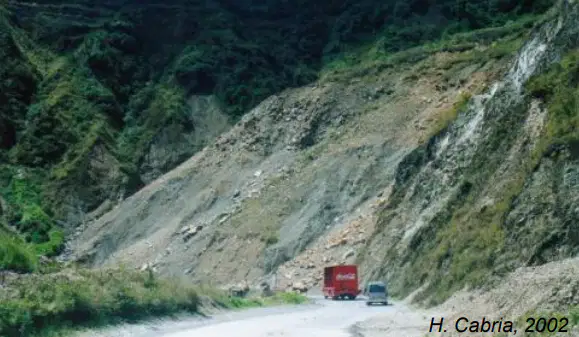
Sudden movement of rock separated along fractures/bedding planes. No fluidity, only bouncing
Flow
Slides
Slumps
Fall
Topple
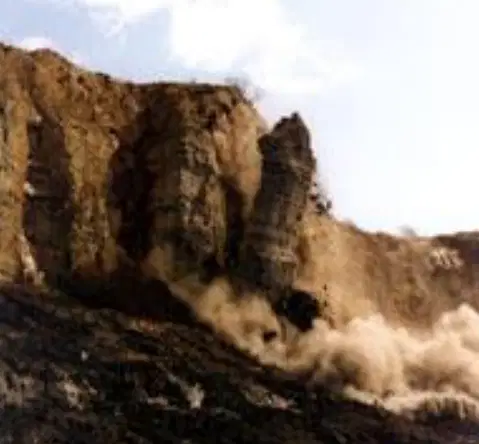
Blocks fall over as a unit
Spread and subsidence
Slides
Slumps
Fall
Topple
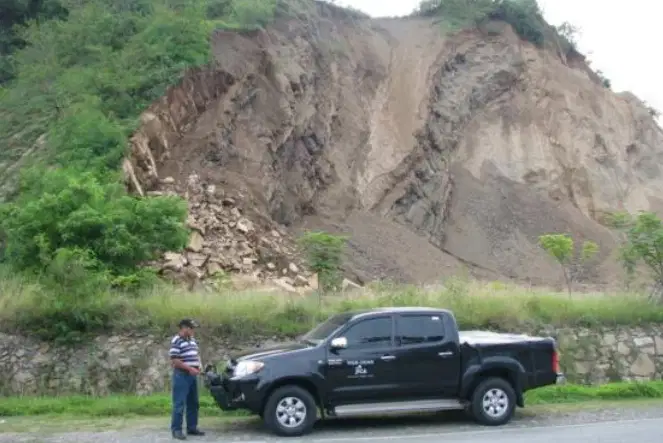
Blocks slide down pre-existing plane such as foliated surface or joint
Spread and subsidence
Slides
Slumps
Fall
Flow
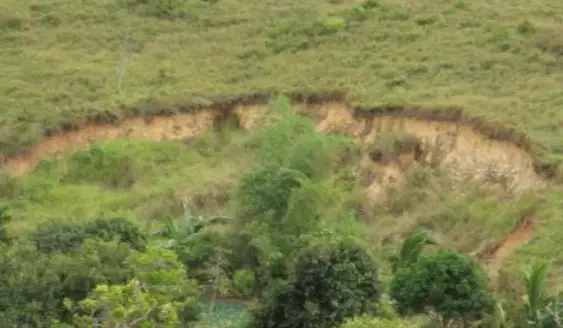
Downward rotation of rock/regolith along concave surface
Spread and subsidence
Slides
Slumps
Fall
Flow
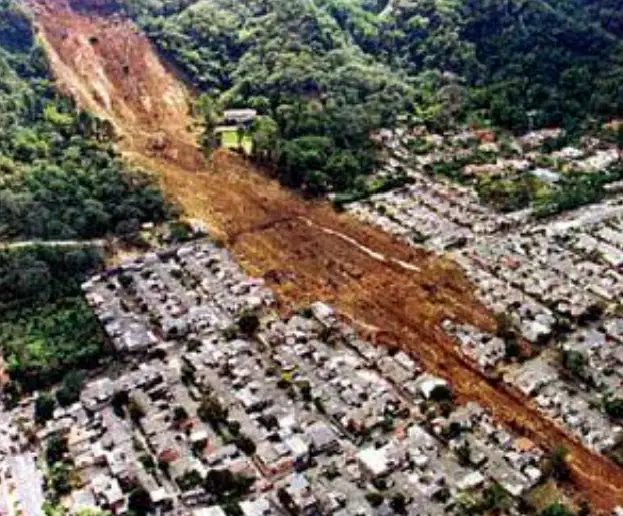
Rocks behave in a fluid manner and move rapidly
Spread and subsidence
Slides
Slumps
Fall
Flow
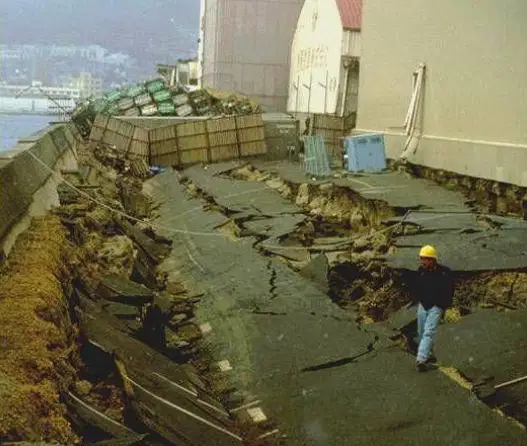
Uplift and rupture
Spread and subsidence
Slides
Slumps
Fall
Flow
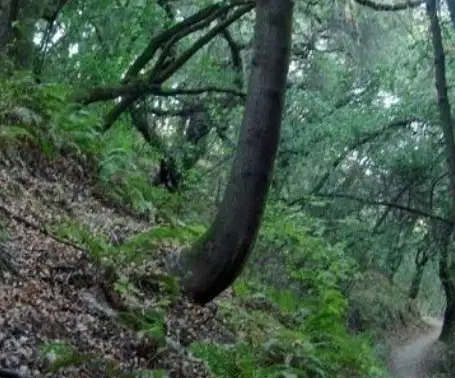
Very slow motion with continuous regolith downslope
Debris flow
Grain flow
Creep
Solifluction
Earth flow
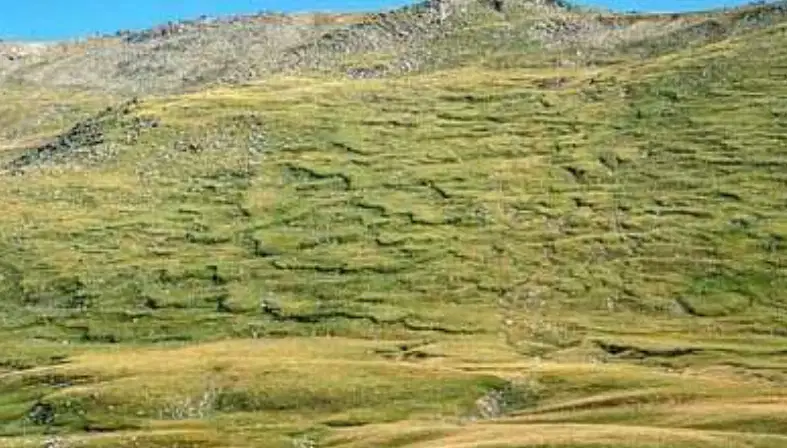
Produces lobes where the soil remains saturated with water for long periods of time
Debris flow
Grain flow
Creep
Solifluction
Earth flow

Fine-grained materials that have fluid motion. Oozes rather than rushes, and forms lobes rather than long streams
Debris flow
Grain flow
Mudflows
Debris Avalanche
Earth flow
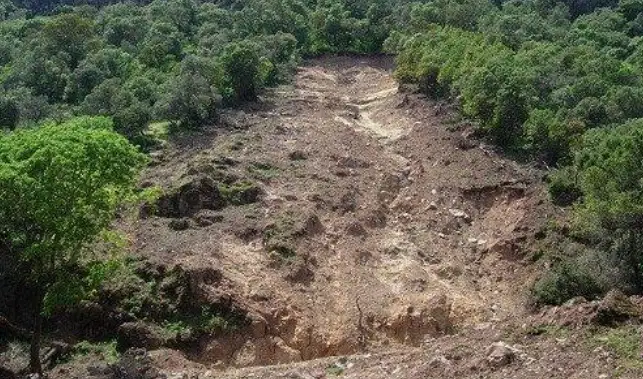
Caused by water saturation of soil and regolith. Slumps then flows downhill forming lobes with irregular surface.
Debris flow
Grain flow
Mudflows
Debris Avalanche
Earth flow
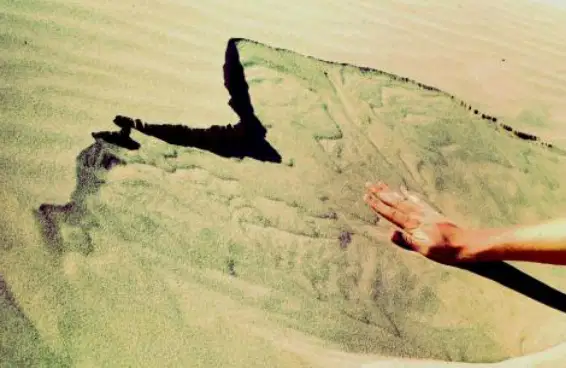
Relatively dry material in a steep slope. Slow disturbance causes movement.
Debris flow
Grain flow
Mudflows
Debris Avalanche
Earth flow
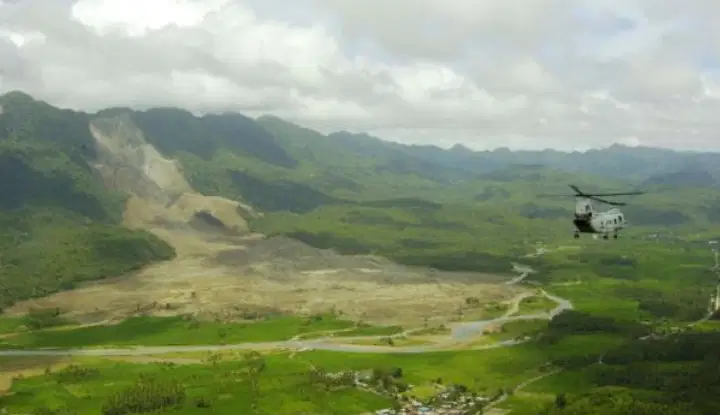
High fluids, high velocity, mix of sedimentary and water, soup-like or wet concrete
Debris flow
Grain flow
Mudflows
Debris Avalanche
Earth flow
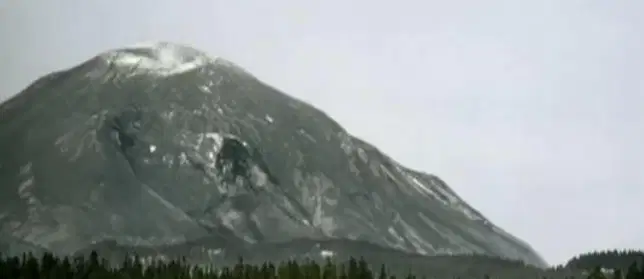
Complete collapse of a mountainous slope
Debris flow
Grain flow
Mudflows
Debris Avalanche
Earth flow
Occurs when rock crosses threshold from ductile to brittle. Caused by sudden movement or slippage of large volume of a rock.
(a)
Origin of an Earthquake at depth
Center
Epicenter
Focus
Eye
Point at the surface of the Earth directly above the focus
Center
Epicenter
Focus
Eye
The movement of a fault for the past million years cannot be determined.
True
False
Theory that states that earthquakes originate from the build up of strain, rupture slippage, and release of energy
(a)
Energy released during earthquakes
(a)
Faster and less energetic seismic waves.
Body waves
Surface waves
Primary Waves
Secondary Waves
Seismic waves that travel to the surface with higher amplitude.
Body waves
Surface waves
Primary Waves
Secondary Waves
Faster body waves that travel through solids and liquids in a push-pull manner
Rayleigh waves
Love waves
Primary Waves
Secondary Waves
Body waves that travel through solids in transverse directions
Rayleigh waves
Love waves
Primary Waves
Secondary Waves
Surface waves that move in cyclical up and down
Rayleigh waves
Love waves
Primary Waves
Secondary Waves
Surface waves that move in cyclical side to side
Rayleigh waves
Love waves
Primary Waves
Secondary Waves
Study of earthquake waves
(a)
Instrument that records earthquakes producing records of movements
(a)
The produced record of movement of earthquake waves
(a)
We can estimate the location of the epicenter using the time between the first P wave and first S wave.
True
False
Earthquake caused by deformation of Earth's lithosphere
Volcanic Earthquake
Tectonic Earthquake
Human Activity
Movement of magma causes rock fractures
Volcanic Earthquake
Tectonic Earthquake
Human Activity
Small magnitude earthquakes caused by dams, fracking
Volcanic Earthquake
Tectonic Earthquake
Human Activity
Qualitative scale on how much the Earthquake was felt by people based on amount of damage
Strength
Extensity
Intensity
Magnitude
Amount of energy released by an earthquake by measuring amplitude of largest seismic wave recorded.
Strength
Extensity
Intensity
Magnitude
Standard measure for an Earthquake's intensity
Modified Mercali Intensity Scale
Richter Scale
Philippine Earthquake Intensity Scale
Richter Intensity Scale
Standard measure for an Earthquake's magnitude
Modified Mercali Intensity Scale
Richter Scale
Mercali Magnitude Scale
Richter Intensity Scale
Farther from sources > ____ wavelength > felt by _____ buildings
(a)
near source > ____ wavelength > felt by _____ buildings
(a)
Longer shaking and closer to source :
Lower seismic wave amplitude
Higher seismic wave amplitude
Higher intensity
Lower intensity
Shaking may cause loose, saturated sediments to swallow structures during earthquakes
(a)
Waves caused by displacement of large volume of water due to offshore earthquakes
(a)
Areas that may be collecting stress
(a)
Tiny earthquakes happening before the main shock
(a)
Change undergone by existing rock in solid state to another rock
(a)
Parent rock in metamorphism
Pluton
Protolith
Batholith
Laccolith
Lower limit of metamorphism : ____ : transformation of sediments to sedimentary rocks : >150C at 1-2 Kb
Solidification
Diagenesis
Melting
Recrystallization
Lower limit of metamorphism : ____ : partial ____ is in 5% of rock mass to be considered metamorphic
Solidification
Diagenesis
Melting
Recrystallization
Agents of metamorphism (H, P, D, C)
(a)
Natural increase in temperature and pressure deeper in Earth
Intrusive bodies
Geothermal Gradient
Radioactive decay
Magma drives metamorphism
Intrusive bodies
Geothermal Gradient
Radioactive decay
Nuclear fusion provides enough heat to melt energy
Intrusive bodies
Geothermal Gradient
Radioactive decay
Equal stress in all directions deeper into the Earth as it is heated up and pressure is increased
Local Pressure
Confining Pressure
Differential Stress
Adiabatic Pressure
Unequal pressure in different directions from collision zones causing foliation
Local Pressure
Confining Pressure
Differential Stress
Adiabatic Pressure
[Chemically Active Fluids] Fluids in ____ ____ of original rock
(a)
[Chemically Active Fluids] From (a) of hydrated fluids
[Chemically Active Fluids] Water from (a) bodies
Fluids transport mineral matter from one to another
(a)
Small volume of metamorphism (<300 km3) from intrusive body and those surrounding it or fluids passing through
Local Metamorphism
Contact Metamorphism
Regional Metamorphism
Dynamic Metamorphism
Thousands of kilometers of metamorphism from differential stress
Local Metamorphism
Contact Metamorphism
Regional Metamorphism
Dynamic Metamorphism
Temperature is dominant. Happens at shallow depths and low pressure. The rock is heated up and magma recrystallizes. Produces non-foliated and fine-grained rocks.
Contact Metamorphism
Static Metamorphism
Dynamic Metamorphism
Deviatoric stress is dominant and can be local or regional. Rocks cut along a fault zone resulting in a pulverized rock.
Contact Metamorphism
Static Metamorphism
Dynamic Metamorphism
Pressure is dominant. Occurs at depth in regional scale. Massive amount accumulates in subsiding basin. Low grade metamorphism in deepest layers.
Contact Metamorphism
Static Metamorphism
Dynamic Metamorphism
Pulverized rock from deviatoric stress that is ductile and in depth
Fault brittle
Mylonite
Fault gouge
Fault breccia
More powdered shallow pulverized rock
Fault brittle
Mylonite
Fault gouge
Fault breccia
Less powdered shallow pulverized rock
Fault brittle
Mylonite
Fault gouge
Fault breccia
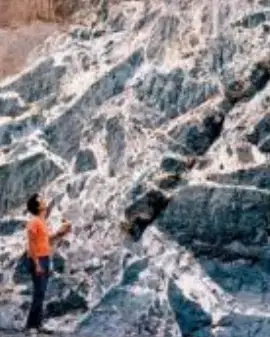
Pulverized rock is already very white
Fault brittle
Mylonite
Fault gouge
Fault breccia
Hot ion-rich fluids circulating through fissures and cracks in rocks
Regional metamorphism
Contact metamorphism
Dynamothermal metamorphism
Hydrothermal metamorphism
Large segments of crust are deformed and majority is formed during mountain building
Regional metamorphism
Contact metamorphism
Dynamothermal metamorphism
Hydrothermal metamorphism
Chemical makeup of parent rock controls chemical composition of metamorphic rock
True
False
No change in bulk chemistry of rock - occurs in all metamorphic processes except metasomatism
Allochemical
Alloy
Isochemical
Iso
No change in bulk chemistry of rock - occurs in all metamorphic processes except metasomatism
Allochemical
Alloy
Isochemical
Iso
Mineral assemblage present in metamorphic rock
Mineralogy
Texture
Protolith
Size, shape, and relationship of minerals in metamorphic rocks
Mineralogy
Texture
Protolith
Pervasive planar structure formed due to nearly parallel alignment of minerals
Non-foliated
Foliated
Stratified
Non-stratified
No preferred orientation as one mineral transforms to another
Non-foliated
Foliated
Stratified
Non-stratified
Relative temperature and pressure under which metamorphic rocks form
(a)
Minerals stable at lower temperature are only partially replaced by those stable at higher temperature (higher temp, larger grain size, less fluids)
(a)
Incomplete replacement of minerals stable at high temperature by those stable at lower temperature (lower temp, lower pressure)
(a)
Set of rocks representing full range of possible chemistries within limited range of metamorphic conditions
(a)
Metamorphism at 3.5 kb & 300°C of Marble
calcite
dolomite
quartz
chlorite
feldspar
Metamorphism at 3.5 kb & 300°C of Metabasalt
chlorite
albite
actinolite
epidote
quartz
Metamorphism at 3.5 kb & 300°C of Pelitic schist
quartz
albite
chlorite
muscovite
garnet
Changes in shape, size, and orientation of rock body
(a)
Force that deforms rocks
Stress
Strain
Strength
Strata
Deformation of the rock
Stress
Strain
Strength
Strata
Small deformation will cause rock to return to original shape when stress is removed
(a)
Larger deformations that produce permanent mountains and faults
(a)
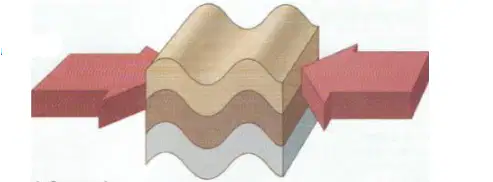
What type of stress is shown in the photo?
Compressional
Tensional
Shear

What type of stress is shown in the photo?
Compressional
Tensional
Shear
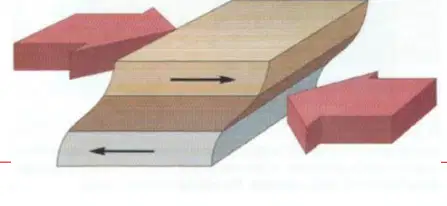
What type of stress is shown in the photo?
Compressional
Tensional
Shear
Azimuth of the line formed by intersection of a layer interface or bedding plane with the horizontal
(a)
Angle between the layer interface or bedding plane and the horizontal measured perpendicular to the strike direction
(a)
Imaginary surface that divides a fold as symmetrically as possible
Axial plane
Fold Axis
Limbs
Line made by the length-wise intersection of the plane with beds in the fold
Axial plane
Fold Axis
Limbs
Correspond to the two sides of an anticline or syncline
Axial plane
Fold Axis
Limbs
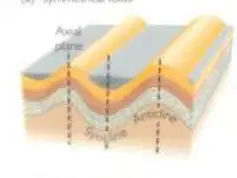
What type of fold is shown in the photo?
Symmetrical
Asymmetrical
Overturned
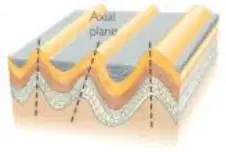
What type of fold is shown in the photo?
Symmetrical
Asymmetrical
Overturned

What type of fold is shown in the photo?
Symmetrical
Asymmetrical
Overturned
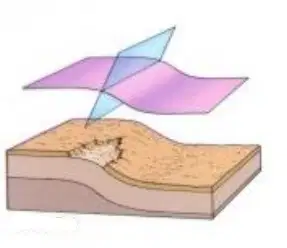
What type of limbs are shown in the photo?
Monocline
Syncline
Anticline
Overturned

What type of limbs are shown in the photo?
Monocline
Syncline
Anticline
Overturned
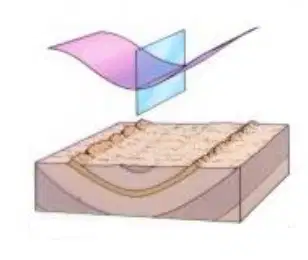
What type of limbs are shown in the photo?
Monocline
Syncline
Anticline
Overturned
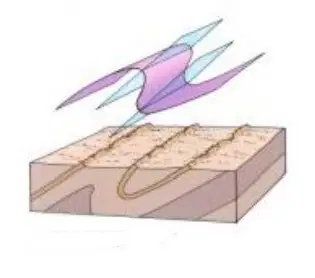
What type of limbs are shown in the photo?
Monocline
Syncline
Anticline
Overturned
Break in the rocks
(a)
Fractures with no appreciable displacement
(a)
Fractures with appreciable displacement
(a)
Leftwards strike slip
Dextral
Sinistral
Normal
Reverse
Rightwards strike slip
Dextral
Sinistral
Normal
Reverse
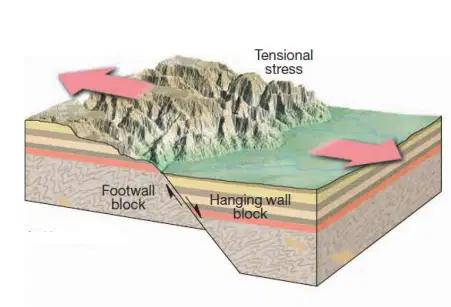
What type of fault is shown?
Strike-slip
Thrust
Normal
Reverse
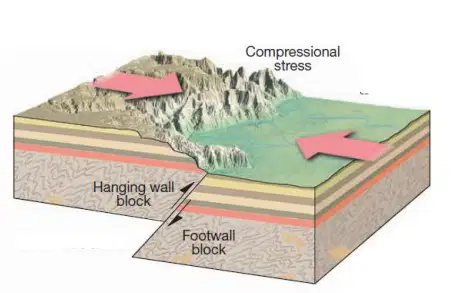
What type of fault is shown?
Strike-slip
Thrust
Normal
Reverse
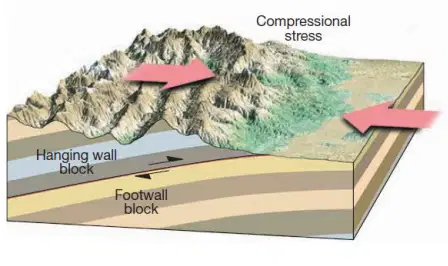
What type of fault is shown?
Strike-slip
Thrust
Normal
Reverse
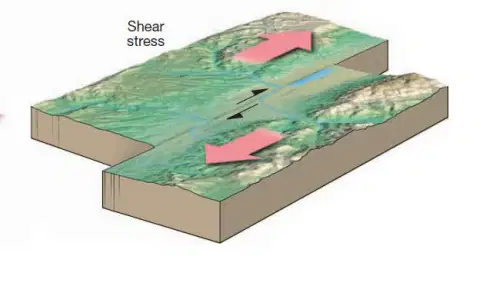
What type of fault is shown?
Strike-slip
Thrust
Normal
Reverse
Deals with the origin of the Earth and its development through time
(a)
Remains or traces of prehistoric life preserved in sedimentary rocks
(a)
Requirements for preservation of fossils
Rapid burial
Protective cover or preserving medium
Hard parts or durable tissues such as shells, bones, teeth and woody tissues
Melted rocks to host fossils
Carbon coating on fossils
Preserve soft tissues by:
Radioactive wrap
Mummification
Burrowing
Freezing
Soft tissues preserved as thin carbon film
Carbonization
Recrystallization
Replacement
Permineralization
Conversion of a mineral to another
Carbonization
Recrystallization
Replacement
Permineralization
Dissolution of original material & precipitation of new mineral
Carbonization
Recrystallization
Replacement
Permineralization
Porous material filled with secondary materials
Carbonization
Recrystallization
Replacement
Permineralization
Evidence of life in the form of tracks, burrows, gastroliths, coprolites etc.
Ichnofossils
Mold & Cast
Hard Parts
Dissolution and Refilling
Ichnofossils
Mold & Cast
Hard Parts
Usually shells, bone, teeth or pollen
Ichnofossils
Mold & Cast
Hard Parts
Which is the correct order?
Age > Eon > Era > Epoch > Period
Eon > Era > Period > Age > Epoch
Eon > Era > Period > Epoch > Age
Era > Eon > Epoch > Age > Period
[Steno's Law] The oldest layer will lie below or underneath the youngest
Law of superposition
Law of original horizontality
Law of lateral continuity
Law of cross-cutting
[Steno's Law] Layers of sediments are deposited by gravity into flat, horizontal or sub-horizontal layers
Law of superposition
Law of original horizontality
Law of lateral continuity
Law of cross-cutting
[Steno's Law] Rock layers will extend outwards until the environment that produces
Law of superposition
Law of original horizontality
Law of lateral continuity
Law of cross-cutting
[Steno's Law] If a rock is cut by a fault or igneous intrusion, the cut one must be older than the one that cuts.
Law of superposition
Law of original horizontality
Law of lateral continuity
Law of cross-cutting
In inclusions, the included body is older than the host body.
True
False
Breaks in the deposition of the rock indicating geologically long periods of non-deposition or erosion
(a)
Overlying strata that has a different strike and dip characteristics than the underlying bed
Angular unconformities
Nonconformity
Disconformity
Paraconformity
Igneous or metamorphic rocks overlain by a sedimentary unit and separated by an erosional surfaces
Angular unconformities
Nonconformity
Disconformity
Paraconformity
Flat lying sedimentary rocks overlain by another sedimentary unit and separated by an erosional surface
Angular unconformities
Nonconformity
Disconformity
Paraconformity
Surface of non deposition separating two parallel units of sedimentary
Angular unconformities
Nonconformity
Disconformity
Paraconformity
Will Smith states that fossil organisms succeed one another in a definite and determinable order, and therefore any time period can be recognized by its fossil content
(a)
Pinpoints the time in years when an event occurred
(a)
Technique used to date materials such as rocks, usually based on a comparison between naturally occurring radioactive isotope and its decay products using decay rates
(a)
Length of time required for one-half of the nuclei of a radioactive isotope to decay
(a)
Long period of little evolutionary change punctuated by rare and geologically rapid events
(a)
Most speciation is slow, uniform and gradual
(a)

