
 Worksheets
Semester 1 Review
Total questions: 142
Worksheet time: 3hrs 8mins
War between Christians and Muslims
Europe was known as the Dark Ages because
there was decline in trade, education,and culture
Rome did not pay its electric bill
There was constant darkness all the time and the sun never came out.
Kings were not very smart
What was a fief?
Any thing of value given to a vassal by a lord, including land
The currency of Medieval Europe
The Medieval government
What was the overall effect of the Crusades?
Feudalism breaks down
Harmony amongst all world religions
The Byzantine empire strengthens
trade declines heavily
During the Early Middle Ages, the most powerful kingdom was? (hint: led by Charlemagne)
Ostrogoths
Franks
Visigoths
Vandals
Which of the following is a result of the crusades?
What was the main goal of the first Crusade?
Establish a Christian kingdom in Asia Minor
Defeat the Muslim Saljooks
Capture Constantinople
Reconquer Jerusalem
Which answer choice shows the order of Feudal Society from highest to lowest?
peasants, knights, nobles, king
king, nobles, knights, peasants
knights, king, peasants, serfs
Kings, knights, commoners, serfs
How did Charlemagne rule his large kingdom?
Split up the kingdom into three parts with his sons
Asked nobles to watch his kingdom
Split kingdom into regions, each one ruled by a count.
Built universities all over the kingdom
The code that guided knights’ behavior was . . .
chivalry
feudalism
coat of arms
codes of war
Which of the following cities was the center of conflict in the First Crusade?
Baghdad
Rome
Paris
Jerusalem
A major contributor to the spread of the the Black Death was fleas.
True
False
What common symbol was worn by Christian warriors during the Crusades?
Red Cross
Stars
Lion
Blue Cross
Which of the following best describes the term, medieval or middle ages?
The time period before ancient Greece.
Historical time period before the Roman Empire.
The time period before ancient Greece.
The time period in Europe between the Roman Empire and the Renaissance.
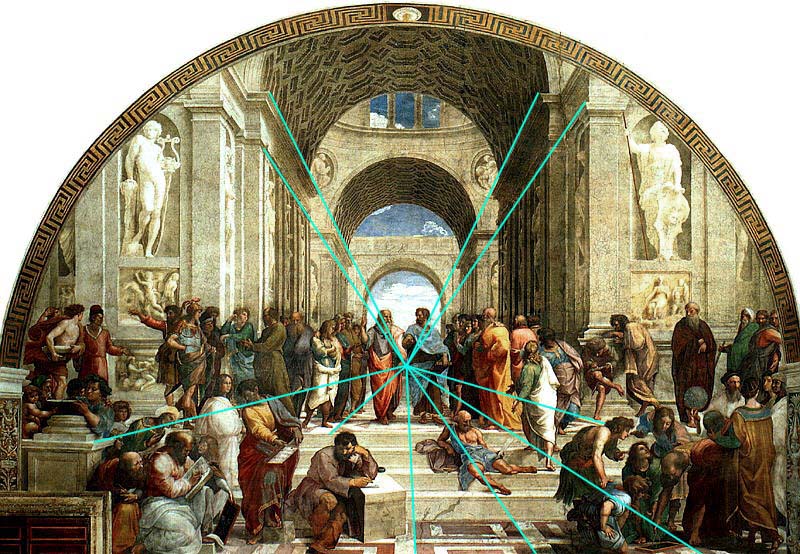
How did the invention of the printing press help the Reformation?
Bibles printed allowed more people to read them.
People could read translations of the Bible in their language.
It allowed reformers to spread their ideas.
All of the Above
What was the Counter Reformation?
Pope's decision to go to war
Protestants moving to new lands
Printing Bible in other languages
Catholic Church defining doctrine
Why did Luther disagree with the selling of indulgences?
He believed they should cost more.
He believed people had to work to earn salvation.
He believed salvation was a gift of grace.
He believed his 95 Theses could get people to Heaven.

In The Prince, Machiavelli stated what as his thesis?
Where was the heart of the Renaissance?
Japan
Florence
All of Europe
Life (after the plague)
Invention that helped spread information
Printing Press
Mail service
Pigeon Carrier
Typewriter
The first book ever published for the public
The Prince
Romeo and Juliet
Dante's Inferno
The Bible
English playwright famous for his plays and sonnets
Dante
Shakespeare
Machiavelli
Lorenzo Medici

______ is an art technique used during the Renaissance to give depth/dimension.
prettiness
marble
fresco
perspective
How did Luther deliver his 95 Theses?
Nailed it to the door of a church in Wittenberg
Dropped it off at the Vatican
Mailed it to Thomas Moore
Sealed it in his memoirs to be published after his death
Who dismissed the authority of the Pope and started the Anglican Church?
Queen Elizabeth
Martin Luther
John Calvin
Henry VIII

a movement against the Roman Catholic Church that began in 1517; it resulted in the creation of Protestant churches
Reformation
Purgatory
Protestant
Indulgence
Martin Luther suggested which change to church practice?
Printing the Bible in the vernacular so all could read it
Saying mass in Latin so the faithful would learn it.
Increasing the sale of indulgences
Installing statues of saints in churches.
What does the word Renaissance translate to?
Secular
Rebirth
Dowry
New Born
Indulgence
Giving into food that is not on your diet but is tempting
Eating your favorite food
Something the Protestant church sold to sinners
Release from all or part of punishment for sin
Select all of the Renaissance artists
Leonardo Da Vinci
Michelangelo
Raphael
Donatello
Select the two most famous art pieces by Michelangelo
The Statue of David
The Last Supper
The Sistine Chapel
The Mona Lisa
What country sponsored Christopher Columbus?
Spain
England
Italy
Portugal
What ocean did many explorers travel across?
Pacific
Atlantic
Indian
Arctic
Located in South America, this empire is famous for ruins like Machu Pichu..
Mayans
Incans
Aztecs
Romans
Due to superior technology, a stable and wealthy government, which empires lead the world in exploration?
England and Spain
France and Portugal
Spain and England
Spain and Portugal
Who sponsored Portuguese fleets and navigation schools?
Prince Henry the Navigator
Queen Isabella
Christopher Columbus
Ferdinand Magellan
The term circumnavigate means...
To use navigational instruments
To travel around the entire globe
To explore new lands
To measure the circumference of the Earth
What does heliocentric mean?
The earth is at the center of the universe
The sun is at the center of the universe
The earth rotates
The earth has gravity
Who discovered the laws of gravity?
Harvey
Galileo
Copernicus
Newton
The geocentric theory
proposed the Moon was the center of the universe
proposed the Sun was the center of the universe
proposed the Earth was the center of the universe
proposed the Sun was not a star
_____ was the first to turn the telescope to the sky and examine the moon’s surface
Galileo
Copernicus
Kepler
Newton

His crew was the first to circumnavigate (sail around) the world.
Christopher Columbus
Vasco da Gama
Ferdinand Magellan
Hernan Cortex

A new type of ship capable of sailing in the open ocean.
astrolabe
compass
canoe
caravel

He established a school of navigation in Portugal.
Prince Henry
Christopher Columbus
Ferdinand Magellan
Vasco da Gama
Who conquered the Inca Empire?
Pizarro
Cortes
de Soto
Vespucci
Which civilization settled in the Andes Mountains of South America?
Maya
Aztec
Inca

Which civilization settled in modern day Mexico?
Maya
Aztec
Inca

The Triangular Trade
The Columbian Exchange
The Middle Passage
Colonial Expansion
Slaves were sent in large numbers to the...
New World
Old World
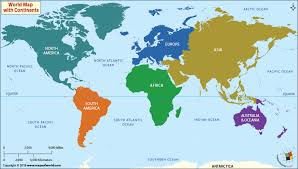
What continents are in the New World?
North America
South America
Europe
Asia
Africa
What was the journey from Africa to the New world called?
Old Passage
New Passage
Middle Passage
Slave Passage
Europeans brought African slaves to the New World to grow
Subsistence crops
Cash crops
New fruits and vegetables
Every inch of a country's soil is utilized for agriculture, mining or manufacturing. Government controls trade and economy. More exports than imports.
Mercantilism
Economics
Manorialism
Free market Capitalism
Business owners raise money by selling shares, or stock, in the company. Investors become co-owners and share in the profits.
Mercantilism
Joint Stock Company
Cottage Industry
Communism
Private person or ship attacking ships or trade routes
Pirate
Privateer
Conquistador
King


A right, such as life and liberty, that a person is born wth
divine right
philosophes
natural rights
contract
When England restored the Monarchy they limited the kings power by establishing a.....
Constitutional Monarchy
Absolute Monarchy
Republic
A place where Enlightenment thinkers got together to discuss Enlightenment ideas
divine right
salon
laissez-faire
bourgeoisie
Separation of Powers
Separating the ruler from the military.
Dividing powers equally among organizations
Dividing powers equally among three people
Dividing powers equally among three branches of government.
A person(s) who had unlimited authority and almost no legal limit.
A Monk
Absolute Monarch
A Philosophe
A Salon Manager
Enlightenment thinker who believed in the natural rights of "Life, Liberty, and the right to Property".
Montesquieu
John Locke
Rousseau
Enlightenment thinker who was a pioneer for women's rights and education.
Mary Wollstonecraft
Voltaire
Thomas Hobbes
People are naturally cruel, greedy, and selfish. Powerful government needed to ensure orderly society
John Locke
Thomas Hobbes
Montesquieu
Rousseau
Voltaire
Montesquieu is most known for his ideas on?
Social Contract
Separation of Powers
Natural Rights
Protection of life, liberty, and property
The right to life, liberty, and property
natural rights
social contract
natural beauty
popular sovereignty
Enlightenment philosopher who believed in freedom of speech and freedom of religion
Locke
Hobbes
Montesquieu
Voltaire
Enlightenment philosopher who believed in freedom of speech and freedom of religion
Locke
Hobbes
Montesquieu
Voltaire
This philosopher believed that government power should be divided into three branches.
Locke
Montesquieu
Voltaire
Beccaria
The Third Estate was made up of these people.
clergy
nobles
common people
kings and queens
Before the French Revolution, why did the representatives of the Third Estate form the National Assembly?
voting in the Estates General was not fair
the king had ordered them to do so
they wanted an end to the Reign of Terror
they demanded that the king be put on trial and executed
Which of the following was NOT a domestic reform under Napoleons imperial rule?
Established public education opportunities
Institutes a period of persecution and execution known as the "Reign of Terror"
Set up a fair and equal tax code that led to a stable economy
Seized power through a coup'etat and issued the Napoleonic code
The great French empire that Napoleon created eventually fell after the unsuccessful invasion of Russia. Why was the invasion considered a great disaster for Napoleon?
There was a massive air attack by the Russians that wiped out most of Napoleons army
Russia's scorched-earth policy and cold winter wiped out most of Napoleons army
The Battle of the Bulge wiped out most of Napoleons army
The newly formed United States allied with Russia to wipe out most of Napoleons army

What leader is associated with this image?
Napoleon
Robespierre
Louis XIV
Louis XVI

Which event is associated with this image?
Reign of Terror
Meeting of the Estates General
Rise of Napoleon
Storming of the Bastille
Who came to power in France at the end of the French Revolution?
Napoleon
Louis XIV
Robespierre
Louis XVI
Belief in the ideas of the Enlightenment and discontent within the Third Estate were causes of the
French Revolution
Counter Reformation
Industrial Revolution
Spanish Reconquista
Which issue was a cause of the French Revolution?
ineffective rule of Napoleon Bonaparte
nationalization of the Church
outrage over the use of the guillotine by the Committee of Public Safety
demand of the Third Estate for more political power
The French Revolution started with the storming of the:
Bastille
White House
Palace
Guillotine
The Pope
He crowned himself
The King of France
The people voted him Emperor
This person claimed it was possible to build a "republic of virtue" He also lead the Reign of Terror
Napoleon
Louis XVI
Marie Antoinette
Maximilien Robespierre
What was the name of Napoleon's set of rules and regulations?
Napoleon's Way
Declaration of Rights of Man and Citizen
Napoleonic Code
French Code of Ethics
What became the motto or the main political ideas of the French Revolution?
Freedom!
Liberty, Equality, Fraternity
France!
All men are created equal
After the creation of the National Assembly, they said they would not stop meeting until they had a new constitution.
True
False
The official date of Bastille Day is July 14, 1789.
False
True
The King and Queen of France killed during the French Revolution for working with foreign governments to reestablish their reign.
False
True
Napoleon took control of France in a coup d'etat, which means that the people chose him in an election.
True
False
King Louis XVI ordered his army to destroy the Bastille.
True
False
Austria and Prussia tried to re-establish the French Monarchy back into power. Which leader is closely associated with Austria?
Marie Antoinette
Max Robespierre
Napoleon
Louis
Reign of Terror
a period of time when the National Convention used any means necessary to end opposition to the revolution
Before the Glorious Revolution
Medieval Era
Progressive Era
What was the purpose of the Committee of Public Safety during the Regin of Terror?
Trying to re-establish the monarchy back into power
Assist in creating a tax code for all citizens
Creating a democratic government
Defend France against Counter-revolutionaries
King Louis XVI sends troops to paris
King Louis XVI storms the Palace
People storm the Bastille
King Louis XVI leaves Paris
King Louis XVI disbands the Estates General
1) The member of the First Estate?
the middle class and the peasants
the Catholic clergy
the nobility
the King
2) The members of the 2nd Estate?
the middle class and the peasants
the Catholic clergy
the nobility
the Bastilles
3) Members of the Third Estate?
the middle class and the peasants
the Catholic clergy
the nobility
the Royals
6) The rich palace where King Louis XVI and Marie Antoinette lived outside of Paris
Bastille
Versailles
National Assembly
The Grand Estate
9) In the “Tennis Court Oath”, members of the Third Estate
Swore to behead the king
Planned to storm the Bastille
Pledged to improve their tennis game
Promised to not disband until they had a written constitution
10) The event on July 14, 1789 that is the beginning of the French Revolution?
Execution of Marie Antoinette
Storming of the Bastille
Reign of Terror
Counter Reformation
The rights gained in the Declaration of Rights of Man did not extend to whom?
Clergy
Members of the 3rd Estate
Members of the 1st Estate
Women

