
 Worksheets
Physical Science Semester I Final Exam 2024
Total questions: 52
Worksheet time: 26mins
Name
Class
Date
1.
First name
4 lines
2.
Last name
4 lines
3.
Long hair in a laboratory should be kept (a)
Choose from the below words
tied back
cut short
held away from the experiment with
always neatly groomed
4.
2. How much protection do personal eyeglasses provide?
a)
a face shield
b)
safety glasses
c)
splashproof chemical googles
d)
none of the above
5.
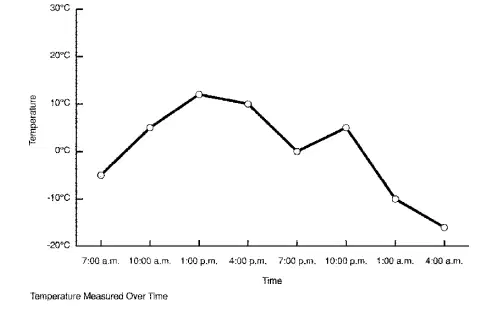
3. Which time of the day was the temperature approximately 5 degree Celsius?
a)
9:00 AM
b)
10:00 AM
c)
11:00 AM
d)
12:00 PM
6.
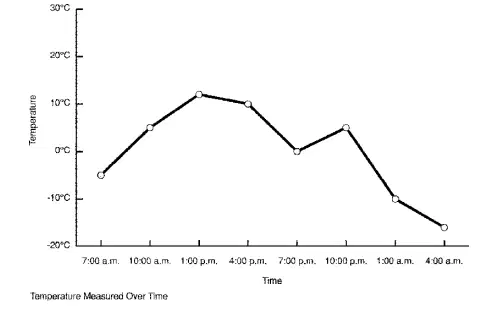
The temperature was the same at two times of day: (a) .
Choose from the below words
7:00 AM and 7:00 PM
7:00 AM and 10:00 PM
10:00 AM and 7:00 PM
10:00 AM and 10:00 PM
7.
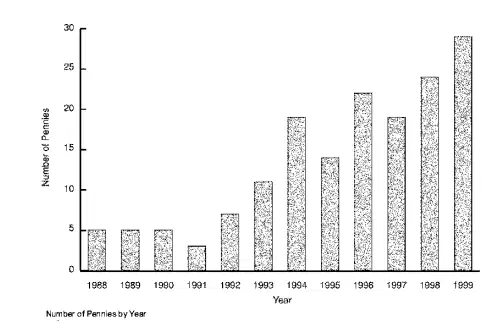
5. Which two years did the sample contain the same number of pennies?
a)
1988 and 1992
b)
1988 and 1991
c)
1994 and 1997
d)
1994 and 1998
8.
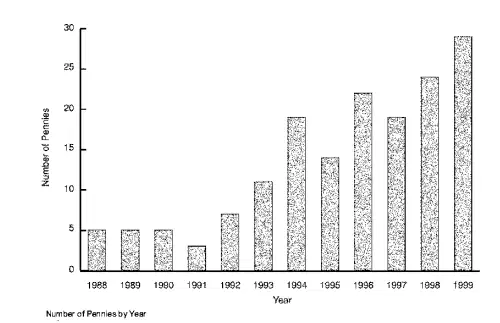
6. Which year was the smallest number of pennies found.
a)
1988
b)
1989
c)
1990
d)
1991
9.
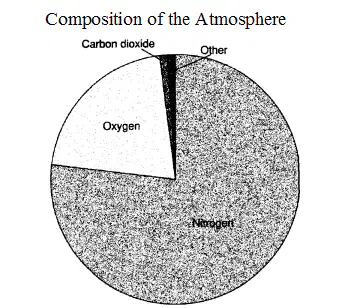
Match the following gases with their abundance in the atmosphere.
a)
carbon dioxide
1.
Fourth most abundant gas in the atmosphere
b)
nitrogen
2.
Most abundant gas in the atmosphere
c)
oxygen
3.
Second most abundant gas in the atmosphere
d)
hydrogen
4.
Least abundant gas in the atmosphere
10.
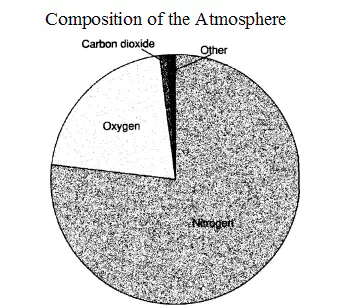
8. What percentage best represents the proportion of oxygen gas in the atmosphere?
a)
1%
b)
4%
c)
20%
d)
75%
11.
9. Which type of graph should be used to show the average daily temperature of Gravette?
a)
line
b)
pie
c)
bar
d)
scatter plot
12.
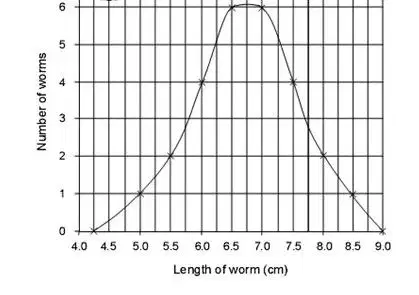
10. According to the graph below, how many worms were 6 cm long?
a)
5
b)
4
c)
3
d)
2
13.
11. Which statement about the atomic nucleus is correct?
a)
The nucleus is made of protons and neutrons and has a negative charge
b)
The nucleus is made of protons and neutrons and has a positive charge
c)
The nucleus is made of electrons and has a positive charge
d)
The nucleus is made of electrons and has a negative charge
14.
12. What is the charge of an electron?
a)
-2
b)
-1
c)
0
d)
+1
15.
13. Why do atoms have no electric (neutral) charge?
a)
Atoms have an equal number of charged and non-charged particles
b)
Atoms have neutrons in their nuclei
c)
Atoms have an equal number of electrons and protons
d)
Atoms have an equal number of neutrons and protons
16.
14. According to Bohr's model of the atom, what do electrons behave like?
a)
planets orbiting the sun
b)
waves on a vibrating string
c)
light energy in a vacuum
d)
planets rotating on their axes
17.
15. What is the order of elements in the periodic table is based on?
a)
the number of protons in the nucleus
b)
the electric charge of the nucleus
c)
the number of neutrons in the nucleus
d)
atomic mass
18.
16. What do atoms of elements that are in the same group have the same number of?
a)
protons
b)
neutrons
c)
valence electrons
d)
protons and neutrons
19.
17. What do the valence electrons in an atom determine?
a)
mass
b)
chemical properties
c)
electric charge
d)
period
20.
18. Oxygen's atomic number is 8. What does this number tell us about the atom?
a)
eight neutrons in its nucleus
b)
a total of eight protons and neutrons
c)
eight protons in its nucleus
d)
a total of eight neutrons and electrons
21.
19. Which of the following elements is an alkali metal?
a)
calcium
b)
magnesium
c)
mercury
d)
sodium
22.
20. Why are alkali metals extremely reactive?
a)
have very small atomic masses
b)
are not solids at room temperature
c)
have one valence electron that is easily removed to form a positive ion
d)
have two valence electrons that form compounds with calcium and magnesium
23.
21. Which area of the periodic table are carbon and other nonmetals found?
a)
on the left-most side
b)
on the right side
c)
in the middle column of the periodic table
d)
in the bottom rows
24.
Matter is defined as anything that (a)
Choose from the below words
can be seen and touched
has mass and takes up space
can be weighed
contains kinetic or potential energ
25.
23. What is the term for a pure substance that cannot be broken down into simpler substance?
a)
a compound
b)
a mixture
c)
an element
d)
an atom
26.
24. What is the term for smallest unit of a substance that behaves like the substance?
a)
an element
b)
an atom
c)
a molecule
d)
a compound
27.
25. What is the term for a material that can be represented by a chemical formula?
a)
an element
b)
a mixture
c)
a homogeneous solution
d)
a compound
28.
26. The chemical formula for water, H₂O. How many atoms of each atom does water contain?
a)
two hydrogen atoms and two oxygen atoms
b)
two hydrogen atoms and one oxygen atom
c)
two hydrogen atoms and zero oxygen atoms
d)
one hydrogen atom and two oxygen atoms
29.
27. What will knowing the chemical properties of a substance will tell you?
a)
what it looks like
b)
how it smells
c)
how it can be broken down into atoms
d)
how it reacts with other substances
30.
28. How are covalent bonds different from ionic bonds?
a)
covalent bonds have no electrons.
b)
covalent bonds take electrons.
c)
covalent bonds share electrons.
d)
there are no differences.
31.
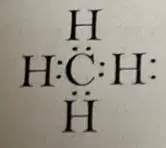
29. What is wrong with the Lewis Dot structure for CH4 in the diagram below?
a)
there are not enough valence electrons drawn.
b)
the hydrogen on the right has too many electrons.
c)
all of the hydrogens should have more electrons.
d)
there is nothing wrong with this diagram.
32.
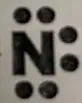
30. What is wrong with the electron dot structure for Nitrogen?
a)
nitrogen has more valence electrons than are shown.
b)
N has fewer electrons that are shown.
c)
the nitrogen needs to have 14 electrons in the structure.
d)
the nitrogen has no protons shown in the structure.
33.
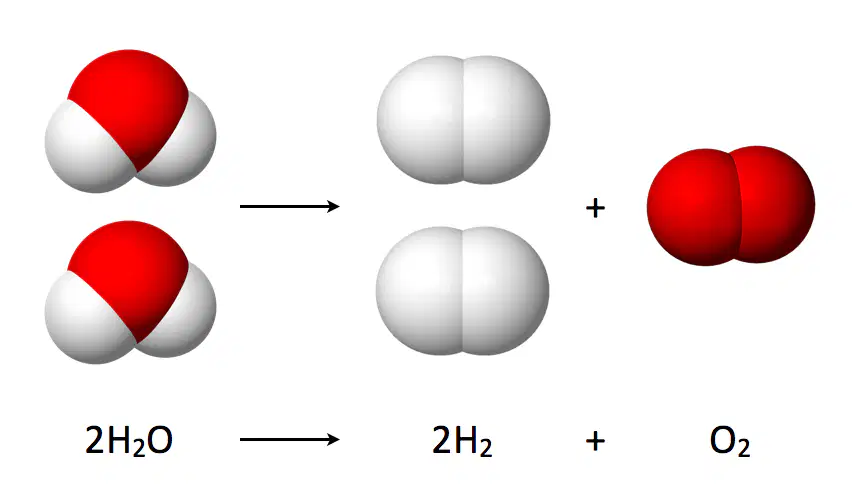
31. If 15.1 grams of hydrogen and 4.5 grams of oxygen were produced when water is broken down, how much water did you start with?
a)
4.2 grams
b)
20.2 grams
c)
10.9 grams
d)
19.6 grams
34.
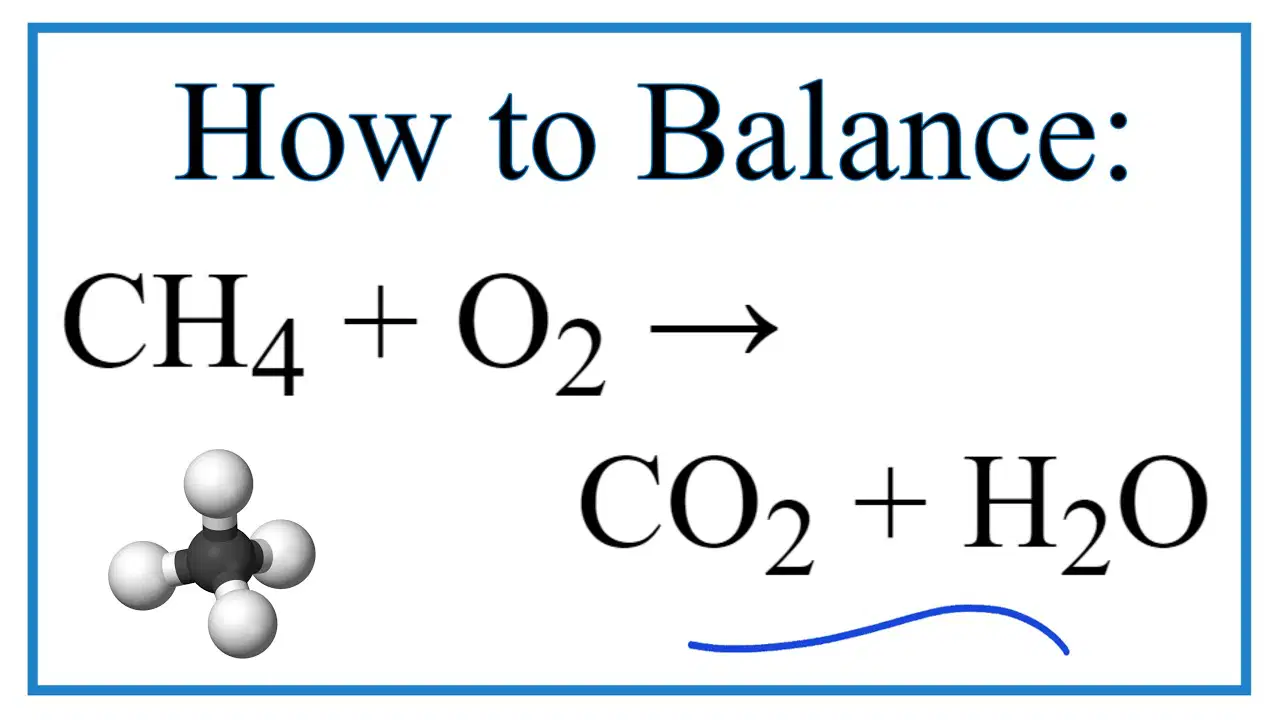
32. For the following reaction, which are the reactants?
a)
CO₂ and H₂O
b)
CH₄ and O₂
c)
O₂ and CO₂
d)
all of these
35.
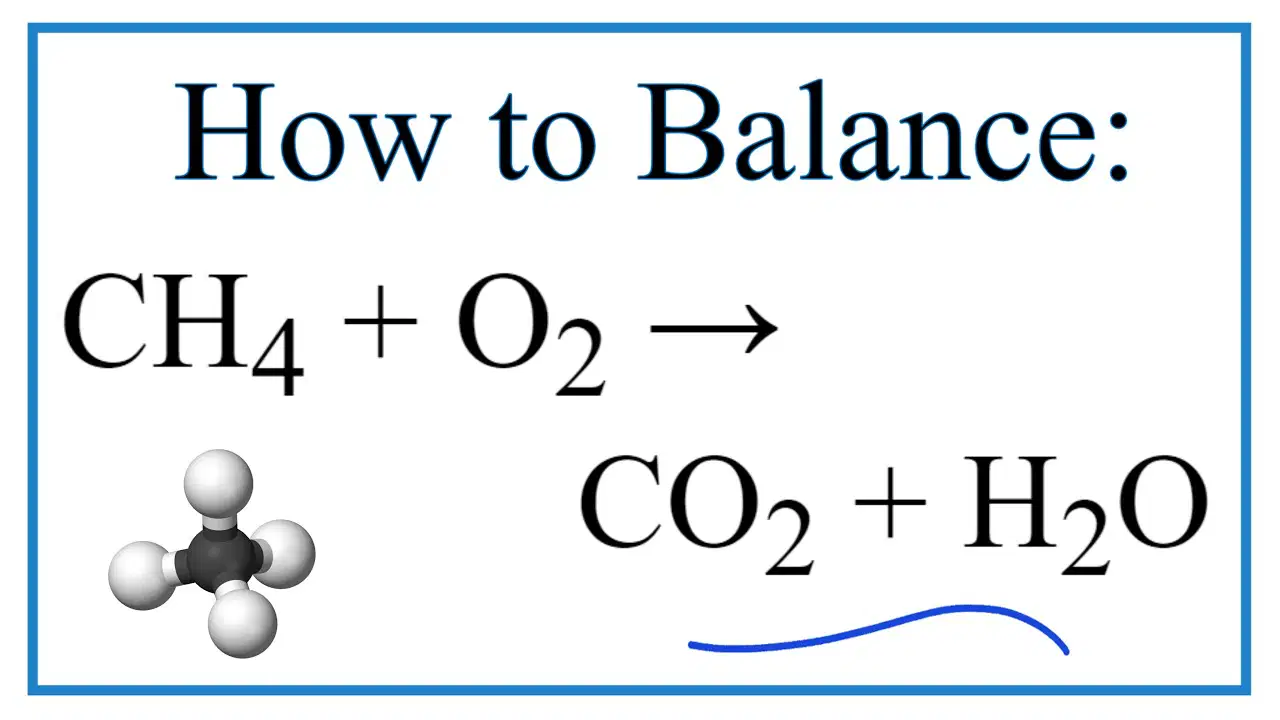
For the following reaction, the products are (a) .
Choose from the below words
CO₂ and H₂O
CH₄ and O₂
O₂ and CO₂
all of these
36.
34. A synthesis reaction is a reaction between at least two compounds in which...
a)
one breaks down into at least two products
b)
a compound is decomposed by an electric current
c)
a compound burns in the presence of oxygen
d)
a new, more complex compound is formed
37.
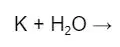
35. What kind of reaction occurs when potassium is placed in water?
a)
a decomposition
b)
a synthesis
c)
a single replacement
d)
a double replacement
38.
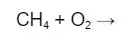
36. What are the products when methane (a hydrocarbon) reacts with abundant amounts of oxygen?
a)
carbon dioxide and water.
b)
carbon monoxide and water.
c)
soot and water.
d)
simple sugar and oxygen.
39.
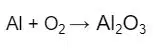
37. For the reaction below choose the correct coefficients to balance the equation.
a)
1, 2, 1
b)
2, 2, 1
c)
2, 2, 2
d)
4, 3, 2
40.
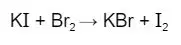
Match the following reactions with their correct coefficients to balance the equations.
a)
1, 3 , 2
1.
N2 + H2 → NH3
b)
2, 1, 2, 1
2.
KI + Br2 → KBr + I2
c)
2, 1, 2
3.
H2 + O2 → H2O
d)
1, 3, 2, 2
4.
C2H4 + O2 → CO2 + H2O
41.
39. Often atoms join so that each atom will have...
a)
an even number of electrons
b)
an outermost energy level that is full of electrons
c)
an equal number of protons and electrons
d)
more electrons that either protons or neutrons
42.
40. What are the forces that hold different atoms or ions together?
a)
electric currents
b)
chemical bonds
c)
physical bonds
d)
nuclear forces
43.
41. An ionic bond is a bond that forms between...
a)
ions with opposite charges
b)
atoms with neutral charges
c)
one atom's nucleus and another atom's electrons
d)
The electrons of two different atoms
44.
42. Which of the following correctly describes a water molecule?
a)
Water is a polar molecule. Oxygen is slightly negative because it is more electronegative.
b)
Water is a polar molecule. Oxygen is slightly positive, because O is less electronegative than H.
c)
Water is a nonpolar molecule. Hydrogen and oxygen are equal in electronegativity.
d)
Water is a nonpolar molecule. Hydrogen and oxygen have zero electonegativity.
45.
43. Which atom would NOT participate in hydrogen bonding?
a)
Oxygen
b)
Nitrogen
c)
Fluorine
d)
Carbon
46.
The kind of intermolecular attraction responsible for a water's high boiling point is (a) .
Choose from the below words
hydrogen bonding
ion - ion forces
ion - dipole forces
dipole - dipole forces
47.
45. Which of the choices below is ordered in increasing intermolecular strength.
a)
dipole-dipole < hydrogen bonding < London dispersion
b)
dipole-dipole < London dispersion < hydrogen bonding
c)
London dispersion < dipole-dipole < hydrogen bonding
d)
hydrogen bonding < dipole-dipole < London dispersion
48.
46. What are attractions that occur between molecules called?
a)
intramolecular forces
b)
intermolecular forces
c)
chemical attractions
d)
atomic forces
49.
47. What are attractions that occur within a molecule called?
a)
intramolecular forces
b)
intermolecular forces
c)
chemical attractions
d)
atomic forces
50.
48. Which type of intermolecular force is present between most molecules, but it is the only one present between nonpolar molecules?
a)
ion - ion forces
b)
hydrogen bonding
c)
dipole - dipole forces
d)
London dispersion forces
51.
49. What is the strongest intermolecular force in HCl?
a)
hydrogen bonding
b)
dipole - dipole
c)
London dispersion
d)
ionic bonding
52.
50. What do all intermolecular forces involve. Select one answer below.
a)
bonding by sharing electrons
b)
bonding by transferring electrons
c)
slightly positive and slightly negative poles
d)
hydrogen atoms that are involved in a bond
100 %

