
 Worksheets
Test Review Greece & Rome
Total questions: 74
Worksheet time: 1hrs 2mins


Which areas was NOT part of Alexander's Empire?
Rome
Egypt
Greece
Persia

Which of the following is the definition of Hellenistic
Alexander's battle field tactics
The Combination of Greek, Persian, Egyptian, and Indian culture
The religious values of the Greeks
The Alliance formed between the Greeks and Macedonians
What happened to Alex's empire after his death?
His Persian wife became regent.
His son took over but quickly lost control
The empire was split among his major generals
The Persian king, Darius III, reclaimed most of the territory.

Which war followed the Persian Wars and made it possible for Philip II of Macedonia to take over the Greek city-states?
Peloponnesian Wars
Battle Star Galactica
Trojan Wars
Punic Wars
Alexander's father was:
Philip II
Aristotle
Sophocles
Hammurabi

The Persian King who fought against Alexander was
Xerxes
Nebuchadnezzar
Cyrus
Darius III
Who won the Peloponnesian War?
Sparta
Athens
Persia
Which of the following describes the Classical Period of Ancient History?
The Period when Humans began to use Stone tools for the first time
New Kingdoms of Egypt and Mesopotamia
Period of Ancient History where Civilizations formed for the first time
Cultural Flourishing in Art, Literature, Architecture.
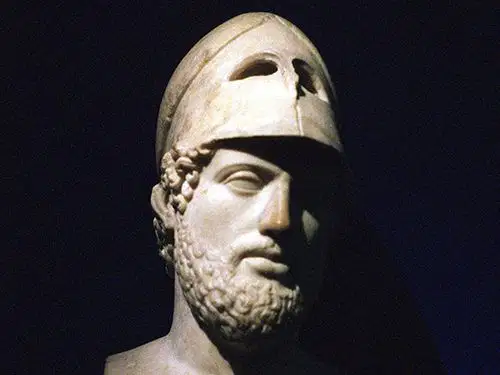
Pericles was famous for which of the following
Convicting Plato of treason and sentencing him to death
Defeating the Athenians during the Peloponnesian War
Rebuilding Athens after the Persian Wars
Gave us the Story of the Iliad and the Odyssey
Which three bodies of water surround Greece?
Mediterranean
Ionian
Aegean
Yellow
The Athenian government was considered a _____________.
monarchy
democracy
dictatorship
tyranny
Women could vote and take part in government in Athens.
True
False
What did architects of ancient Greece use in the construction of their buildings?
ceilings
walls
mosaic
columns
How would someone from Athens describe Sparta after visiting it?
“The Spartans are so strict. Their military is what dominates their society.”
“It’s interesting how both the rich and poor can be rulers in Sparta."
"This society has so many personal freedoms, unlike in Athens.”
“Sparta is exactly like Athens."
In a comparison between the Greek city-states of Sparta and Athens, Sparta placed more importance with ___
Equality and voting rights
Art and culture
education
the military


(Also, the largest city-state by a wide margin)


What was this war called?
Which of these is NOT true about the geography of Ancient Greece?
Greece is made up of small islands and peninsulas
Greece had a lot of good farmland
Greece is rocky and mountainous
The mountains and seas isolated Greek city-states
The ___________________ were the first to Greeks to develop a democratic government?
Athenians
Spartans
Minoans
Thracian
Spartan boys began training to be soldiers at the age of __________?
7
20
30
60
Helots were Spartan ______________________.
Citizens
Slaves
Traders
Officials
Who was the leader of Athens during the height of Athenian Democracy?
Solon
Cleisthenses
Pericles
Leonidas
How were juries chosen in Athens?
By the ruler
volunteered
Citizen signed up
Lottery
What was the only class allowed to vote in Athens?
Men
Slaves
Women
Government Officials
Who did Sparta defeat in the Peloponnesian War?
Macedonia
Marathon
Thrace
Athens
What city did Alexander the Great built?
Alexandria
Thebes
Antioch
Rhodes
What is the terms used to blend the eastern and western cultures together?
Pythagorean Theorem
Hellenism
Philosophy
Geometry
What are the two types of Greek plays?
(a)

Who is the famous Macedonian king?
Phillip II
Darius III
Xerxes the Great
Alexander the Great
Which river is Rome located on?
Tiber
Ganges
Danube
Nile
What type of government did Rome have during the Roman Republic?
monarchy
republican
democracy
dictatorship
A government where citizens elect their leaders.
monarchy
republic
oligarchy
pantheon
The laws of Rome were known as...
The Senate's Rules
Draco's Laws
The Ten Commandments
The Twelve Tables
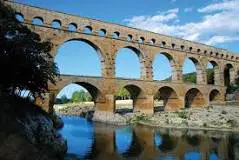
How did the form of technology seen in the picture impact ancient Rome?
It provided a place for Romans to worship all of the pagan gods of Roman mythology
It provided a place for citizens to trade and meet with people for official business
It provided a central location for spectators to observe the gladiators fight to their death
It provided clean water to public paths and other water systems in the empire
________are 2 officials elected by the senators who serve for 1-year terms.
Consuls
Senators
Tribunes
Dictators
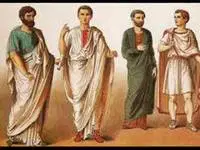
Wealthy landowners who had most of the power in Rome.
Plebeians
Patricians
Daimyo
Bolsheviks
Which official doctrine signed by Emperor Constantine ended the persecution of Christians and legalized Christianity?
The Twelve Tables of Law
Pax Romana
The Edict of Milan
The Ten Commandments
The forum was:
Similar to the Roman bath
A settlement of an upper part of an ancient Greek city, especially a citadel
The heart of Roman political life
An architectural achievement in ancient Rome that carried water to the cities
Roman general, statesman, Member of the First Triumvirate and politician who named himself dictator of the Roman Empire
Julius Caesar
Octavian
Caesar Augustus
Cicero
Augustus known for being:
The first Roman Emperor
The child of Romulus and Remus
The first Roman Consul
The first Tribune
Emperor of Rome who stopped the persecution of Christians and in 324 made Christianity the official religion of the Roman Empire
Octavian
Augustus
Julius Caesar
Constantine
Religion founded in the Roman Empire based on the teachings of Jesus:
Islam
Judaism
Christianity
Hinduism
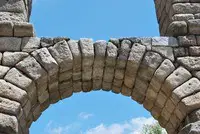
What is this structure called?
Roof
Arch
Dome
Column
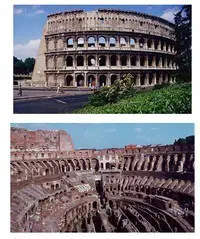
What is the name of the structure seen here?
The Parthenon
The Arena
The Colossos
The Colosseum
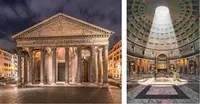
What is the name of this structure built to honor all the Roman gods?
Pantheon
Parthenon
Portcullis
Panetone
Rome controlled trade and culture throughout the Mediterranean after what war?
Punic War
Persian War
Peloponnesian War
Patrician War
The average person in the Roman Republic was an artisan, merchant, or farmer. What social class were they are part of?
Punics
Slaves
Plebeians
Patricians
This person was the nephew of Julius Caesar, started Pax Romana, and was the first Roman Emperor.
Darious
Mark Anthony
Alexander the Great
Augustus
The Golden Age in Greece is similar to what in Rome
Pax Romana
Prosperous Time
Gupta Empire
Han Dynasty
What was Rome considered because it elected Representatives to create laws.
direct democracy
republic
monarchy
dynasty
Which social class was a minority of the population, but held the majority of power in Rome?
Carhaginians
Slaves
Patricians
Plebeians
What codified Roman laws so that all citizens were treated equally?
Twelve Tables
Ten Commandments
Hammurabi's Code
Twelve Desks
What was another term for the Roman Army?
Legion
Diocletian
Pax Romana
Hannibal
Who divided Ancient Rome because it was to large for one ruler?
Diocletian
Hannibal
Pax Romana
Legion
Which feature of the Roman Empire allowed for Christianity to easily spread throughout the empire?
safe travel and relative peace
improved sanitataion
open market space
dominating the Mediterranean Sea
What was the attitude of Roman Republic when it come to the people they conquered?
Forced people to practice the religion of Rome
pay taxes, provide soldiers, swear loyalty
Forbade the practice of any religion
Persecuted people who were monotheistic
Which emperor converted to Christianity, allowed Romans to convert to Christianity, and moved the Roman Capital east?
Diocletian
Augustus Caesar
Constantine
Julius Caesar
What was used to carry fresh water in Ancient Rome?
Groma
Legion
Baths
Aqueducts
What was an ECONOMIC cause for the decline of Rome?
new resources to create new roads
the Roman Legions were to spread out
high inflation that ruined business
corrupt leaders with no clear line of succession
Which of the following was a POLITICAL cause of the decline of Rome?
no clear succession of power with corrupt leaders
There were too many slave revolts
free bread and entertainment for the majority
Rome was experiences high inflation

The decline of the Roman Empire was
accelerated (happened faster) because?
Rome waged war against a single
powerful trade rival.
Rome allowed Christianity to spread.
Rome was conquered by the Islamic
Empire.
Rome faced invasions from many
"Barbarian" tribes.
Which Barbarian tribe set off a domino effect which pushed many other tribes into Roman territory?
A) The Goths
B) The Huns
C) The Vandals
D) The Franks

What does this diagram illustrate?
events that led to corruption in ancient Rome
effects of the collapse of the Roman Empire
patterns that develop when a government collects taxes
causes of the fall of the Roman Empire

Italy is in which continent?
North America
Africa
Europe
Asia

True/False: The Roman Empire was far too large to govern for one person?
True
False
The Roman Empire had 4 major issues they were Political, Social, Economic, and ?
Social
Military
Education
Poverty
TRUE/FALSE: No money to pay military = weak military
and Constant threat of invaders on empire’s borders
TRUE
FALSE

What is inflation?
Increase general price level of goods and services
Increase price level from one private organisation
Decrease general price level of goods
Increase general price level of services

