Wayground logo

Free Printable Worksheets

Font size

S
M
L
XL
Worksheets

Final Exam Review

Total questions: 158

Worksheet time: 9hrs 12mins

Name
Class
Date
1.

Name the lines that are only in plane Q.

a)

n and m

b)

m and t

c)

t and q

d)

n and q

2.

How many planes are labeled in the figure?

a)

0

b)

1

c)

2

d)

3

3.

Name a point that is NOT coplanar with points A, B, and C. Select all that apply.

a)

F

b)

D

c)

E

d)

P

4.

Are points B, C, and H coplanar?

a)

Yes

b)

No

c)

Maybe

d)

Justin Bieber

5.
Part of a line. Has two endpoints and includes all of the points in between.
a)
Point
b)
Angle
c)
Line
d)
Line Segment
6.
A__________ is a fixed position in space and has no dimensions or size.
a)
Point
b)
Line
c)
Plane
d)
Cube
7.
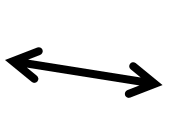
Name the Image
a)
Angle
b)
Line
c)
Line Segment
d)
Ray
8.
Two lines intersect at a ....
a)
angle
b)
point
c)
line
d)
intersection
9.
Two planes intersect at a...
a)
line
b)
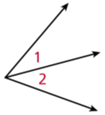
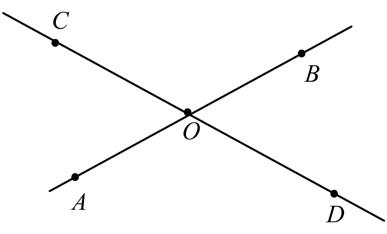
point
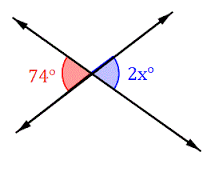
c)
plane
d)
letter
10.
A line that contains point M.
a)
Line q
b)
Line p
c)
Line r
d)
Line NH
11.

Are points D and E collinear or coplanar?

a)

Collinear

b)

Coplanar

c)

Both

d)

Neither

12.
Name two points collinear to Point K
a)
H & M
b)
J & L
c)
N & J
d)
M & L
13.
A plane is named by...
a)
Any 1 point on the plane.
b)
Any 3 collinear points on the plane or a lowercase script letter.
c)
Any 3 non-collinear points on the plane or an uppercase script letter.
d)
All points on the plane that aren't part of a line.
14.
A plane containing point A.
a)
Plane DEA
b)
Plane k
c)
Plane CDF
d)
Plane F
15.

Name the figure above.

a)

Plane P

b)

Point P

c)

Ray P

d)

Line P

16.

Find the midpoint:

a)

(−32,−52)\left(-\frac{3}{2},-\frac{5}{2}\right)

b)

(−1,−3)\left(-1,-3\right)

c)

(−12,−52)\left(-\frac{1}{2},-\frac{5}{2}\right)

d)

(−3,−1)\left(-3,-1\right)

17.

What formula would I use to find the y-coordinate of the midpoint between (3,9) and (5,9)

a)

3+52\frac{3+5}{2}  

b)

3+92\frac{3+9}{2}  

c)

5+92\frac{5+9}{2}  

d)

9+92\frac{9+9}{2}  

18.

Find the y-coordinate of the midpoint of the line segment with the given endpoints (6,-6) and (-10,-10)

a)

-8

b)

-16

c)

-20

d)

8

19.

What is the x-coordinate of the midpoint between (-4,4) and (-2,2)?

a)

3

b)

-3

c)

4

d)

6

20.

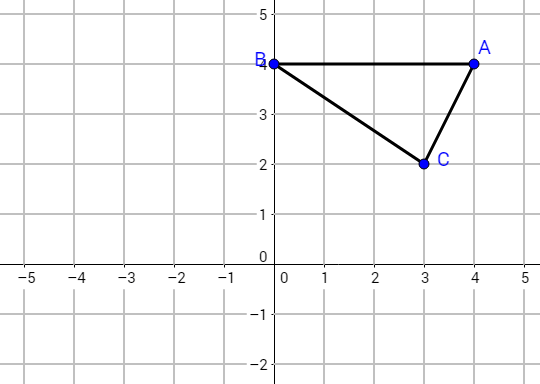
Find the midpoint of the line.

a)

(2,1)

b)

(1,2)

c)

(-2,1)

d)

(1,-2)

21.

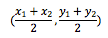
Which of the following is the correct midpoint formula given two endpoints (x1, y1) and (x2, y2)?
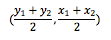
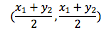
a)
b)
c)
d)
22.

Which of the following formulas is the distance formula?

a)

(x1+x22, y1+y22)\left(\frac{x_1+x_2}{2},\ \frac{y_1+y_2}{2}\right)

b)

(x2−x1)2+(y2−y1)2\sqrt{\left(x_2-x_1\right)^2+\left(y_2-y_1\right)^2}

c)

a2+b2=c2a^2+b^2=c^2

d)

y2−y1x2−x1\frac{y_2-y_1}{x_2-x_1}

23.

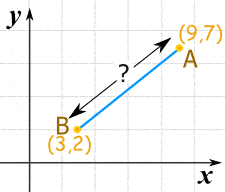
Find the distance between each pair of points.

(-6,-10)  and (-2,-10)

a)

d=6d=6  

b)

d=4d=4  

c)

d=15d=15  

d)

d=12d=12  

24.
Find the endpoint of the segment with the endpoint of  (-4, 5) and midpoint of (7, -9) 
a)
(18, -23)
b)
(13, 18)
c)
(11,4)
d)
(1.5, -2)
25.
Find the distance.
a)
7.1
b)
7.8
c)
8.7
d)
8.9
26.
Find the missing endpoint given the midpoint (3,4) and the other endpoint (-1,6)
a)
(1,5)
b)
(2,10)
c)
(7,2)
d)
(1,2)
27.
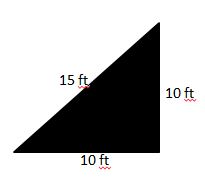
Find the area of this triangle.
a)
150 ft2
b)
100 ft2
c)
50 ft2
d)
35 ft2
28.
What is the perimeter of this shape?
a)
24cm
b)
16cm
c)
22cm
d)
30cm
29.
What is the perimeter of the shaded figure?
a)
12
b)
10
c)
16
d)
18
30.
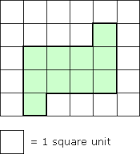
What is the area of the figure? 
a)
11 square units
b)
15 square units
c)
25 square units
d)
30 square units
31.
What is the area of the rectangle?
a)
28 units squared
b)
45 units squared
c)
33 units squared
d)
19 units squared
32.

Translate the blue shape to the pink shape...

a)

5 Right

2 Down

b)

5 Left

2 Up

c)

3 Right

1 Down

d)

3 Left

1 Up

33.

Translate shape B to shape A...

a)

5 Right

3 Up

b)

5 Left

3 Down

c)

3 Right

3 Up

d)

3 Left

3 Down

34.
The original figure prior to a transformation.
a)
Pre-image
b)
Image
35.
The result of a transformation.
a)
Pre-image
b)
Image
36.
Determine where T' would be if you translated T 3 units to the right and 6 units up.
a)
(5, 1)
b)
(2, -5)
c)
(-1, 1)
d)
(8, -2)
37.
Write the rule for this translation:
Slide 3 up and 2 right
a)
(x, y)---->(x + 3, y + 2)
b)
(x, y)-----> (x+2, y + 3)
c)
(x, y)----> (x - 2, y + 3)
38.
Identify the transformation from ABC to A'B'C'.
a)
(x+8, y+4)
b)
(x-8, y-4)
c)
(x+4, y+8)
d)
(x-4, y-8)
39.

When translating left or right on a coordinate plane, what coordinate is affected?

a)

x-coordinate

b)

y-coordinate

40.

When translating up or down on a coordinate plane, what coordinate is affected?

a)

x-coordinate

b)

y-coordinate

41.
What does this transformation say to do?
(x, y) -----> (x, y +4) 
a)
slide down 4
b)
slide up 4
c)
slide right 4
d)
slide left 4
42.
Point M (-3, 5) is translated using this rule. 
(x, y) ----> (x - 1, y) 
What are the coordinates of M'?
a)
(-4, 5)
b)
(-2, 5)
c)
(-4, 4)
d)
None of these
43.

Select the picture showing a translation of:

4 squares right and 1 square up

a)
b)
c)
d)
44.
What transformation is happening to the red triangle to get to the blue triangle?
a)
Translation
b)
Rotation
c)
Reflection
45.
Write the rule for this translation:
Slide 3 up and 2 right
a)
(x, y)---->(x + 3, y + 2)
b)
(x, y)-----> (x+2, y + 3)
c)
(x, y)----> (x - 2, y + 3)
46.
How is trapezoid ABCD translated to trapezoid A'B'C'D'?
a)
Translated 5 units down and 5 units to the right
b)
Translated 5 units down and 1 to the right
c)
Translated 8 units down and 5 units to the right
d)
Translated 5 units down and 4 units to the right
47.
 Describe the Transformation.
a)
Translation
b)
Rotation
c)
Reflection
48.

Which rule describes rotating 180° clockwise?

a)

( x, y ) → ( y, -x )

b)

( x, y ) → ( -x, -y )

c)

( x, y) → ( x, y )

d)

( x, y ) → ( -y, x )

49.

If you were to rotate ABCD 180° about the origin, what would the coordinate of A' be?

a)

(3, 5)

b)

(-3, -5)

c)

(-5, 3)

d)

(5, 3)

50.
The image shows what type of transformation?
a)
Rotation
b)
Translation
c)
Reflection
51.

Which answer shows a reflection across the x-axis?

a)

a

b)

b

c)

c

d)

d

52.

If the triangle is reflected across the y-axis, the coordinates of the new triangle will be (5, 0), (2, 3), and ___.

a)

(0, 5)

b)

(4, 3)

c)

(3, 5)

d)

(2, 3)

53.

Which kind of transformation maps

ΔPQR to ΔP′Q′R′\Delta PQR\ to\ \Delta P'Q'R'  ?

a)

Translation

b)

Rotation

c)

Reflections 

d)

Dilation 

54.
Dilate Point B by a scale factor of 3:
a)
(12,0)
b)
(12,12)
c)
(4,3)
d)
(0,12)
55.
Choose the correct scale factor:
a)
2
b)
3
c)
1/3
d)
1/2
56.
If two lines are parallel their slopes are  ____________
a)
the same.
b)
negative reciprocals of each other.
57.
Are these lines parallel?
y = 12x + 4
y = 12x +14
a)
YES
b)
NO
58.

Are these lines parallel?

y = (-1/2)x + 1

y = (1/2)x - 5

a)

YES

b)

NO

59.
Write an equation of a line that passes through the point (5,-1) and is parallel to the line y = (-3/5)x -3
a)
y = (-3/5)x + 2
b)
y = (-3/5)x -2
c)
y = (3/5)x + 2
d)
y = (5/3) + 2
60.
Write an equation of a line that passes through the point (2,6) and is parallel to the line y = -3
a)
y = 12
b)
y = 6
c)
x = 12
d)
x = 6
61.
Write an equation of a line that passes through the point (-2,3) and is parallel to the line x = 4
a)
y = -2
b)
y = 2
c)
x = 2
d)
x = -2
62.

If two lines are perpendicular to each other their slopes are ____________

a)

the same.

b)

negative reciprocals of each other.

63.
Are these lines perpendicular?
y = 4x + 2
y = (-1/4)x + 12
a)
YES
b)
NO
64.
Are these lines perpendicular?
y = (1/2)x + 2
y = -2x + 13
a)
YES
b)
NO
65.
Write an equation of a line that passes through the point (-9,2) and is perpendicular to the line y = 3x - 12
a)
y = (-1/3)x - 1
b)
y = (1/3)x - 2
c)
y = -3x + 12
d)
y = 3x - 1
66.
Write an equation of a line that passes through the point (7,10) and is perpendicular to the line y = (1/2)x - 9
a)
y = -2x - 24
b)
y = -2x + 12
c)
y = -2x  + 24
d)
y = (1/2)x - 12
67.
Write an equation of a line that passes through the point (-2,3) and is perpendicular to the line x = 4
a)
y = 3
b)
x = -3
c)
y = -3
d)
x = 3
68.
What slope is perpendicular to:  
m = 3
a)
-3
b)
-1/3
c)
1/3
d)
3
69.
y = 6x + 2
y = -6x + 2
These lines are...
a)
Parallel
b)
Perpendicular
c)
Neither
70.
y = -2/3x + 2
y = 3/2x + 9
These lines are...
a)
Parallel
b)
Perpendicular
c)
Neither
71.
What type of angles are they?
a)
VERTICAL
b)
ALTERNATE INTERIOR
c)
ALTERNATE EXTERIOR
d)
CORRESPONDING
72.
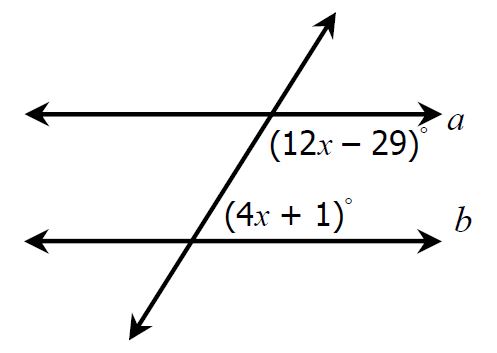
WHAT IS THE VALUE OF X?
a)
16
b)
11.4
c)
0 
d)
-16
73.
WHAT TYPE OF ANGLES ARE THEY?
a)
ALTERNATE INTERIOR
b)
SAME SIDE
c)
CONSECUTIVE
d)
CORRESPONDING
74.
WHAT IS THE VALUE OF X? 
a)
-7
b)
9.4
c)
7
d)
-9.4
75.
WHAT TYPE OF ANGLES ARE THEY
a)
ALTERNATIVE
b)
CONSERVATIVE
c)
CONSECUTIVE (SAME SIDE)
d)
CORRESPONDING
76.

WHICH IS THE CORRECT EQUATION TO SOLVE FOR X?

a)

16X+180 = 90

b)

12X - 29 = 4X +1

c)

12X - 29 + 4X +1=90

d)

12X - 29 + 4X +1=180

77.
WHAT TYPE OF ANGLES ARE THESE?
a)
CONSERVATIVE
b)
ALTERNATE INTERIOR
c)
ALTERNATE EXTERIOR
d)
SAME SIDE
78.
WHAT IS THE CORRECT EQUATION TO USE TO SOLVE FOR X?
a)
33 = 7X +5
b)
-7X=33
c)
33+7X+5=180
d)
33+7X+5=90
79.

Select the images that represent alternate interior angles.

a)
b)
c)
d)
e)
80.

Which images represent corresponding angles?

a)
b)
c)
81.

Which image(s) represent(s) the definition of a transversal?

a)
b)
c)
d)
82.

Select the images that show alternate exterior angles.

a)
b)
c)
d)
e)
83.

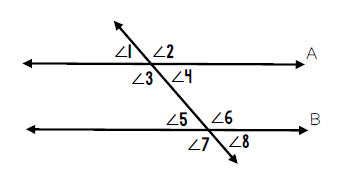
If ∠2 is 150°, what is the measure of ∠8?

a)

50°

b)

30°

c)

150°

d)

45°

84.

If ∠1 is 70°, what is the measure of ∠8?

a)

70°

b)

110°

c)

90°

d)

50°

85.

If ∠4 is 45°, what is the measure of ∠5?

a)

90°

b)

45°

c)

135°

d)

50°

86.

Which of the following statements about the diagram is true?

a)

∠1 and ∠2 are complementary

b)

∠3 and ∠6 are alternate interior angles

c)

∠1 and ∠3 are vertical angles

d)

∠1 and ∠7 are corresponding angles

87.

Which of the following statements about the diagram is true?

a)

∠1 and ∠5 are corresponding angles

b)

∠5 and ∠6 are complementary

c)

∠8 and ∠2 are alternate interior angles

d)

∠3 and ∠5 are alternate interior angles

88.

What is the measure of ∠2?

(a)  

89.

What is the measure of ∠4?

(a)  

90.

Angle 3 and Angle 6 are examples of which type of angle pair?

a)

Alternate exterior angles

b)

Alternate interior angles

c)

Vertical angles

d)

Corresponding angles

91.
Name the angle pair. 
a)
Complementary
b)

Linear Pair

c)
Vertical
92.

< 1 and < 3 are which angle pair?

a)
Complementary
b)
Supplementary
c)
Adjacent
d)
Vertical
93.

Name the angle pair.

a)
Complementary angles
b)
Congruent angles
c)
Linear Pair
d)
Vertical Angles
94.

Name the angle pair.

a)

complementary

b)
linear pair
c)
supplementary 
d)

vertical

95.

Are these angles complementary, supplementary or neither ?

a)
Complementary
b)
Supplementary 
c)
Neither
96.

Vertical angles are always _______

a)
acute
b)

complementary

c)

congruent

d)
adjacent angles
97.

∠2\angle2  and ∠4\angle4  are

a)

vertical

b)

supplementary

c)

complementary

98.

Name the angle pair.

a)

Adjacent Angles

b)

Complementary Angles

c)

Supplementary Angles

d)

Vertical Angles

99.

Name a pair of adjacent angles.

a)

∠COB and ∠DOA

b)

∠AOD and ∠AOC

c)

∠COB and ∠AOD

d)

∠BOD and ∠AOC

100.
What is the value of x?
a)

37°

b)

74°

c)

148°

d)

16°

101.

< 4 and < 2 are what angle pair?

a)
Complementary
b)
Linear Pair
c)
Acute
d)
Vertical
102.

Which angle is vertical to <5?

a)

<1

b)

<4

c)

<2

d)

<6

103.

What is the value of x?

104.

What is the value of x?

105.

What is the value of x?

106.

What is the m∠ABC ?

a)

45°

b)

60°

c)

105°

d)

15°

107.

What is the m∠3 ?

a)

28°

b)

152°

c)

180°

d)

62°

108.

What is the angle pair relationship between ∠8 and ∠9 ?

a)

Linear Pair

b)

Complementary

c)

Adjacent

d)

Vertical

109.
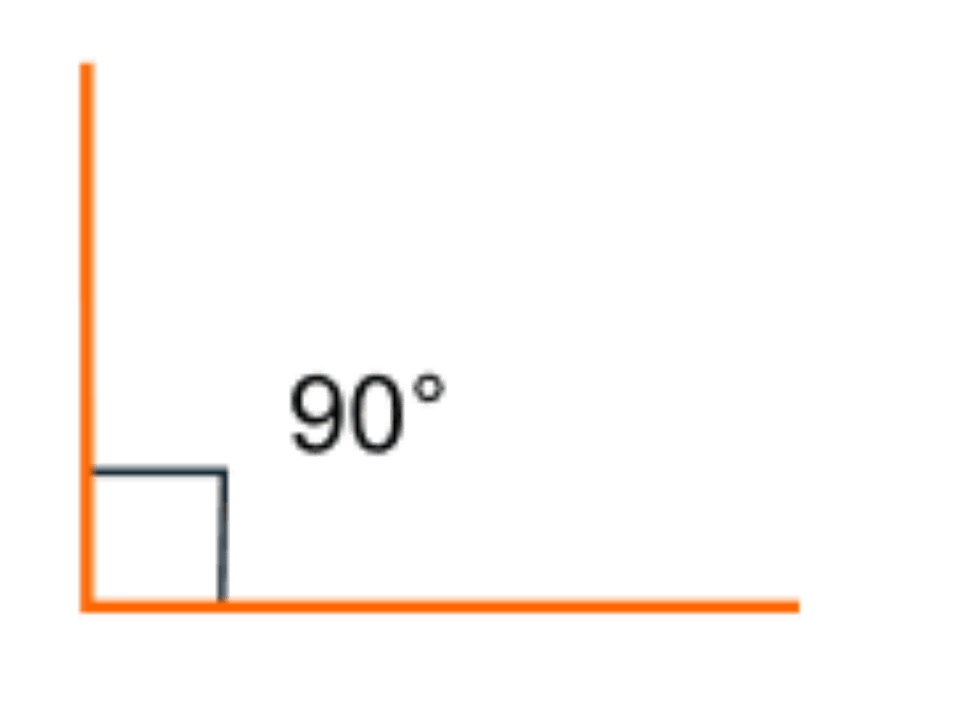
Which angle type is pictured?
a)
Acute
b)
Right
c)
Obtuse
d)
Straight
110.
Which angle type is pictured?
a)
Acute
b)
Right
c)
Obtuse
d)
Straight
111.
Which type of angle is pictured?
a)
Acute
b)
Right
c)
Obtuse
d)
Straight
112.

What is the measure of the angle?

a)

50 degrees

b)

65 degrees

c)

75 degrees

d)

70 degrees

113.

What is the measure of the angle?

a)

20 degrees

b)

60 degrees

c)

80 degrees

d)

40 degrees

114.
What is the measure of the angle?
a)
110 degrees. 
b)
140 degrees.
c)
150 degrees.
d)
170 degrees. 
115.
What is the measure of the following angle?
a)
78 degrees.
b)
11 degrees.
c)
190 degrees.
d)
58 degrees. 
116.

Find the measure of this angle and classify it.

a)

50o, acute

b)

130o, obtuse

117.
a)

71o, acute

b)

109o, obtuse

118.
a)

6o

b)

14o

c)

174o

d)

186o

119.
a)

70o

b)

110o

120.
a)

125o

b)

115o

c)

75o

d)

65o

121.
a)

66o

b)

74o

c)

114o

d)

126o

122.
Name the figure.
a)
ray
b)
line
c)
line segment
d)
point
123.
What is this?
a)
Line segment
b)
Ray
c)
Point
d)
Line Segment
124.
What type of line does the picture represent? 
a)
Parallel
b)
Intersecting
c)
Perpendicular
125.
What type of line does the picture represent? 
a)
Parallel
b)
Intersecting
c)
Perpendicular
126.

What type of angle is 180 °\degree ? 

a)

Straight Angle

b)

Acute Angle

c)

Right Angle

d)

Obtuse Angle

127.

What type of angle is less than 90 °\degree ? 

a)

Straight Angle

b)

Acute Angle

c)

Right Angle

d)

Obtuse Angle

128.

What type of angle is greater than 90 °\degree ? 

a)

acute angle

b)

right angle

c)

obtuse angle

d)

straight angle

129.
Which angle type is pictured?
a)
Acute
b)
Right
c)
Obtuse
d)
Straight
130.
Which angle type is pictured?
a)
Acute
b)
Right
c)
Obtuse
d)
Straight
131.
Which type of angle is pictured?
a)
Acute
b)
Right
c)
Obtuse
d)
Straight
132.

What is the measure of the angle?

a)

50 degrees

b)

65 degrees

c)

75 degrees

d)

70 degrees

133.

What is the measure of the angle?

a)

20 degrees

b)

60 degrees

c)

80 degrees

d)

40 degrees

134.
What is the measure of the angle?
a)
110 degrees. 
b)
140 degrees.
c)
150 degrees.
d)
170 degrees. 
135.
What is the measure of the following angle?
a)

95 degrees.

b)
11 degrees.
c)
190 degrees.
d)
58 degrees. 
136.

Find the measure of this angle and classify it.

a)

50o, acute

b)

130o, obtuse

137.
a)

71o, acute

b)

109o, obtuse

138.
a)

6o

b)

14o

c)

174o

d)

186o

139.
a)

70o

b)

110o

140.
a)

125o

b)

115o

c)

75o

d)

65o

141.
a)

66o

b)

74o

c)

114o

d)

126o

142.
Name the figure.
a)
ray
b)
line
c)
line segment
d)
point
143.
What is this?
a)
Line segment
b)
Ray
c)
Point
d)
Line Segment
144.
What type of line does the picture represent? 
a)
Parallel
b)
Intersecting
c)
Perpendicular
145.
What type of line does the picture represent? 
a)
Parallel
b)
Intersecting
c)
Perpendicular
146.

What type of angle is 180 °\degree ? 

a)

Straight Angle

b)

Acute Angle

c)

Right Angle

d)

Obtuse Angle

147.

What type of angle is less than 90 °\degree ? 

a)

Straight Angle

b)

Acute Angle

c)

Right Angle

d)

Obtuse Angle

148.

What type of angle is greater than 90 °\degree ? 

a)

acute angle

b)

right angle

c)

obtuse angle

d)

straight angle

149.

What type of polygon is thist?

a)

concave

b)

convex

150.

What type of polygon is this?

a)

concave

b)

convex

151.

What type of polygon is this?

a)

concave

b)

convex

152.

What type of polygon is this?

a)

concave

b)

convex

153.

What type of polygon is this?

a)

concave

b)

convex

154.

What type of polygon is this?

a)

concave

b)

convex

155.

What type of polygon is this?

a)

concave

b)

convex

156.

What type of polygon is this?

a)

concave

b)

convex

157.

A polygon is a closed plane figure with at least 3 straight sides and at least three angles.

a)

True

b)

False

158.

A regular polygon has all equal ___________ and ___________

a)

heights; lengths

b)

widths; bases

c)

radii; altitudes

d)

sides; angles