
 Worksheets
Renewable and Nonrenewable resources
Total questions: 44
Worksheet time: 41mins
A nonrenewable resource is ________.
a natural resource that cannot be remade or regrown
a plant
a natural resource that can be remade or regrown
an animal
Nuclear energy is a type of nonrenewable energy.
True
False
Coal, petroleum, and gas are all considered_____ resources.
renewable
nonrenewable

How is coal created?
dark clouds hitting together in the atmosphere
small particles of topsoil that mixed with air and clouds
dead plants pushed together by heat and pressure underground

What is the main disadvantage of using natural gas as energy?
It makes electricity.
There are less pollutants when using it.
It does not light easily.
It is highly flammable.
About how many years does it take to make oil and gas?
one million years
10 years
1,000 years
300-400 million years
What are some of the natural resources that are renewable?
solar
wind
biomass
geothermal
all of these answers

What type of energy is shown in the picture?
wind
geothermal
solar
biomass

What type of energy is made from using water?
wind
solar
hydroelectric
biomass
What can be used to generate electricity?
coal
oil
tidal
hydroelectric
all of these are energy sources and can generate electricity
Energy that is made from heat inside Earth
Coal
Fossil Fuels
Geothermal
Solar
Why are fossil fuels nonrenewable?
fossil fuels come from the remains of prehistoric life, which takes along time to make again
when the store runs out of fossil fuels, they can't buy anymore


What happens to fossil fuels to create electricity?
They are stored
They are burned
They are melted
They are frozen
What is the carbon cycle?
Carbon moves through the water cycle
Carbon moves through a circle
Carbon moves through organisms and then returns to the environment
Carbon moves through the air
Greenhouse gases are increasing.
True
False
What is global warming?
The rise in temperature on Earth
A microwave heating up
The decrease in temperature on Earth
Heating up food
What is an effect of global warming?
Sea ice melting
Ocean water has risen
More extreme weather
All of the above
What are renewable resources?
Food
A resource that is remade by natural processes at the same rate used
A resource that is remade by people
A resource that is not remade
What are nonrenewable resources?
A resource that can be remade
Fossil fuels and nuclear power
A resource that is used up faster than it can be made by nature
Both B and C
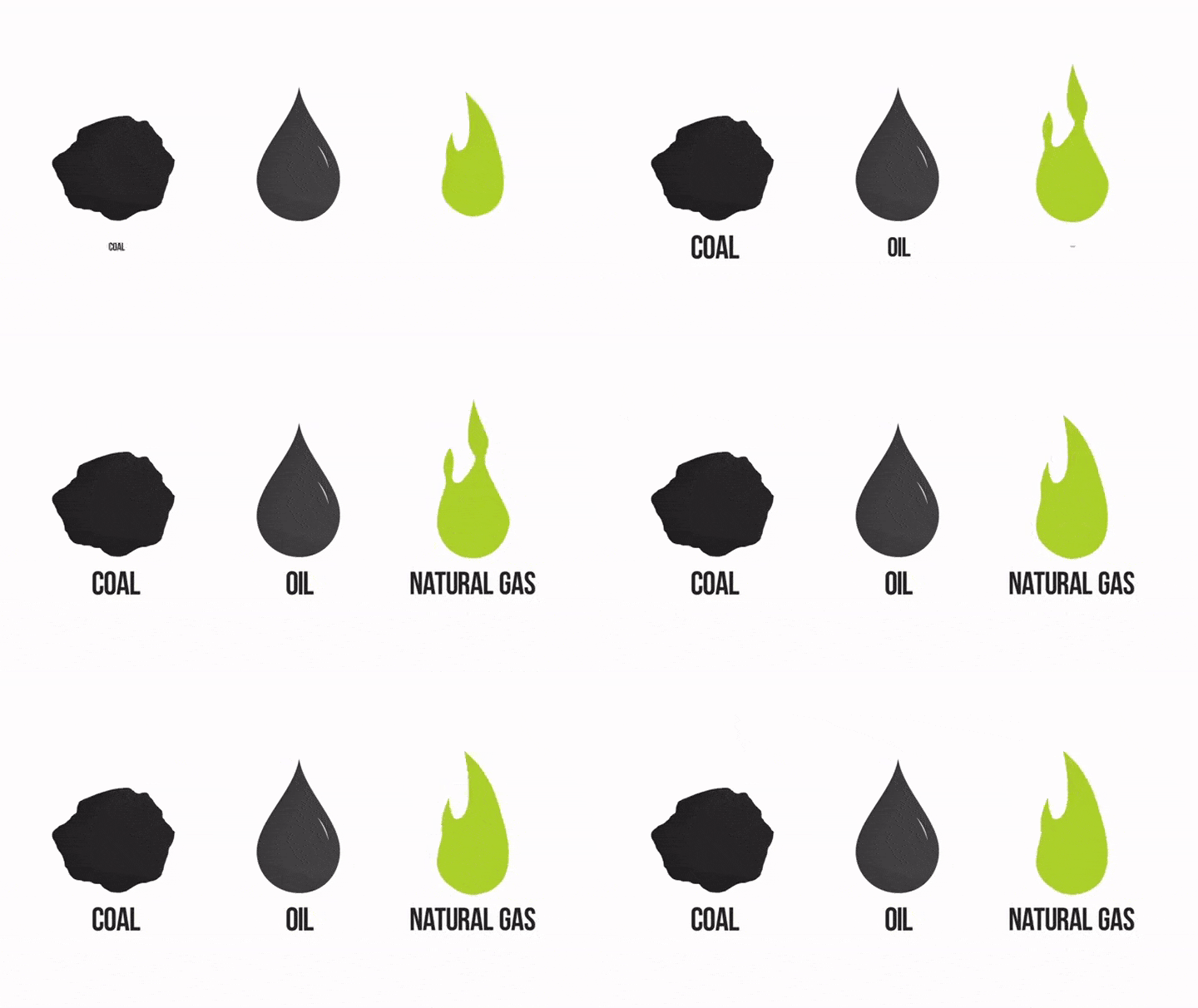
A group of non-renewable resources, called ______________, include coal, oil, and natural gas.
Fossils
Energy
Resources
Fossil fuels
Which of the following are greenhouse gases?
Carbon dioxide
Methane
Nitrogen Oxide
All answers are correct
Which of the following is an effect of Global Warming? Check all that apply
Polar ice caps will melt.
Coastal regions will be covered with rising sea levels.
Some areas will experience serious droughts
The Earth's rotation will slow down and eventually stop
Which layer in the atmosphere protects us form harmful UV radiation? Earth's sunscreen
Ozone
Troposphere
Ionosphere
Exosphere
What is one benefit of using renewable resources to produce energy?
Renewable resources cannot be used up permanently.
Renewable resources are available everywhere.
Producing energy from renewable resources is easy.
Producing energy from renewable resources relies on weather.
Which example describes the use of a nonrenewable energy resource?
Gasoline is used to fuel a car.
Sunlight is used to heat a home.
Water is released through a dam.
Wind turbines spin to generate electricity.
The United States has the third highest population of all the countries in the world, yet it has the highest energy consumption. Which energy source is the United States in danger of depleting first?


The table shows the percentages of coal usage in the years 1990 and 1997.
Which conservation method would result in the change indicated by the data?
recovering
recycling
reducing
reusing
The amount of coal burned to produce electricity by a typical coal plant in the United States during a three year period has increased by 30%.
What immediate impact will this increase in the consumption of coal have on the environment?
a decrease in freshwater resources
an increase in non-biodegradable wastes
an increase in greenhouse gas emissions
a decrease atmospheric O2
In a city, home-heating from coal and local timber increased by 30% in a single year.
As a result, which direct impact to the local environment will most likely happen?
Soil erosion in the area will decrease.
Forests in the area will grow much faster.
Carbon dioxide concentrations in the air will increase.
Lakes, rivers, and streams will become less polluted.

The table shows some resource conservation examples as suggested by four different students (Shawna, Mike, Roy, and, Katy).
Which student's example can be described as reusing a resource?
Katy
Mike
Roy
Shawna

Global warming is caused by the presence of excess amounts of greenhouse gases such as CO2 and SO2 in the air. The activities listed have a positive impact on the environment.
Which activities will help to control global warming?
3 and 4
2 and 3
2, 3, and 4
1, 2, and 4
Energy can be produced in many different ways. Which method adds more greenhouse gases to the atmosphere and increases global warming?


Use the pie graph to answer the question.
What percentage of energy is produced from energy sources that are nonrenewable?
21.3%
44.7%
69.1%
89.4%
In a local town, more than 50% of home owners installed solar heaters to keep their homes warm instead of using electricity from coal that comes from a different state.
How will this decision impact the local environment?
There will be a decrease in local deforestation.
There will be an increase in acid rain as result of the increased coal conservation.
There will be an increase in local smog from the coal fired power plants.
There will be a decrease in local greenhouse gas emissions.
Hydropower generates over 60% of the world's renewable energy. What could be an environmental impact of this method of power generation?
It emits greenhouse gases.
It produces air pollutants.
It contaminates groundwater resources.
It results in the destruction of plant and animal habitats.

The photograph shows a solar energy farm near Seville, Spain.
The mirrors reflect incoming sunlight toward the solar tower in the center, where the energy from the sun is turned into electricity. Why are mirrors used to reflect the sunlight?
to diffuse the incoming solar radiation
to concentrate the energy from solar rays
to drive the process of nuclear fission
to create heat for burning coal
A substance is composed of organic material such as dead plants. To which category does the substance belong?
magma
mineral
ore
soil
Gardeners will sometimes add lime to soils that are too acidic. Lime acts as a fertilizer and raises the pH of the soil to an appropriate level.
What soil pH most likely requires the application of lime?
4
7
9
11
44-53.
Answer the questions below after watching the video
What are natural resources?
Man-made elements
Synthetic products
Artificial tools
Resources from nature
How is wind energy renewed?
Solar energy
Ocean waves
Heat from the sun
Geothermal heat
What replenishes the water in rivers?
Groundwater
Soil absorption
Sunlight
Rain
Which of the following is a renewable resource?
Water
Petroleum
Coal
Natural Gas
Why are plants considered renewable resources?
They can regenerate
They produce oxygen
They are in abundant supply
They use solar energy
What makes animals a renewable resource?
They are used for labor
They are domesticated
They can reproduce
They live in water
Which resource takes millions of years to form?
Fossil fuels
Solar energy
Hydroelectric power
Wind
What is a characteristic of non-renewable resources?
Clean energy
Slow replacement
Unlimited availability
Quick regeneration
Which of the following is not a fossil fuel?
Coal
Uranium
Petroleum
Natural Gas
What should one understand from the video about resources?
Only renewable resources are useful
Non-renewable resources regenerate quickly
The importance of resource sustainability
All natural resources are renewable

