
 Worksheets
Biology Final- 1st Semester
Total questions: 44
Worksheet time: 2hrs 56mins
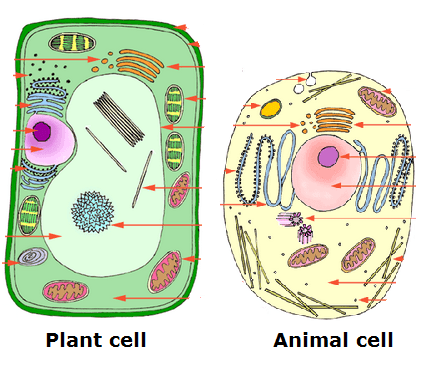
What distinguishes a plant cell from an animal cell? (How do you tell them apart) Hint: There's 3 ways (Check all 3)
Central Vacuole
Mitochondria
Cell Wall
Ribosomes
Chloroplasts

The 3 parts of the Cell Theory are...?
All living things are composed of cells
Cells are the basic units of structure and function in living things
All cells are produced from other cells
All living things are composed of cells
Cells are the basic units of dance and vibes in living things
All cells are destroyed from other aliens
All living things are composed of Jell-O
Cells are the basic units of structure and function in living things
All cells are produced from factories in Canada
All living things are composed of cells
Cells do karate and practice eating whole pies in their free time
All cells are produced from other cells

Cellular Respiration occurs within me and I am in BOTH plant and animal cells. I am a....
Nucleus
Golgi Body
Cytoskeleton
Mitochondria

I am the "brain" of the cell or the "control center" for everything happening within the cell. I am a...
Golgi Body/Apparatus
Nucleus
Ribosome
Lysosome

Photosynthesis takes place within me. I am a...
Mitochondria
Cell Wall
Chlorine
Chloroplast

I am the "waste removal expert" within a cell, removing unwanted material. Like a garbage man, I am a...
Waste Management
Nucleus
Ribosome
Lysosomes

I decide what goes in and out of the cell. I am fluid like and found in BOTH plant and animal cells. I am a...
Cell Wall
Cell Membrane
Cytoplasm
Golgi Apparatus

I provide plant cells their rigid shape. I am the...
Basketball that Nic Quarne left in Mr. Woller's room last week
Cytoskeleton
Cell Membrane
Cell Wall
Plant Cells can perform which reactions? Check ALL that apply.
Photosynthesis
Rock and Roll
Cellular Respiration
Surprised reactions
In a prokaryotic cell, the DNA is found in the nucleus
True
False
Which of the following is an example of a prokaryotic cell
Plant Cell
Animal Cell
Bacteria Cell
None of these
Which of the following best describes a prokaryotic cell?
Small and simple
Large and complex
Select the 2 answers that best describe a prokaryotic cell
small size & simple
large size & complex
DNA is contained in a nucleus
DNA is NOT contained in a nucleus
contains many membrane-bound organelles such as mitochondria, ER, & more
In a prokaryotic cell, the DNA is...
floating freely inside the cell
contained inside of a nucleus
The Cell Wall's function is to
let things in/out of the cell
provide support & structure for the cell
create proteins
make energy for the cell
Unicellular means ______.
many cells
DNA
one cell
no nucleus
Multicellular means _______.
one cell
many cells
DNA
no cells
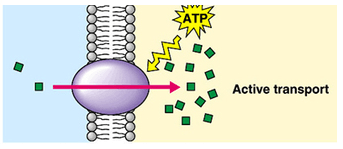
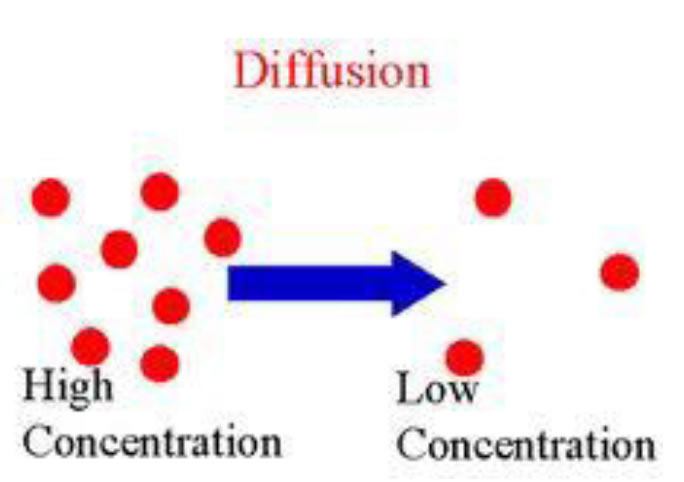
to pump a solute across a membrane against its gradient requires work; the cell must expend energy
active transport
passive transport
osmosis
gated channels
Which statement is correct? (choose 2)
In active transport; particles move up the concentration gradient
In active transport; particles move against the concentration gradient
In active transport; particles move with the concentration gradient
In active transport; particles move down the concentration gradient
Which statement is correct? (choose 2)
In passive transport; particles move against the concentration gradient
In passive transport; particles move up the concentration gradient
In passive transport; particles move with the concentration gradient
In passive transport; particles move down the concentration gradient

What is the definition of Selective Permeability?
The movement of materials across the cell membrane that requires NO ENERGY from the cell.
The movement of materials through (or across) the cell membrane
The ability of the cell membrane to allow some things to pass through while preventing other things from passing through.


The cell shows water moving in and out equally, which means it was placed in a ___ solution.
Isotonic
Hypertonic
Hypotonic


What are the two products of photosynthesis?
Oxygen and Carbon Dioxide
Oxygen and Sugar
Sunlight and Sugar
Choose the statement that best describes light reaction.
It converts CO2 to sugar molecule
It converts light energy to chemical energy of ATP and NADPH
It takes place in the stroma
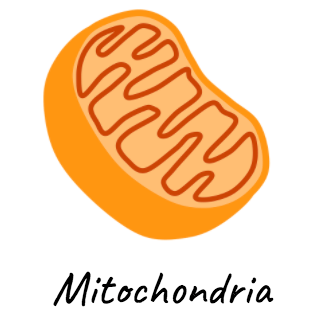

Steps of Cellular Respiration
1. Glycolysis
2. Krebs Cycle
3. Electron Transport Train
1. Krebs Cycle
2. Glycolysis
3. Electron Transport Train

What are the products (COMES OUT) for cellular respiration?
*Hint - There are 3 correct answers
Energy/ATP
Water
Carbon Dioxide
Oxygen
What are the reactants (GOES IN) for cellular respiration?
Glucose
Water
Carbon Dioxide
Oxygen

