
 Worksheets
EXAM REVIEW - Chemistry MC Questions
Total questions: 138
Worksheet time: 1hrs 9mins
Name
Class
Date
1.
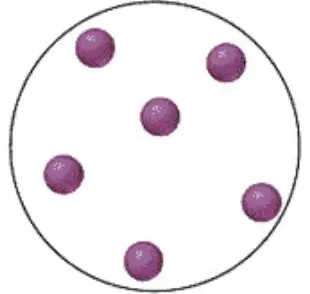
A substance that CANNOT be broken down by chemical or physical means is a(n):
a)
compound
b)
element
c)
mixture
d)
solution
2.
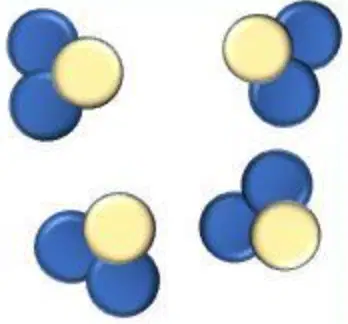
A substance where all particles are identical, but can be broken down into simpler substances chemically:
a)
compound
b)
element
c)
mixture
d)
solution
3.
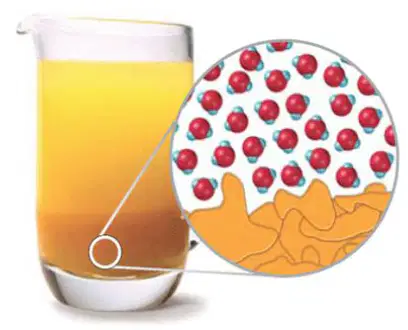
A substance where you can clearly see the different components:
a)
compound
b)
element
c)
heterogeneous mixture (mechanical mixture)
d)
homogenous mixture (solution)
4.
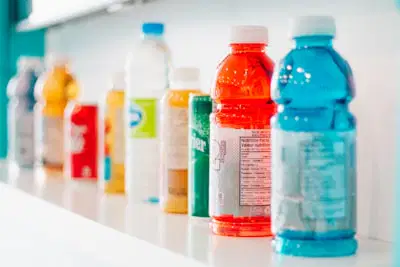
A uniform substance made of different types of particles. It is difficult to distinguish the different componenets.
a)
compound
b)
element
c)
heterogeneous mixture (mechanical mixture)
d)
homogenous mixture (solution)
5.
Which is NOT a part of the Particle Theory of Matter?
a)
All matter is made up of particles
b)
Particles in solids do not have spaces between them.
c)
Particles are always moving.
d)
Different substances have their own unique kind of particles.
6.
Which is NOT a part of the Particle Theory of Matter?
a)
All matter is made up of particles
b)
Particles have spaces between them.
c)
Particles in solids do not move.
d)
Different substances have their own unique kind of particles.
7.
Which is NOT a part of the Particle Theory of Matter?
a)
All matter is made up of particles
b)
Particles have spaces between them.
c)
Particles are always moving.
d)
All substances have the same type of particles.
8.

Which statement explains why food colouring diffuses faster in HOT water than COLD?
a)
The particles are further spaced apart in the HOT water
b)
The particles move faster in the COLD water
c)
The particles move faster in the HOT water
d)
The particles in the HOT water are different than the COLD
9.

Unopened soda pop is:
a)
mechanical mixture
b)
homogenous solution
c)
element
d)
compound
10.
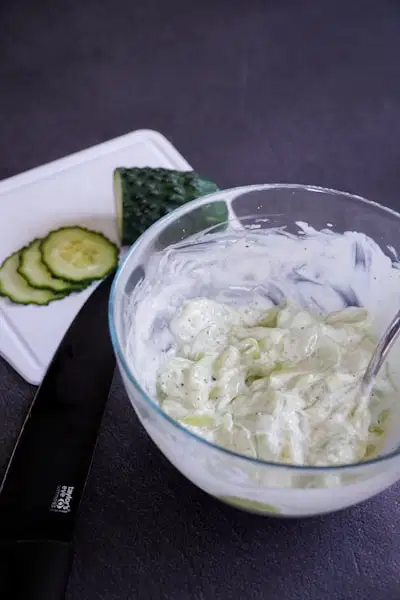
Salad dressing is:
a)
heterogeneous mixture (mechanical mixture)
b)
homogenous solution
c)
element
d)
compound
11.
Air is:
a)
mechanical mixture
b)
homogenous solution
c)
element
d)
compound
12.
C2H2 Acetylene is:
a)
mechanical mixture
b)
homogenous solution
c)
element
d)
compound
13.
H2O Pure water is:
a)
mechanical mixture
b)
homogenous solution
c)
element
d)
compound
14.
H2 Hydrogen is:
a)
mechanical mixture
b)
homogenous solution
c)
element
d)
compound
15.
O2 Oxygen is:
a)
mechanical mixture
b)
homogenous solution
c)
element
d)
compound
16.
Baking soda (NaHCO3) is:
a)
mechanical mixture
b)
homogenous solution
c)
element
d)
compound
17.

Brass (e.g. the material door knobs are made from, copper & zinc mixed together) is:
a)
mechanical mixture
b)
homogenous solution
c)
element
d)
compound
18.
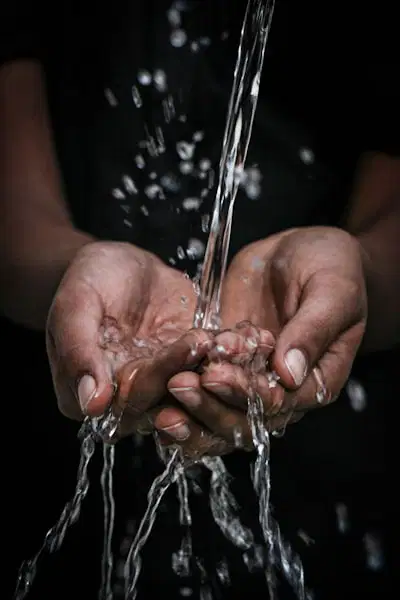
Tap water is:
a)
mechanical mixture
b)
homogenous solution
c)
element
d)
compound
19.

Trail mix (nuts, cereals, chocolate chips) is:
a)
heterogeneous mixture (mechanical mixture)
b)
homogenous solution
c)
element
d)
compound
20.

Sand is:
a)
heterogeneous mixture (mechanical mixture)
b)
homogenous solution
c)
element
d)
compound
21.

Coffee is:
a)
mechanical mixture
b)
homogenous solution
c)
element
d)
compound
22.
Chewing a bite of your veggie burger:
a)
Physical Change
b)
Chemical Change
23.
Dynamite explodes:
a)
Physical Change
b)
Chemical Change
24.
A maple tree is chopped down and used to build a chair:
a)
Physical Change
b)
Chemical Change
25.
After a shower, your wet hair dries:
a)
Physical Change
b)
Chemical Change
26.
Copper turns black and green after reacting with oxygen:
a)
Physical Change
b)
Chemical Change
27.
Air pockets form when you bake a loaf of bread:
a)
Physical Change
b)
Chemical Change
28.
Wax from a candle turns from liquid to solid after it is blown out.
a)
Physical Change
b)
Chemical Change
29.
Hydrogen peroxide is poured over liver. The liver bubbles and some of it breaks down:
a)
Physical Change
b)
Chemical Change
30.
Silver nitrate and sodium chloride form a white-ish precipitate:
a)
Physical Change
b)
Chemical Change
31.
Scientists break up water (H2O) using hydrolysis, by separating O2 and H2:
a)
Physical Change
b)
Chemical Change
32.
A change in size or shape is a physical change.
a)
True
b)
False
33.
A chemical change means a new substance with new properties was formed.
a)
True
b)
False
34.
Water freezing is a chemical change.
a)
True
b)
False
35.
When platinum is heated, then cooled to its original state, it is a physical change.
a)
True
b)
False
36.
When milk turns sour (spoils) this is a physical change because a change in odour does not indicate a chemical change.
a)
True
b)
False
37.
Citric acid mixed with baking soda produces carbon dioxide and temperature decreases. This is a chemical change.
a)
True
b)
False
38.
Colour is:
a)
quantitative
b)
qualitative
39.
Density is:
a)
quantitative
b)
qualitative
40.
Height is:
a)
quantitative
b)
qualitative
41.
Malleability is:
a)
quantitative
b)
qualitative
42.
Speed is:
a)
quantitative
b)
qualitative
43.
Luster is:
a)
quantitative
b)
qualitative
44.
When mixed in water, corn starch is insoluble.
a)
Solubility
b)
Viscosity
c)
Lustre
d)
Malleability
45.
The window is transparent.
a)
Clarity
b)
Volume
c)
Lustre
d)
Mass
46.
The compound is powdery.
a)
Clarity
b)
Texture
c)
Lustre
d)
Hardness
47.
The metal is soft and can be divided with a knife.
a)
Ductility
b)
Malleability
c)
Lustre
d)
Hardness
48.
Gold can be hammered into sheets.
a)
Ductility
b)
Malleability
c)
Lustre
d)
Hardness
49.
Grapefruit is sour and bitter.
a)
Odour
b)
Taste
c)
Reaction with an acid
d)
Clarity
50.
Iron oxidizes very quickly in the presence of air.
a)
Reactivity
b)
Combustability
c)
Reaction with an acid
d)
Ductility
51.
Wood burns very easily.
a)
Reactivity
b)
Combustability
c)
Reaction with an acid
d)
Ductility
52.
Copper can be pulled into thin wires.
a)
Melting point
b)
Texture
c)
Malleability
d)
Ductility
53.
The point a substance changes from liquid to gaseous state.
a)
Melting point
b)
Boiling point
c)
Density
d)
Volume
54.
The point a substance changes from solid to liquid state.
a)
Melting point
b)
Boiling point
c)
Density
d)
Volume
55.
The amount of mass per unit of volume of a substance
a)
Melting point
b)
Boiling point
c)
Density
d)
Volume
56.
Group 17
a)
Noble Gasses
b)
Halogens
c)
Alkaline Earth Metals
d)
Alkali Metals
57.
Group 18
a)
Noble Gasses
b)
Halogens
c)
Alkaline Earth Metals
d)
Alkali Metals
58.
Group 1
a)
Noble Gasses
b)
Halogens
c)
Alkaline Earth Metals
d)
Alkali Metals
59.
Group 2
a)
Noble Gasses
b)
Halogens
c)
Alkaline Earth Metals
d)
Alkali Metals
60.
Groups 3-12
a)
Noble Gasses
b)
Transition Metals
c)
Alkaline Earth Metals
d)
Alkali Metals
61.
Element with 7 protons
a)
Lithium
b)
Nitrogen
c)
Fluorine
d)
Chlorine
62.
Element with 9 protons
a)
Lithium
b)
Nitrogen
c)
Fluorine
d)
Chlorine
63.
Element with 78 protons
a)
Osmium
b)
Nitrogen
c)
Platinum
d)
Polonium
64.
"Fe" is the chemical symbol of:
a)
Fluorine
b)
Iron
c)
Francium
d)
Fermium
65.
"Cu" is the chemical symbol of:
a)
Chlorine
b)
Calcium
c)
Copper
d)
Cobalt
66.
"Ne" is the chemical symbol of:
a)
Neon
b)
Sodium
c)
Nickel
d)
Lithium
67.
The chemical symbol of Manganese is:
a)
Mg
b)
Mn
c)
M
d)
G
68.
The chemical symbol of Phosphorus is:
a)
P
b)
Te
c)
Ag
d)
Pm
69.
A diagram of an atom that uses dots to represent valence electrons only
a)
Bohr-Rutherford Diagram
b)
Standard Atomic Notation
c)
Lewis Dot Diagram
d)
All of the above
70.
Elements in Group 18 on the far right of the periodic table. They are all stable because their outer energy level is filled.
a)
Alkaline earth metals
b)
Halogens
c)
Alkali metals
d)
Noble Gases
71.
Helium, Neon, Argon, Krypton, Xenon, Radon
a)
Metals
b)
Transition Metals
c)
Metalloids are
d)
Examples of noble gases
72.
Metallic elements in group 2 of the periodic table. They are fairly hard, gray-white, and good conductors of electricity. Never found uncombined in nature.
a)
Alkali metals
b)
Metals
c)
Alkaline Earth Metals
d)
Halogens
73.
Highly reactive elements that belong to group 1 on the periodic table. Never found as uncombined elements in nature.
a)
noble gases
b)
alkaline earth metals
c)
nonmetals
d)
Alkali Metals
74.
Can be ductile and malleable, shiny or dull, somewhat conductive
a)
Metals
b)
Non-metals
c)
Metalloids
d)
Examples of Noble gases
75.
Elements that have properties of both metals and nonmetals. They make-up the stair-step of the periodic table.
a)
Metalloids
b)
Non-metals
c)
Examples of noble gases
d)
Metals
76.
chlorine, oxygen, sulfur, iodine
a)
Examples of nonmetals
b)
Examples of metals
c)
Examples of metalloids
d)
Examples of noble gases
77.
An element that tends to be a poor conductor of heat and electricity. Usually gases or brittle solids.
a)
Metalloids
b)
Metals
c)
Non-Metals
d)
Noble gases
78.
brittle, dull, not malleable or ductile
a)
Metals
b)
Alkali Metals
c)
Metalloids
d)
Non-metals
79.
Shiny, ductile, malleable
a)
Non-metals
b)
alkaline earth metals
c)
Metals
d)
Metalloids
80.
Elements that are good conductors of heat and electricity. All but mercury are solid at room temperature.
a)
Metalloids
b)
Metals
c)
Non-metals
d)
Noble Gases
81.
A diagram of an atom that uses dots to represent valence electrons
a)
Bohr-Rutherford Diagram
b)
Standard Atomic Notation
c)
Lewis Dot Diagram
d)
All of the above
82.
A diagram of an atom that shows number of protons, electrons and neutrons
a)
Bohr-Rutherford Diagram
b)
Standard Atomic Notation
c)
Lewis Dot Diagram
d)
All of the above
83.
What is the charge of an oxide ion?
a)
O2−
b)
O2+
c)
O4−
d)
O4+
84.
What is the charge of an aluminum ion?
a)
Al3+
b)
Al5+
c)
Al13+
d)
Al3−
85.

What is an Ion?
a)
A pure substance
b)
An atom with a charge
c)
A mixture
d)
A compound
86.
Ions can have a positive or negative charge.
a)
True
b)
False
87.
What Ion has a positive charge of 1?
a)
lithium ion
b)
oxide ion
c)
magnesium ion
d)
phosphide ion
88.

Does a nitride ion have a positive or negative charge?
a)
Positive
b)
Negative
89.
How do you figure out if an ion will have a negative or positive charge?
a)
group number
b)
row number
c)
identify if it's a metal or non-metal
d)
there is no way
90.
Atoms that gain electrons are ______ with _____ charges.
a)
Anions , negative
b)
Anions, positive
c)
Cation, positive
d)
Cation, negative
91.

Atoms that lose electrons are known as _____ with _____ charge.
a)
Cations, positive
b)
Cations, negative
c)
Anion, negative
d)
Anion, positive
92.
With ionic bonds, cations are attracted to ______.
a)
Themselves
b)
Anions
c)
Electrons
d)
Protons
93.
Which element is most likely to LOSE electrons to become stable?
a)
Calcium
b)
Chlorine
c)
Carbon
d)
Bromine
94.
Which element is most likely to GAIN electrons to become stable?
a)
Oxygen
b)
Calcium
c)
Potassium
d)
Sodium
95.
What charge is sodium most likely to take on when it becomes an ion?
a)
-1
b)
1
c)
-8
d)
8
96.
Sulfur needs to ______ electrons. It will have a ____ charge.
a)
Gain 2
-2
b)
Lose 6
-2
c)
Gain 2
+ 2
d)
Gain 6
+8
97.
In ionic bonds , electrons are ______ from metals to ______.
a)
transferred
non-metals
b)
transferred
other metals
c)
shared
non-metals
d)
shared
protons
98.

The diagram show the formation of water. Which of the following occurs when water forms?
a)
Two hydrogen atoms are destroyed to form atoms of water.
b)
One oxygen atom shares electrons with two hydrogen atoms.
c)
Two hydrogen atoms each give an electron to an oxygen atom.
d)
One oxygen atom gives an electron to each of the two hydrogen atoms.
99.
Which of the following occurs when a sodium atom forms a positively charged sodium ion?
a)
The sodium atom loses one proton.
b)
The sodium atom gains one proton.
c)
The sodium atom loses one electron.
d)
The sodium atom gains one electron.
100.
How do molecular compounds form?
a)
Electrons from metals are transferred to non-metal atoms.
b)
Atoms of elements, usually nonmetals, share electrons.
101.
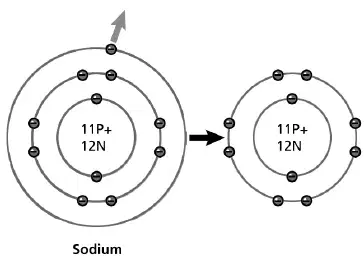
The diagram shows the formation of a sodium ion. Which of the following atoms might gain the electron from sodium?
a)
Carbon (C)
b)
Chlorine (Cl)
c)
Copper (Cu)
d)
Magnesium (Mg)
102.
In a an ionic bond....
a)
the electrons are shared.
b)
the electrons are transferred (taken/given away).
103.
In a covalent bond...
a)
electrons are shared.
b)
the electrons are transferred (taken/given away).
104.
the attractive force between oppositely charged ions, which form when electrons are TRANSFERRED from one atom to another
a)
covalent bond
b)
ionic bond
105.
The type of bond that happens when atoms SHARE one or more pairs of electrons.
a)
covalent bond
b)
ionic bond
106.
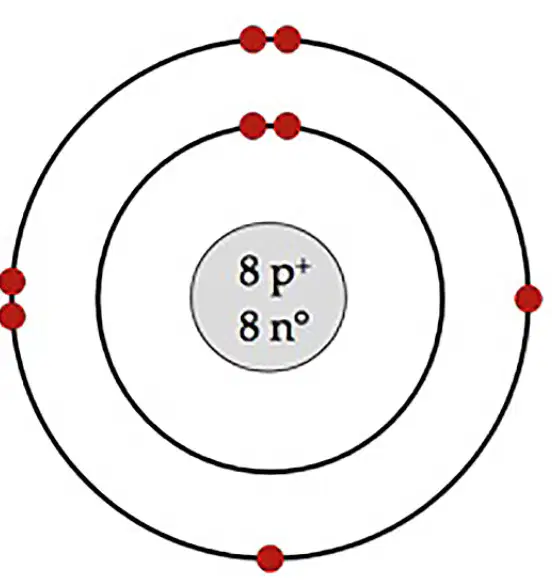
The diagram pictured is...
a)
Bohr-Rutherford diagram
b)
Standard Atomic Notation
c)
Lewis-Dot diagram
d)
An isotope
107.
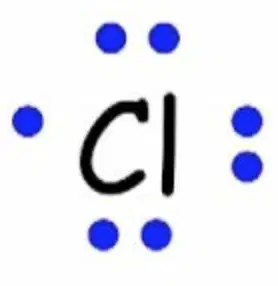
The diagram pictured is...
a)
Bohr-Rutherford diagram
b)
Standard Atomic Notation
c)
Lewis-Dot diagram
d)
An isotope
108.

The diagram pictured is...
a)
Bohr-Rutherford diagram
b)
Standard Atomic Notation
c)
Lewis-Dot diagram
d)
An isotope
109.
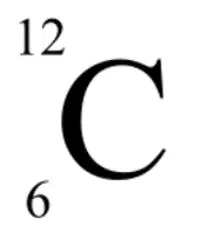
The standard atomic notation of carbon tells us the atom has
a)
An atomic number of 12
b)
A mass number of 6
c)
A mass number of 12
d)
12 neutrons
110.
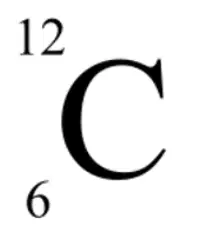
In standard atomic notation, which number goes on the bottom left?
a)
Atomic number
b)
Number of neutrons
c)
Mass number
d)
Number of charge
111.
Which subatomic particle(s) has/have a relative mass of 1?
a)
Protons
b)
Electrons
c)
Neutrons
d)
Protons and neutrons
112.
Which subatomic particle(s) has/have a relative mass of 0 (1/2000) and do not contribute to the mass of an atom?
a)
Protons
b)
Electrons
c)
Neutrons
d)
Protons and neutrons
113.

Neutrons have ___________ charge and are found in the __________.
a)
neutral; electron cloud
b)
neutral; nucleus
c)
negative; electron cloud
d)
negative; nucleus
114.

Electrons have a ______________ charge and are found in the __________.
a)
neutral; electron cloud
b)
positive; nucleus
c)
negative; electron cloud
d)
negative; nucleus
115.

The atomic number is the same as the number of ...
a)
electrons
b)
protons
c)
neutrons
116.

An atom's nucleus contains _______ and _______.
a)
protons and electrons
b)
protons and neutrons
c)
electrons and neutrons
117.

If an atom is neutral (no net charge) it is because it has the same number of _____ and _______.
a)
protons and electrons
b)
protons and neutrons
c)
electrons and neutrons
118.

An atom has 34 neutrons, 32 electrons, and 32 protons. What is its atomic number?
a)
32
b)
34
c)
66
d)
98
119.
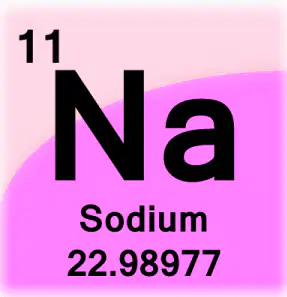
What is the atomic number for sodium (Na)?
a)
23
b)
11
c)
22.98977
d)
33.98977
120.

How many protons are in an atom of magnesium (Mg)?
a)
12
b)
Magnesium doesn't have any protons
c)
24.305
d)
36
121.

How many electrons does a neutral oxygen (O) atom have?
a)
8
b)
15.9994
c)
7.9994
d)
36
122.

How many neutrons are in a sodium atom (Na)?
a)
23
b)
11
c)
22.98977
d)
12
123.

What is the mass number for sodium (Na)?
a)
23
b)
11
c)
22.98977
d)
33.98977
124.
What is the rule for the maximum number of electrons orbitals of an atom can hold?
a)
1-8-8-2
b)
18-8-8-2
c)
2-8-8-18
d)
8-8-8-8
125.
Mg(NO3)2 how many oxygen atoms are in this compound?
a)
1
b)
2
c)
6
d)
9
126.
Mg(C2H3O2)2 how many carbon atoms are in this compound?
a)
1
b)
4
c)
6
d)
24
127.
C2H6 how many atoms are in this compound total?
a)
8
b)
2
c)
12
d)
10
128.
How many hydrogen atoms in NH₄C₂H₃O₂?
a)
2
b)
7
c)
11
d)
12
129.
3 SBr2 How many Sulfur (S) atoms in this compound?
a)
2
b)
1
c)
6
d)
3
130.
3 CH4O How many hydrogen atoms are in this compound?
a)
4
b)
12
c)
18
d)
3
131.
When drawn the formation of an ionic bond, a(n) _________ is used to show the __________ of electrons from metal to non-metal.
a)
circle, sharing
b)
circle, transfer
c)
arrow, sharing
d)
arrow, transfer
132.
When drawn the formation of a molecular compound, a(n) _________ is used to show the __________ of electrons between non-metals.
a)
circle, sharing
b)
circle, transfer
c)
arrow, sharing
d)
arrow, transfer
133.
NaCl
a)
Ionic
b)
Molecular
134.
NH₃
a)
Ionic
b)
Molecular
135.
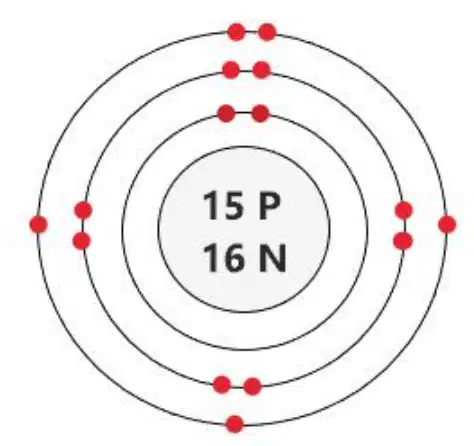
The following diagram is...
a)
sulfur
b)
sulfide ion
c)
phosphorus
d)
phosphorus ion
136.

The following diagram is...
a)
fluorine
b)
fluoride ion
c)
neon
d)
calcium ion
137.
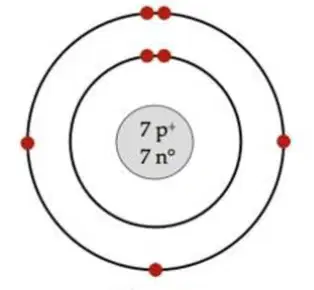
The following diagram is...
a)
silicon
b)
a noble gas
c)
an alkali metal
d)
nitrogen
138.
How many electrons can each orbital hold (from innermost to outermost)?
a)
2-8-8-18
b)
8-2-2-18
c)
8-8-8-18
d)
2-2-8-18
100 %

