
 Worksheets
2025 English 12 Midterm Academic
Total questions: 70
Worksheet time: 35mins
An example of this from “Sir Gawain and the Green Knight” is the opposition between courage and cowardice.
Caesura
Dichotomy
Kenning
Satire
The technique in which ideas, customs, or institutions are ridiculed for the purpose of reform
Dichotomy
Satire
Caesura
Kenning
This is usually found in character shifts and plot twists
Motif
Direct characterization
Theme
Tone
This is the reason why Beowulf has no author and there are multiple versions.
Oral Tradition
Grotesque Character
Indirect characterization
Deism
A metaphorical phrase or word that takes the place of a name.
Motif
Kenning
Caesura
Paganism
This is a period of time where the literature, themes, and characters share similar patterns
Literary Device
Literary Period
Literary Lens
Literary Lyrical Battle
A twist in the speaker which suggests that they are untrustworthy
Satire
Magic Realism
Unreliable Narrator
Irony
We find out that the temptress was really the Green Knight’s wife.
Motif
Satire
Situational Irony
Unreliable Narrator
The repetition of consonant sounds at the beginning of words
Alliteration
Tone
Caesura
Kenning
Clues in the text that hint future events.
Dichotomy
Foreshadowing
Irony
Unreliable Narrator
A character with unlimited strength and pride
Tragic Hero
Anti-Hero
Epic Hero
Romance Hero
A moral character with limited abilities who goes on a quest.
Romance Hero
Epic Hero
Tragic Hero
Anti-Hero
In poetry, what term describes pauses and breaks in a line to add dramatic style?
Dichotomy
Caesura
Kenning
Paganism
An example of this from “The Canterbury Tales” is: “he was clad in coat and hood of green”. (We know how the yeoman dresses)
Verbal Irony
Dramatic Irony
Direct Characterization
Indirect Characterization
An example of this from “The Canterbury Tales” is: “it’s good to hear ‘madam’ before one’s name, and go to church when all the world may see” (we can infer that the guild is superficial)
Verbal Irony
Dramatic Irony
Indirect Characterization
Direct Characterization
A bizarre and 1 dimensional character who is obsessed with one main idea
Dynamic Character
Crone
Grotesque Character
Temptress
A story setting characterized by a broken world and an oppressive ruling group.
Dystopia
Pantopia
Utopia
Ectopia
What was chivalry?
A system of social codes governing the behavior of knights.
Appropriate social behavior for married couples to follow in the medieval times.
Rules of conduct for courting a woman.
A book all boys had to read at age 13.
Courtly love consisted of all of the following EXCEPT:
A man glorifies his lady with flattering words.
The lady always remains pure and out of reach of her pursuer.
A man wearing his lady’s colors while in battle.
Holding hands and hugging.
In the “Canterbury Tales”, Chaucer is most recognized for using what literary device?
Satire
Allusion
Theme
Situational Irony
Why are the characters travelling in the “Canterbury Tales”?
They are embarking on a holy pilgrimage.
They are moving to the city as most people tended to do in the late medieval times.
They are fleeing the towns formerly raided by the Vikings.
They are off to join a play which will be performed for the Queen of England.
The Squire’s (knight’s apprentice) most obvious flaw is
He lies and cheats.
He is vain.
He steals.
He has no recognizable flaw.
The Prioress’s most obvious flaw is that she
curls her hair.
cares for animals more than people.
is a drunk.
refuses to read the Bible.
The monk’s most obvious flaw is that he
wants to get married.
cheats people out of money.
prefers hunting over God.
pretends to know Latin.
The Miller's most obvious flaw is that he
refuses to say his prayers.
is conceited.
is an alcoholic
steals
Which one of Chaucer’s characters corruptly pocketed money and was deceitful, making the parson and the rest his apes?
Clerk
Pardoner
Physician
Sailor
Chaucer seemed to favor all of the following characters EXCEPT
Physician
Yeoman
Parson (Pastor)
Ploughman (Farmer)
A medieval romance often contains all of the following EXCEPT
a temptress
supernatural elements
divine intervention
a damsel in distress
A Medieval romance’s function was to
create suspense
teach a moral lesson for the betterment of society
inform the reader of notable events throughout history.
teach the nature of courtly love
The romance hero’s quest is described in the following order:
A dangerous journey, a test to determine heroic qualities, a return to the beginning place
A conflict at the kings castle, a war fought by knights, the king recognizes the bravest knight
A damsel in distress, knight in shining armor to the rescue, wedding and celebration
The summoning of the knights, knights protect the king, the king rewards the leader
A Romance hero usually possesses all of the following characteristics EXCEPT:
Bound by a code of chivalry and readiness to serve his king
unmatchable fighting skills when compared to other knights
Performs brave deeds to win the approval of his lady
A human with limited physical strength
Why does Gawain accept to fight the Green Knight?
He considers himself to be best in battle.
Other knights encourage him to do it.
He thinks Arthur is too important to fight.
Queen Guinevere asks him to fight.
Why does the Green Knight twice pretend to strike Gawain before actually touching him with the blade?
The fake blows reward the Green Knight’s fair terms and Gawain’s honorable behavior on his first two nights in the castle.
Gawain flinched the first time and the knight wanted to test him again.
The lady in the castle kissed Gawain twice a day for two months so he must be punished
Gawain showed himself to be a powerful knight on two occasions.
The Green Knight’s motive in playing the Christmas game seems to be
To prove the importance of integrity
To test the Green Knight’s superhuman skills
To mock King Arthur’s court
To test the Green Knight’s wit
Why does the lady tempt Gawain?
She wants to help him because she knows that her husband plans to kill him.
She is simply following her husband’s orders.
She is attracted to Gawain and regularly cheats on her husband.
She wants to leave her husband and escape with Gawain.
How does the Green Knight treat Gawain after the game is over?
He tells him that he is forgiven and as pure as a pearl.
He forces him to stand before King Arthur and admit his cowardice.
He allows him to wallow in his shame and guilt.
He rewards him with a green sash.
True or False: Anglo-Saxon literature mostly depicted chivalrous knights performing brave deeds.
False
True
True or False: Postmodern literature often features multiple storylines which eventually connect.
False
True
True or False: Beowulf was a famous romance hero.
False
True
True or False: Anglo-Saxon literature contains elements of both Christianity and paganism.
True
False
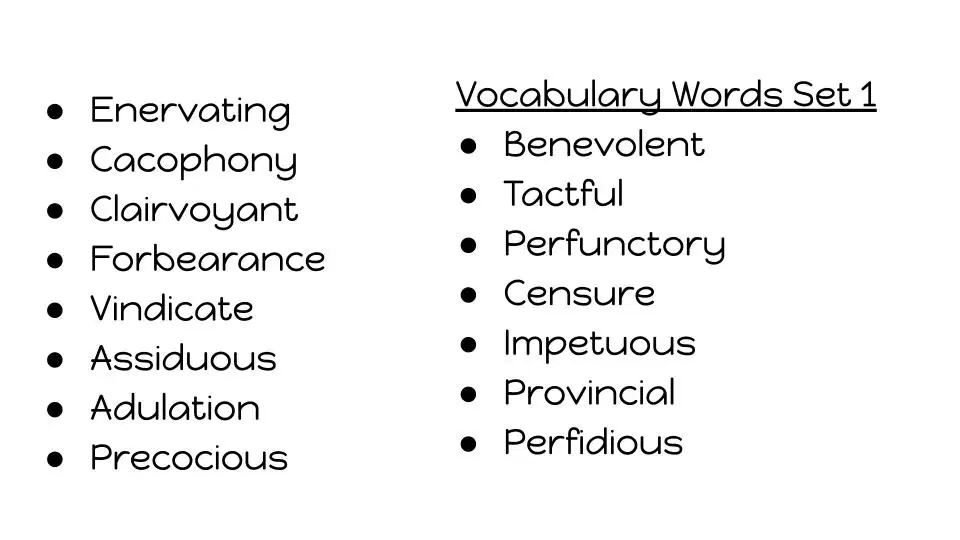
To free from blame (Answers need to be all lowercase)
(a)
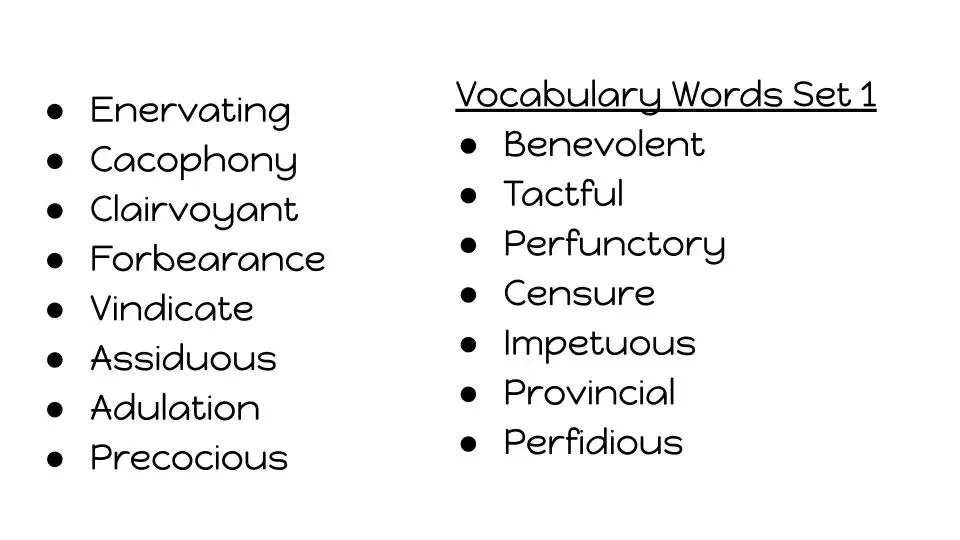
Kind or good
(a)
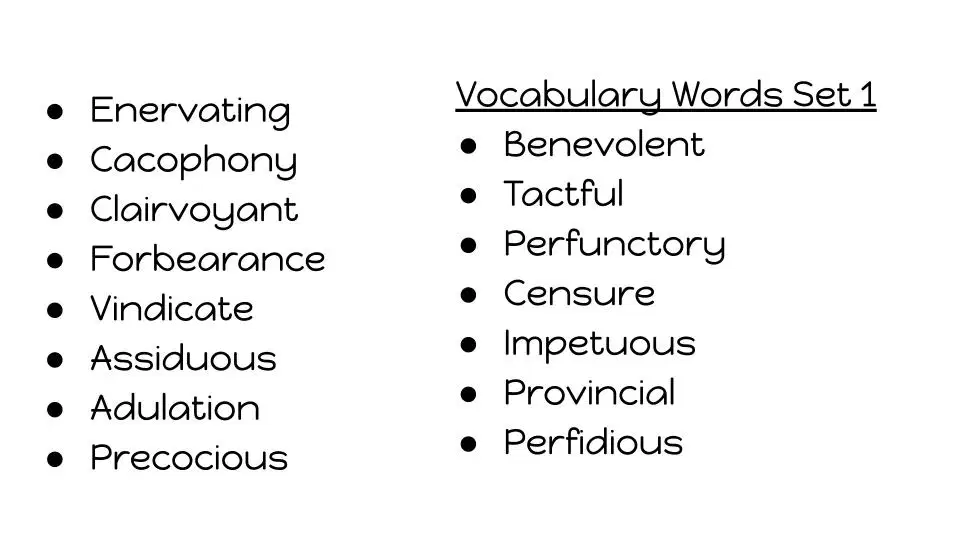
To criticize harshly
(a)
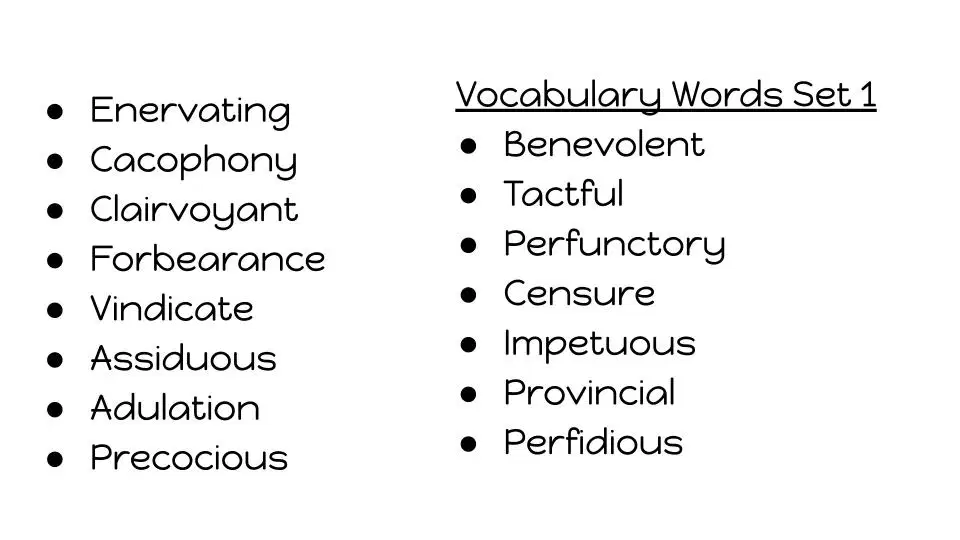
Polite socially, careful not to offend others
(a)
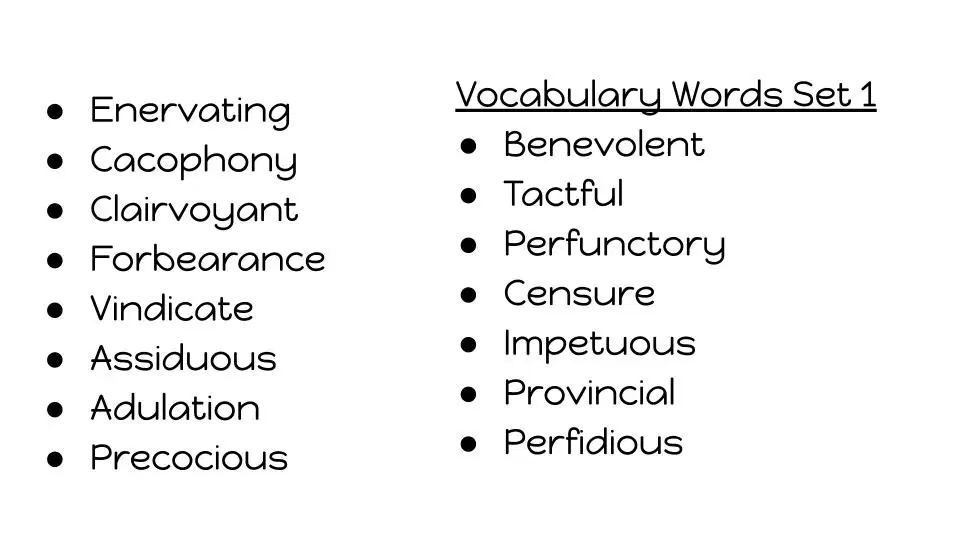
Weakening or tiring
(a)
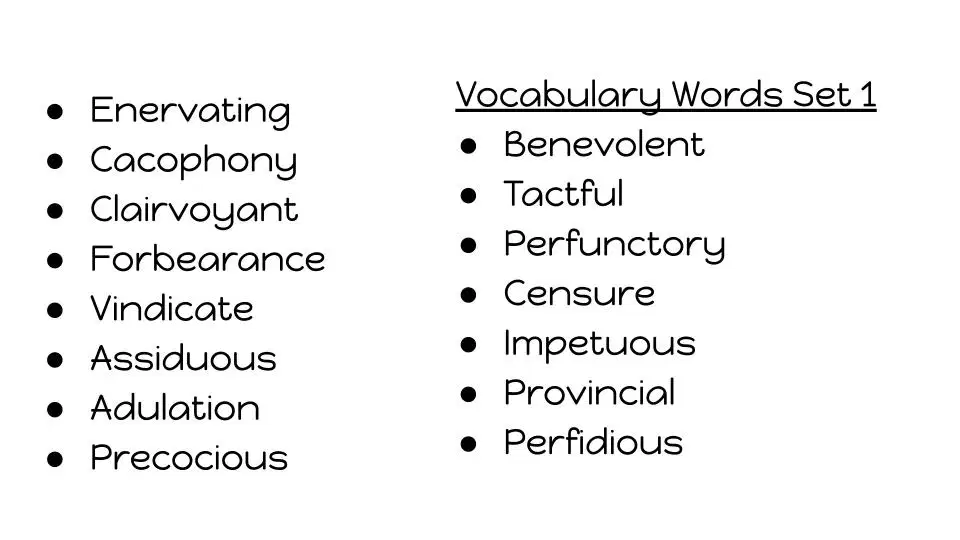
Talented or skilled at a young age
(a)
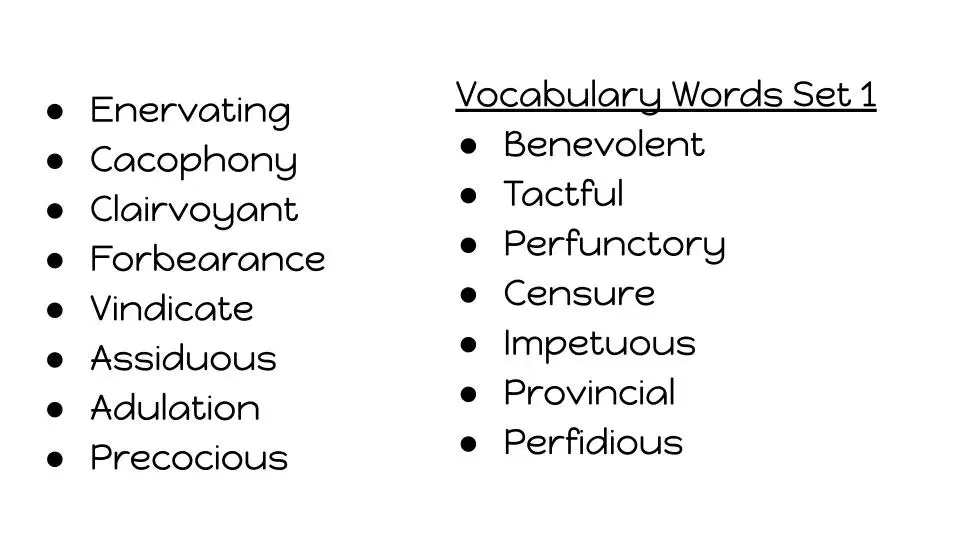
performed merely as routine or mindless activity
(a)
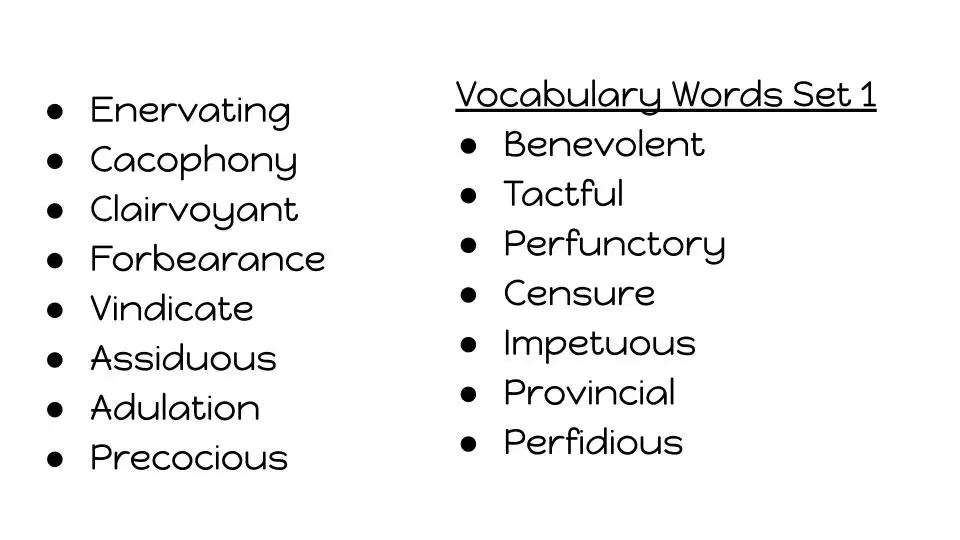
Deceitful or untrustworthy
(a)
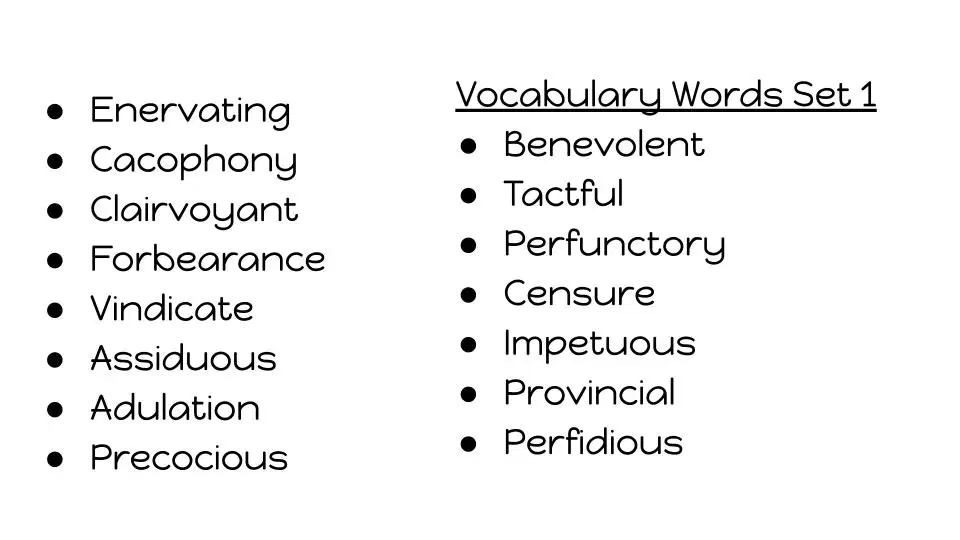
Inexperienced or closed minded
(a)
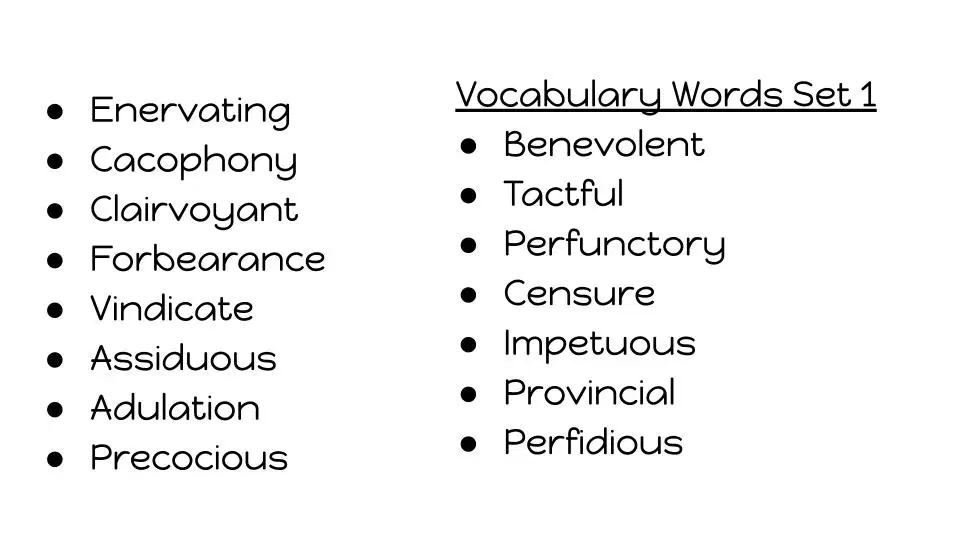
Mix of unpleasant sounds and loud noise
(a)
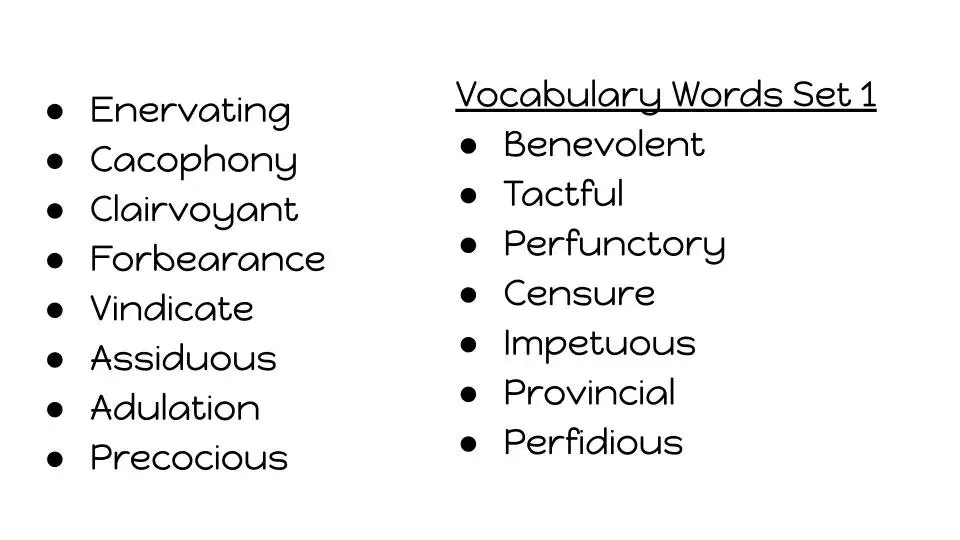
High praise
(a)
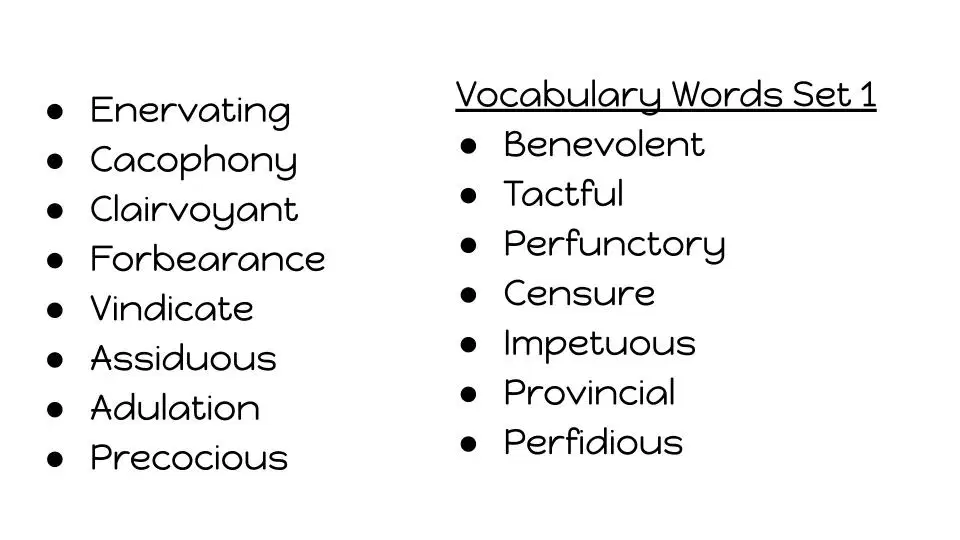
impulsive, acting without thinking
(a)
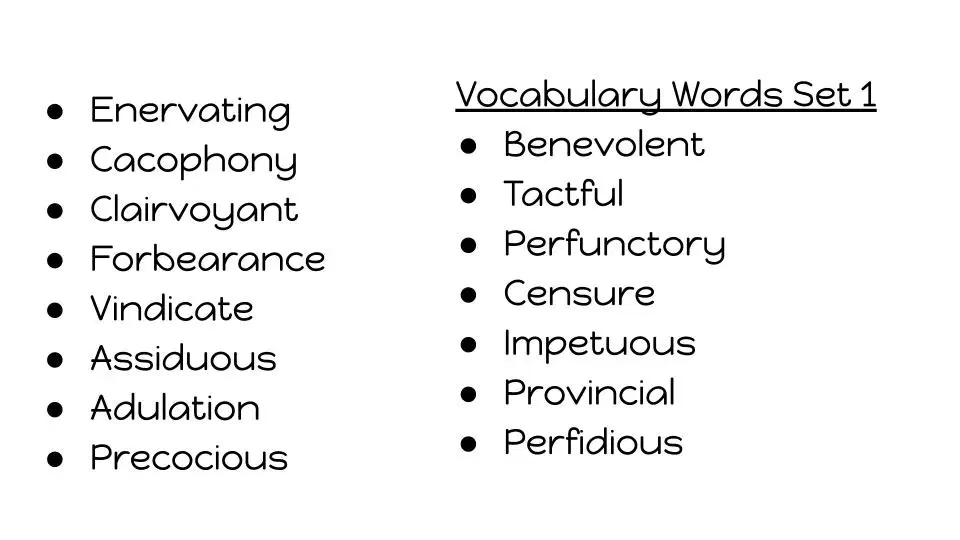
Insightful ability to predict the future
(a)
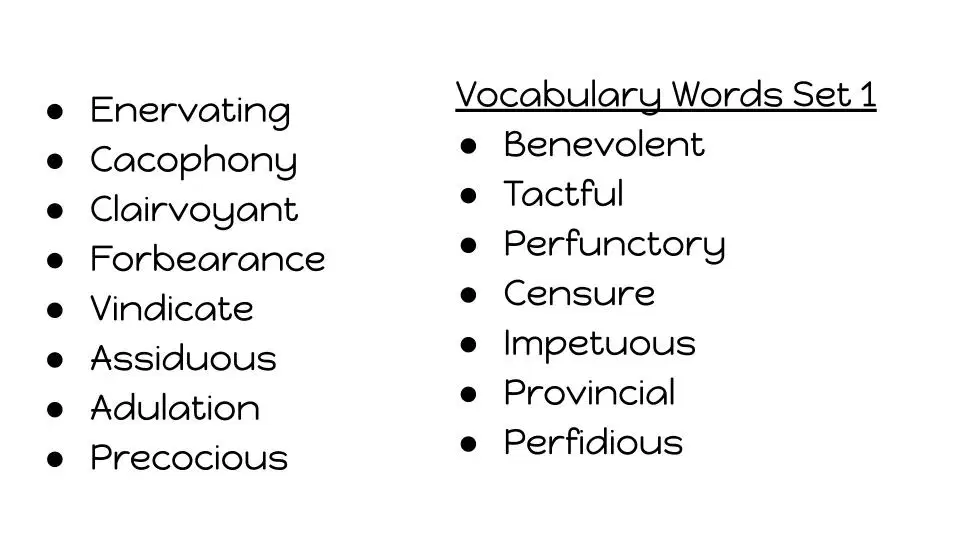
self-control and self-restraint
(a)
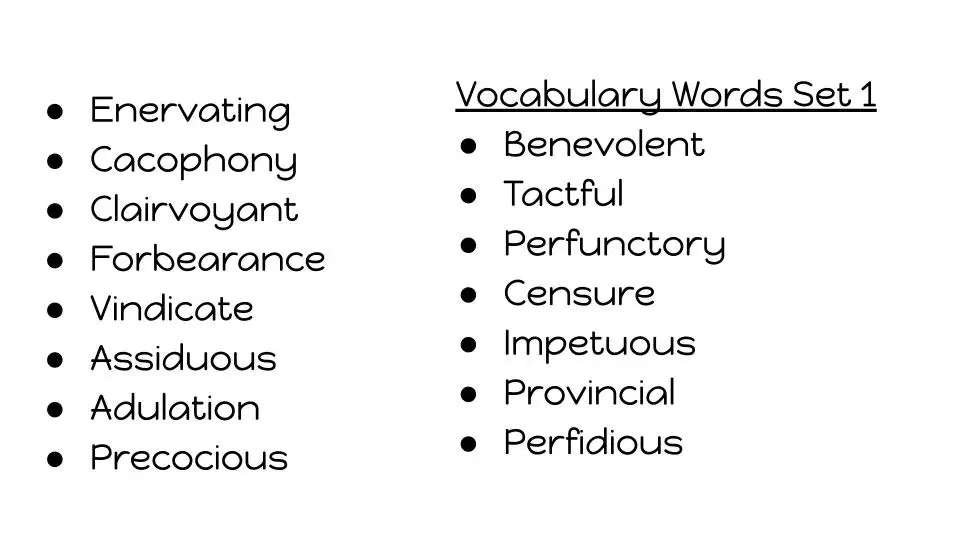
Hard working
(a)
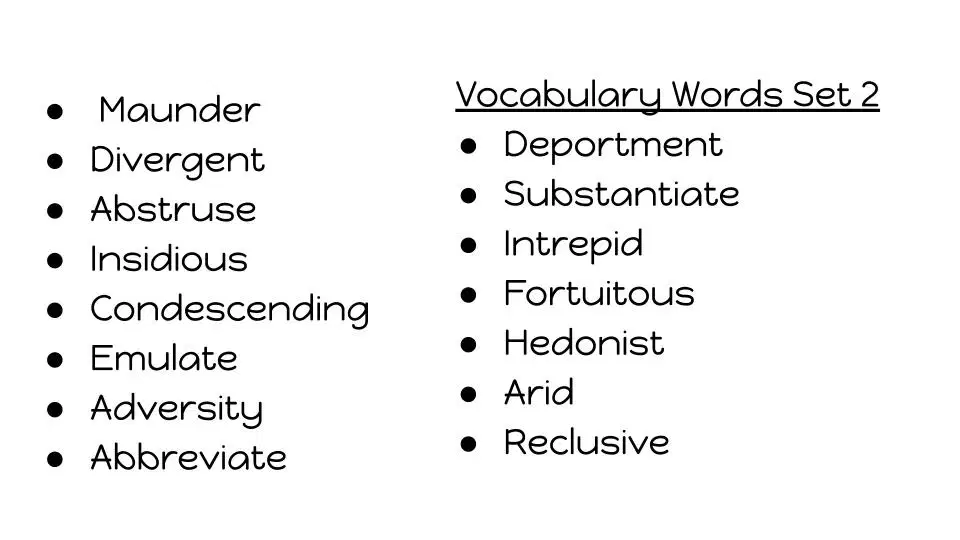
Different or separating
(a)
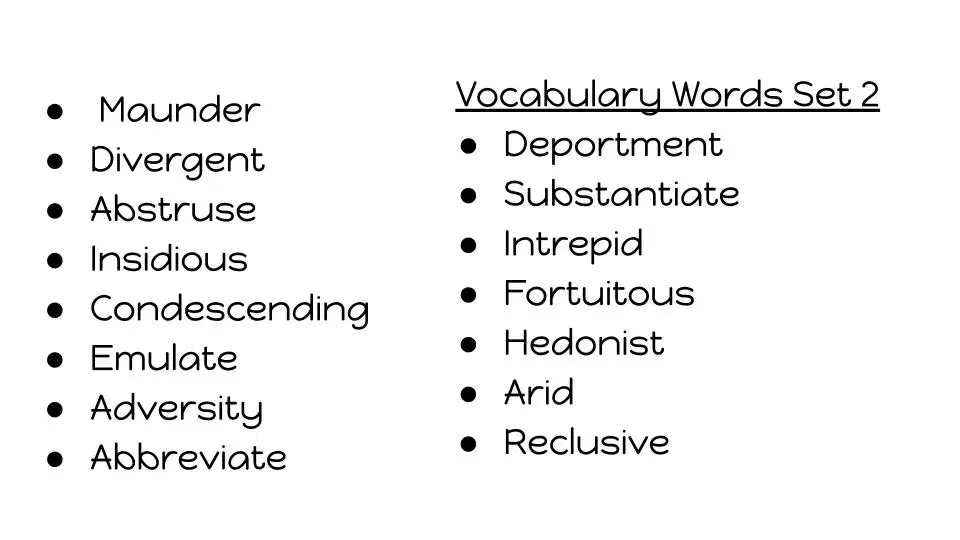
Behavior or conduct
(a)
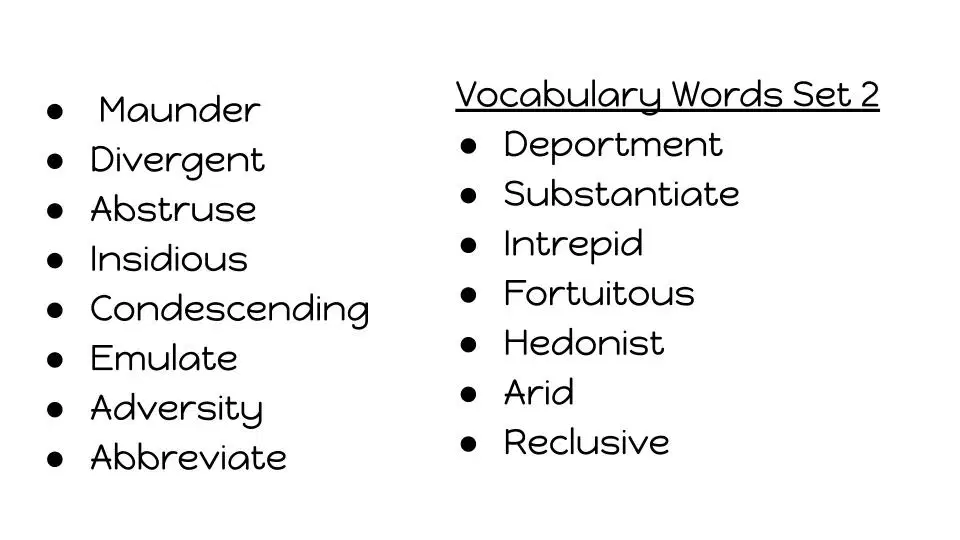
happening by luck, fortunate
(a)
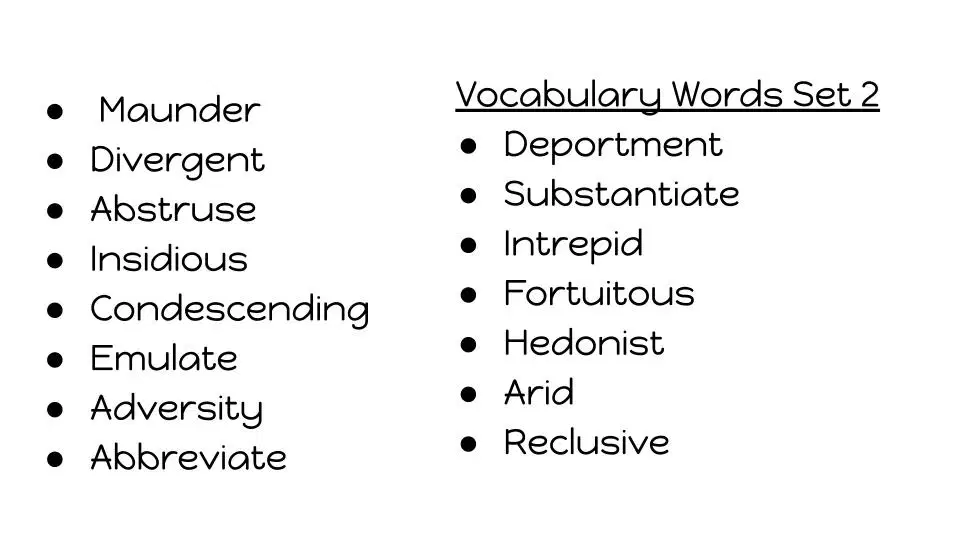
misfortune, struggle, or hardship
(a)
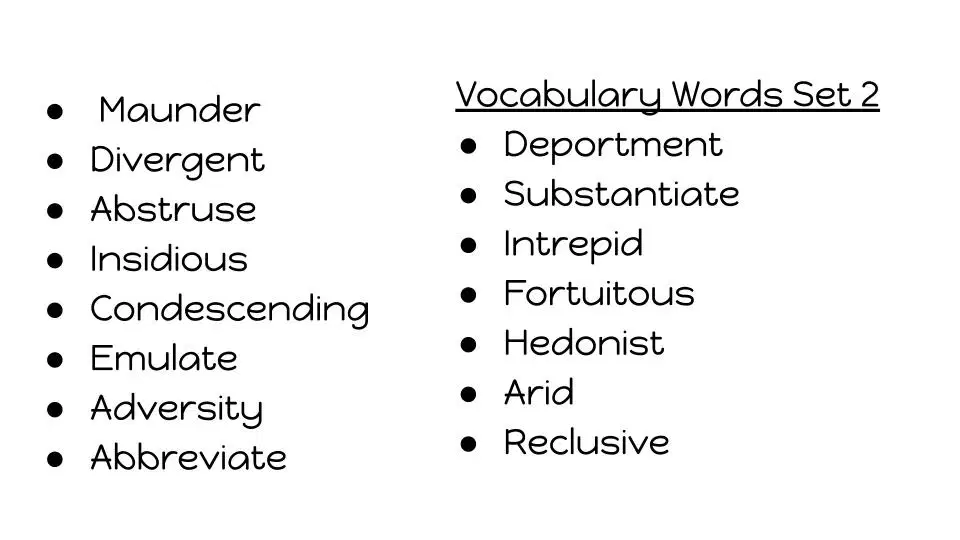
To mimic or imitate
(a)
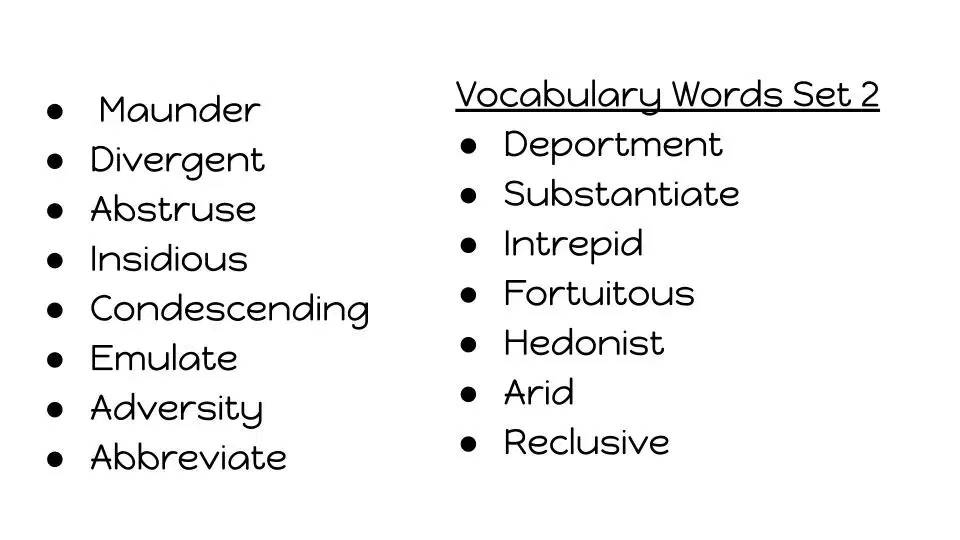
to ramble or talk on and on
(a)

Brave or courageous
(a)
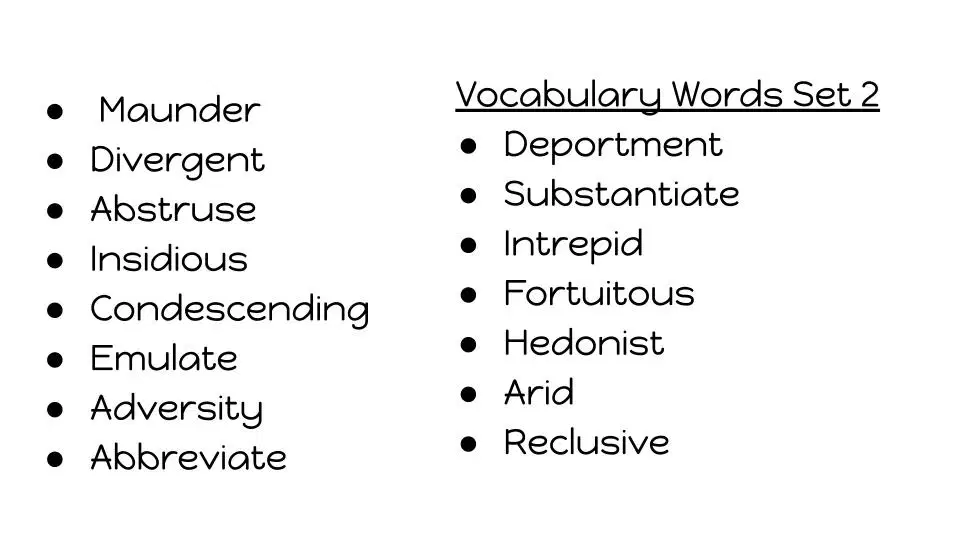
Having or showing feelings of superiority
(a)
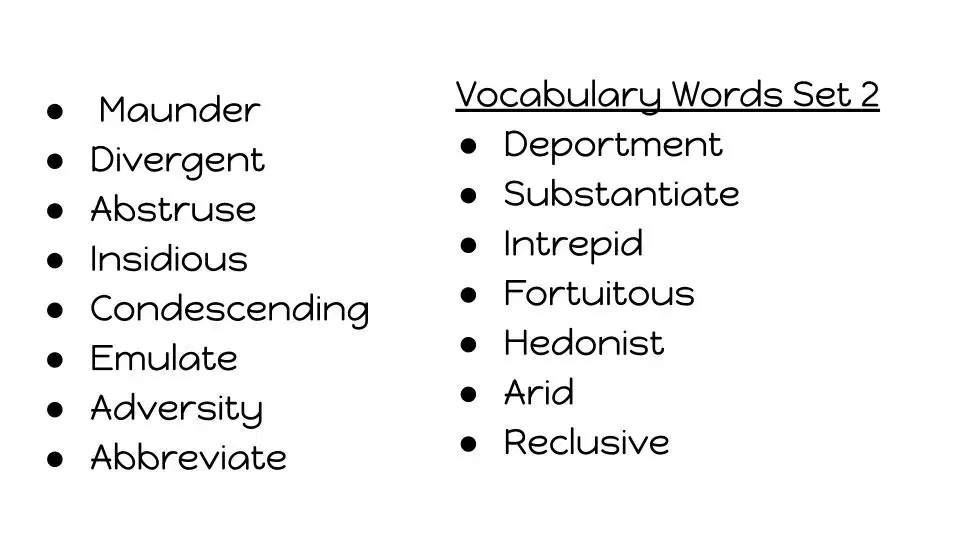
To shorten the length or duration of
(a)
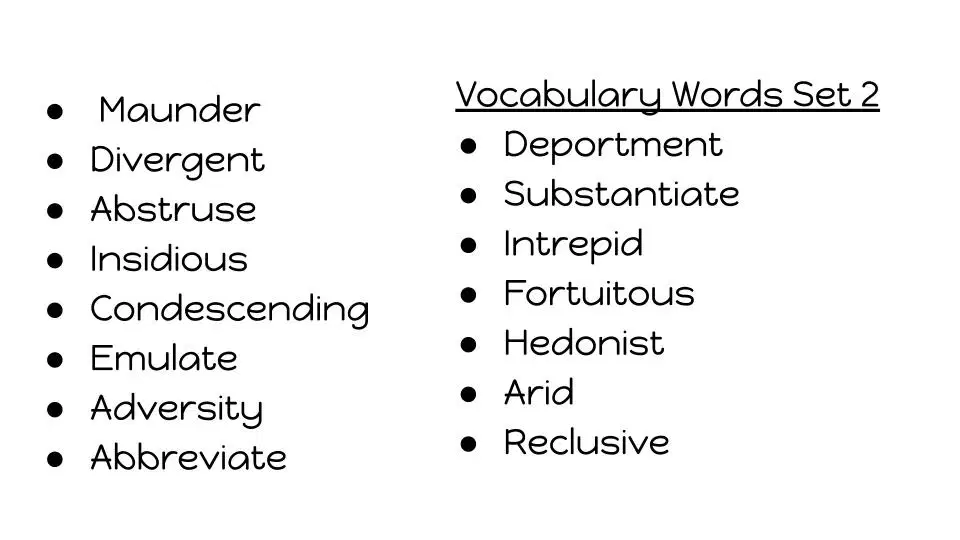
Preferring to be alone
(a)
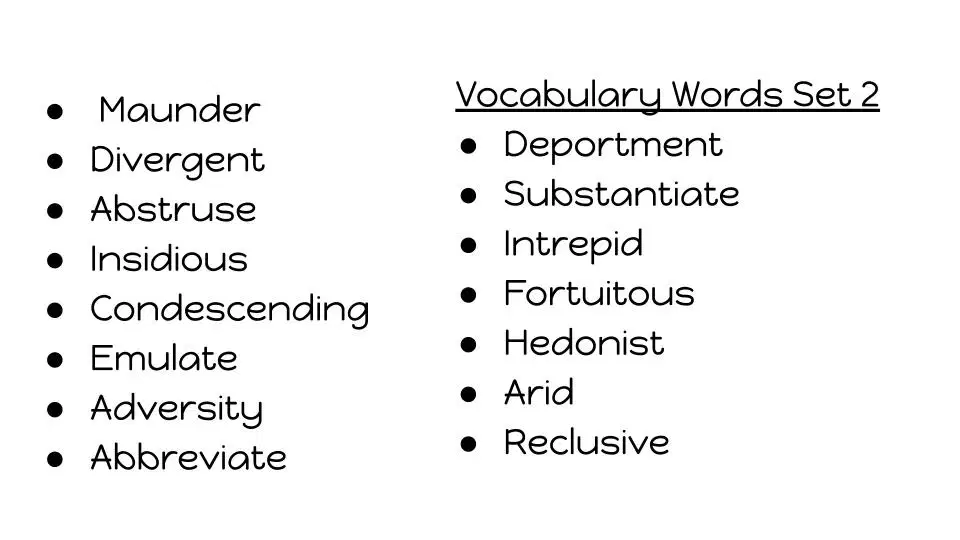
a person who lives only for personal pleasure
(a)
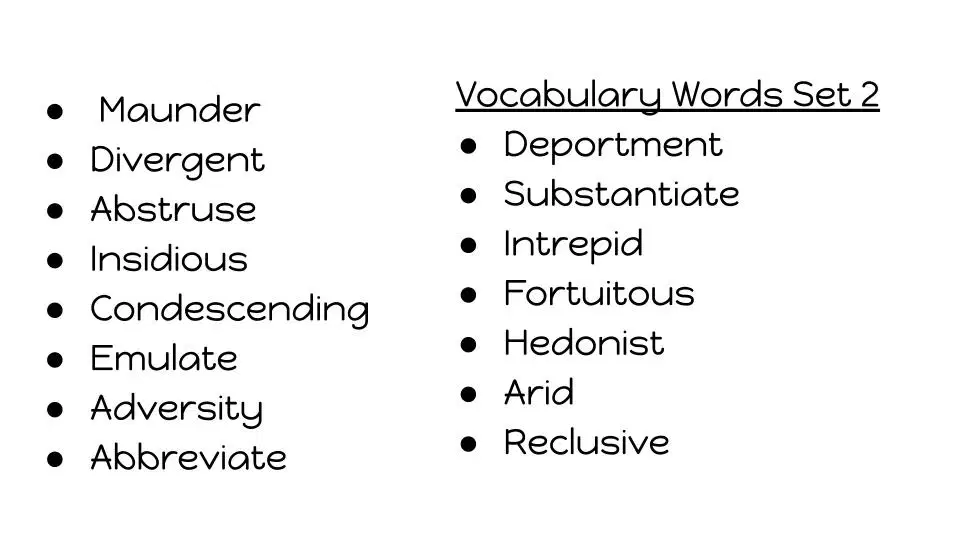
Dry or deathly boring
(a)
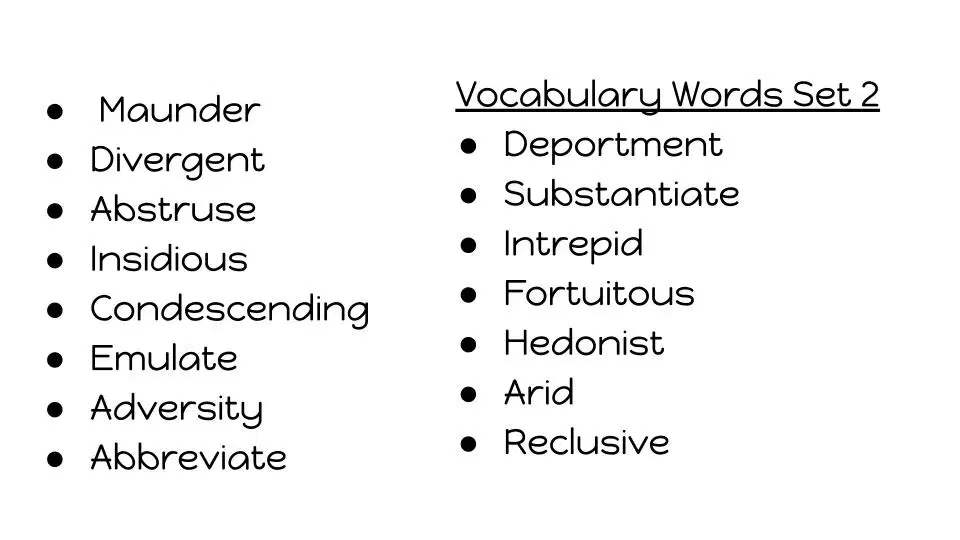
intended to trick or deceive, sinister
(a)
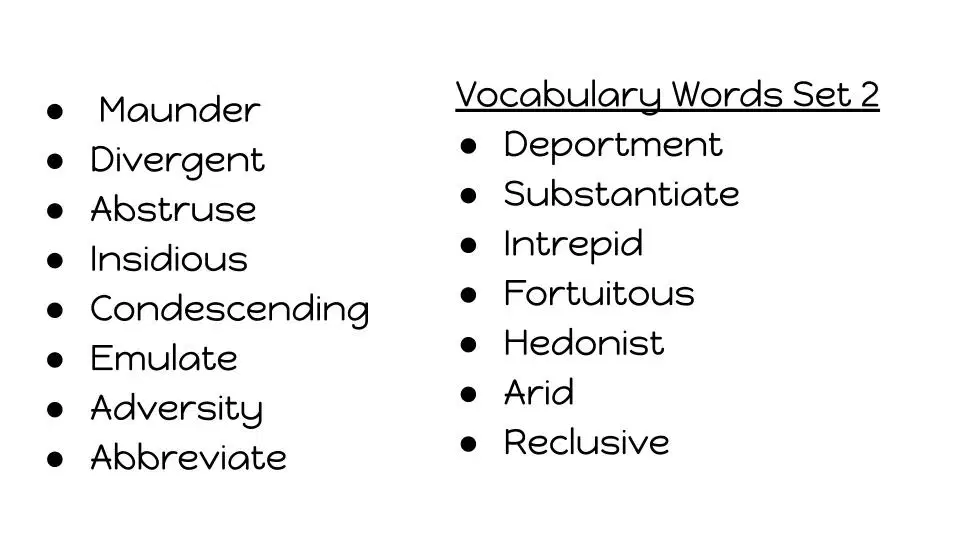
To prove or provide evidence for
(a)
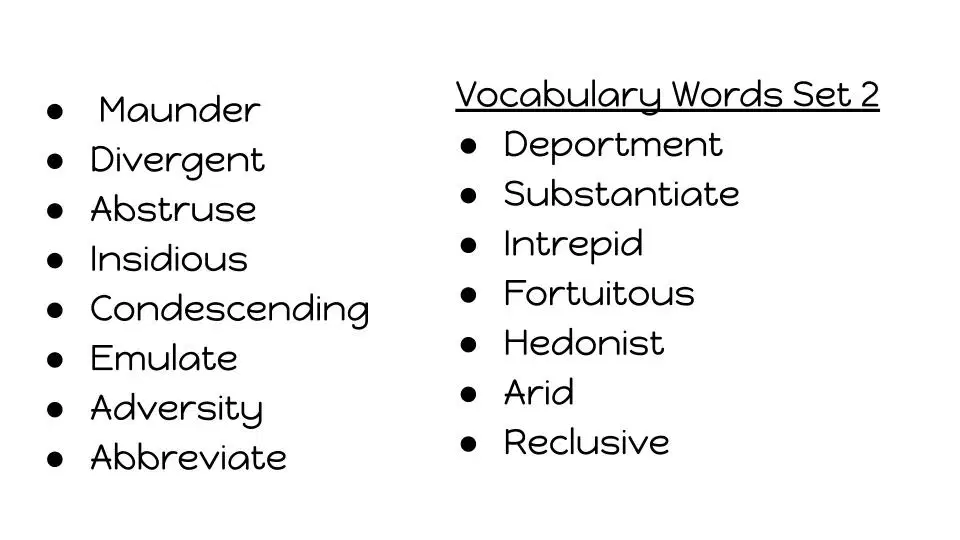
confusing, complicated, coiled
(a)

