
NEW
Font size
 Worksheets
Hot water Regulation Systems part 1
Total questions: 34
Worksheet time: 17mins
The WRAS stands for ______.
A) Water Regulation Advisory Scheme
B) Water Resource Allocation System
C) Waste Reduction and Sustainability
D) Water Recycling and Sanitation
What does BSEN806 standard cover?
Design, installation, testing, and maintenance
Workmanship on building sites
Electrical installations
Fire safety regulations
What do manufacturers' instructions typically outline?
Installation requirements
Maintenance and servicing requirements
Fault diagnosis
All of the above.
Manufacturers' instructions list commissioning details such as _______.
flow rates
color codes
electrical wiring
user manuals
Which of the following is a type of system that provides hot water on demand without storage?
Centralised
Localised
Stored
Instantaneous
A ______ system is designed to supply hot water to multiple locations from a single source.
Localised
Centralised
Instantaneous
Stored
In a _______ water system, water is heated on demand when hot water outlets are opened.
Stored
Instantaneous
Localised
Centralised
What is a characteristic of a centralised stored hot water system?
Uses a combination boiler
Heats water on demand
Uses a hot water cylinder centrally located in an airing cupboard
Distributes cold water through the pipework system.
Centralised instantaneous hot water systems are commonly used in ______ domestic properties.
larger
smaller
industrial
commercial
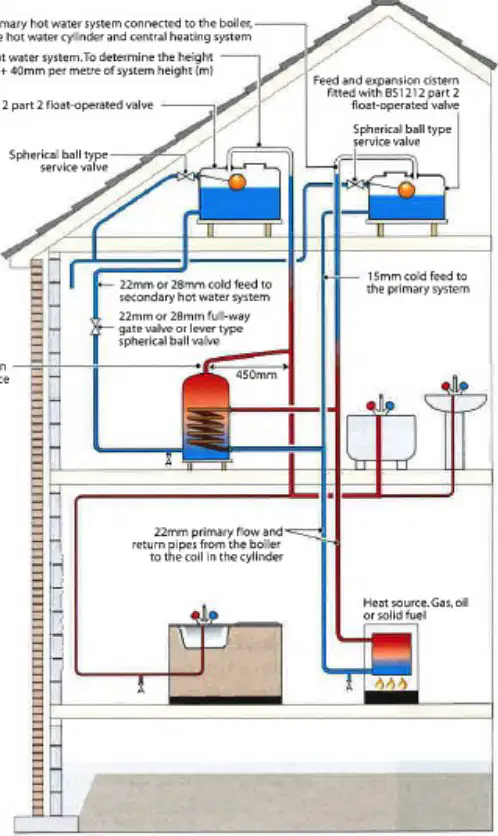
What type of system is described in the image?
Centralised open vented indirect gravity system
Decentralised closed direct pressure system
Centralised closed direct pressure system
Decentralised open vented indirect gravity system
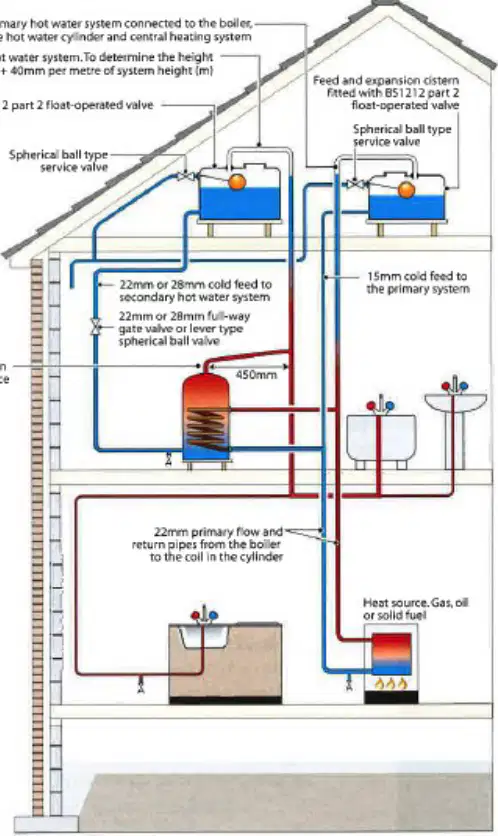
This system is not installed today but is commonly found in ______ properties.
New
Older
Commercial
Industrial
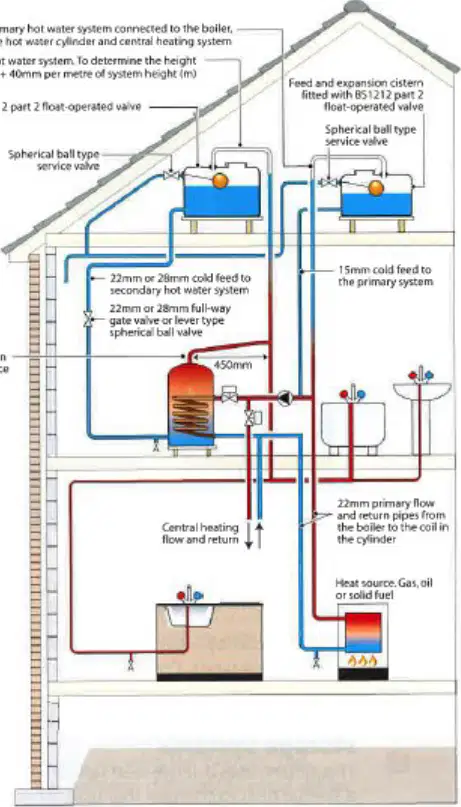
What type of system is commonly installed today?
Centralised open vented indirect pumped primaries
Direct vented system
Closed loop system
Solar heating system
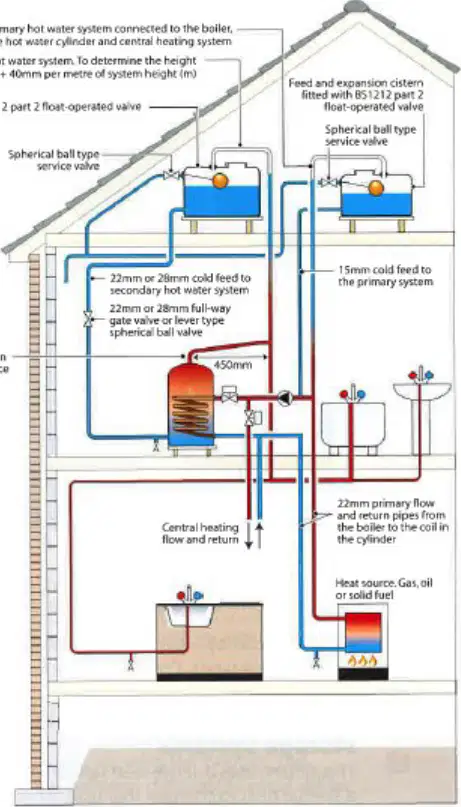
The primary flow and return from the boiler transfers heat to the cylinder by the use of a ______.
valve
pump or circulator
radiator
thermostat

What does the F&E system feed?
Primary circuit
Secondary circuit
Hot water distribution
None of the above
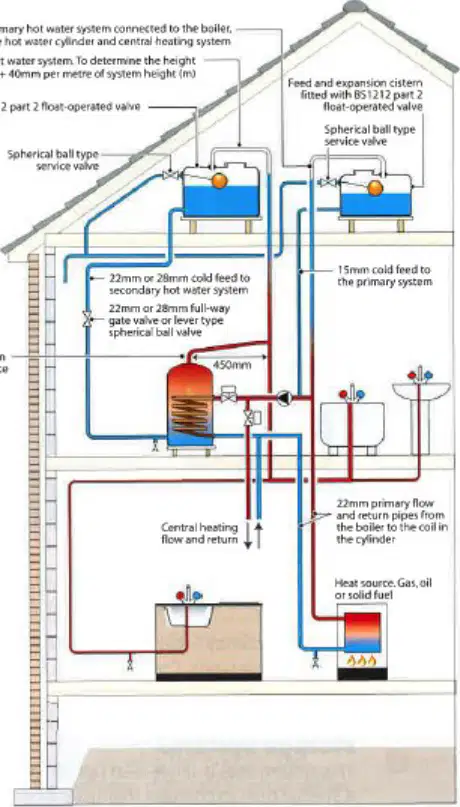
The CWSC feeds the ______ circuit.
Primary
Secondary
Tertiary
Quaternary
Fill in the blank: The _______ is responsible for storing cold water in these systems.
A) Heat exchanger coil
B) Cold water storage cylinder
C) Open vent pipe
D) Hot distribution pipe
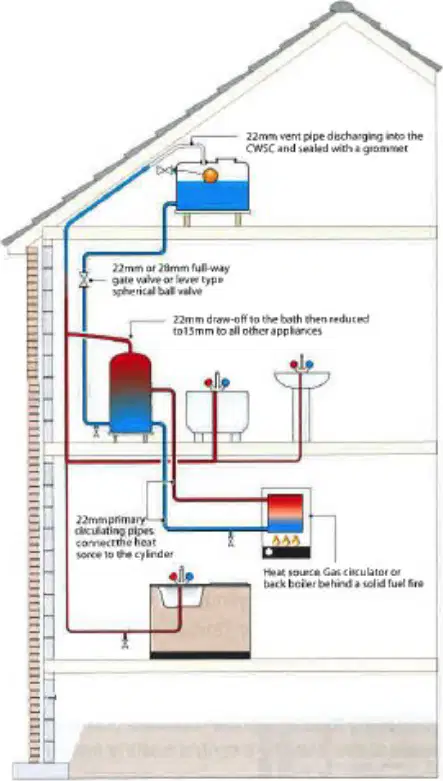
What is a characteristic of a direct hot water cylinder system using a boiler?
It has a heat exchanger coil
It does not have a heat exchanger coil
It uses solar panels
It is only for industrial use.
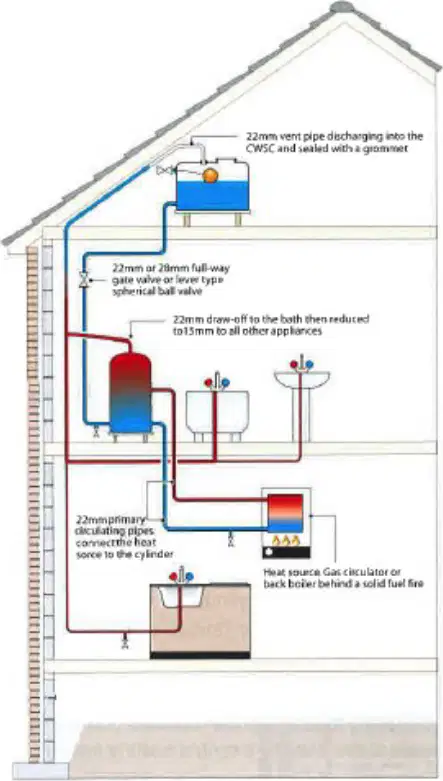
In a direct hot water cylinder system, the boiler heats the water that directly comes out of the ______.
heat exchanger
draw off points
solar panel
storage tank
What type of system uses electric immersion heaters to heat water directly from the draw-off points?
Indirect hot water cylinder
Direct hot water cylinder
Solar water heater
Gas boiler system
In a direct hot water cylinder system, there is no ______ coil, and it uses two immersion heaters.
heat exchanger
cooling
pressure
filtration
What is the purpose of the hot water expansion pipe in a household plumbing system?
To supply cold water
To allow for the expansion of hot water
To drain excess water
To filter impurities
In the plumbing system diagram, the _______ is used to control the flow of water to the boiler.
Overflow warning pipe
Check valve
Stop valve
What type of pressure do open vented systems rely on?
High pressure
Low pressure
Medium pressure
No pressure
Open vented systems use a vent pipe to allow air ___ the system when it is drained down.
out of
into
around
above
What does BSEN806 recommend about the capacity of the CWSC feeding a hot water cylinder?
It should be at least half the capacity of the cylinder.
It should be at least the capacity of the cylinder.
It should be double the capacity of the cylinder.
It should be at least 230 litres.
Fill in the blank: If the CWSC feeds just the hot system, the minimum size is ___ litres.
230
115
150
200
What is the minimum size of the vent pipe?
20mm
22mm
25mm
30mm
Fill in the blank: The cold feed should be sized according to ______ and allows for expansion when the cylinder is heated.
A) BSEN806
B) BS6800
C) BS6900
D) BS7000
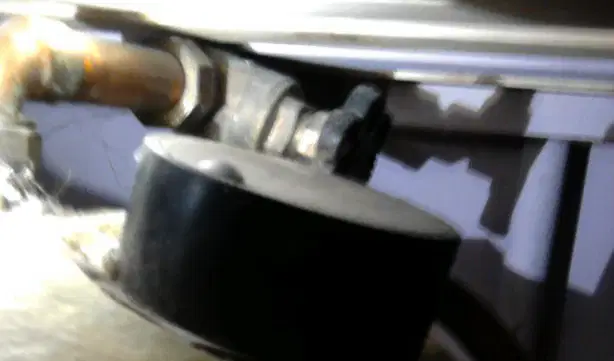
According to BS6700, what should be done if valves are found on the route of the vent pipe?
Leave them as they are
Remove them
Replace them with new ones
Paint them
As per BSEN806, no ______ should be placed on the route of the vent pipe.
pipes
valves
filters
sensors
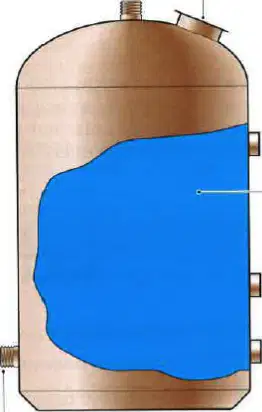
In a direct system, the hot water cylinder does not have any form of what?
Heat exchanger
Coil
Both A and B
None of the above
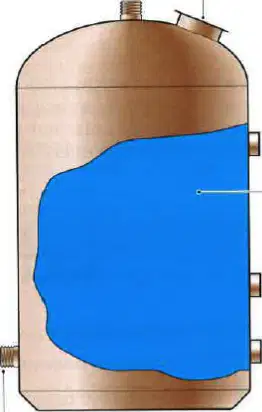
In older systems, the water was heated directly by the ______.
Immersion heater
Boiler
Heat exchanger
Coil
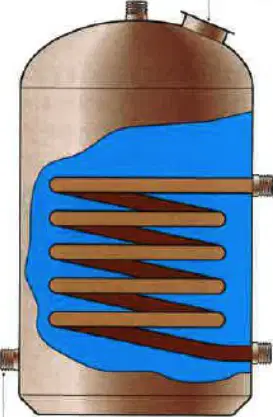
What is the function of the internal coil in an indirect open vented system?
To cool the water
To act as a heat exchanger to heat the stored water
To store cold water
To provide electricity
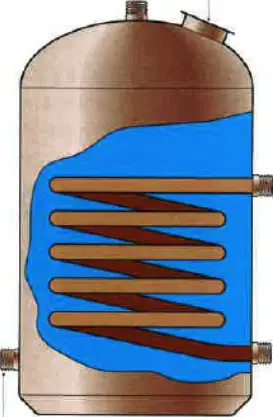
In an indirect system, the hot water cylinder normally has a ______ immersion.
primary
secondary
backup
auxiliary

