
 Worksheets
Review: Basic Cell Types & Cell Theory
Total questions: 72
Worksheet time: 1hrs 12mins


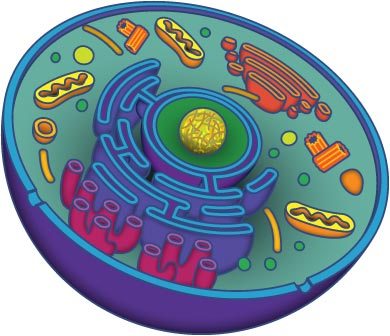
All cells -----
come from other dead cells
come from other living cells
crystallize out of the air

There are three parts to the cell theory. Which is NOT one of those parts?
All organisms are composed of one or more cells.
The cell is the basic unit of structure and organization in organisms.
Cells spontaneously arise from carbon and nutrients carried in the bloodstream.
All cells come from pre-existing cells.
Who named the cell?
Robert Hooke
Robert Redford
Robert Smith
Robert DeNiro
What is NOT part of the modern cell theory?
all cells contain a nucleus
metabolism (processing energy) occurs in cells
genetic (hereditary) info is passed from one cell to another
all cells have the same basic composition (a cell membrane, cytoplasm, cytoskeleton, ribosomes, etc).
Who discovered and named cells while looking at cork?
Captain Hook
Robert Hooke
Matthais Schleiden
Rudolf Virchow
What was Schleiden convinced of?
All plants are made of cells
All animals are made of cells
All cells are prokaryotic
None of the above
This early cell theory scientist looked in a microscope and discovered "animalcules" in the gunk from his teeth and pond water.
Schleiden
Leeowenhoek
Hooke
Virchow
Schwann
Who noted that all animals are made of cells and helped write the first two parts of cell theory?
Rudolf Virchow
Anton van Leeuwenhoek
Theodor Schwann
Robert Hooke
Who discovered that all cells come from other living cells and had research that lead to the last major principle of cell theory?
Matthias Schleiden
Theodore Schwann
Robert Hooke
Rudolf Virchow
The cell theory was discovered by one person
true
false
maybe true
one group of people
What is any living thing?
Nucleus
Organism
Cell
Cell Theory
How many cells are bacteria made of?
one
two
three
none
Which are examples of things made up of cells?
Bacteria
A Flower
Sand
Grass
A Dog
A pre-existing cell is one that is
already alive
Not alive
Newly created
divided
The process where older cells divide into two new cells is a process called
cell division
cell multiplication
generating
cell adding
Robert Hooke named the small compartments that made up the cork __________after the rooms monks lived in.
organelles
membranes
mocroscopes
cells
Cell theory also states that...
bacteria are eukaryotic cells
animals are prokaryotic cells
cells come from other cells (cell division or splitting apart)
cells are awesome!
Cell theory states that...
cells are the basic building block of life
cells are cool
cells are microscopic
cells cannot be destroyed
Cells that are only made of (a) cell are called unicellular.
Bacteria is classified as a what?
Prokaryote
Eukaryote
Which of the following is NOT made up of cells?
snowflake
earthworm
tree
human

What did Hooke first examine?
Pond water
Plant cells
Cork
Animal fat

What does an amoeba and a human have in common?
brain
heart
cells
lungs
What is the primary difference between a prokaryotic and eukaryotic cell?
A prokaryotic cell has a nucleus
A prokaryotic cell does not have a nucleus
A eukaryotic cell has DNA floating throughout the cell
A prokaryotic has DNA contained within a nucleus.
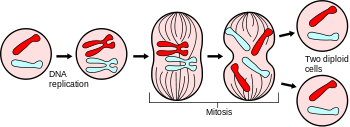
When cells are damaged, new cells are created by cell a process called cell division. How does the cell theory support this fact?
It states that all cells have a nucleus which divides.
It states that all living things are made up of one or more cells.
It states that cells come from previously existing cells.
It states that the basic units of structure and function are cells.
Eukaryotes DO HAVE
a membrane bound nucleus
a virus
pili
antibacterial protection
Prokaryotes DO NOT HAVE...
DNA
flagella
a membrane bound nucleus
ribosomes

What kind of cell is this?
virus
animal
plant
bacteria
All of the following apply to eukaryotic cells except:
All of the following apply to prokaryotic cells except:
They have the ability to reproduce
They have DNA
The following kingdoms all contain eukaryotes except:
Which of the following kingdoms contains prokaryotes?
Eubacteria
DNA is located in the nucleus
prokaryotes
eukaryotes
Eukaryotic cells are
the smallest of cells
those without DNA inside of a nucleus
more complex than prokaryotic cells
found only making up multicellular organisms
Eukaryotic cells are
found in plants, animals, protists, and fungi
cells with no membrane bound organelles
less organized than prokaryotic cells
not in possession of a nucleus
Both prokaryotic and eukaryotic cells can
make up unicellular or multicellular organisms
have a nucleus
have membrane bound organelles
make up unicellular organisms
Eukaryotes include
all organisms other than bacteria
plants and animals only
all bacteria
only animals and bacteria
Both prokaryotes and eukaryotes
have a nucleus
have DNA
do not have DNA
have DNA in the form of chromosomes
Ribosomes, Cell membrane, and Cell Wall are organelles found in which cell type?
Eukaryotic
Prokaryotic
Both
What is different about prokaryotic and eukaryotic cells?
Prokaryotic cells make up all plants and eukaryotic cells make up all animals.
Eukaryotic cells have ribosomes and prokaryotic cells do not.
Prokaryotic cells don’t have a cell membrane and eukaryotic cells do.
Eukaryotic cells have a nucleus and prokaryotic cells do not.
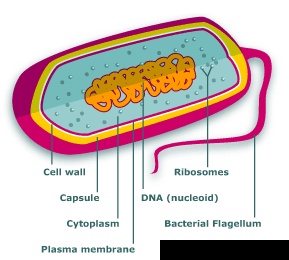

In a prokaryotic cell, where is the DNA located?
In the cell wall
In the nucleus
In the cell wall
It has no specific location

True or False:
Only eukaryotic cells have DNA.
True
False

