
 Worksheets
G5 Unit 2 Review 24-25
Total questions: 61
Worksheet time: 43mins
The French treated the Native Americans (before the French and Indian War)
with disrespect trying to take over their land
with respect and wanted to trade with them
The British treated the Native Americans (before the French and Indian War)?
with disrespect and wanted to take over their land
with respect and wanted to trade with them
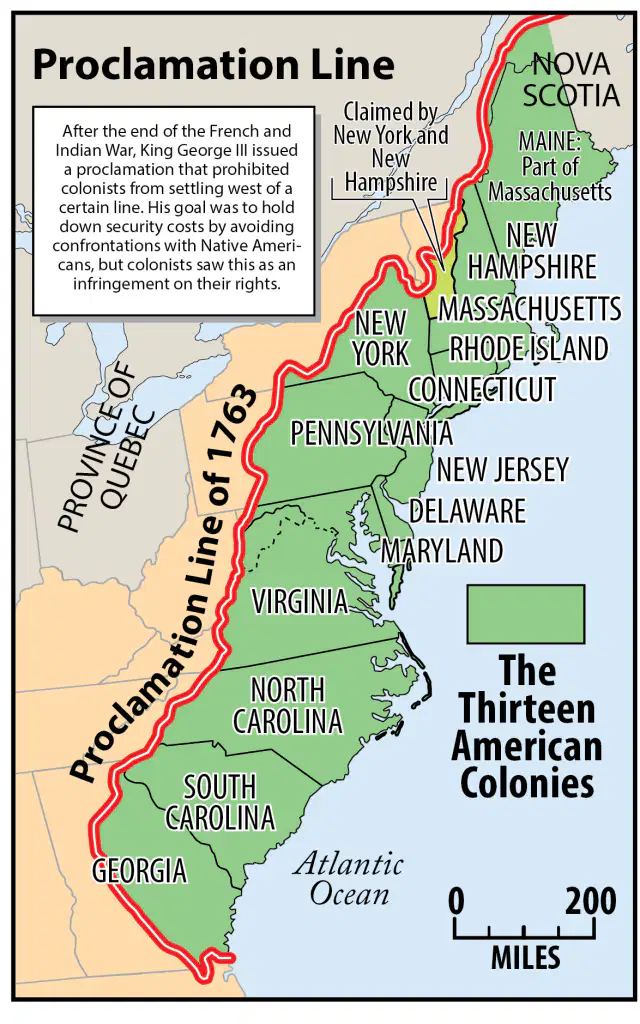
The Proclamation of 1763 established
all colonists had to house the British army if needed
no new lands could be sold or settled on by the American British colonists east of the Appalachian Mountains
no new lands could be sold or settled on by the American British colonists west of the Appalachian Mountains which was the Ohio River Valley
The reaction after the colonists were being taxed is described as outraged and were.....
thrilled
angered
overjoyed
sad

The British tried to repay their debt from the French and Indian War by
taxing American colonists
borrowing money from other countries
selling plots of land in North America to the French
sending more colonists to North America to collect resources.
What was the intial (main reason) that started the war?
A disagreement between the Fren h and the Indians over land.
A disagreement between the Spanish and the Indians over land.
A disagreement between the French and British over more land.
Indians raided French houses for food.
What ended the French and Indian War?
Signing the French Compact
Signing the George Washington Promise
Signing the Mayflower Compact
Signing the Treaty of Paris, 1763
How did the French and Indian War impact the colonies in a negative way?
The colonists had to ration food.
The war was expensive
They became part of France
Spain took over the colonies

The British tried to repay their debt from the French and Indian War by
taxing American colonists
borrowing money from other countries
selling plots of land in North America to the French
sending more colonists to North America to collect resources
Before the French and Indian War, the Native American nations all lived in harmony with one another
True
False

This created a temporary border at the Appalachian Mountains or heading towards Indian country, restricting the movement of the colonists
Appalachian Line of 1769
Proclamation of 1763
Northwest Ordinance of 1767
Colonial Border of 1763
Treaty of Paris 1763
According to the British what was the REASON for the Proclamation of 1763?
The Proclamation of 1763 gave all of the land to the American colonists.
The Proclamation was a meeting between Native Americans and the colonists.
It was attempt to end conflicts/war between Native Americans and colonists west of the Appalachian Mountains.
It was a law that allowed colonists the chance to settle west of the Appalachian Mountains.
Why did Great Britain create the Proclamation of 1763?
To end the French and Indian War
To stop attacks and protect the colonists
To give Native Americans whatever they wanted
To give forts back to the British
Why were the colonists angered by the new taxes imposed by Great Britain?
They had no representatives in the British government to vote on these laws.
They did not want to pay any taxes.
They believed Great Britain had no right to create laws and taxes.
They wanted to be independent from Great Britain.

Witch picture did Paul revere paint


What were the causes of the Boston Massacre?
High taxes imposed by the American colonists, disagreement over trade regulations, and disputes over land ownership.
Lack of communication between British soldiers and American colonists, cultural differences, and religious conflicts.
The presence of French spies in Boston, economic instability, and political rivalries between American colonists.
Tensions between British soldiers and American colonists, anger towards the British taxation, and the presence of British troops in Boston.
What were the events that led to the Boston Massacre?
The French and Indian War
Escalating tensions between British soldiers and American colonists
The signing of the Declaration of Independence
The Boston Tea Party
What was the impact of the Boston Massacre on the American colonies?
It had no impact on the American colonies.
It led to increased British control over the colonies.
It resulted in improved relations between the colonies and Britain.
It fueled anti-British sentiment and increased support for the American Revolution.
How did the Boston Massacre contribute to the American Revolution?
The Boston Massacre resulted in increased support for the British monarchy.
The Boston Massacre increased tensions and fueled anti-British sentiment, contributing to the American Revolution.
The Boston Massacre had no impact on the American Revolution.
The Boston Massacre led to peaceful negotiations between the colonists and the British.
What was the result of the Boston massacre
anger, propaganda, rebellion
Profit, gains, love
Nothing
Better careers/schools
How was the Boston massacre a good thing because...
United people against the British
Gave supplies
It was important
Paul Revere
How was the Boston massacre a bad thing
People died
started a war
People rebelled
Ended the world

What are the three inalienable rights that are mentioned in the Declaration of Independence that all people have?
The List of Grievances were the part of the Declaration of independence was a
detailed list of colonists' complaints about King George
According to the Declaration, all men had "unalienable rights"...life, liberty, and the pursuit of happiness? Who didn't have these rights?
Rich, white men
women
black people
Native Americans
Fill in the missing word from the "Declaration of Independence".
We hold these truths to be self-evident, that all men are created _________, that they are endowed by their Creator with certain unalienable Rights, that among these are Life, Liberty and the pursuit of Happiness.--That to secure these rights, Governments are instituted among Men, deriving their just powers from the consent of the governed."
self-evident
equal
endowed
unalienable (cannot be taken away)
We hold these truths to be self-evident, that all men are created equal, that they are endowed by their Creator with certain unalienable Rights, that among these are Life, Liberty and the pursuit of Happiness.--That to secure these rights, Governments are instituted among Men, deriving their just powers from the consent of the governed."
What does consent mean in the "Declaration of Independence"?
given
not to be taken away
getting from a source
agreement/permission


Who votes for the one person in the Executive Branch?
The American People vote for the ONE person

The Legislative Branch is broken into two houses which are?
The House of the Senate
A system that gives each branch of government different powers so that each branch can watch over the authority of the others is
electoral college
checks and balances
census
justice
The purpose of the Constitution was to
create a better plan of government.
give everyone the freedom to do anything.
break free of Britain.
outline the steps for voting.
The number of members in House of Representatives is based on
city populations
state populations
the nation's population
town populations
How many branches of government are there in the U. S. government?
(a)
What are the two parts of Congress?
Cabinet, Vice president
Judge, Bailiff
Mario, Luigi
Senate, House of Representatives
This system makes sure that no one branch can have too much power.
democracy
impeachment
checks and balances
election
What is the Bill of Rights?
The document signed giving us our independence from Great Britain.
The first 10 amendments added to the Constitution.
The 8 most important amendments added to the Constitution.
The first 11 amendments added to the Constitution.
We are allowed to speak our opinion about the government without getting in trouble because of the...
9th amendment
10th amendment
4th amendment
1st amendment
Which amendment allows you to write an article criticizing the government without getting in trouble for it?
7th amendment
5th amendment
8th amendment
1st amendment

Which of the following is another name for the first 10 amendments to the U.S. Constitution?
Bill of Constitution
Rights Convention
Bill of Rights
Bill of Amendments
Which amendment gives us freedom of speech and freedom of religion?
Amendment 1
Amendment 2
Amendment 3
Amendment 4
The national government under the Articles of Confederation...
Was very strong
Was very weak
Many veterans (soldiers who fought in the Revolution) were angry because...
They weren't allowed to keep their weapons
They weren't given much credit for their win
They did not believe the war ended fairly
They didn't get paid for their service
Why were farmers in Massachusetts so upset in 1786 and 1787?
The US was getting ready to go to war with France and they'd have to be soldiers again
The national government kept raising taxes on farmers to pay off the war debt
They were losing their farms because they could not afford the taxes on them
No one would buy their crops because they were over priced
What is one reason the farmers in Massachusetts could not afford to pay the taxes on their farms?
There was a drought that ruined their crops
Most were soldiers who'd never been paid of their service
People were not interested in buying the crops they were selling
Who was Daniel Shays?
A former soldier and farmer who was worried about losing his farm, so he started a rebellion
A tax collector from Massachusetts who had to go and collect money from the poor
He was the Governor of Massachusetts at the time of a huge rebellion by farmers
What did Daniel Shays' and his men do?
Burned down government buildings all over Massachusetts
Took over courthouses to stop the courts from meeting
Paid Native Americans to raid the houses of the wealthy and powerful
Challenged the US military to a battle
Why didn't the Articles of Confederation stop the rebellion sooner?
They were afraid of the militia and didn't want to make it worse
The militia was too well trained and had the support for the French military
They didn't have a military or the authority to stop it
They didn't want it to end, they supported what Shays and is men were doing

How are the number of Senators determined?
There is one from each state
By population
There are two from each state
By the House of Representatives
Nominated by the President

