
 Worksheets
Cycle 2 Recovery
Total questions: 209
Worksheet time: 6hrs 30mins

What part of the plant anchors the plant for support?
roots
stem
leaves
What part of the plant transports water and nutrients to other parts of the plant?
roots
stem
leaves

which sample represents S Phase?
Sample A
Sample B
Sample C
Sample D
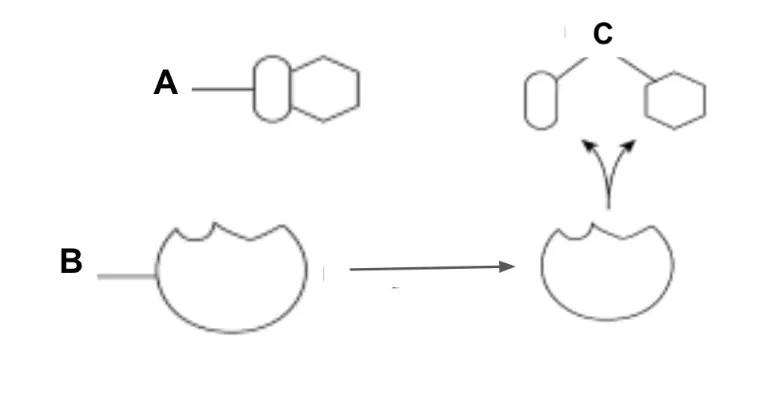
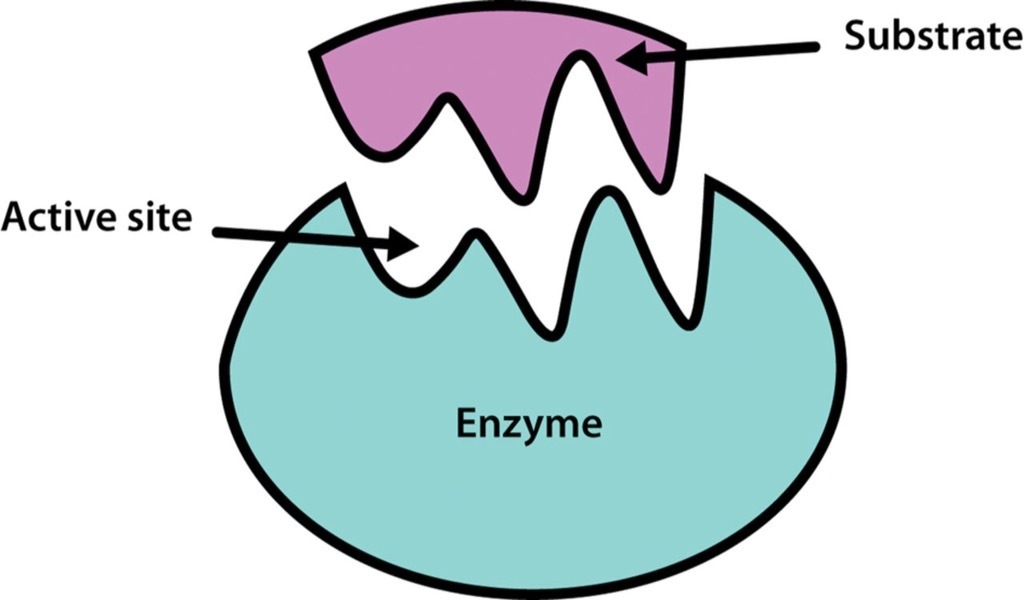
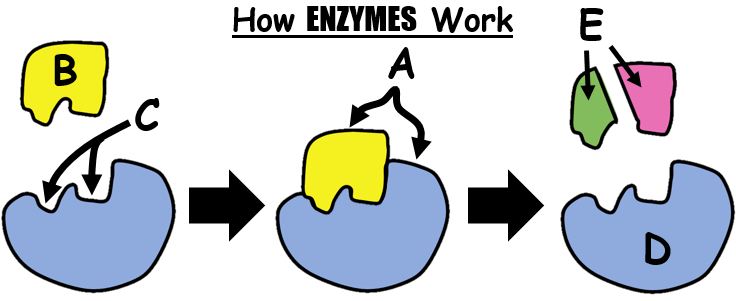
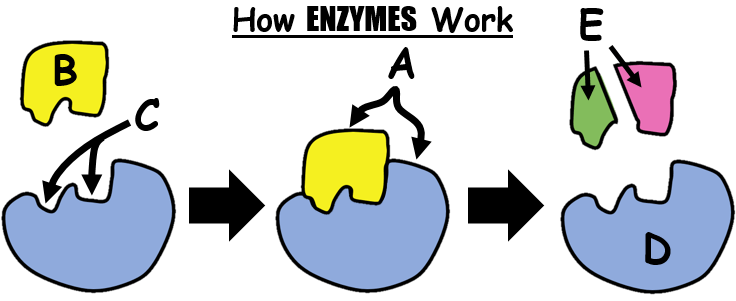
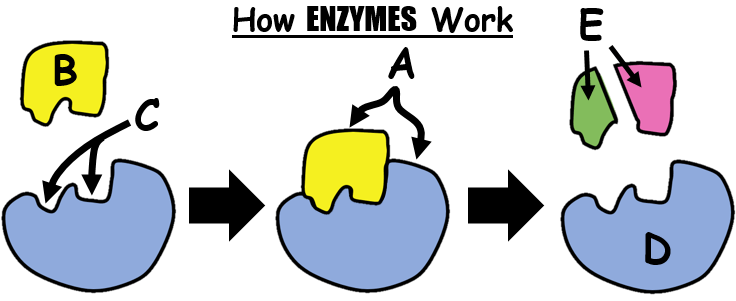
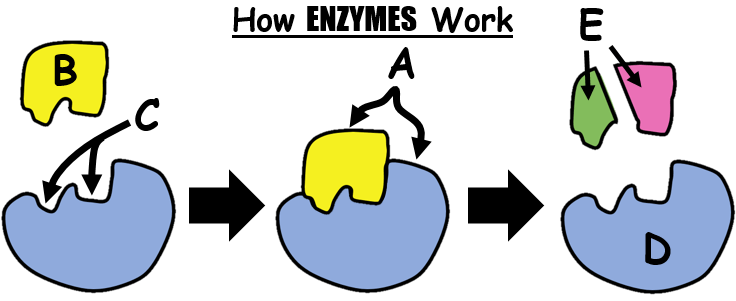
WHY is A the enzyme?
The enzyme is transformed into products while the substrate is reusable.
The enzyme are reusable while substrates are transformed into products.
The enzyme is broken apart by the products.
The enzyme is broken apart by the substrate
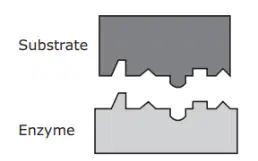
Which one of these pictures shows the end result of an enzyme chemical process?


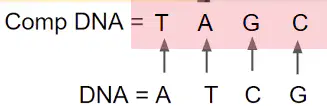
Make a complementary DNA using this template DNA
GAT-GTC-ACG
(a)
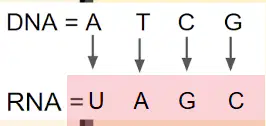
Make a mRNA using the template DNA
GCG-AAA-GTC
(a)

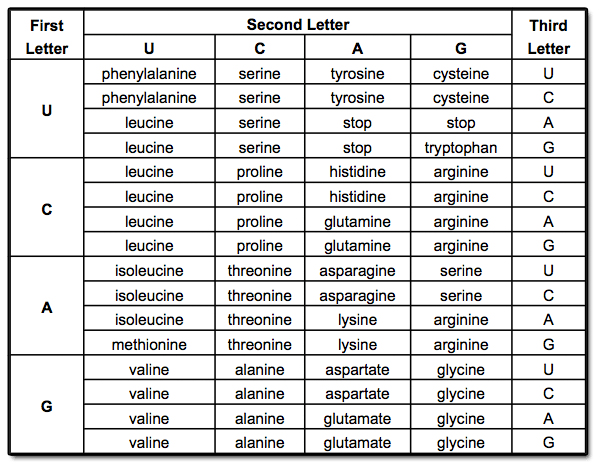
What is the amino acid sequence for the following mRNA strand:
UGG-ACU-CGA
(a)

Cells spend most of their lives in which phase?
Interphase
Prophase
Telophase
Metaphase
Cells of organisms must replicate for?
Growth
Replacement of dying cells
Repair of damaged cells
All of the above
What is the correct order of the phases of mitosis?
Metaphase, Anaphase, Prophase, Telophase,
Pelophase, Motophase, Anaphase, Trophase
Prophase, Metaphase, Anaphase, Telophase
Telophase, Anaphase, Prophase, Metaphase
What is cytokinesis?
When 2 cells merge together to make 1 giant cell
The end of the cell cycle when the cell divides and mitosis is complete
The stage when DNA condenses into chromosomes
The stage where chromosomes are pulled to opposite ends of the cell.

The G1, S, and G2 are parts of which phase of the cell cycle?
Prophase
Interphase
Telophase
Anaphase

Why do cells go through mitosis?
to make food from sunlight
to get air into the cells
to create proteins
to reproduce, grow, and repair/replace cells

Is interphase a part of Mitosis?
Yes, it happens after prophase
No, it happens before mitosis

What are chromosomes?
They attach to the DNA and pull it to the sides
They contain mitochondria
They contain ribosomes
DNA packaged into threadlike structures

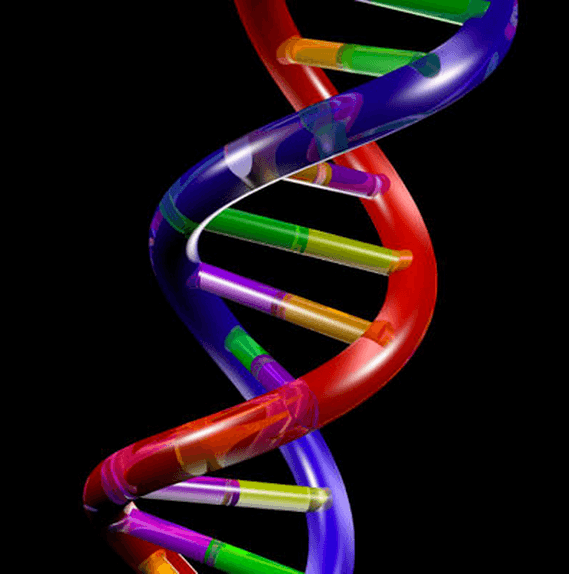
The shape of DNA looks like a twisted ladder, known as
helicase
a double helix
a triple helix
The sides of DNA contain
Sugar and phosphate
Sugar and base pairs
Phosphate and base pairs
DNA does not have any sides

Guanine, cytosine, adenine, and thymine are
sides of the ladder in DNA
phosphate molecules
nitrogen bases
In eukaryotes, which organelle is DNA usually found in?
cell membrane
vacuole
chloroplast
nucleus

Cystosine is always paired with ______________.
Adenine
Thymine
Guanine
It doesn't match with anything
Adenine is always paired with _______________________.
Thymine
Cytosine
Guanine
It doesn't match with anything
The sides of the DNA molecule (the ladder) are made up of nucleotides. These nucleotides are ____ & ____.
deoxyribose sugar and phosphates
Splenda and phosphates
phosphates and glucose
If one side of DNA is ATTA what would the complementary strand look like?
CGGC
GCCG
TAAT
ATTA
If one side of DNA is TTAACCGG what would the complementary strand look like?
AAGGCCGG
TTAACCGG
AAGGCCGG
AATTGGCC
Which list is in the correct order from biggest to smallest?
organism-cell-nucleus-chromosome-DNA-gene
gene-DNA-chromosome-nucleus-cell-organism
organism-DNA-cell-gene-chromosome-nucleus
organism--cell-nucleus-gene-chromosome-DNA

Genes are a segment of DNA that codes for a specific trait. Genes affect your traits by coding for the ______________ in your cells
Nucleic acids
Genes
Proteins
DNA
A gene tells the cell how to make a __________.
Nucleotide
Amino acid
Protein
Base pair

ATG TGA CAG
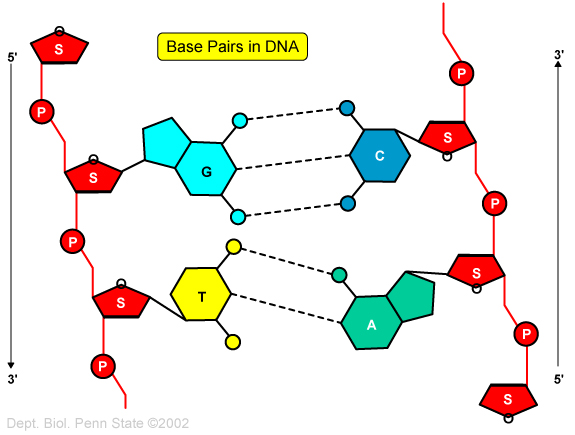
Which enzyme is responsible for unzipping or the DNA molecule when replication begins?
Helicase
DNA breakase
Primase
DNA polymerase
Which enzyme is responsible for gluing together the Okasaki fragment on the lagging strand during DNA replication?
Ligase
Helicase
Amaylase
DNA polymerase
Where does the DNA molecule unzip at during DNA replication?
Between the sugar and phosphate
Between the sugar and nitrogen bases
Between the nitrogen bases
Which part of a DNA molecule is responsible for the direct coding of specific traits in an organism?
The number of hydrogen bonds that hold the strands of DNA together
The number of carbons in the DNA molecule.
The sequence of nucleotide bases in the DNA molecule
The sequences of phosphates along each DNA strand


AATCATGGA

What is the correct order to make a protein?
Protein, DNA, RNA
RNA, DNA, Protein
DNA, RNA, Protein
Protein, RNA, DNA
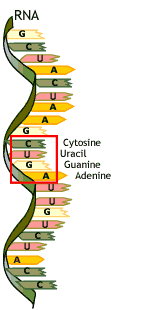

What makes up the SIDES of a DNA ladder?
nitrogen bases
sugars & phosphates
genes & chromosomes
RNA




Which organelle is the location where protein is made?
Ribosome
Nucleus
Cytoplasm
Nucleotide

When these bond together, they form a protein
Amino Acids
Peptide Bonds
Ribose
Nucleotides
Which of the following is the complementary mRNA sequence to this DNA strand: AACTGAA
UUGACUU
TTGACTT
AACTGAA
AACUGAA


What brings the amino acids to the ribosome to assemble a protein?
DNA
How many nucleotides code for 1 amino acid?
1
2
3
4

What is the location in the cell for translation?
Cytoplasm
Nucleus
Lysosome
Golgi apparatus
Choose the sequence of the mRNA strand that would be match up with to the following strand:
GTAGTCA
UATUAGA
ACGACTG
CAUCAGU
CATCAGT


Double stranded DNA is unzipped, and one strand is used as a template to form Messenger RNA.
Translation
Transcription
Replication
Mitosis

Messenger RNA travels out of the nucleus to ribosomes
and is used as a template to assemble a protein.
Translation
Transcription
Replication
Homeostasis

A small section of RNA that transports amino acids
to the ribosome for synthesis into proteins.
tRNA
mRNA
rRNA
DNA

The enzyme that codes mRNA from DNA instructions.
DNA Polymerase
RNA Polymerase
Helicase
Lipase

mRNA occurs during this process
Translation
Transcription
Replication
Delivery
In what process is mRNA synthesized?
Transcription
Translation
DNA Replication
Mitosis

The following DNA strand is TTACCGATACAT, what would the transcription mRNA strand be?
AAUGGUAUGUA
TTACCGATACAT
UUAGGCUAUCUA
AATGGCTATGTA

Which amino acid matches with the following codon:
GAU
GLU
SER
ASP
ILE
Which amino acid matches with the following codon:
CAC
STOP
HIS
LYS
ARG

Use the mRNA below to select the correct amino acid sequence:
AUG-UCA-AAA-UAG
MET-SER-LYS-STOP
MET-THR-LYS-TYR
LEU-SER-CYS-STOP
ILE-LYS-SER-STOP

Use the codon chart to translate the following mRNA:
AUG | GGC | CCU
Methionine | Glycine | Proline
Tyrosine | Proline | Glycine
Methionine | Lysine | Stop
TAC | CCG | GGA
Use the codon chart to translate the following mRNA:
UAG | CCA | GGC
Methionine | Glycine | Proline
Tyrosine | Proline | Glycine
Methionine | Lysine | Stop
TAC | CCG | GGA
DNA: CAC
Pro
Val
Stop
Leucine
RNA has the nitrogen base Uracil, which takes the place of what base found in DNA?
Adenine
Cytosine
Thymine
Glutamine
A single nucleotide of either DNA or RNA is made up of which three components?
amino acid
phosphate groups
a sugar (deoxyribose or ribose)
nitrogenous base
DNA is transcribed into which type of RNA inside the nucleus?
tRNA
rRNA
mRNA
chromatin

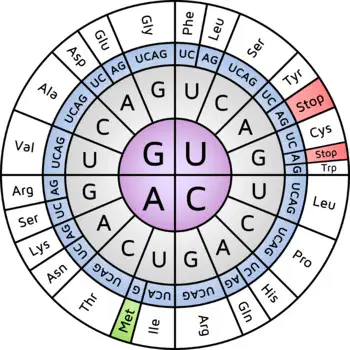
The codon wheel is used to find what?
tRNA
Amino Acids
rRNA
anticodons

Use the codon wheel to find what amino acid is coded for with the codon UCA.
Isoleucine
serine
tyrosine
leucine
A codon, which codes for 1 amino acid, consists of how many bases?
1
2
3
4

Use the wheel to find what amino acid is created by a GGG codon.
Glycine
Aspartic Acid
Glutamic Acid
Phenylalanine

Sometimes a single amino acid can be coded for by multiple codons. How many different codons code for the amino acid leucine? (Trick question)
2
4
6
8

From a gene found in a DNA strand you are given the bases of ATG. Using transcription rules, find the amino acid that would be coded for from the resulting mRNA. Use the codon wheel to help.
Leucine
Isoleucine
STOP
Tyrosine

Working backwards through the transcription process, identify the DNA sequence that would be found in a gene that codes for the amino acid methionine.
AUG
TAC
UAC
TUC
The process of assembling a protein from RNA is called __________?
transjahon
translation
transcription
replication
Proteins are assembled following instructions that start in a segment of DNA called a ________.
gene
base
amino acid
mRNA
What part of the cell in eukaryotes is the site of transcription?
ribosome
rough er
cytoplasm
nucleus
Translation takes place in what part of the cell?
lysosome
cytoplasm
nucleus
vesicle
The Central Dogma for biology is correctly identified by which choice below?
mRNA --> DNA --> Protein
Protein --> DNA --> RNA
tRNA --> DNA --> Protein
DNA --> RNA --> Protein
Amino acids are carried by which molecule below?
mRNA
rRNA
tRNA
aRNA

Identify the all 3 stop codons.
UAA
UAC
UAG
UGA
A gene is a segment of DNA that codes for a specific protein, what happens to that segment of DNA prior to transcription?
the segment is removed from the DNA strand
nothing
that segment is opened to allow transcription
the segment is replaced by RNA
One major difference between RNA and DNA, is that RNA is __________ __________?
single stranded
double based
double helixed
double paired

What amino acid is also considered a start codon?
threonine
isoleucine
startamine
methionine
Backbone/sides of DNA
phospate and sugar
phosphate and nitrogen base
nitrogen base pair
sugar and nitrogen base
Rungs/steps of DNA ladder
phosphate and sugar
phosphate and nitrogen base
nitrogen base pair
sugar and nitrogen base
Scientists given credit for the structure of DNA
Watson and Chargaff
Chargaff and Crick
Watson and Crick
Wilkins and Chargaff
Building blocks of DNA and RNA
amino acids
nucleotides
fatty acids
ribosomes
DNA making a copy of itself
transcription
replication
translation
protein synthesis
Where does replication take place in a cell?
ribosome
cytoplasm
nucleus
ER
Process of making mRNA
replication
translation
extraction
transcription
Where does transcription take place in a cell?
ribosome
cytoplasm
nucleus
ER
A triplet on mRNA is called
codon
anticodon
Where does translation take place in the cell?
nucleus
ribsome
nucleolus
ER
Scientist who discovered base pairing
Crick
Watson
Wilkins
Chargaff
Nitrogen bases are attached to
phosphate groups
sugars
Which base does NOT belong in DNA?
thymine
cytosine
guanine
adenine
uracil
Which base is NOT found in RNA?
adenine
cytosine
guanine
thymine
A triplet on tRNA is called
anticodon
codon
GCU will base pair to which of the following in DNA?
AGA
CGA
CGT
ACU
Cytosine base pairs with
adenine
guanine
thymine
uracil
Deoxyribose is found in
DNA
RNA
lipids
proteins
Deoxyribose and Ribose are types of
proteins
lipids
sugars
fats
A term referring to the bases that pair between two sides of DNA
identical
exact
complementary
Sugar in RNA
deoxyribose
ribose
sucrose
lactose
A point mutation
insertion
deletion
frameshift
substitution
Type of mutation causing a shift in frames
point mutation
substitution
insertion
deletion
What are polymers made of?
lipids
monomers
enzymes
macromolecules
What are the monomers of carbohydrates?
Monosaccharides
Nucleotides
Amino Acids
Glycerol & Fatty Acids
What are the monomers of nucleic acids?
Amino Acids
Monosaccharides
Glycerol & Fatty Acids
Nucleotides

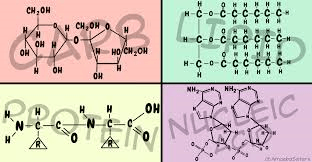
What is this molecule?
Protein
Carbohydrate
Lipid
Nucleic Acid
Lipids can be a secondary form of energy. What else can they do? (2 things)
components of cell membranes
make proteins
provide insulation
store genetic material
Which are examples or sources of carbohydrates?
cereal
starch
dairy
sucrose
What type of molecule is an enzyme?
Lipid
Nucleic Acid
Protein
Carbohydrate

Which of the following is/are the reactants of this equation?
A + B
AB
Which word means that an enzyme has lost its shape?
digestion
synthesis
catalyze
denature
Which word means "to speed up"?
digestion
synthesis
catalyze
dentaure
Which of the following means "to break down"?
denature
catalyze
synthesis
digestion
Which word means "to build or make"?
synthesis
digestion
denature
catalyze
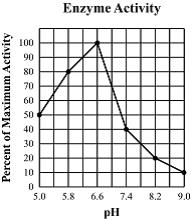
Changes in what may cause an enzyme to become denatured?
pH
substrates
temperature
illuminance
Substrates bind to enzymes at the ...
polymer
denature site
active site
complex
Which biomolecule polymers are held together by peptide bonds?
Lipids
Proteins
Nucleic Acids
Carbohydrates
Protein in food gives you energy.
True
False
On a nutrition label, which category is lipids?
dietary fiber
protein
total fats
total sugars
On a nutrition label, what do I need a lot of if I need quick energy?
Protein
Saturated Fat
Total Carbohydrates
Trans Fat
What letters do enzymes often end in?
(a)
Which letters do sugars (carbohydrates) often end in?
(a)

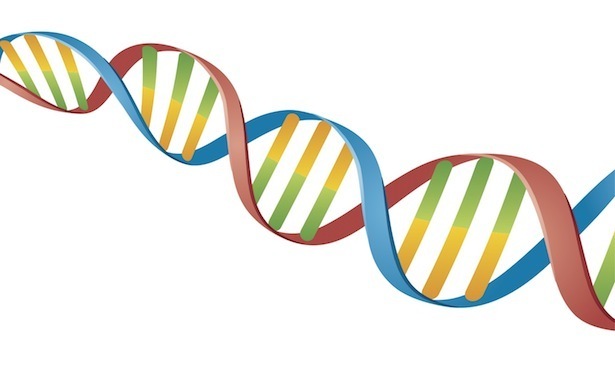
Which biomolecule is made of nucleotides and contains your DNA?
Carbohydrate
Lipids
Protein
Nucleic Acid
Which biomolecule helps form muscles?
Nucleic Acid
Carbohydrate
Protein
Lipids

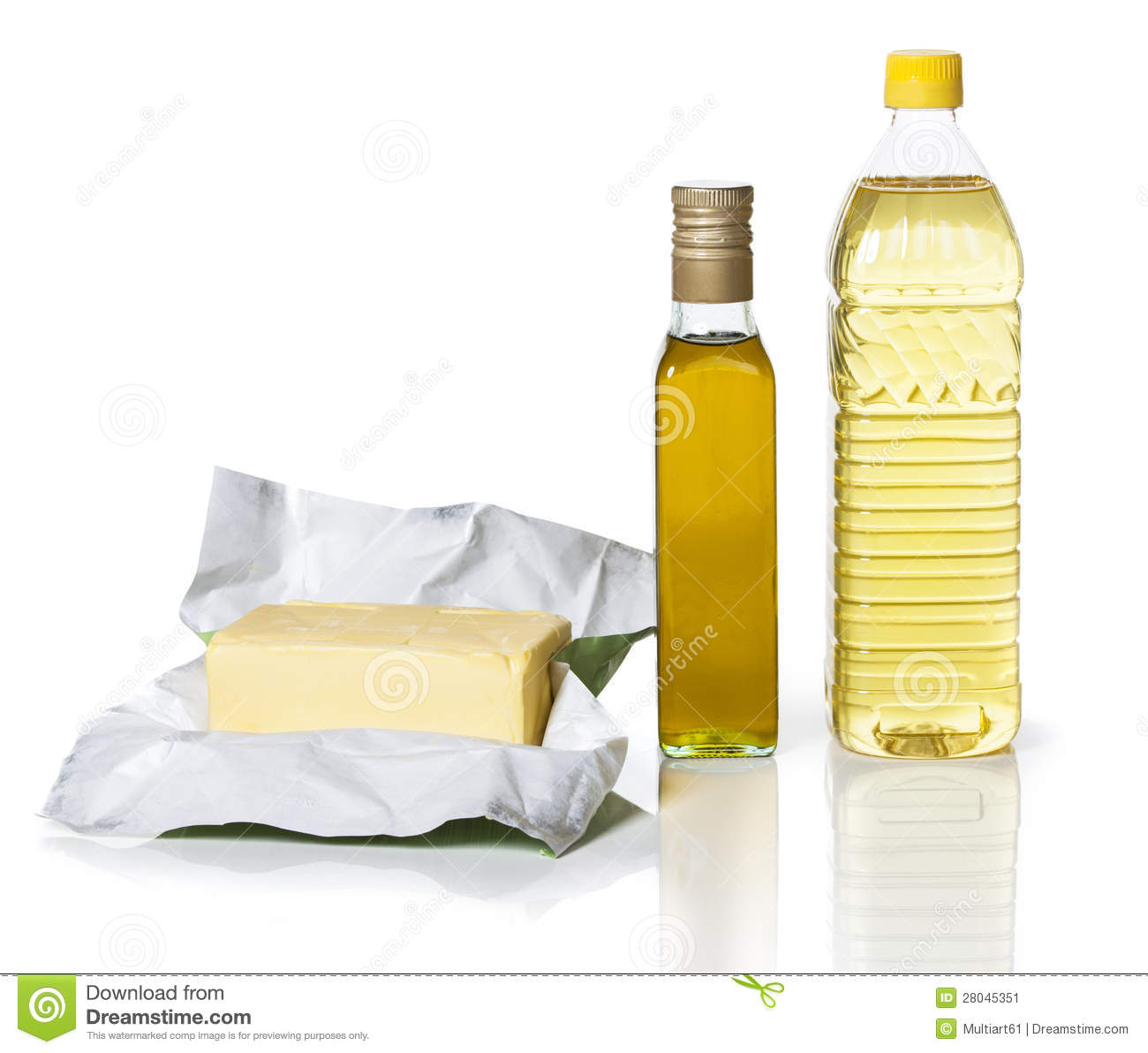
What are lipids?
Polymers made of amino acids
Monomers that store and transfer genetic information
Fatty acids not generally soluble in water
Complex carbohydrates like starch

Which biomolecule makes up cell membranes?
Protein
Carbohydrate
Lipid
Nucleic acid

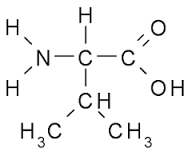
Identify the biomolecule
Carbohydrate
Lipid
Protein
Nucleic Acid
What is the monomer of a carbohydrate?
Monosaccharide
Amino acid
Triglyceride
Nucleotide
What biomolecule is responsible for immune support such as antibodies?
Nucleic Acid
Lipid
Protein
Carbohydrate
Which of the following is a complex polysaccharide?
Starch
Glucose
Glycerol
Phosphate
How do animals store complex sugars?
In the form of glycogen
In the form of cellulose
In the form of chitin
None of the above
Which triglyceride is solid at room temperature?
Unsaturated
Saturated
Amino Acids
Nucleotide
Which biomolecule includes RNA as an example?
Protein
Lipid
Nucleic Acid
Carbohydrate
Which element is found in only proteins and nucleic acids?
Nitrogen
Hydrogen
Helium
Oxygen
Enzymes are an example of
Lipids
Carbohydrate
Protein
Nucleic Acid

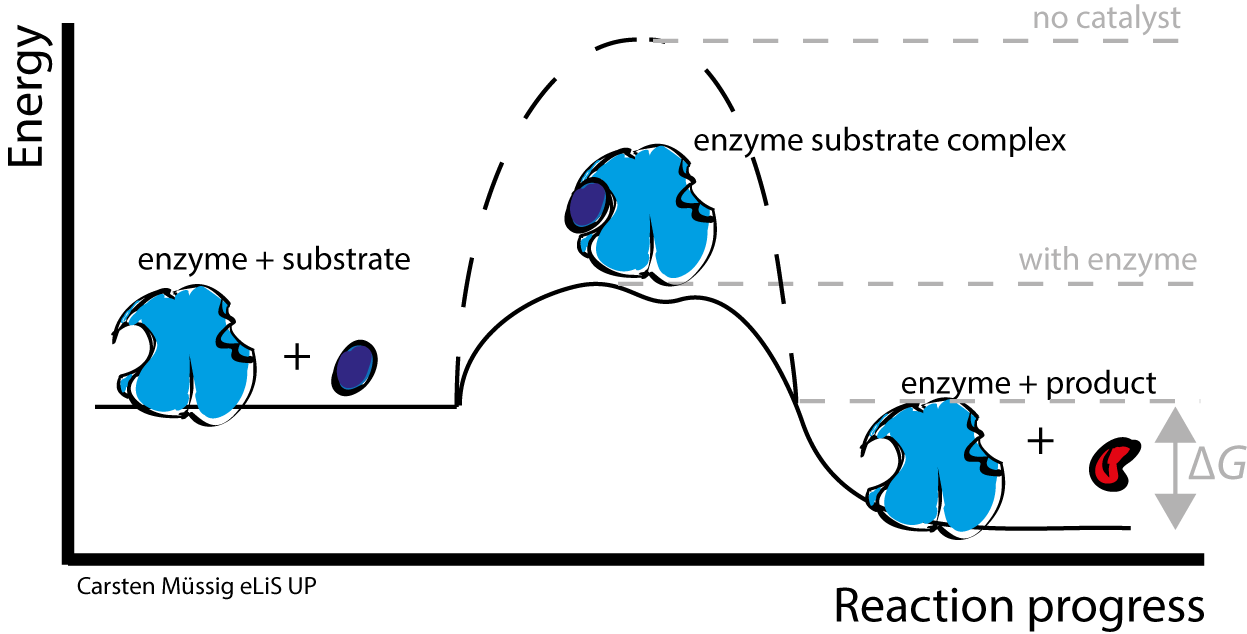
What happens when enzymes are heated to a high temperature OR put into a pH outside its normal range?
The enzymes die.
The shape of the enzyme are changed and it denatures
The enzymes' amino acid sequence changes.
The enzymes remain the same

G1, S, G2 are all part of what stage of the cell cycle?
Cytokinesis
Interphase
Mitosis
Telophase
In a human diploid (2n) cell containing 46 chromosomes, mitosis results in the formation of two diploid daughter cells containing ____ chromosomes.
92
23
46
0
Cancer is defined as the
uncontrolled division of mutated cells
normal division of cells
normal DNA replication
abnormal ATP synthesis
Cells differentiate to perform different functions because
all genes are turned on inside that cell
all genes are turned off inside that cell
different genes are turned on inside that cell
different genes are turned on or off inside that cell

