
 Worksheets
Kinetic and Potential Energy
Total questions: 22
Worksheet time: 11mins

Potential energy depends on
mass and height
height and speed
mass and speed
height and force


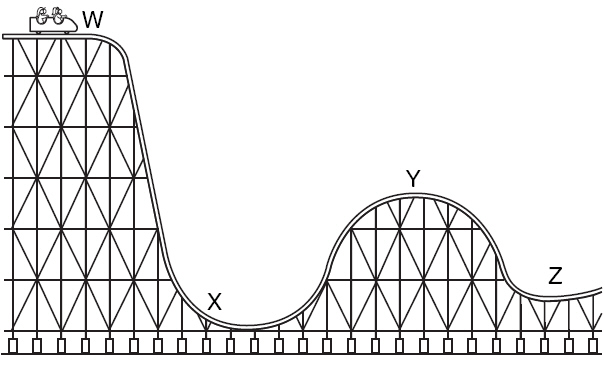


What is true of kinetic energy and potential energy at point X?
The kinetic energy and potential energy are the same.
The kinetic energy is at its greatest. Potential energy at its lowest.
Kinetic energy at its lowest. Potential energy at its greatest.
Kinetic and potential energy are the two types of energy that relate to:
Change
Friction
Density
Motion
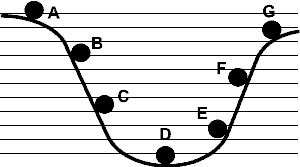
Which of these has the most potential energy?


Which passenger has the most potential energy?
A
B
C
D
Which of the following has the most kinetic energy?
A car traveling at 80 mph
A tractor-trailer traveling at 80 mph
A cheetah running at 80 mph
a motorcycle traveling at 80 mph
What does the law of conservation of energy tell us?
Energy is created and destroyed all of the time.
Stars generate most of the energy on the earth.
Energy can not be created or destroyed.
Dark matter absorbs most of the energy in the universe.
When does an object have no kinetic energy?
When it is at rest
When it is moving very slowly
When the only force acting on it is gravity
When it has no electrical charge
Which object has the most potential energy?
A ball resting on the ground
A ball thrown at 100 miles per hour
A ball on top of the refrigerator
A ball resting on the edge of cliff
When does a yo-yo have the most potential energy?
when it is at its highest point
when it is at its lowest point
when it is moving between its highest and lowest point
when it is moving at its top speed
When is potential energy transformed into kinetic energy?
When an object at rest is lifted to a higher elevation.
When an object at rest remains at rest.
When an object at rest is put into motion.
When an object in motion is stopped and put at rest.
What is the best synonym for potential energy?
Stored energy
Energy of motion
Energy due to gravity
Mechanical energy
Why do objects at high elevations have more potential energy than objects at low elevations?
Because the thinner air at higher elevations means objects have a greater potential to move very fast
Because objects at high elevations are closer to the sun, which is the source of all energy on earth
Because objects at high elevations tend to move slower than objects at low elevations
Because gravity gives objects at high elevations the potential to fall to fall much further

