Worksheets
Plates Tectonics
Total questions: 40
Worksheet time: 46mins
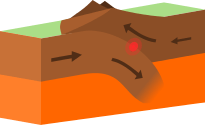

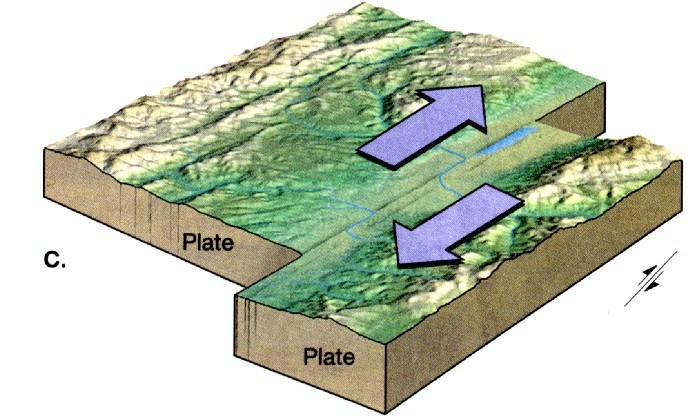

Islands can from from magma which is pushed up at a __________ plate boundary
Divergent
Convergent
Transform
Mountains are created when....
Two continental plates collide
Two oceanic plates pull apart
An Oceanic plate subducts under a Continental Plate
Two continental plates pull apart

Ocean Ridges are formed by _______ plate boundaries
Convergent Oceanic / Continental
Convergent Continental / Continental
Convergent Oceanic / Oceanic
Divergent

Which of these events can ONLY happen on a DIVERGENT BOUNDARY?
Rift Valley
Mountain
A peninsula
An Insanely complex, long answer that you will click out of instinct.
Two or more tectonic plates that move towards one another is a
Divergent Boundary
Transform Boundary
Subduction
Convergent Boundary
Two or more tectonic plates move away from each other is a
Subduction
Transform Boundary
Divergent Boundary
Convergent Boundary


Alfred Wegener's hypothesis of continental drift was not widely accepted because
he could not provide evidence to support his claim
the puzzle fit was his only evidence and scientists thought it was a coincidence
he could not explain what mechanism caused the plates to move
he claimed continents drifted on the oceans

Wegener's hypothesis that the Earth's continents were once part of a giant landmass, and subsequently moved into their current positions is known as ...
Drifting
Continental Drift
Catching My Drift
Universal Drift
Undersea valleys that are the deepest parts of the ocean and where subduction occurs are called ...
hot spots
conversion zones
ocean trenches
mid-ocean ridges


Which of the following is likely true about this image?
Layer C is the newest rock
Layer E is younger than layer B
Layer D is older than layer B
Layer E is the oldest rock

Which layer is younger
layer M
Layer K
Layer Q
Layer H
Rock layer D is _______________ than rock layer C
younger
older
Match the description to the graph:
"The car is stopped."


Match the description to the graph:
"The car is traveling at a constant speed."

Match the description to the graph:
"The car is slowing down."

Describe the motion in the graph:
Constant Speed (positive slope)
Stopped (at rest)
Acceleration (increasing speed)
Return Home (negative slope)
If 2 roller coaster cars race with the same force, the car with greater mass will have a lower acceleration. This is an example of Newton's ____ Law of Motion.
Fir
Second
Third
Fourth
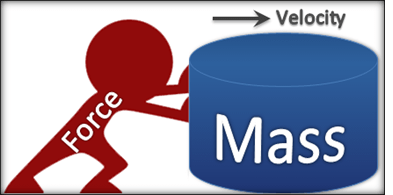
The picture is an example of Newton's...
1st Law
2nd Law
3rd Law

The picture is an example of Newton's...
1st Law
2nd Law
3rd Law

How much an object accelerates is dependent upon the object's mass and the force applied to it. This best defines Newton's -
1st Law
2nd Law
3rd Law
4th Law

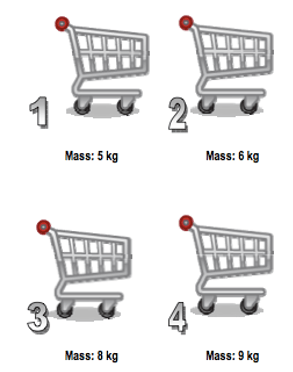
The masses of four objects are given in this table. If all of the objects have an acceleration of 2m/s2 , which will require the greatest force to move?
Object 1
Object 2
Object 3
Object 4
What unit do we measure force in?
Kilometer/hr
Joules
Seconds
Newtons