
 Worksheets
Ch 3 Post Assessment Practice Test
Total questions: 27
Worksheet time: 14mins
Name
Class
Date
1.
True or False: Only the women in Ancient Egypt wore jewelry and make-up.
a)
True
b)
False
2.
What type of plant did the Egyptians use to make paper?
a)
a. Papyrus
b)
b. Wheat
c)
c. Palm Leaves
d)
d. Lotus
3.
Which statement below best describes hieroglyphics?
a)
a. A font that can be used with any language
b)
b. A form of writing using picture symbols
c)
c. A fancy way of writing the Greek alphabet
d)
d. Similar to cursive.
4.
A triangular shaped area at the mouth of some rivers is called a
a)
a. Triad
b)
b. Deltoid
c)
c. Delta
d)
d. Cataract
5.
Which is the longest river in the world?
a)
a. Amazon
b)
b. Nile
c)
c. Yellow
d)
d. Arkansas
6.
What did the Egyptians get from the Nile that led them to call it the “Gift of the Nile”?
a)
a. The fish they were able to catch for food
b)
b. The fresh water they could use for drinking and bathing
c)
c. The rich black soil from the Nile flooding that they used to grow crops
d)
d. All new children were considered Gifts of the Nile
7.
What is a mummy from Ancient Egypt?
a)
a. A scary monster that walks around with its hands held out
b)
b. A preserved body of the dead
c)
c. Someone who takes care of you when you are young
d)
d. All of the above
8.
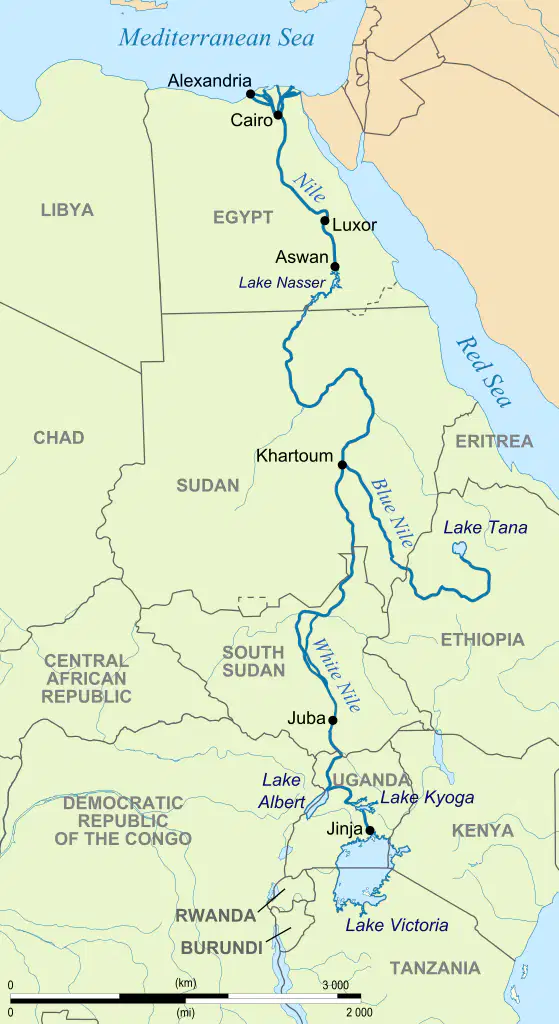
What body of water does the Nile River empty into?
a)
a. Lake Victoria
b)
b. Mediterranean Sea
c)
c. Red Sea
d)
d. Indian Ocean
9.
Why did the Egyptians bother to preserve their dead?
a)
a. They wanted to remember them
b)
b They believed their bodies were needed for the afterlife
c)
c. Out of respect for their elders
d)
d. To honor them
10.
Which of the following statements is true about King Tut?
a)
a. His full name was Tutankhamun.
b)
b. One of the greatest surviving treasures of Ancient Egypt was found in his tomb.
c)
c. He became Pharaoh at the age of 9.
d)
d. All of the above
11.
What is the process called that the Ancient Egyptians used to preserve the dead?
a)
a. Embalming
b)
b. Deflating
c)
c. Afterlifing
d)
d. Deadening
12.
True or False. Upper Egypt is located at the North end of the Nile River ?
a)
True
b)
False
13.
What discovery led to the ability to decode hieroglyphics?
a)
a. Nile River Valley
b)
b. Old Kingdom
c)
c. Rosetta Stone
d)
d. The Great Rock
14.
What is the period rule called when the title of Pharaoh is passed down within the same family? Example: from father to son
a)
a. An Age
b)
b. A Kingdom
c)
c. A Dynasty
d)
d. An Empire
15.
What happened to the brain when Ancient Egyptians were preserving the organs of the body?
a)
a. It was dried and put back into the skull
b)
b. It was thrown away
c)
c. It was preserved with the heart
d)
d. Nothing, they just left it there
16.
Just like in Mesopotamia, the majority of Egyptians also worked as...?
a)
a. Soldiers
b)
b. Craftsman
c)
c. Scribes
d)
d. Farmers
17.
The ____________ were thought to be gods on earth, they were the king of Egypt
a)
Dynasty
b)
Pharaohs
c)
Hieroglyphics
18.
Belief in many gods is called
a)
monotheism
b)
polytheism
c)
theocracy
19.
Method of bringing water to a field is called ______________
a)
Irrigation
b)
Agriculture
c)
Domestication
20.
What divides a globe into Northern and Southern hemispheres?
a)
Prime Meridian
b)
Equator
21.
What hemisphere do we live in?
a)
Northern Hemisphere
b)
Southern Hemisphere?
22.
What continent is Alma, Arkansas located on?
a)
Arkansas
b)
Crawford
c)
North America
d)
South America
e)
Southern
23.
16. The P in GRAPES stands for
a)
Polytheism
b)
Politics
c)
Policies
d)
Papyrus
24.
21. Which element of GRAPES deals with location?
a)
Economics
b)
Social Structure
c)
Geography
d)
Religion
e)
Achievements
25.
The Nile River currents and the wind patterns made the Nile perfect for
a)
irrigation
b)
floods
c)
ventilation
d)
transportation
26.
King Tut or King Tutankhamun is well known not because he was a great pharaoh, but because his nearly intact __________ was discovered in 1922 and still contained his treasures.
a)
Mummy
b)
Crown
c)
Tomb
d)
Throne
27.
Which of the following is considered to be an achievement of the Ancient Egyptians?
a)
Performed some surgery, setting of broken bones, dentistry, used plants and honey to cure ailments, and had basic knowledge of anatomy
b)
A written language called hieroglyphics and the first to make paper
c)
A calendar based on the flooding of the Nile
d)
All of the above
100 %

