
 Worksheets
FALL 2025 SOCIOLOGY FINAL
Total questions: 75
Worksheet time: 2hrs 23mins
One of the key concepts in socialization and child development is the idea of childhood as a social construct
TRUE
FALSE
Childhood is NOT a critical period for socialization, the process through which individuals learn and internalize the values, norms, and behaviors of their society.
TRUE
FALSE
Factors such as _____. _____ and ______ can significantly impact a child's experiences and opportunities.
Status, cell phones and television
socioeconomic status, race, and gender
Race, school and cookouts
The "looking-glass self" is a concept in sociology that describes how our sense of self is shaped by how we believe others perceive us.
TRUE
FALSE
This idea "THE LOOKING GLASS SELF" was first proposed by American sociologist George Mead and it's based on the idea that we see ourselves reflected in the eyes of others.
TRUE
FALSE
We imagine how we appear to others.
We might think about whether others see us as intelligent, attractive, or friendly.
If we believe others see us positively, we might feel proud or confident. But if we believe others see us negatively, we might feel ashamed or insecure
This might involve considering our physical appearance, our behavior, or our personality traits.
We develop feelings about ourselves based on these perceived judgments.
We might think about whether others see us as intelligent, attractive, or friendly.
If we believe others see us positively, we might feel proud or confident. But if we believe others see us negatively, we might feel ashamed or insecure
This might involve considering our physical appearance, our behavior, or our personality traits.
George Herbert Mead came up with the theory of the social self in the early 1900s.
TRUE
FALSE
Focus on child development
JEAN PIAGET
GEORGE MEAD
JOHN DEWEY
CHARLES COOLEY
The people we know personally are our significant others
JEAN PIAGET
GEORGE MEAD
JOHN DEWEY
CHARLES COOLEY
Ages: Birth to 2 Years
The infant knows the world through their movements and sensations
Children learn about the world through basic actions such as sucking, grasping, looking, and listening
The Sensorimotor Stage
The Preoperational Stage
The Concrete Operational StagE
The Formal Operational Stage
Ages: 12 and Up
Abstract thought emerges
Teens begin to think more about moral, philosophical, ethical, social, and political issues that require theoretical and abstract reasoning
The Sensorimotor Stage
The Preoperational Stage
The Concrete Operational StagE
The Formal Operational Stage
Ages: 2 to 7 Years
Children begin to think symbolically and learn to use words and pictures to represent objects.
Children at this stage tend to be egocentric and struggle to see things from the perspective of others.
The Sensorimotor Stage
The Preoperational Stage
The Concrete Operational StagE
The Formal Operational Stage
Ages: 7 to 11 Years
Major Characteristics and Developmental Changes
During this stage, children begin to thinking logically about concrete events
Their thinking becomes more logical and organized, but still very concrete
The Sensorimotor Stage
The Preoperational Stage
The Concrete Operational StagE
The Formal Operational Stage
The Bechdel Test
Has 2 named female characters, Who talk to each other, About something besides a girl
TRUE
FALSE
the process of biological, psychological, and emotional changes that occur in a child from birth to the end of adolescence.
ADULTHOOD DEVELOPMENT
SELF CONCEPT
CHILD DEVELOPMENT
Three aspects of Self Concept:
SOCIALIZATION
The image you have of yourself is based on various assessments you’ve made.
ADULTHOOD DEVELOPMENT
SELF CONCEPT
CHILD DEVELOPMENT
Three aspects of Self Concept:
SOCIALIZATION
Self-image, Ideal self, & Self-worth
ADULTHOOD DEVELOPMENT
SELF CONCEPT
CHILD DEVELOPMENT
Three aspects of Self Concept
SOCIALIZATION
Continuation from stages of childhood development
ADULTHOOD DEVELOPMENT
SELF CONCEPT
CHILD DEVELOPMENT
Three aspects of Self Concept
SOCIALIZATION
The process of learning one’s culture and how to function within it.
ADULTHOOD DEVELOPMENT
SELF CONCEPT
CHILD DEVELOPMENT
Three aspects of Self Concept
SOCIALIZATION
The main goals of socialization are…
1.Teach impulse control & develops a conscience
2.Cultivate shared meaning and values—a culture
TRUE
FALSE

According to Karl Marx, what defines the historical clash between the bourgeoisie and the proletariat?
sociological perspective
class conflict
latent functions
verstehen
What is sociology?
it studies Humans and everything they do.
It studies humans and animals and human behaviour
It studies of human society and human behaviour
It studies everything
Which of these answers describes what culture means?
The social organisations and social relationships that form the 'building blocks' of society.
The various organised social arrangements which are found in all societies
The way of life of a particular society or social group
Beliefs about what is important, what is worth having, what is right and wrong
Which of these answers describes what norms mean?
Social expectations or rules about how people should behave. Guides to behaviour
They are things which give sense and significance to people's experiences.
The way of life of a particular society or social group
Beliefs about what is important, what is worth having, what is right and wrong
Any social group that a person belongs to is a ______.
Perspective
Nurture
Behavior
Society
Which of the following men coined the term positivism, and is widely considered the father of sociology?
Auguste Comte
Karl Marx
Max Weber
Émile Durkheim
____ believed that societies grew and changed as a result of the struggles of different social classes over the means of production and greatly favored ____.
Durkheim; Communism
Max Weber; Positivism
Karl Marx; Communism
Comte; Antipositivism
Society has an influence on an indidviduals personality and beliefs.
False
True
Who is considered a founder of Structural Functionalism?
Emile Durkheim
W.E.B. DuBois
Karl Marx
Max Weber
Who is considered a founder of Symbolic Interaction?
Karl Marx
Emile Durkheim
Max Weber
Harriett Martineau
Examination of large-scale patterns of society
MICRO or MACRO LEVEL
MACRO
MICRO
Examination of small-scale patterns of society
MICRO or MACRO LEVEL
MACRO
MICRO
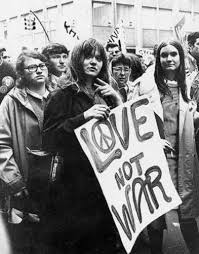
A subgroup that pushes back on the mainstream culture in an attempt to change how society functions is known as the:
Subgroup
Radical Culture
Counterculture
Marginalized

He spent his lifetime studying relations between African Americans and whites. He was also a founding founder of The National Association for the Advancement of Colored People (NAACP) along with Jane Addams.
Max Weber
W.E.B. DuBois
Karl Marx
Emile Durkheim
Name PIAGET'S FIRST STAGE of development
(a)
Erikson's 8th or last stage of development is called
(a)
The image you have of yourself is based on various assessments you’ve made.
(a)
”I” – impulsive, raw desires & emotions
“Me” – how we learn to act & think from socialization
Ongoing conversation
TRUE
FALSE
“Front stage” – performing for society, general others
TRUE
FALSE
“Backstage” – real self, around significant others
TRUE
FALSE
Preparation and practice to enter a role one expects to take on in the future.
(a)
Sociologist Mead has 2 stages of development
TRUE
FALSE
According to the originator Alison Bechdel, the three rules to pass the BECHDEL test are:
The movie must have at least two women in it.
The women must talk to each other.
Their discussion must be about something other than a man.
TRUE
FALSE
The regulation and enforcement of norms
social control
social order
compliance
conformity
The act of matching attitudes, beliefs, and behaviors to group norms
compliance
conformity
social control
social order
Rewards given for conforming to norms
Formal sanctions
Negative sanctions
Informal sanctions
Positive sanctions
The first stage of culture shock is:
Distress
Honeymoon
ReIntegration
Adaptation
The fourth stage of culture shock is:
Adaptation
Honeymoon
Independence`
Distress
Words, gestures, images, sounds, objects,
events, or parts of the natural world that
represent a group of people and having
meaning
Language
Symbols
Material Culture
Behaviors, beliefs, and characteristics of a particular social, ethnic, or age group
government
economy
culture
Language is not considered a component of culture.
True
False

People who share the same language and live in the same area can have a different culture:
True
False

Shaking hands when you meet someone is an example of a/an:
Formal Norm
Informal Norm

A speed limit sign is an example of a/an:
Formal Norm
Informal Norm
Unofficial aspects of culture that children are taught in school
Examination of large-scale patterns of society
MICRO or MACRO LEVEL
(a)
Examination of small-scale patterns of society
MICRO or MACRO LEVEL
(a)
BONUS QUESTION - 5 POINTS:
He spent his lifetime studying relations between African Americans and whites. He was also a founding founder of The National Association for the Advancement of Colored People (NAACP) along with Jane Addams.
Max Weber
W.E.B. DuBois
Karl Marx
Emile Durkheim

A refocus in history and society on the contributions of Africans and African-Americans is known as:
Afrocentrism
Egocentrism
Eurocentrism
Multiculturalism
Which of the following best describes deviance?
crime
behaviors that are viewed as a violation of societal norms
behaviors that result in a severe punishment or crime
None of the above
Which sociological perspective asserts that the richest, most powerful members of society decide who is and who is not considered deviant?
Functionalism
Conflict Theory
Symbolic Interactionism
Structuralism
The title given to people like Carnegie who invested their money to start businesses, such as his steel monopoly.
Entrepreneurs
Nativists
Philanthropists
Populists
What is Andrew Carnegie known for?
Oil Company
Steel Company
Automobile Company
Railroad Company
How did Cornelius Vanderbilt build his wealth?
Automobile Industry
Railroad and Shipping Industry
Oil Industry
Steel Industry
What company did John D. Rockefeller start that made him an industrial capitalist?
Premium Oil
Rockefeller Oil
American Oil
Standard Oil

