
 Worksheets
YS 9 2nd quarter
Total questions: 88
Worksheet time: 55mins

After His baptism, where did Jesus go?
wilderness
mountain
seaside
temple

How long had Jesus gone without eating?
7 days
14 days
30 days
40 days

How did Satan suggest Jesus get food?
to turn the stones into bread
to go to market and buy bread
to ask the disciples to bring Him bread
to ask for bread from heaven

Where did Satan take Jesus next and ask Him to jump?
top of the mountain
highest spot of the temple
highest peak of Mt Everest
top of a tree

What did Satan offer Jesus if Jesus would worship Satan?
money
beautiful house
power over all of the kingdoms
riches

Jesus' death on the cross defeated S____ and D____.
Sin and
Death
Self
Denials
Satan and
Devils
Sacrifice and
Desires

If someone would offer you something that you like very much in exchange for something you know is a sin, would you do it? Why?
Temptation comes when we are planning to do good.
TRUE
FALSE
Satan always uses what is pleasing, desirable and convenient to us.
TRUE
FALSE
Who led Jesus to the wilderness?
Satan
John the Baptist
The Holy Spirit
How did Jesus overcome Satan?
By his might
By the Word of God
By the sword
Who came to comfort Jesus after the devil left Him?
His disciples
Moses
Angels
What must we do to be able to meet temptations?
Study computer
Study BIBLE
See T V
Study book
Before being tempted by the devil; what was Jesus doing?
Fishing
Teaching
Meditating
Fasting
What is Fasting?
Meditating on the things you have done.
Abstaining from food (or some other necessity)
Praying to God on a daily basis.
Having fun doing whatever.
What is temptation?
Doing what is right?
one's desire to something that we shouldn't
Following the things that we believe what is right
Actions that we don't do because it's not right
Which among of this actions DO NOT APPLY in overcoming temptations?
Doing what is right
Listening to parents and teachers
Praying and asking forgiveness
Following the actions whether it is right or wrong

Jesus' first reply to Satan was
‘Man shall not live on bread alone, but on every word that comes from the mouth of God.’
“It is also written: ‘Do not put the Lord your God to the test.’
Away from me, Satan! For it is written: ‘Worship the Lord your God, and serve him only'
Complete this statement, facing temptation is not
good
bad
decent
a sin
One of the lessons from the temptation of Jesus is
the usage of God's words
relying on the power of the word of God
acting out God's words
all of the above
Christians should always use and act on the words of God to overcome temptation
occasionally
rarely
sometimes
none of the above
Overcoming temptation can be possible through the use of
God's words
anointing oil
knowing bible characters
all of the above
According to the texts, what did Jesus emphasize as crucial for resisting temptation?
Personal strength and resolve
Trust in God's promises and word
Avoidance of risky situations
Seeking advice from others
What lesson did Jesus teach by refusing to turn stones into bread?
Trusting in God's provision
Asserting His divine power
Avoiding physical harm
Demonstrating humility
Reflection Question
Reflect on how you can apply the lessons from Jesus' temptations in your own life. How can relying on God's word help you overcome challenges and lead a successful life?
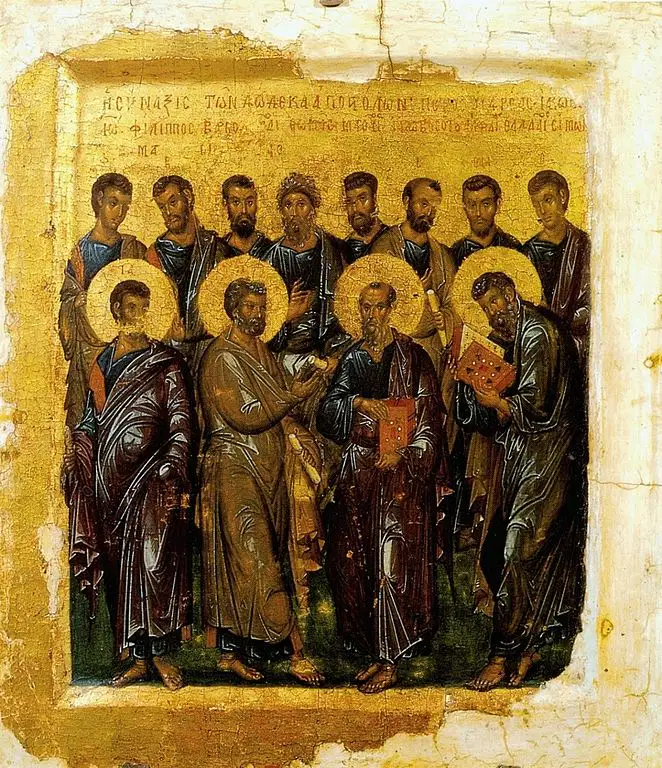
St. Peter
St. John
Judas Iscariot
St. Andrew

Mark
Matthias
Matthew
Simon

Peter
Bartholomew
James
Thomas

Peter
Paul
Matthew
Simon

Matthew
Andrew
John
Bartholomew

Matthias
Jude Thaddeus
Bartholomew
Philip

John
James the Greater
James the Lesser
Philip

Judas
Jude
Matthias
Matthew

Philip
Andrew
John
Peter

Who did Jesus commissioned to be His witnesses to the ends of the earth?
Humans
Apostles
Disciples

The apostles were commanded to __________, __________, and ____________.
to make disciples
to travel
to proclaim the Good News
to baptize
They are one who is sent; one given a mission by God
Disciples
Apostles
Evangelists
Prophets
He was know a Christian persecutor before he can his conversion and change his former name Saul.
Saul
Paul
Peter
Simon

Whose symbol is this?
x-shaped cross and two fish
(a)

Whose symbol is this?
Inverted Cross and Crossed keys
(a)

Whose symbol is this?
Winged Man or an Angel and 3 bags of money
(a)
Define term parable.
A heavenly story with an earthy meaning.
A short story Jesus told with a lesson.
An earthly story with a heavenly meaning.
What is the central theme of Jesus’ preaching?
Divinity
Kingdom of God
Resurrection
Blessings and healings
Parables are small stories with big __________
kingdoms
lessons
characters
problems
Jesus used parables to confuse the_________________ leaders of his day.
foreign
religious
earthly
Why did Jesus teach in parables?
Parables are simple teachings that lack creativity
Parables were the unique miracles and healing acts of Jesus
Parables were taught by the Roman Empire so Jesus was familiar with this style of teaching
Parables "tease" the mind into active thought and allows us to change our perceptions about reality
What is the difference of parables and fables?
Parables tend to be more spiritual while fables tend to be political
Parables use events and characters that represent an abstract idea while fables are just stories
Parables use ordinary characters while fables use animals
Parables have a moral lesson, fables do not
What do we learn from The lost sheep parable?
That being shepherd is difficult
That sheeps tend to run away
That 100 sheeps are a lot
That we are all important to God
The Kingdom of God is
a specific place
made real when we live God's rule of love and goodness
a place where the devil also lives
nowhere where the children of God are
Jesus does not just tell us about the Kingdom, he shows us how
we should live our lives
we should eat
we should get married
we should earn a living
This parable’s lesson taught that it only takes a little faith to accomplish anything.
Parable of The Great Pearl
Parable of The Sower
Parable of The Mustard Seed
The Parable of the Good Samaritan
This parable’s lesson taught that a person may have to give up all they have in order to enter the kingdom of Heaven
Parable of The Great Pearl
Parable of The Leaven
Parable of The Mustard Seed
The Parable of the Good Samaritan

In the parable of the good Samaritan, what was Christ trying to teach?
In the parable of the good Samaritan, what was Christ trying to teach?
That the priests and the Levites had become corrupted
That the priests and the Levites had become corrupted
That everyone is our neighbor

In the parable of the sower, what did the seeds that fell on the way side represent?
Those who heard the word and followed it, but shortly afterward fell away
Those that did not have the chance to hear the word
Those that heard the word, and followed it
Those that do not understand the word of God

In the parable of the sower, what did the seeds that fell in thorny places represent?
Those whose lives were too busy to hear the word
Those who would be trampled down by the difficulties in life
Those that heard the word, but were caught up by the riches of the world
Those who did not want to hear the word

In the parable of the ten virgins, what was Jesus trying to teach?
That no one can be ready for when He comes
That God does not know us
That all must be ready for when He comes
That sharing is not correct
In the Parable of the Prodigal Son, what is the main message about the father's character?
He is strict and unforgiving
He represents God's unconditional love
He favors the younger son
He shows favoritism between his children
In the Good Samaritan story, who showed true neighborly love?
The priest who passed by
The temple worker
The Samaritan traveler
The robbers
What does the Parable of the Talents teach about using our gifts?
Keep them safe and unused
Use them to serve others
Give them away
Hide them until later
In the Parable of the Sower, what does the seed represent?
Money and wealth
God's Word
Physical food
Farming techniques

What should you do when you hear or read God's Word?
Take it to your heart, follow and share it to other people
Ignore it
Listen and then forget it
Do not believe on it
What is the central theme of Jesus’ preaching?
Divinity
Kingdom of God
Resurrection
Blessings and healings
In a healing miracle someone is________.
someone is brought back to life
cured
demons are cast out
it is done using the elements of nature
In a resurrection miracle ________.
someone is brought back to life
cured
demons are cast out
it is done using the elements of nature
In a nature miracle ________.
someone is brought back to life
cured
demons are cast out
it is done using the elements of nature
In a exorcism miracle ________.
someone is brought back to life
cured
demons are cast out
it is done using the elements of nature
Why did Jesus Perform Miracles?
To do showoff and glorify his name
To give message to people to believe
To get attention of people
Jesus Miracles gives us ___________ of Gods saving presence and action in the world.
Jesus glorification
Signs
Jesus Power
What are the 2 Purposes of the Miracles? (2 are correct)
To announce the Kingdom of God
To learn about the life of Jesus
To invite people to participate in the Kingdom of God
To sing God's praises through the miracles performed by Jesus
Jesus healed a leper using the Power over?
Harry Potter
disease
Narnia
nature
Jesus raised the son of a widow using the power over
Zeus
Matilda
demons
death
How did Jesus calm the storm?
He did a tik toc dance
He used the power over nature
He didn't
he used the power over disease
Jesus fed 5000 people with _______ Fishes and _______ loaves of bread
60, 40
2, 5
Popeyes Chicken Sandwiches
Wendy's 4 for 4
Jesus walked on the Sea of Galilee using
The new LeBron's from Nike
Power over nature
He was wearing a Pair of Jordan's
He split the sea and walked on the bottom
How did Jesus give sight to a blind man?
He gave him some new Sunglasses
Power over disease
He gave him some contact lenses
Power over death
Which of the following is NOT a category of miracles?
Healing
Nature
Miracles of food
Exorcisms
Bring the dead back to life
Of the following miracles, which is your favorite?
Raising of Lazarus
Multiplication of the loaves and fishes
healing of the blind man
healing of the 10 lepers
calming of the storm
Miracle that shows Mary can intercede for us with Jesus her son, and that providing abundance is a sign of God's presence.
The Wedding Feast of Cana
Stilling a Storm
miracle
Truth learned from Jesus's miracles: the law of love
nature, sin, sickness, Satan, and death
The Wedding Feast of Cana
Miracles show Jesus's power over
parables vs miracles
Truth learned from Jesus's miracles: The Kingdom of God
Answer the following questions in 2-3 sentences.
1. How will you strengthen your faith in God?
2. Do you believe in miracles? if you do, share an experience of a miracle you have encountered. If not, how do you think God intervenes in your life.?
Answer the following questions in 2-3 sentences.
3. Why do you think it is important to have faith in God and be His disciple?
4. Explain the three aspect of faith (paniniwala, pagsunod, pagtitiwala) through your own experiences.
Read Romans 8:28. Considering the suffering of the apostles, what does this tells you about God's purpose for suffering and how does it give you hope in your own suffering and mission?
The one who helped the victim of robbery was a _____.
friend
Levite
priest
Samaritan
The Samaritan represents a person who is _____.
boastful
powerful
helpful
rich
What lesson can we learn from the Prodigal Son about forgiveness and acceptance?
Acceptance requires a change in behavior first.
Forgiveness should be earned through penance.
Forgiveness is only for those who deserve it.
Forgiveness and acceptance can be given freely, regardless of past actions.
What message does the Unforgiving Servant convey about the importance of forgiving others?
Forgiving others only benefits the one who is forgiven.
The importance of forgiving others is crucial, as it reflects the forgiveness we receive and prevents us from facing dire consequences.
Forgiveness is unnecessary and can lead to weakness.
Holding grudges is a sign of strength and resilience.
Which of the following proves Jesus's divinity?
Jesus's physical pain during the crucifixion
His friendships
His miracles

