
 Worksheets
DNA Review (Bonus)
Total questions: 35
Worksheet time: 23mins
Deoxyribose is classified as a(n)
protein
enzyme
5 carbon sugar
nitrogen base
Which of the following is a pair of complementary bases?
cytosine and cytosine
cytosine and guanine
adenine and guanine
thymine and cytosine
The sides or backbone of DNA is made of ______________.
single nucleotides
pairs of nucleotides
joined sugars and phosphates
joined nitrogen bases & phosphates
Suppose that a strand of DNA has the following sequence of bases: TTTGGC. What sequence of bases will the complementary strand of DNA have?
AAACCG
TTACCG
GGCAAT
TTTCCG
If DNA had 20% cytosine, what percentage of thymine should be present?
30%
15%
60%
90%
At the end of the replication process, each of the two new DNA molecules is composed of which of the following?
two new DNA strands
one new and one original DNA strand
one new and one mutated strand
two original DNA strands
Complementary base pairing links
amino acids
phosphate groups
proteins
nitrogenous bases
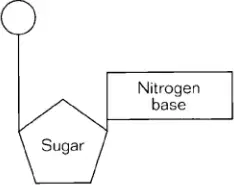
The entire molecule shown in the diagram below is called a(n)
amino acid
nucleotide
polysaccharide
pyrimidine
Hydrogen bonds - click all that apply
hold nitrogen bases together
are broke by helicase
hold the sugar and phosphates together
form ester linkages
Which process takes place before mitosis?
DNA replication
chromosomes line up in the middle of the cell
spindle fibers attach to chromosomes
crossing over
In prokaryotes, DNA is located in the (a) while in eukaryotes DNA is located in the (b) .
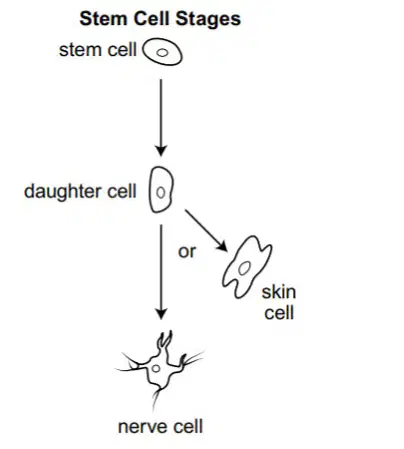
Which processes demonstrated by the model allow a single cell to produce skin cells and nerve cells that all contain the same DNA - select all that apply?
mitosis
differentiation
meiosis
nondisjunction
Which characteristic of DNA makes it most suitable as a molecule for this role?
Stability
Replication
Information storage
Mutation
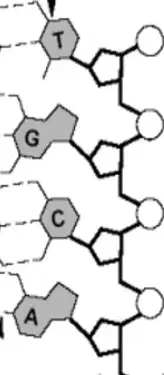
What would the complementary strand for this DNA molecule be?
ACGT
AGGT
UCCU
AGGU
What “shape” is DNA?
double helix
triple helix
linear
double sided and circular
Put the steps of DNA replication in order.
New hydrogen bonds form between the nitrogen bases
3
DNA polymerase adds new nucleotides
2
DNA helicase “unzips” the helix at many origins
1
Two strands of DNA are created
4
Based on semiconservative replication, DNA is replicated with radioactive nucleotides. How many of the daughter cells will be radioactive?
The first daughter cell
The second daughter cell
Both daughter cells
Neither daughter cell
Label the nucleotide
Phosphate
Sugar
Nitrogenous base
Select ALL the Phosphate Group
Select ALL the NITROGEN BASES in the picture (4 total)
What is the role of helicase in DNA replication?
It unwinds the DNA double helix
It synthesizes new DNA strands
It adds nucleotides to the growing DNA strand
It joins Okazaki fragments
Which enzyme is responsible for adding nucleotides to the growing DNA strand during replication?
Primase
DNA polymerase
Helicase
Ligase
Adenine pairs with
Thymine
Thyme
Guanine
Glutamine
What does semiconservative replication mean?
that the DNA is proof read at the end of the process
that the newly made DNA has one strand from the original DNA and one new strand
that the newly made DNA will send half of its strand to one cell and leave the old strand in the original cell
that the original DNA strands come back together after replication is over

#1
Backbone
Deoxyribose Sugar
Nucleotide
Phosphate
#2
Covalent Bond
Hydrogen Bond
Nucleotide
Phosphate
#6
Ribose Sugar
Deoxyribose sugar
Monosaccharide
Phosphate

AATCATGGA
Which statement best describes how DNA replication results in
the conservation of genetic information?
Enzymes associated with DNA replication are used over and over by the cell
Each strand of DNA serves as a template for a new strand during DNA replication.
Nucleic acids linked to sugars twist in a specific pattern
Random shuffling of DNA base pairs maintains the base pair ratios
In Griffith and Avery's experiments, which of these molecules WAS responsible for transformation?
nucleic acids
carbohydrates
lipids
proteins
In prokaryotes, DNA is located in the ___ while in eukaryotes DNA is located in the ___.
cytoplasm; nucleus
mitochondria; chloroplast
nucleus; cytoplasm
chloroplast; mitochondria
Complementary base pairing links
amino acids
proteins
phosphate groups
nitrogenous bases
(a) are segments of (b) that code for a (c) and therefore determine a (d) . This is called (e) .

