
 Worksheets
Ancient Civilizations (through January)
Total questions: 104
Worksheet time: 1hrs 14mins

Which of the following was a significant function of the Great Wall of China?
serve as a boundary marker for the Chinese empire
protect the Chinese empire from the Mongolians and other invaders
act as a ceremonial site for ancient rituals
facilitate trade with neighboring countries
What was the Silk Road?
trade routes from the East to the Western Mediterranean
a single path a Chinese trader followed to reach India and Arabia
a combination of sea and land routes that led from Beijing to the Himalayas
a road made of silk from central China to the Middle East

Which product was NOT exchanged on the Silk Road?
silk
plastic
exotic animals
spices
Many items from different cultures, such as pottery or tools, have been found in other places around the world throughout history because of the existence and exchange of goods along international trade routes connecting Asia and Europe. This is called Cultural Diffusion.
True
False
According to the Mandate of Heaven, what happened if a ruler became corrupt and governed poorly?
If a ruler governed poorly, heaven withdrew its support and the ruler lost power by being overthrown by another dynasty.
Children had to respect their parents and other elders, and place the needs/desires of the head of the family before their own
Filial piety
Mandate
Huang He
Daoism
Surgery in ancient India was an important contribution because it gave doctors a way to repair damaged body parts.
True
False
Which of these are mathematical contributions created by the Gupta Empire? (Choose 2 Correct Answers)
Gupta mathematicians created calculus and trigonometry.
Gupta mathematicians created the Concept of Zero
Gupta mathematicians created number symbols 0-9
Gupta mathematicians discovered the last number of pi
According to Buddha's teaching of the Four Noble Truths, what is the first and most basic idea of his teachings?
All people suffer.
People suffer because they want to.
According to Buddha's teaching of the Four Noble Truths, why do all people suffer?
All people suffer because they desire things and self-satisfaction.
The Eightfold Path is...
A path with 8 turnings which Siddhartha Gautama has to choose from
The name of a famous Buddhist pop group
The way Buddhists can achieve enlightenment and freedom from human suffering
Something that Buddhists must do every day
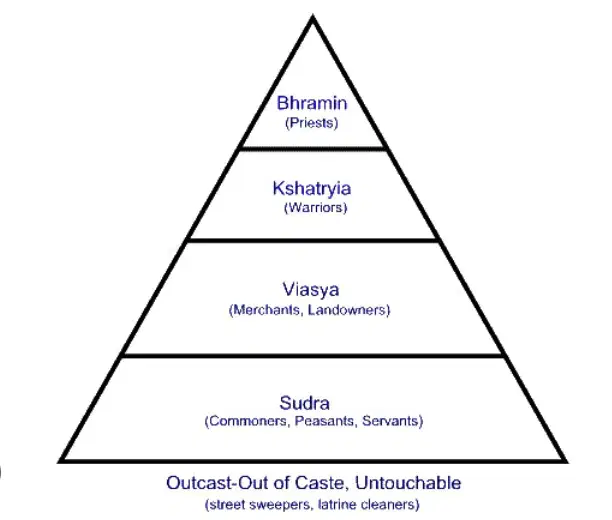
In the Hindu religion, people could be reincarnated into a different caste depending upon their actions in the previous life.
True
False
How did the Mandate of Heaven affect government in China?
It led to long periods of war among families.
Religious leaders read oracle bones to select new rulers.
The ruler received a direct mandate from heaven that he should resign.
It allowed new rulers to justify the overthrow of a previous declining dynasty.
Founder of Judaism, a monotheistic religion different from all others. He led his family from Ur to Canaan in obedience to God's command.
Ramses
Paul
Moses
Abraham
Filial Piety
respect for one's elders, parents, older siblings
animal worship
Worship of Gods
Major contribution of the Chinese
ink
paper
books
paint

What change began the Neolithic Age?
hunting
farming
trading
building
Once people started farming,...
they lived farther apart.
they lived in smaller communities.
they lived closer together and community populations grew.
Polytheistic Societies (Check all that apply):
Egypt
China
Indus Valley (India)
Israel/Hebrews
Mesopotamia
What did the process of mummification teach the Egyptians?
human body, surgery, and science
astronomy and math
Buddhists believe you need to follow this "road map" to have a chance of becoming enlightened:
The Vedas
The Four Noble Truths
The Eightfold Path
The Caste System

What is monotheism?
a disease which spread by animal contact
the belief in many gods
the belief in only one god
What developments emerged during the late empire of ancient India? (Choose 2.)
new medical techniques and medical education in things such as tooth removal, herbal remedies, and resetting broken bones
new mathematical advancements such as Hindu-Arabic numerals for the numbers 0-9
new military techniques that allowed the Gupta Empire to conquer China
new religions that were monotheistic and promised an afterlife for people who lived good lives
Nirvana played their first rock concert to sold-out venues across India.
Which ancient civilization is known for its use of irrigation?
Mesopotamia
Hebrews
Phoenicians
Which ancient civilization is known for Hammurabi's Code?
Phoenicians
Mesopotamia
Hebrews
Egypt
Which ancient civilization is known for its city-states?
Mesopotamia
Hebrews
Phoenicians
Egypt
Which ancient civilization is known for its use of cuneiform?
Hebrews
Phoenicians
Egypt
Mesopotamia
Which ancient civilization is known for its use of hieroglyphics?
Phoenicians
Hebrews
Egypt
Mesopotamia
Which ancient civilization is known for its pyramids?
Egypt
Mesopotamia
Hebrews
Phoenicians
Which ancient civilization is known for its pharaohs?
Mesopotamia
Egypt
Phoenicians
Hebrews
Which ancient civilization is known for its use of the alphabet?
Hebrews
Phoenicians
Egypt
Mesopotamia
Which ancient civilization is known for its monotheistic religion?
Mesopotamia
Hebrews
Phoenicians
Egypt
Which ancient civilization is known for the Ten Commandments?
Mesopotamia
Egypt
Phoenicians
Hebrews
Which ancient civilization is known for its ziggurats?
Mesopotamia
Egypt
Phoenicians
Hebrews
Which ancient civilization is known for its use of papyrus?
Hebrews
Phoenicians
Egypt
Mesopotamia
Which ancient civilization is known for its sphinx?
Egypt
Mesopotamia
Hebrews
Phoenicians
Which ancient civilization is known for its mummification process?
Egypt
Mesopotamia
Hebrews
Phoenicians
Which ancient civilization is known for its epic of Gilgamesh?
Phoenicians
Mesopotamia
Hebrews
Egypt
The Nile River was important to Ancient Egyptians for all of the following reasons except
it created new jobs
it helped with trade
it provided food
it helped discovoer bronze tools
Having a form of writing was important for early civilizations for all of the following reasons except
document culture and history
document goods for trade and economy
communication
the development of new tools

Assyrians were known for treating their enemies and people captured well.
True
False

What two city-states developed in India during ancient period?
Asoka & Harappa
Baghdad & Mohenjo-Daro
Tigris & Memphis
Harappa & Mohenjo-Daro

Who was the founder of Buddhism?
Asoka
Siddhartha Gautama
Vishnu
Shiva
Which is the oldest civilization
Mesopotamia
Chinese
Egyptian
Indus
Which civilizations built pyramids?
Mesopotamians
Indus
Chinese
Egyptian
Which civilizations did the Mesopotamians trade with?
Europeans
Indus
Chinese
Egyptians
Which civilization invented the wheel?
Mesopotamians
Indus
Chinese
Egyptians
What river is the basis for Egyptian civilization?
Tigris River
Yellow River
Nile River
Indus River
What river is the basis for Indus civilization?
Tigris River
Yellow River
Nile River
Indus River
What river is the basis for Chinese civilization?
Tigris River
Yellow River
Nile River
Indus River
What “paper” did Egyptians write on?
Silk
Papyrus
Mead
Cotton
In what modern day country are the settlements of the Indus River Valley civilization?
Iraq
Saudi Arabia
Pakistan
India

Based on the diagram, Aryans were divided into classes according to their
occupations.
age and place of birth.
religious beliefs.
gender and race.
What does the term "civilization" refer to in the context of early civilizations?
A type of currency used in ancient times
A society or group of people achieving a higher state of social development
A method of farming
A specific architectural style
An "archeologist" is a person who studies:
The structure of the earth's surface
Ancient languages and scripts
Human history and prehistory through the study of sites and artifacts
The evolution of plant species
A primary source is
a book about history
document or physical object which was written or created during the time under study.
a story
These sources are one or more steps removed from the event.
A secondary source
Not very important
interprets and analyzes primary sources. These sources are one or more steps removed from the event.
is written during the time period
is a document or physical object which was written or created during the time under study.
A good example of a secondary source is
The diary of Anne Frank
A history textbook
A poem written during the time period
A work of art from the rennissance era

Which option below includes the two sets of letters that are commonly used to refer to the time before the birth of Jesus Christ?
BC and BCE
AD and CE
BP and AD
BP and CE

What does the term AD mean?
Anno Domini, therefore the years since the death of Christ
Before the Common Era, therefore the years before the birth of Christ
Before the Present, therefore the years before the present moment
Anno Domini, therefore the years since the birth of Christ

Which two terms below refer to time without any direct reference to a specific religion? (tick TWO)
BCE - Before the Common Era
BC - Before Chris
AD - Anno Domini
CE - Common Era
"something that has happened that can be proven " best describes a;
history
fiction
fact
legend
Books, diaries and letters are examples of
Oral sources
factual sources
written sources
opinions
Oral sources may include?
Interviews and stories
saying and telling
books and ancient documents
Credible is
Something real or true
The way someone understands or explains something
Prejudice, or the tendency to favor one side or person
Someone or something that is beliievable or reliable
The G in GRAPES stands for ______________.
Government
Geographical Region
Geography
Global
The R in GRAPES stands for _______________.
Region
Rulers
Retail Industry
Religion
The A in GRAPES stands for ______________.
Achievements
Architecture
Acknowledgement
Asia
The P is GRAPES stands for ____________.
Place
Politics
People
Population
The E in GRAPES stands for ____________.
Environment
Earth
Establishment
Economics
The S in GRAPES stands for _____________.
Social Structure
Struggles
Seas
Services
How the Earth’s surface, climate, and landscape affect lifestyle
Geography
Religion
Social Structure
Achievements
A society’s belief system and its related morals and traditions
Geography
Social System
Achievements
Religion
The lasting works and noteworthy contributions of a society
Politics
Achievements
Social Structure
Economics
The government and power structure of a society and who runs that society
Geography
Religion
Politics
Social Structure
How a society uses its resources, such as goods and money
Economics
Religion
Social Structure
Politics
The organization of people into different levels or classes in a society
Social Structure
Politics
Geography
Religion
For which characteristic of a society is a historian most likely to ask: "What were their places of worship called?"
Geography
Religion
Achievements
Political System
Social Structures
For which characteristic of a society is a historian most likely to ask: "What kind of art, scientific discoveries, inventions, or literature are they famous for?"
Geography
Religion
Achievements
Political System
Social Structures
For which characteristic of a society is a historian most likely to ask: "How did this civilization make money?"
Economy
Religion
Achievements
Political System
Social Structures
For which characteristic of a society is a historian most likely to ask: "Did this civilization have taxes?"
Economy
Religion
Social Structures
Political System
Geography
For which characteristic of a society is a historian most likely to ask: "Were there social classes?"
Economy
Achievements
Social Structures
Religion
Geography

A ________________ is a society with cities, a central government, religion, writing, art, architecture, and workers who specialize in certain jobs leading to social classes.
Civilization
State
Culture
Tribe
Geography refers to the major ______________________ of a place.
regions
landforms
religions
Religion refers to a society's _________.
dress
values/beliefs
foods they eat
Economics refers to how a civilization uses...
goods and services
money
resources
all of the above
An example of achievement is
social classes
democracy
computers
landforms
The US lands the first man on the moon. This is an example of...
Geography
Achievements
Religion
Politics

The Himalayan mountains served as a natural barrier between India and other nations. This natural barrier protected the ancient Indians from foreign invaders. Which category does this fall under?
Geography
Religion
Economy
Social Structures

In ancient India, people were organized into categories by how important they were in society (see image). What category would this be under?
Geography
Religion
Achievements
Politics
Social Structures/Society
The Egyptians prayed to the gods daily for many blessings. Which category would this go under?
Geography
Religion
Achievements
Politics
Social Structures

The image here represents what historical theme?
Geography
Achievement
Religion
Political
In ancient Mesopotamia, Hammurabi the king, made laws to rule the land. One of his laws was that if a child struck his parents, the child's hands would be cut off. Which category does this fall under?
Geography
Religion
Politics
Achievements

