wayground logo

Free Printable Worksheets

Font size

S
M
L
XL
Worksheets

DNA, RNA, and DNA Replication

Total questions: 40

Worksheet time: 26mins

Name
Class
Date
1.
Which sequence of DNA bases would pair with this partial strand
ATG TGA CAG
a)
ATG TGA CAG
b)
TAC ACT GTC
c)
GTA AGT GAC
d)
CAT TCA CTG
2.
Which of the following best describes a DNA molecule?
a)
double helix
b)
contains ribose
c)
made of amino acids
d)
contains Uracil
3.
In a molecule of double-stranded DNA, the amount of Adenine present is always equal to the amount of
a)
cytosine
b)
guanine
c)
thymine
d)
uracil
4.
Adenine bonds with ______________.
a)
Guanine
b)
Thymine
c)
Cytosine
d)
Adenine
5.
Guanine bonds with ______________.
a)
Adenine
b)
Guanine
c)
Cytosine
d)
Thymine
6.
Why is DNA important?
a)
it is very small and very complicated
b)
it's in everything
c)
it serves as the blueprint for traits of all living things
d)
because we eat it every day for energy
7.
Which 2 molecules form the sides (backbone) of the DNA ladder?
a)
deoxyribose sugar and adenine
b)
deoxyribose sugar and a hydrogen bond
c)
deoxyribose sugar and the nucleus
d)
deoxyribose sugar and phosphate
8.
Which organelle is DNA usually found in?
a)
cell membrane
b)
vacuole
c)
chloroplast
d)
nucleus
9.
Nitrogenous bases are joined by which type of bond?
a)
polar bonds
b)
ionic bonds
c)
covalent bonds
d)
hydrogen bonds
10.
The enzyme that unzips the DNA to prepare for replication
a)
helicase
b)
replicase
c)
polymerase
d)
synthase
11.
DNA replication results in two DNA molecules,
a)
each one with two original strands
b)
each one with two new strands
c)
each one with one new strand and one original strand
d)
one with two new strands and the other with two original strands
12.
What is the correct complimentary strand for the following DNA?ATCGAG
a)
TACGAG
b)
ATCGAG
c)
TAGCTG
d)
TAGCTC
13.
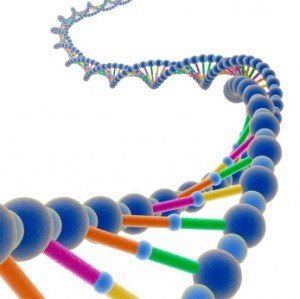
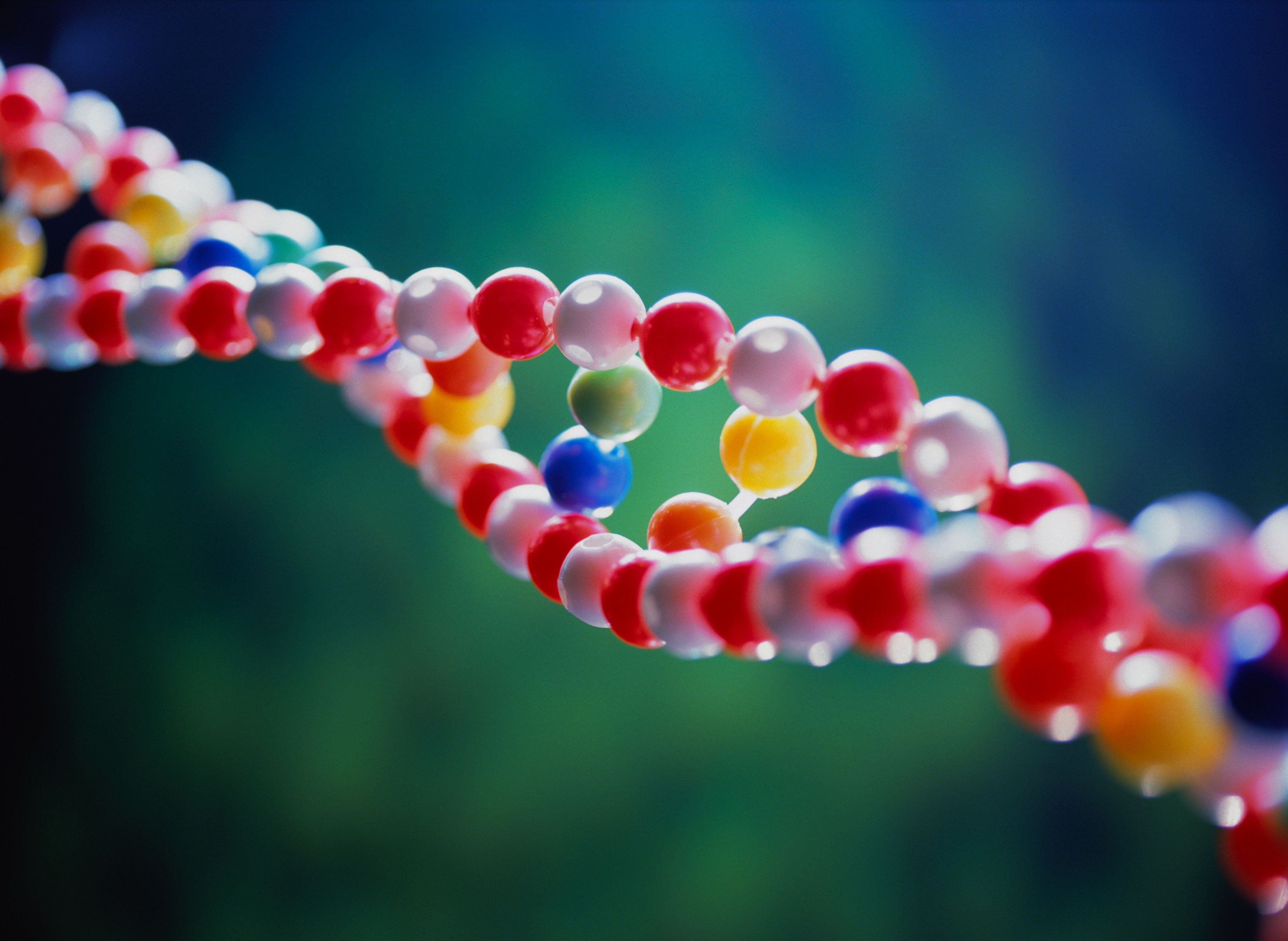
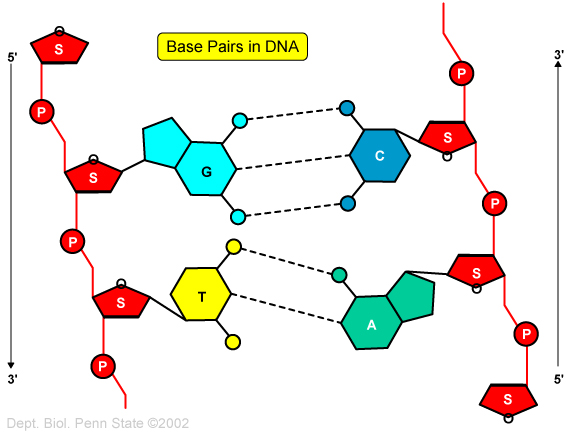
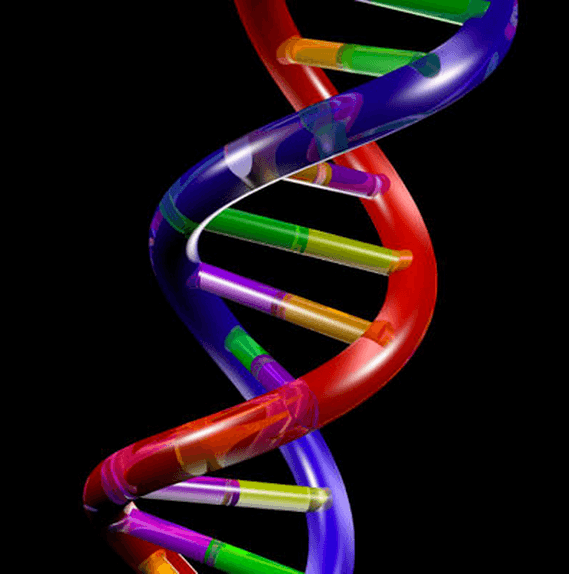
The drawing shows the structure of what molecule?
a)
A DNA molecule
b)
A lipid molecule
c)
A carbohydrate molecule
d)
A protein molecule
14.
In what phase of the cell cycle does DNA replication take place?
a)
G1
b)
S
c)
G2
d)
M
15.
Which enzyme is responsible for adding nucleotides ("The Builder")?
a)
Topoisomerase
b)
DNA Polymerase
c)
Ligase
d)
Primase
16.
Why is it crucial that living things are able to replicate their DNA?
a)
Each cell must have its own DNA
b)
Less copies of DNA are needed when a new cell is created
c)
A cell needs multiple copies of DNA
d)
Only muscle cells need DNA 
17.
The DNA is found in the nucleus of what type of organisms?
a)
Bacteria
b)
Eukaryotes
c)
Prokaryotes
d)
Viruses
18.

The two strands of DNA are

a)

Parallel

b)

Antiparallel

c)

Perpendicular

d)

At Right Angles

19.

What is the primary function of DNA polymerase during DNA replication?

a)

To unwind the DNA helix

b)

To add nucleotides to the growing DNA strand

c)

To seal gaps between Okazaki fragments

d)

To synthesize RNA primers

20.

During DNA replication, which enzyme is responsible for synthesizing the RNA primer?

a)

Helicase

b)

Ligase

c)

Topoisomerase

d)

Primase

21.

What is the role of helicase in DNA replication?

a)

To join Okazaki fragments

b)

To synthesize RNA primers

c)

To unwind the DNA double helix

d)

To add nucleotides to the growing DNA strand

22.

Which of the following nitrogenous bases is not found in DNA?

a)

Cytosine

b)

Uracil

c)

Thymine

d)

Adenine

23.

What is the sugar component of the DNA backbone?

a)

Glucose

b)

Ribose

c)

Deoxyribose

d)

Fructose

24.

What is the function of RNA?

a)
Storing genetic information in the nucleus
b)
Carrying instructions from DNA for controlling the synthesis of proteins
c)
Producing energy for the cell
d)
Regulating cell metabolism
25.

What nucleotides are the components of DNA?

a)
Adenine, Thymine, Cytosine, Guanine
b)
Adenine, Thymine, Cytosine, Adenosine
c)
Thymine, Uracil, Cytosine, Guanine
d)
Adenine, Uracil, Cytosine, Guanine
26.

What nucleotides are the components of RNA?

a)
Adenine, Thymine, Guanine, Uracil
b)
Adenine, Cytosine, Thymine, Uracil
c)
Adenine, Cytosine, Guanine, Thymine
d)
Adenine, Cytosine, Guanine, Uracil
27.

What is the structure of RNA?

a)
Made up of amino acids
b)
Single-stranded molecule composed of nucleotides
c)
Composed of sugar and phosphate molecules
d)
Double-stranded molecule composed of nucleotides
28.

Define tRNA

a)
Transfer RNA
b)
Tandem RNA
c)
Thymine RNA
d)
Total RNA
29.

Define mRNA

a)
messenger RNA
b)
micro RNA
c)
ribosomal RNA
d)
transfer RNA
30.

What is the function of tRNA?

a)
Transports lipids to the nucleus
b)
Regulates blood sugar levels
c)
Assists in oxygen transport in the blood
d)
Carries amino acids to the ribosome during protein synthesis
31.

What is the function of mRNA?

a)
Regulates cell division
b)
Stores energy for the cell
c)
Transports oxygen in the blood
d)
Carries genetic information from DNA to the ribosomes
32.

Which biomolecule is RNA?

a)

Protein

b)

Carbohydrate

c)

Lipid

d)

Nucleic acid

33.
How does RNA differ from DNA?
a)
RNA contains uracil and deoxyribose
b)
RNA contains ribose and thymine
c)
RNA contains uracil and ribose
d)
RNA contains adenine and ribose
34.
In RNA, Uracil pairs with ______. 
a)
cytosine
b)
adenine
c)
guanine
d)
thymine
35.
What are the three components of a nucleotide?
a)
sugar, hydrogen, nitrogen base
b)
sugar, oxygen, nitrogen base
c)
sugar, phosphate, nitrogen base
d)
sugar, phosphate, protein
36.
The sugar in RNA is ____________________.
a)
deoxyribose
b)
ribose
37.
The process of DNA replication is called semi conservative because it results in
a)
none of these
b)
Two DNA molecules.  One original molecule and one with two new strands
c)
two exact copies with new strands
d)
two identical molecules, each with 1 original strand and one new.
38.
What determines the code, or information, of a DNA molecule?
a)
the shape (structure) of the nitrogen bases
b)
the order (sequence) of the nitrogen bases
c)
the color of the nitrogen bases
d)
the frequency (number) of nitrogen bases
39.
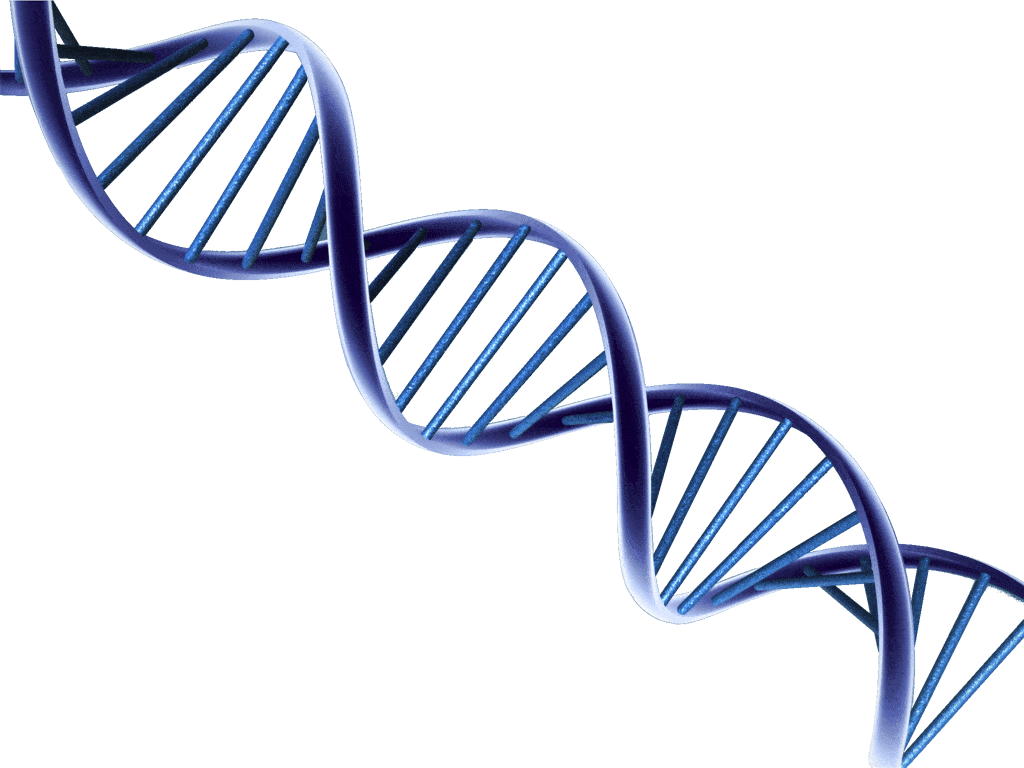
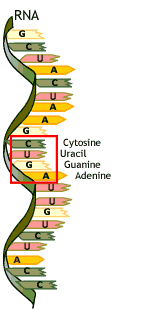
The following picture must be
a)
DNA because it's double stranded
b)
RNA because it's single stranded
c)
DNA because it's single stranded
d)
RNA because it's double stranded
40.

What are the complementary RNA bases for the DNA bases A, T, T, G, A, C?

a)

U, A, A, C, U, G

b)

A, U, U, C, A, G

c)

U, T, T, G, U, C

d)

A, T, T, G, A, C