
 Worksheets
Turbine Engine Diagram and Parameters
Total questions: 100
Worksheet time: 8hrs 20mins

Refer to Figure 1. Fill in the blank: The section labeled 'Air Inlet / Compressor' is responsible for increasing the ______ of the incoming air.
pressure
temperature
velocity
volume

Refer to Figure 1. Fill in the blank: The 'Combustion' section is where the air-fuel mixture is ______.
ignited
cooled
compressed
exhausted
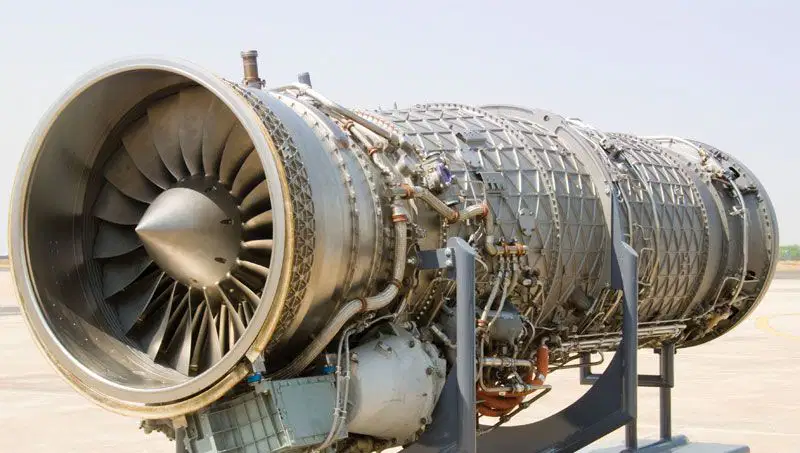
Refer to Figure 1. Fill in the blank: The 'Turbine' section extracts energy from the ______ gases.
exhaust gas from combustion chamber
inert gas from bleed air
compressed air from first stage baffle
liquid sprayed on the 1st stage turbine

Fill in the blank: The 'Exhaust' section is where the gases are expelled at high ______.
velocity
Medium temperature
High ratios
volume

Which section of the turbine engine is responsible for compressing the air?
Compressor
Turbine
Combustor
Nozzle
State the purpose of the diffuser in a turbine engine.
To increase the velocity of the airflow entering the combustion chamber.
To decrease the velocity of the airflow and increase its pressure before entering the combustion chamber.
To cool down the airflow before it enters the combustion chamber.
To filter out impurities from the airflow before it enters the combustion chamber.
State the purpose of the combustion chamber in a turbine engine.
To compress air before it enters the turbine
To ignite the fuel-air mixture and produce high-pressure, high-velocity gas
To cool the engine components
To reduce noise produced by the engine
The pressure drops slightly or remains constant in the combustion section of a turbine engine because:
the combustion process consumes pressure.
the design of the engine maintains pressure.
the pressure is regulated by external systems.
the combustion section is sealed tightly.
The two basic sections of a turbine engine are:
Compressor and Turbine
Intake and Exhaust
Combustion Chamber and Nozzle
Fuel Tank and Engine Block
What are the two basic types of compressors that are used in aircraft turbine engines?
Centrifugal and Axial
Reciprocating and Rotary
Screw and Scroll
Piston and Diaphragm
The purpose of the stators in an axial-flow compressor is to:
Increase the velocity of the airflow
Decrease the pressure of the airflow
Convert kinetic energy into pressure energy
Guide the airflow to the next stage
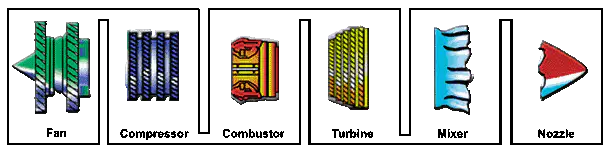
The three types of combustors used on aircraft turbine engines are:
Can-annular, annular, and reverse flow
Tubular, annular, and can-annular
Reverse flow, tubular, and can-annular
Annular, can-annular
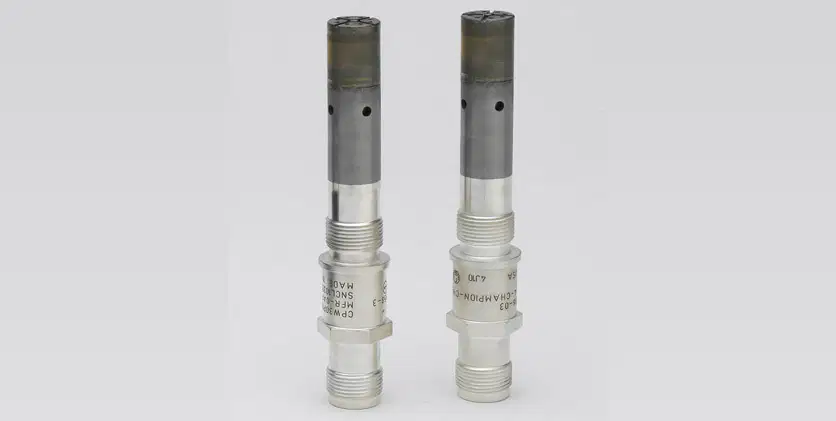
How many igniters are there normally in an aircraft turbine engine?
One
Two
Three
Four
What is meant by a free-turbine turbo shaft engine?
A type of engine where the turbine is mechanically connected to the compressor
A type of engine where the turbine is not mechanically connected to the compressor
A type of engine used only in helicopters
A type of engine that operates without a turbine
What kinds of bearings are used to support the rotor shaft of an aircraft turbine engine?
Ball bearings
Roller bearings
Magnetic bearings
All of the above
A turbofan engine is a type of:
jet engine
rocket engine
piston engine
electric engine
Where can you find the limits of repair allowed for the compressor blades of an aircraft turbine engine?
In the aircraft engine maintenance manual
In the engine manufacturer's service bulletin
In the aircraft's flight manual
In the pilot's operating handbook
Why is it important that a turbojet engine be allowed to cool before it is shut down after it has been operated at a high power setting?
To prevent thermal shock and damage to engine components
To ensure fuel efficiency
To maintain optimal thrust
To reduce noise pollution
A hung start in a turbine engine is:
a condition where the engine fails to reach idle speed.
a situation where the engine starts but then shuts down immediately.
a scenario where the engine operates at maximum speed.
a condition where the engine does not start at all.
A hot start in a turbine engine is:
when the engine starts with excessive temperature
when the engine fails to start
when the engine starts with low fuel
when the engine starts with high pressure
At what point in a turbine engine is the temperature the highest?
At the compressor inlet
At the compressor outlet
At the turbine inlet
At the turbine outlet
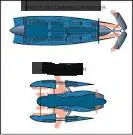
What are two types of thrust reversers that are used on turbojet engines?
Cascade type and clamshell type
Pivoting door type and bucket type
Fan type and turbine type
Exhaust type and intake type
The major components of a turbine engine are:
Compressor, Combustor, Turbine, and Exhaust
Piston, Cylinder, Spark Plug, and Crankshaft
Rotor, Stator, Armature, and Commutator
Fuel Tank, Carburetor, Muffler, and Spark Arrestor
The function of the accessory section used on a turbine engine is to:
provide thrust
house and drive accessories
cool the engine
reduce noise

The purpose of a diffuser used in a turbine engine is to:
increase the velocity of the airflow
direct direction and the velocity of the airflow
maintain the velocity of the airflow
reverse the direction of the airflow
The function of the main bearing in a turbine engine is to:
support the rotor and maintain alignment
increase the engine's thrust
cool the engine components
reduce the engine's noise
The purpose of the exhaust section of a turbine engine is to:
increase the velocity of the exhaust gases to produce thrust
reduce the noise produced by the engine
cool down the engine components
filter out pollutants from the exhaust gases
List the three major modules in the GTCP331-200 APU.
Gearbox, load driven compressor, power section
Fuel control unit, ignition system, lubrication system
Cooling system, exhaust system, intake system
Electrical system, hydraulic system, pneumatic system
The GCTP331-200 Auxiliary Power Unit is designed to provide pneumatic supply and electrical power for the Boeing 757/767 aircraft, both on the ground and in flight, what type of capability does this give the aircraft?
Remote airfields which may not have ground power units/facilities
Increased fuel efficiency during flight
Enhanced in-flight entertainment options
Improved passenger comfort with better air conditioning
What is the maximum altitude that the GTCP331-200 Auxiliary Power Unit can be started?
43,100 ft.
35,000 ft.
30,000 ft.
25,000 ft.
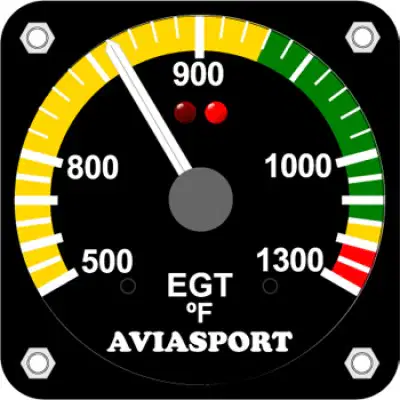
What is this gage for ?
exhaust template
Engine gas Torque
Exhaust gas tempotron
Exhaust Gas temperature

Access to the GTCP331-200 for removal and installation is through what doors and location area of the fuselage?
Clamshell doors on underside of fuselage
Side panel doors near the cockpit
Rear hatch above the tail section
Top access panel on the fuselage
The source of fuel for the operation of the APU is from which of the main tanks?
Left main fuel tank
Right main fuel tank
Center fuel tank
Auxiliary fuel tank
To start the APU, the master switch is placed to what position?
Start
Off
Idle
Run
APU BITE system Line Replaceable Unit failures are displayed in which mode of operation?
Maintenance mode
Normal mode
Emergency mode
Diagnostic mode
What is one advantage of turbines over props related to reliability?
Turbines are more fuel-efficient than props.
Turbines have fewer moving parts than props, leading to higher reliability.
Turbines are quieter than props.
Turbines are cheaper to maintain than props.
Turbines compared to props operate at:
higher air speeds
lower air speeds
the same air speeds
variable air speeds depending on conditions
The advantage of turbines over props in terms of power to engine weight ratio is:
Higher power to weight ratio
Lower power to weight ratio
Equal power to weight ratio
No advantage
According to Newton's Third Law of Motion, what happens for every action?
It produces a reaction equal in force and opposite in direction.
It remains unchanged.
It accelerates.
It decelerates.
What was the world's first aircraft specifically designed for jet propulsion?
Boeing 747
Heinkel He 178
Concorde
Airbus A380
In what year did the Heinkel He 178 make its first flight?
1935
1939
1945
1950
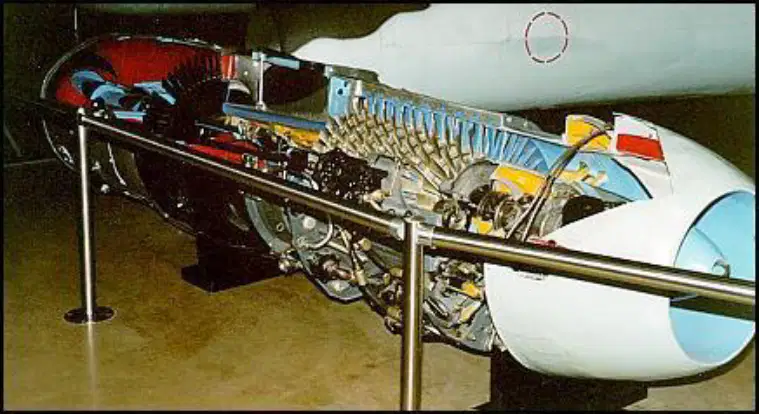
What is the model of the jet engine shown in the image?
Junkers Jumo 004A
Rolls Royce Merlin
General Electric J79
Pratt & Whitney JT3D
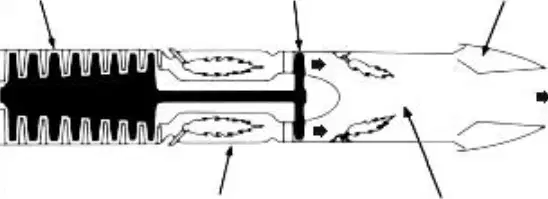
What basic principle does the jet engine of today operate according to?
Newton's First Law
Newton's Second Law
Newton's Third Law
Newton's Fourth Law
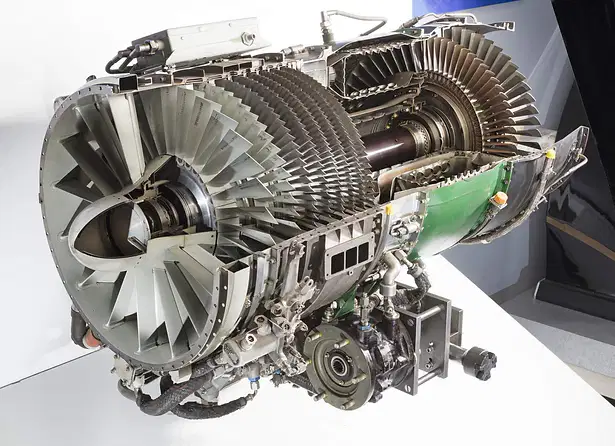
Jet engines contain three common components: the ________, the combustor, and the turbine.
compressor
engine
nozzle
fuel tank
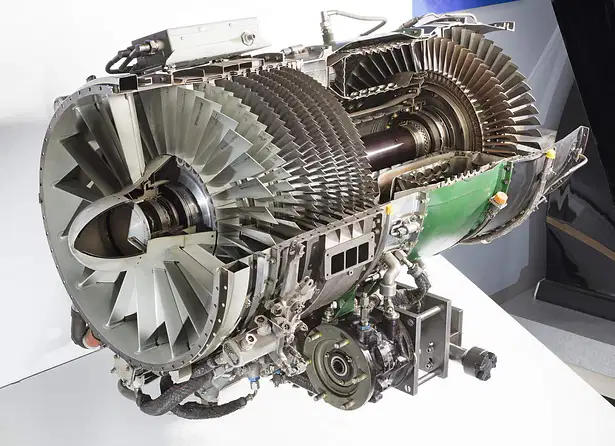
Fill in the blank: Jet engines contain three common components: the compressor, the ________, and the turbine.
combustor
exhaust
nozzle
intake
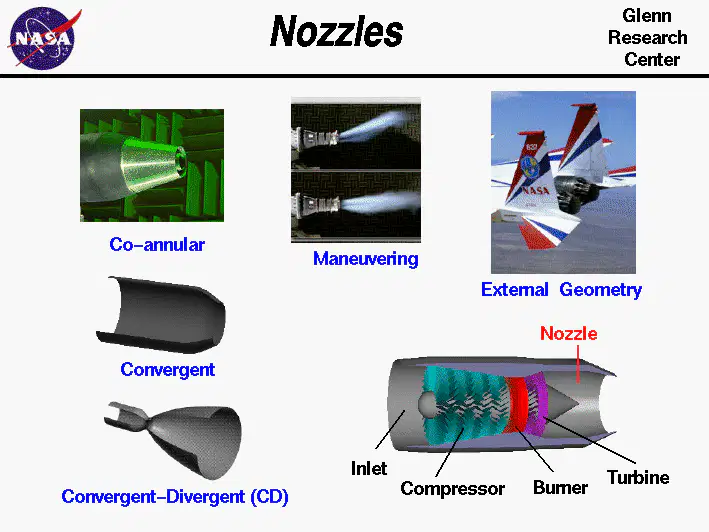
What is the function of a exhaust nozzle in a jet engine?
To recover and direct gas energy
To spray additional fuel
To block gas rushing toward the rear
To provide additional braking

Fill in the blank: An afterburner or augmentor is a long "tailpipe" behind the turbine into which additional fuel is sprayed and burned to provide additional _______.
thrust
heat
drag
weight
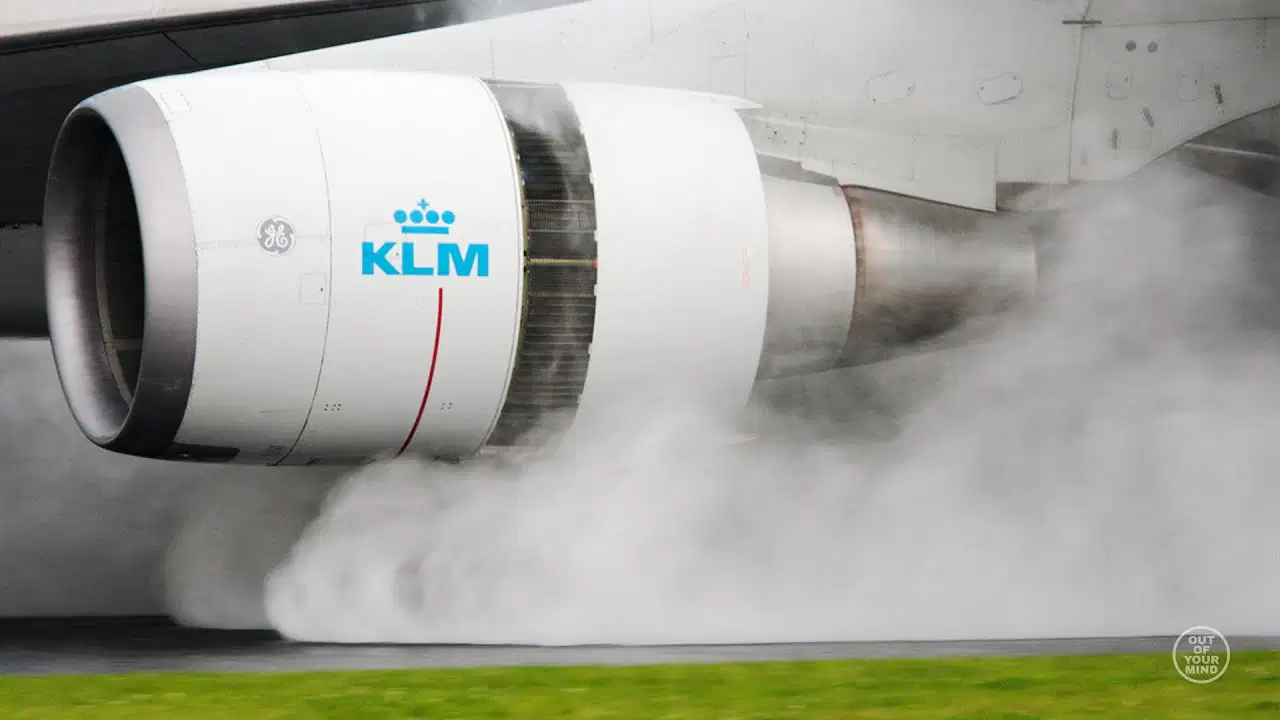
What is the purpose of a thrust reverser in a jet engine?
To recover and direct gas energy
To spray additional fuel
To block gas rushing toward the rear
To change direction of aircraft flight
Turboshaft engines are a type of:
Jet engine
Rocket engine
Piston engine
Electric engine
What are medium-bypass turbofans, high-bypass turbofans, and ultrahigh-bypass engines?
Types of jet engines with varying bypass ratios
Different models of propeller engines
Categories of electric engines
Classes of piston engines
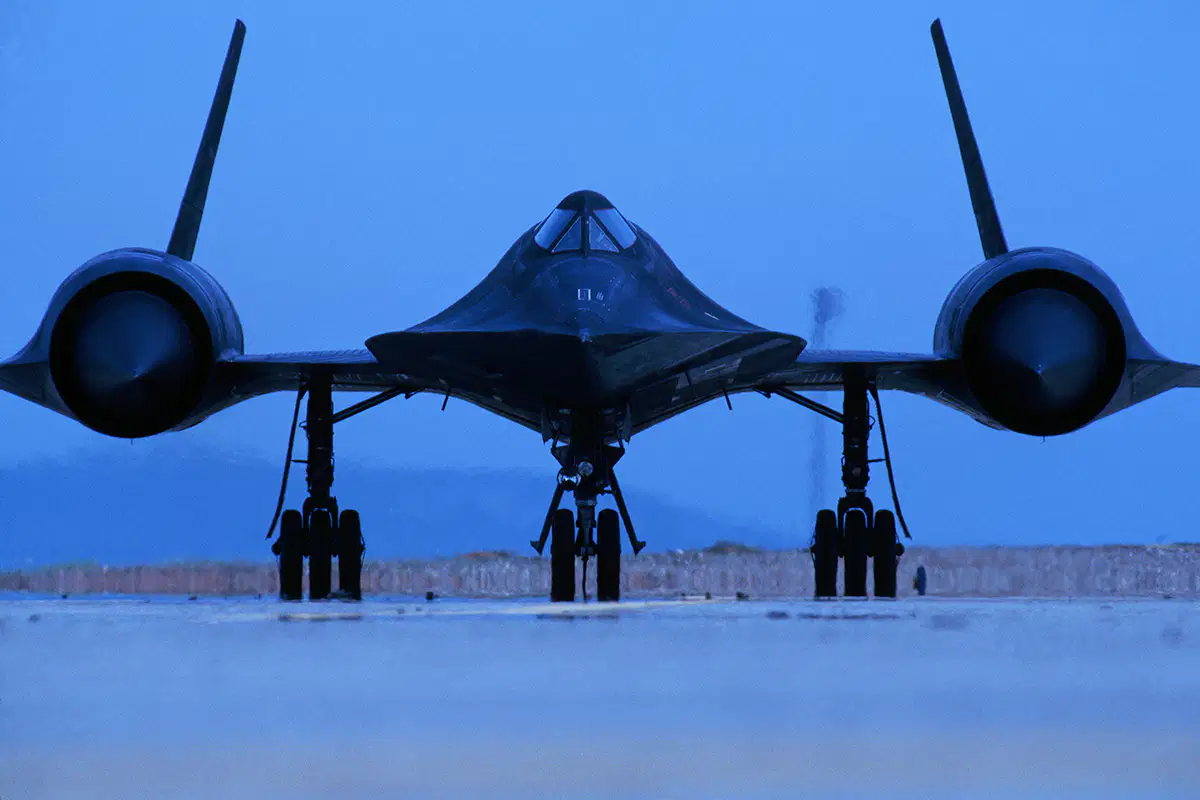
What are ramjets and supersonic combustion ramjets?
Ramjets are a type of jet engine that operates by compressing incoming air without a rotary compressor, while supersonic combustion ramjets (scramjets) are similar but designed to operate at supersonic speeds.
Ramjets are used in subsonic aircraft, while supersonic combustion ramjets are used in helicopters.
Ramjets and supersonic combustion ramjets are both types of propellers used in marine vehicles.
Ramjets are a type of rocket engine, while supersonic combustion ramjets are a type of steam engine.
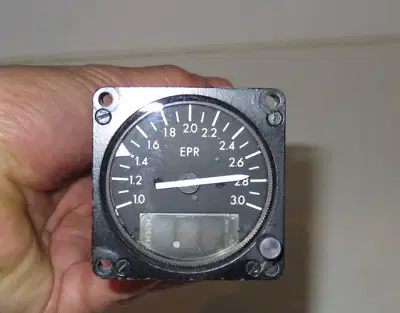
The Engine Pressure Ratio (EPR) is a measure of:
the ratio of the exhaust pressure to the inlet pressure in a jet engine
the fuel efficiency of an engine
the temperature difference between the engine's intake and exhaust
the speed of the engine's turbine
Fill in the blank: The Engine Pressure Ratio (EPR) is the ratio of the turbine discharge pressure to the engine ________ pressure.
inlet
outlet
ambient
exhaust
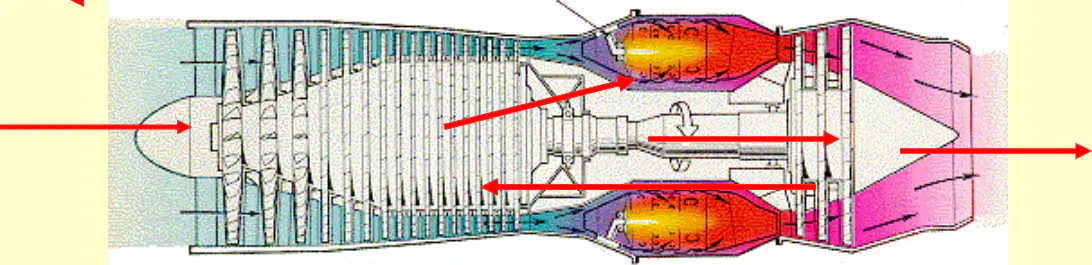
The first step in the operation of a jet engine is:
Compression
Combustion
Intake
Exhaust
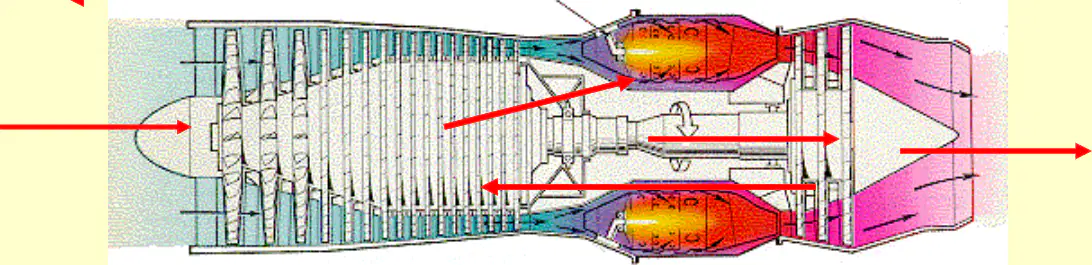
Fill in the blank: The burning gases expand rapidly rearward and pass through the ________.
exhaust nozzle
intake valve
combustion chamber
fuel injector
A turboprop engine is a type of engine used in which of the following?
Cars
Airplanes
Boats
Trains

A turboprop engine is used extensively in what?
Aviation, particularly for regional and commuter aircraft.
Automobile racing, especially in Formula 1 cars.
Maritime navigation, mainly in cargo ships.
Space exploration, specifically in launching satellites.
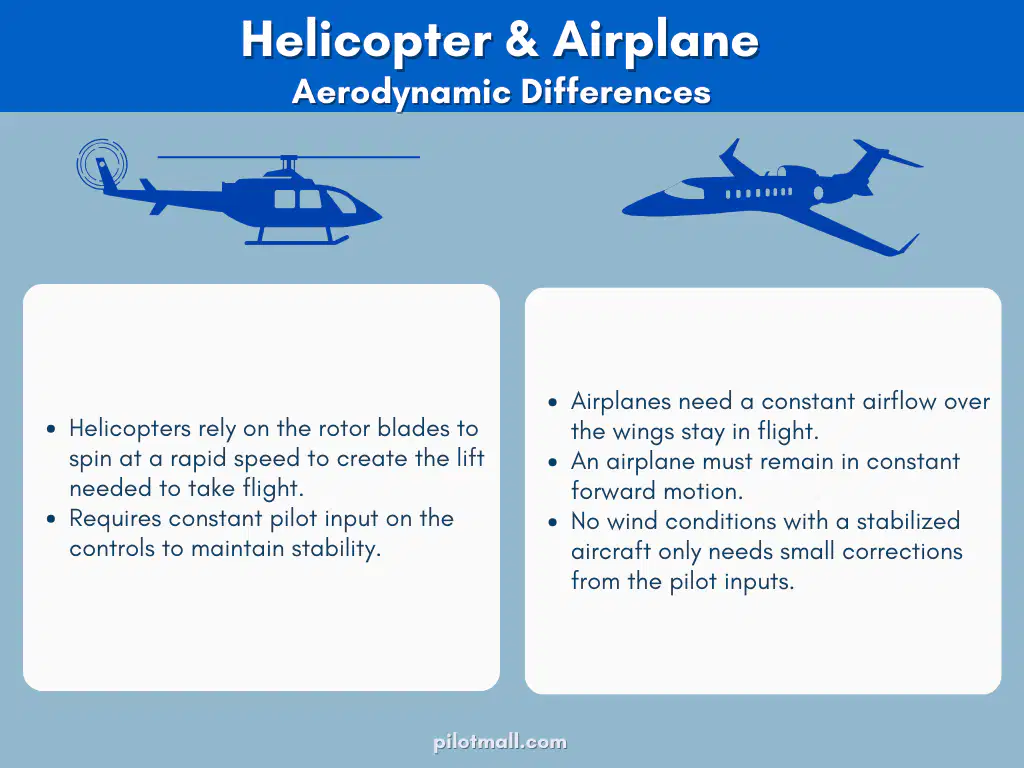
The biggest difference between a turboprop and a turboshaft engine is:
Turboprop engines are used in airplanes, while turboshaft engines are used in helicopters.
Turboprop engines are more fuel-efficient than turboshaft engines.
Turboshaft engines are used in cars, while turboprop engines are not.
Turboprop engines are smaller than turboshaft engines.
What does the term Tare as it applies to weight and balance mean?
Items such as (chocks) used to hold aircraft on scale as it is weighed.
Items needed to be added to the scale as it is weighed.
Both are correct.
What does the term Ballast as it applies to weight and balance mean?
A weight that is installed or carried on an aircraft to move the center of gravity (CG) within its allowable limits. (think counterweight)
A weight that is removed or carried on an aircraft to move the center of gravity (CG) within its allowable limits. (think counterweight)
Define MAC and when it is used.
Mean Aerodynamic Chord (MAC) is an imaginary airfoil with the same characteristics of an actual airfoil. *The center of gravity (CG) on large aircraft is given in a percent of MAC.*
Mean Aerodynamic Chord (MAC) is an imaginary airfoil with the same characteristics of an actual airfoil. *The center of gravity (CG) on small aircraft is given in a percent of MAC.*
What chapters cover powerplant in the ATA codes
50's
70's
30's
80's
What is the main function of a turbine?
Cool the engine
Increase air velocity
Reduce air pressure
Drive the compressor
Where is the highest Air pressure?
Combustion chamber
Exhaust nozzle
Diffuser
Compressor
True or false: Temperature decreases in the combustion chamber
True
False
What is the purpose of the turbine?
decrease velocity
To power the compressor section
Cool air
Reduce pressure
True or false: Pressure drops in the exhaust nozzle
True
False
What happens to velocity in the exhaust nozzle?
Fluctuates
Decreases
Remains constant
Increases
Where does temperature increase significantly?
Combustion chamber
Compressor
Exhaust nozzle
Diffuser
What is the purpose of the diffuser?
Cool air
Generate power
Decrease velocity
makes the airflow more uniform
What happens to velocity in the compressor?
Decreases
Increases
Fluctuates
Remains constant
Where does pressure remain constant?
during the combustion process within the combustion chamber
Exhaust nozzle
Diffuser
Compressor
What is the purpose of the combustion chamber?
Generate power
Cool air
Burn fuel
Increase pressure
Where does velocity increase significantly?
Compressor
Diffuser
Combustion chamber
Exhaust nozzle
What is the primary purpose of a turbocharger in an engine?
To increase fuel efficiency by reducing engine size
To reduce emissions by controlling exhaust flow
To increase engine power by forcing more air into the combustion chamber
To cool the engine by circulating extra air
Aerodynamic force created by the friction of moving air that opposes propulsion.
Angle of Attack
Drag
Thrust
Aileron
Study of manned and unmanned craft outside the earth’s atmosphere
Gas turbine engine
Rudder
Astronautics
Aileron
Rotating blades that force air toward the rear of an aircraft causing the aircraft to move forward.
Satellite
Elevator
Aerospace Engineering
Propeller
Forward force acting on an aircraft or spacecraft created by air or gases being pushed to the rear.
Angle of incidence
Thrust
Drag
Aileron
System that creates thrust for movement.
Aeronautics
Propulsion System
Lift
Propeller
Engine, also known as a jet engine, that pulls air into the front of the engine, increases the pressure of the air, and forces it out the back of the engine at great speed.
Rudder
Gas turbine engine
Aerospace engineering
Angle of attack
_____ defined laws of motion that have had a tremendous impact on aerospace engineering.
Blaise Pascal
Neils Bohr
Robert Boyle
Sir Isaac Newton
The more aerodynamic a plane is, the more efficiently it will fly.
True
False
Rocket engines can operate in space because there is a limitless amount of oxygen.
True
False

What are these called ?
variable guide rotors
Variable guide vanes
Rotor disk
Stator disk
safe distance for aircraf propeller is :
beside 10 ft
fwd 20 ft
beside 15 ft
fwd 25 ft
beside 25 ft
fwd 15 ft

safe distance from ground idle blast danger area to take off blas is :
1200 ft
150 ft
1000 ft
How many CIVVS (Compressor inlet variable vanes) are there in the inlet case?
21
33
17
During a routine maintenance check of a commercial airliner, a technician focuses on inspecting the turbine exhaust system. What are the major components they should examine?
Exhaust sleeve and plug
Fan cowl and thrust reverser
Inlet cowl and core cowl
Low pressure compressor and high pressure compressor
What is the correct sequence of the main components in a gas turbine system?
Compressor → Combustion Chamber → Gas Turbine
Combustion Chamber → Compressor → Gas Turbine
Gas Turbine → Compressor → Combustion Chamber
Compressor → Gas Turbine → Combustion Chamber
Which of the following correctly describes the function of the nozzle or free turbine in a gas turbine system?
It compresses incoming air to increase pressure.
It extracts energy from hot gases to run the compressor.
It adds heat to the compressed air through combustion.
It generates thrust power or shaft power from the hot gas flow.
Which of these shows the schematic diagram of Aircraft Jet Engine?


What is the purpose of the starting device in the operation of a gas turbine?
To inject fuel into the combustion chamber
To ignite the air-fuel mixture
To turn the shaft and initiate the turbine's rotation
To compress the incoming air
What happens to the air as it passes through the compressor stages in a gas turbine?
Its volume increases, while pressure and temperature decrease.
Its volume decreases, while pressure and temperature increase.
It cools down and decreases in pressure.
It remains at a constant volume, pressure, and temperature.

Label Part 2 shown in the picture.
(a)
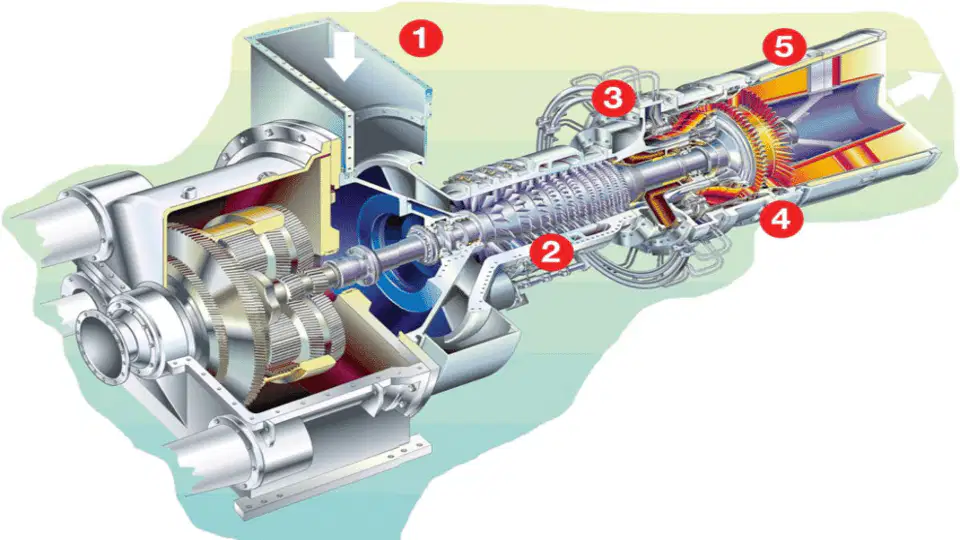
What is part # 1
inlet
Exhaust
Gearbox
fuel cell
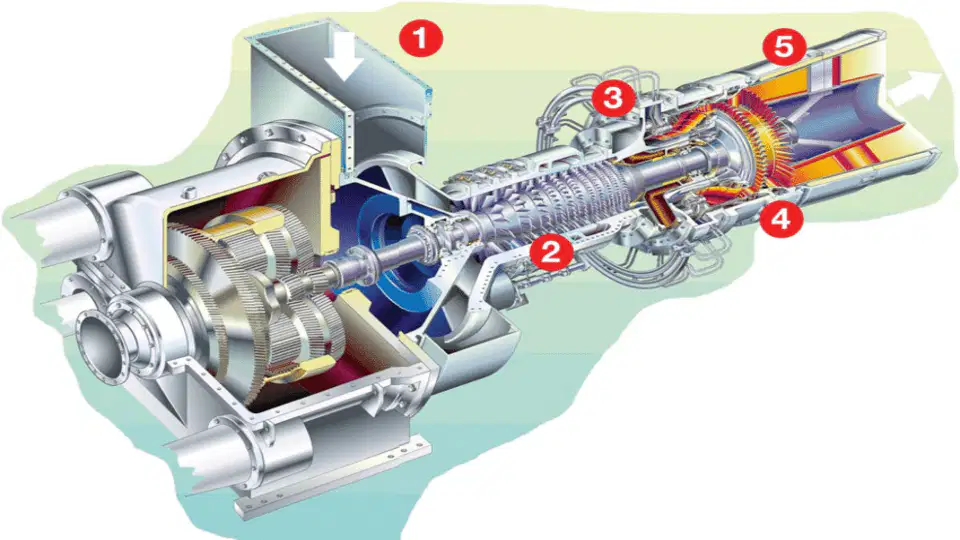
what is part # 3
Fuel rails
hydraulic rails
bleed air lines
igniter wiring
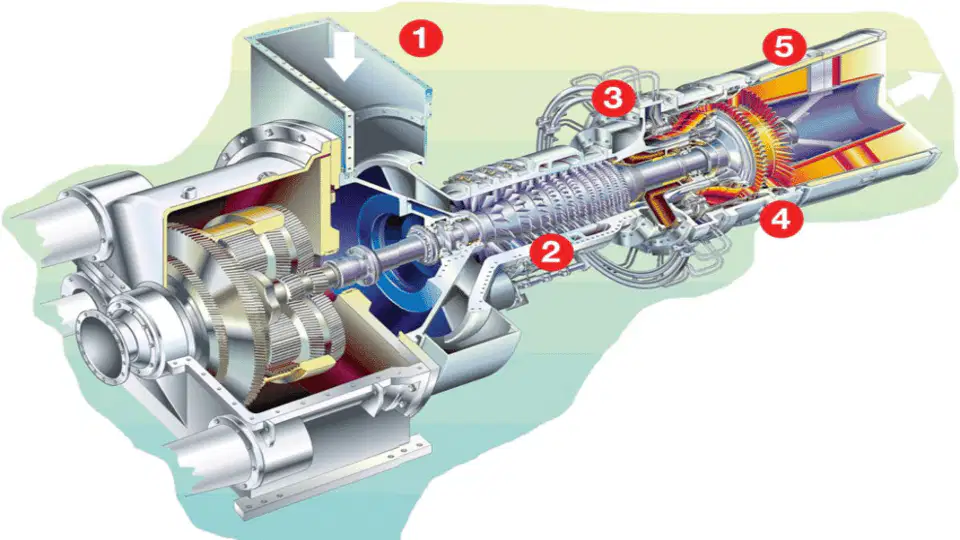
what part in #4
Turbine section
rotor blades
Compressor blades
Afterburner section
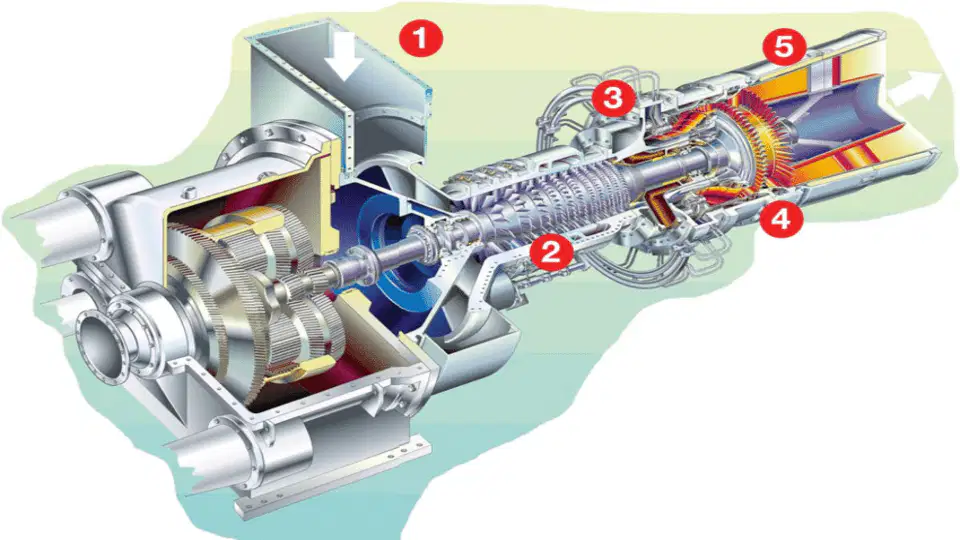
What part is # 5
exhaust section
compressor section
gearbox section
Axial blade section

