
 Worksheets
EM spectrum properties
Total questions: 30
Worksheet time: 16mins
The number of wavelengths that pass by a point each second
frequency
amplitude
compression
rarefaction
The highest point on a transverse wave
trough
crest
amplitude
wavelength
A wave in which the disturbance is perpendicular to the direction the wave travels
longitudinal wave
mechanical wave
electromagnetic wave
transverse wave
The maximum distance a wave varies from its rest position
frequency
wavelength
crest
amplitude
A wave in which the disturbance is parallel to the direction the wave travels
longitudinal wave
mechanical wave
transverse wave
electromagnetic wave
A disturbance that transfers energy from one place to another without transferring matter
crest
trough
wave
wavelength
material in which a mechanical wave travels
trough
crest
wavelength
medium
The distance from one point on a wave and the nearest point just like it
frequency
amplitude
rarefaction
wavelength

As the wavelength increases the frequency...
decreases
increases
stays the same (no effect)
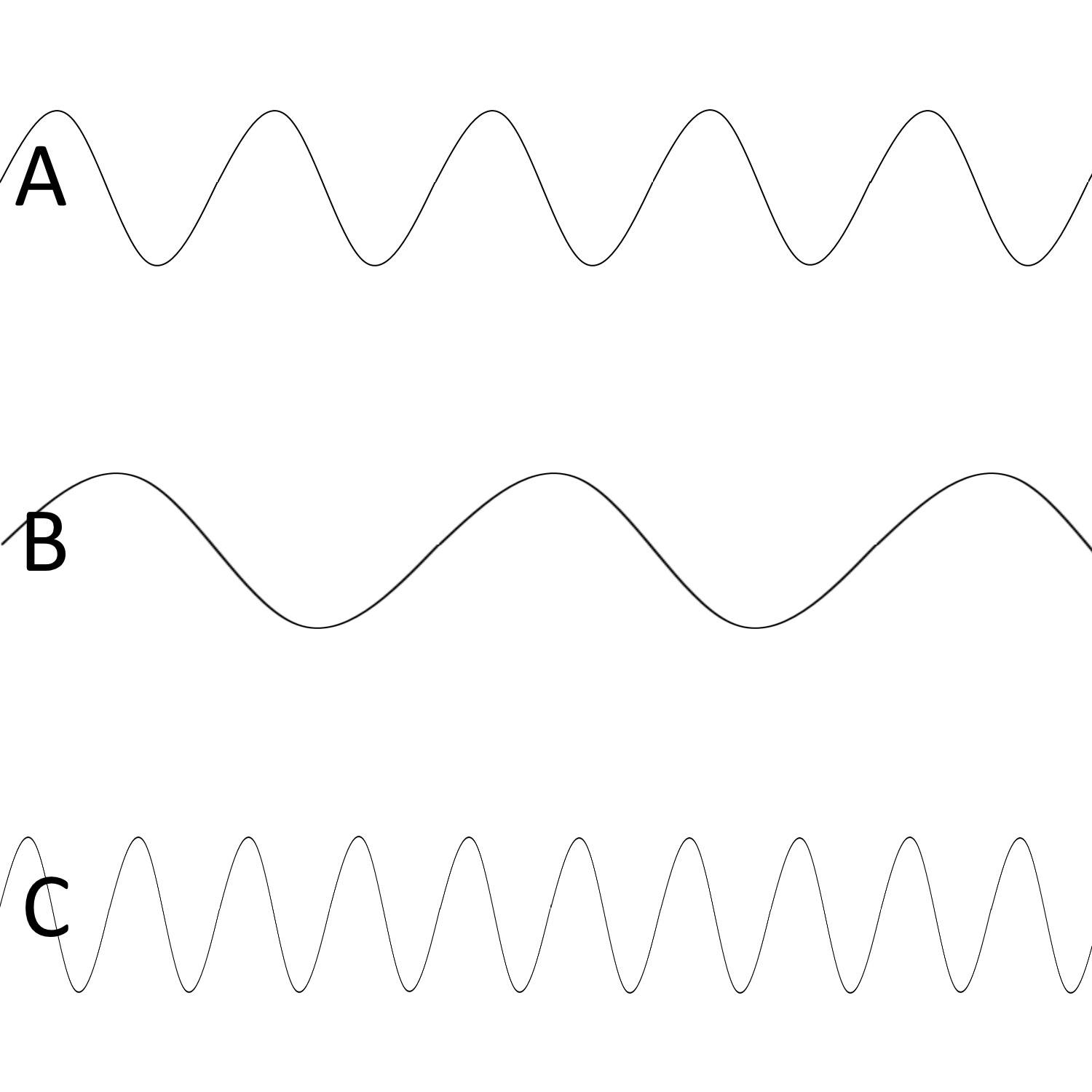


When a wave strikes an object and bounces off of it
Absorption
Diffraction
Refraction
Reflection

absorption
diffraction
reflection
refraction
transmission
What does a wave carry from place to place?
energy
matter
people
The number of waves that pass somewhere in a second is:
amplitude
frequency
wavelength
An example of a combined wave...
sound waves
water waves

Which of the following has the shortest wavelength?
microwaves
UV rays
Infrared
the color blue

Which of the following has the shortest wavelength?
Gamma rays
The color blue
AM radio
Infrared


Which of the following is not in the electromagnetic spectrum?
Light waves
Sound waves
Radio Waves
X-rays
Identify the part of the electromagnetic spectrum from the following description. Used in cooking, used in short-range communication and has a typical wavelength of 900nm.
infrared
microwave
radio wave
gamma wave

