
 Worksheets
US HISTORY- mini unit 1
Total questions: 90
Worksheet time: 52mins

Which colony is this?
Virginia
Pennsylvania
Maryland
Georgia

Which colony is this?
New Jersey
North Carolina
Delaware
Massachusetts

Which colony is this?
Connecticut
New Hampshire
Rhode Island
North Carolina

Which colony is this?
South Carolina
New York
New Jersey
Georgia

Which colony is this?
New Jersey
Pennsylvania
Delaware
New Hampshire

Which colony is this?
Rhode Island
Connecticut
South Carolina
Georgia

Which colony is this?
North Carolina
Virginia
South Carolina
Massachusetts

Which colony is this?
New York
New Jersey
Massachusetts
Pennsylvania

Which colony is this?
Georgia
North Carolina
Virginia
Pennsylvania

Which colony is this?
Delaware
Virginia
New Hampshire
North Carolina

Which colony is this?
Georgia
Virginia
New York
Connecticut

Which colony is this?
Pennsylvania
North Carolina
South Carolina
New York

Which colony is this?
Georgia
Delaware
Connecticut
New Jersey
Three main reasons English men and women came to the new world
Gifts, Land and Family
God, Gold and Glory
Land grants, Loans and love
Kings, Queens and Parliment
Virginia settlement was founded by John Smith also was the first permanent settlement in the new world
(a)
6 of the 13 colonies were founded for this reason
Fishing and Farming
Land grants
Trading Post
Religious Freedom
an area that is under the control of another country
state
colony
region
city
a person who moves with others to live in a new area
family
Pilgrim
hippie
colonist
physical features of Earth
climate
geography
economy
religion
a group of beliefs or rituals
religion
climate
government
economy
the way in which goods and services are produced, distributed, and consumed
climate
economy
government
religion
the people who make and carry out laws in a community
climate
geography
government
religion
Maryland, Virginia, North Carolina, South Carolina, Georgia
Middle Colonies
Southern Colonies
New England Colonies
New York, New Jersey, Pennsylvania, Delaware
Middle Colonies
Southern Colonies
New England Colonies
New Hampshire, Massachusetts, Rhode Island, Connecticut
Southern Colonies
Middle Colonies
New England Colonies
a person who makes a journey for religious reasons
preacher
indentured servant
Pilgrim
governor
the first permanent English settlement in North America
Jamestown
Massachusetts
Roanoke
Plymouth
people who received free passage to North America in exchange for working without pay for a certain number of years
Pilgrams
slaves
indentured servants
colonists
someone who is owned by another person and forced to work without pay
employee
indentured servant
maid
slave
Which region had a climate that only allowed for a very short growing season?
Southern
New England
Middle
Which region was influence heavily by the Puritans?
Middle
New England
Southern
Which region had good farming soil but supported mostly smaller, family farms instead of large plantations?
Southern
New England
Middle
Which region is known for its large plantations and expansive cotton fields?
Southern
Middle
New England
Which region is known for its "agrarian lifestyle" (aka farming as a way of life for the majority of the population) and contained many very large plantations?
New England
Middle
Southern
Which region had a large population of very poor people, including indentured servants and slaves?
Middle
Southern
New England
Which region did not develop major cities right away due to the fact that people lived far distances from each other?
Southern
New England
Middle
Which of the following was NOT one of the 13 colonies?
Delaware
Connecticut
Maryland
Ohio
Who lived in the 13 colonies before the English settlers?
No one
Native Americans
The French
The Spanish
Which of the following was NOT one of the 13 colonies?
Tennesse
New Hampshire
New Jersey
South Carolina
When was Jamestown founded?
1492
1776
1690
1607
Which of the following is NOT one of the geographic groupings of the 13 colonies
New England Colonies
Middle Colonies
Northern Colonies
Southern Colonies
The Pilgrims left England because they wanted freedom to practice their __________
Religion
Juggling
Witchcraft
Cooking
Which European country ruled the 13 colonies?
Spain
France
Britain
the Netherlands
a crop grown for sale rather than for use by farmers
backcountry
commodity
cash crop
neutrality
a person under contract to work, usually without pay, in exchange for free passage to the colonies
charter
indentured servant
traitor
joint stock company
What was the Middle Passage?
The Middle Passage was a military conflict between African tribes during the colonial era.
The Middle Passage was a term used to describe the journey of European explorers to the New World.
The Middle Passage was a trade route between Europe and Asia.
The Middle Passage was the stage of the triangular trade in which millions of Africans were forcibly transported across the Atlantic Ocean to the Americas as part of the transatlantic slave trade.
What was the main crop grown on plantations during the era of slavery?
cotton
corn
rice
wheat
Which of the following was a common punishment for enslaved people on plantations?
Public humiliation
Solitary confinement
Whipping
Hard labor
What was the triangular trade?
The triangular trade was a system of trade during the colonial era that involved the exchange of goods between Europe, Africa, and the Americas.
The triangular trade was a system of trade between North America, South America, and Europe.
The triangular trade was a system of trade between Asia, Africa, and Europe.
The triangular trade was a system of trade between Africa, Asia, and the Middle East.
When is Jamestown founded?
2002
1607
1489
1999
True or False: Jamestown was the last colony to be founded in the 13 colonies.
True
False
How many colonies are there?
13
3
12
50
The three regions were
Detroit Michigan
North, South, East and West
New York, Rhode Island, Pennsylvania
New England, Middle, Southern Colonies
People that live in a colony, such as one of the Thirteen Colonies are called...
Movers
Settlers
Lost
Colonists
Which two of these four colonies are part of the New England Colonies?
Maine
New Hampshire
Rhode Island
New York
The geography of the New England Colonies was hilly due to...
Erosion
The Appalachian Mountains
The Rocky Mountains
Earthquakes
What was salutary neglect?
Britain was strictly controlling the colonies
Britain left the colonies to govern themselves
Britain sent an army to the colonies
Britain sold the colonies to France
The trade pattern between the colonies, Africa, and Europe was called what?
Middle Passage
Navigation Acts
Triangular Trade
Columbian Exchange
This group made a great deal of money off of small farms that grew items like oats
Puritans of New England Colonies
Quakers of Mid-Atlantic Colonies
Aristocrats of Southern Colonies
Group of Protestants who wanted to “purify” or reform the Church of England. Greatly persecuted in England. Over 20,000 migrated to the Mass. colony between 1630 and 1643.
Puritans of New England Colonies
Quakers of Mid-Atlantic Colonies
Aristocrats of Southern Colonies
The leader of the Quaker religion and the person who our state is named after is...
Thomas Jefferson
Ben Franklin
Alexander Hamilton
William Penn
The name Philadelphia means
the city of soft pretzels
the city of brotherly love
the beautiful city
the new city

Southern colonies developed economies in the eastern lowlands based upon _____. (Choose the one best response).
seaports
commercial centers
large cash crop plantations
manufacturing
shipbuilding
“New World” was a name given to the Americas by
spice traders
shipbuilders
American Indians
European explorers
What religious goal inspired many European explorers?
to visit holy sites
to live in poverty
to spread their beliefs
to learn about other faiths
What do farmers do with a cash crop?
sell it for money
feed it to animals
eat it as soon as possible
freeze it to store for winter

What Ocean was used for the Triangular Trade Route?
Atlantic Ocean
Pacific Ocean
Indian Ocean
Southern Ocean
Which three continents were involved in the Triangular Trade Route?
North America, South America and Africa
North America, Africa and Europe
North America, South America and Europe
North America, Africa, and Asia
Ships left the New World with...
Horses
Slaves
Manufactured goods
Raw materials
Ships left Africa with...
Raw materials
Slaves
Manufactured goods
More ships
What contributed to growing tension between settlers and American Indians?
The demand for land in Europe.
The results of the French and Indian war.
The expansion of the English population and the increasing economic development.
The demand of freedom from the Great Britain.

How were the conditions of the slave boats during the Middle Passage?
The lodgings were clean and sanitary for the slaves
The slaves were well fed and clothed
The conditions were dirty and unsanitary for the slaves
All of the above
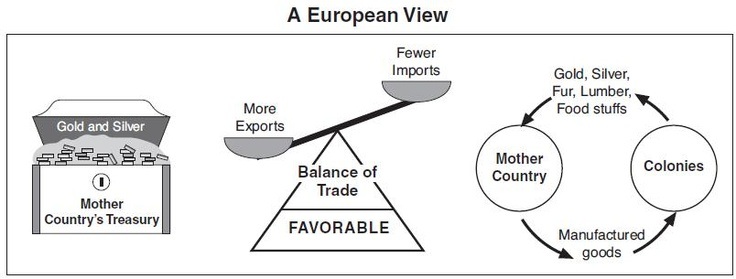
What is mercantilism?
A system where a mother countries gains money and power from natural resources that come from its colonies.
where colonies trade gold and silver with each other.
Wars that start over money.
Plantation colonies trading slaves for money.
The trade pattern between the colonies, Africa, and Europe was called what?
Middle Passage
Navigation Acts
Triangular Trade
Columbian Exchange

SSUSH1a
England sought to exchange manufactured goods for the colonies' raw materials. Which of the following was NOT raw material from the colonies?
Gold
Jewelry
Foodstuffs
Lumber

