
 Worksheets
Survey of Animal Kingdoms
Total questions: 50
Worksheet time: 58mins

What does the hawk have in common with the snake it caught?
they both have feathers
they are both warm blooded
they both hatched from eggs
they both can fly
What do all vertebrate animals have in common?
they all have feathers
they all have hair
they all can swim
they all have a backbone
Which animals are invertebrates?


Which animals are cold-blooded?


Which animals are mammals?


These animals have scales, fins and live in the water:
fish
arthropods
sponges
________________ are animals without a backbone.
Species
Mammals
Invertebrates
Vertebrates
What do fish, amphibians, birds, and mammals all have in common?
They are all vertebrates.
They are all invertebrates.
They are all vascular.
They are all nonvascular.
What is a "single kind of organism that can reproduce among its own kind"?
Organism
Species
Producer
Consumer
How is a fish different from a jellyfish?
A fish can reproduce.
A fish is in the animal kingdom.
A fish has a backbone.
A fish lives in water.
All living things belong to one of five major groups: Bacteria, Protist, Fungi, Plant, and Animal. These are known as
Orders
Phylums
Kingdoms

Which of the following lists the eight levels of classification in the correct order?
kingdom, domain, phylum, order, class, family, genus, species
domain, kingdom, phylum, class, order, family, genus, species
kingdom, domain, phylum, class, order, family, genus, species
Taxonomy is?
the science of classifying and naming living things
one of the six kingdoms of life
Organisms are classified based on ________.
similarities and evolutionary relationships
the year their fossils are discovered
what they look like
What characteristics do all organisms in the phylum Chordata have?
They have spinal cords.
They lay eggs.
They feed their young milk
What is binomial nomenclature?
system of 3 names
system of 2 names
system of the 8 classifications
All living things in a given area, living and non-living.
Ecosystem
Biotic
Community
Species
Which taxonomic category is highest?
class
genus
order
domain


Which of the taxonomic groups would organisms have the LEAST number of similarities?
Species
Genus
Kingdom
Class
If two organisms are classified in different orders but are in the same class, what is true?
They are in the same phylum and kingdom
They are in the same class.
They are in the same order.
They are in different phylums and kingdoms.
What are the characteristics of fungi?
Fungi are typically autotrophic and do not have a cell wall.
Fungi are typically prokaryotic and have a cell wall.
Fungi are autotrophs and unicellular.
Heterotrophic, multicellular, chitin cell wall, eukaryotic
The organisms Panthera pardus and Panthera onca do not belong to the same —
Genus
Kingdom
Species
Family

What are the characteristics of a Canadian anemone?
leaflets; grass; round stem; wildflower
deep cut leaves; grass; round stem; wildflower
round leaves; grass; flat stem; grass
deep cut leaves; round stem; toothed edged leaves; wildflower; entire leaves
What are the advantages of having a universal naming system for organisms?
In the case of pathogens, the scientific name of a virus can also be applied to the disease it causes.
Latin is the language most frequently spoken in the world.
The scientific name of an organism does not address its habitat, diet, and life expectancy.
The same organism name can be recognized in all countries, thus avoiding translation issues.
The list below indicates characteristics for a specific kingdom. Which kingdom do these apply to?
-Heterotrophically attains nutrition
-Reproduces sexually
-Has voluntary movement
Animalia
Plantae
Archaebacteria
Fungi

Which Kingdom is capable of living in extreme environments like hot springs, geysers, or very salty waters?
What would the scientific name of this organism be?
Kingdom: Animalia
Phylum: Chordata
Class: Mammalia
Order: Carnivora
Family:Canidae
Genus: Canis
species: mesomelas
Mammalia carnivora
Canidae mesomelas
Canis mesomelas
Animalia chordata

What is the importance of a standardized taxonomic system to the scientific
community?
To avoid confusion within the science community.
Which organisms can you find living in extreme places such as salt lakes, hot springs and deep sea trenches
bacteria
Plantae
Archea
Protists
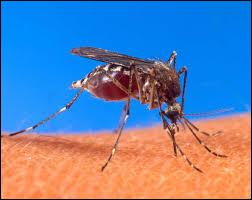

Which of the following taxa contain the fewest members?
phyllum
family
genus
class
Pick the description of sponge that is correct.
Unicellular, has tissues, reproduces asexually
Multicellular,
no tissues or organ systems,
reproduces asexually or sexually
Unicellular,
marine,
filter feeder
Multicellular, tissues regulate filter feeding

Select the correct description of a Sponges body plan.
Sponges are asymmetrical because one side is different than the other.
Sponges are symmetrical because one side is the same as the other.
Sponges are asymmetrical because one side is the same as the other.
Sponges are symmetrical because one side is different than the other.
Which of the following organisms belong to Phylum Annelids?
Snake
Salamander
Earth Worm
Snail

Which phyla has a soft unsegmented body and can be protected by a shell?
Porifera
Mollusks
Echinoderm
Annelid
This phylum means spiny skin and lives in water
Echinoderm
Arthropods
Annelids
Cnidarians
This phylum has a medusa and polyp stage, stinging tentacles, and radial symmetry. What phyla is it?
Arthropods
Annelids
Cnidarian
Mollusks
Identify the phyla which is an invertebrate.
Fish
Arthropods
Amphibians
Birds

Mollusks include which of the following?
Octopus, Squid, Clams, Snails
Fish, Squid, Jellyfish, Sea cucumbers
Earthworms, Sea cucumbers, sea urchins
Birds, Fish, Whales, Sponges

Which of the following are examples of echinoderms?
Jellyfish, Hydrozoa, Squid
Slugs, Snails, Mussels
Sea stars, sea urchins, sea cucumbers
spiders, crabs, crayfish

