
NEW
Font size
S
M
L
XL
 Worksheets
Biol 55
Total questions: 41
Worksheet time: 1hrs 13mins
Name
Class
Date
1.
I am a living thing that can use energy from the sun to make food.
a)
decomposer
b)
consumer
c)
producer
d)
competition
2.
I show the flow of energy through an ecosystem.
a)
producer
b)
consumer
c)
food chain
d)
competition
3.
I am a living thing that must use other organisms as food to get energy.
a)
decomposer
b)
consumer
c)
competition
d)
energy pyramid
4.
I am formed when food chains are linked together.
a)
food web
b)
producer
c)
consumer
d)
enrgy pyramid
5.
I am an organism that breaks down and recycles the remains of dead organisms in an ecosystem.
a)
competition
b)
consumer
c)
decomposer
d)
food chain
6.
I show the order, or sequence, in which organisms in an ecosystem consume one another.
a)
energy pyramid
b)
food web
c)
producer
d)
decomposer
7.
I am the struggle that takes place among organisms for food, water, and others needed to live.
a)
competition
b)
decomposer
c)
energy pyramid
d)
producer
8.
Consumers include all of the following EXCEPT
a)
omnivores
b)
carnivores
c)
herbivores
d)
sunlight
9.
Producers could not make food without
a)
decomposers
b)
sunlight
c)
carnivores
d)
worms
10.
Herbivores, carnivores, and omnivores are all types of _____________.
a)
food chain
b)
decomposers
c)
consumers
d)
producers
11.
Herbivores eat only ________.
a)
animals
b)
plants
c)
animals and plants
d)
candy
12.
Omnivores eat _______________.
a)
only animals
b)
only plants
c)
animals and plants
d)
only pizza
13.
A human & a Tape Worm: The tape worm gets a place to live in the intestines of the human and food from the human. The human loses weight and nutrients from the tape worm.
a)
Mutualism
b)
Commensalism
c)
Parasitism
14.
Bird & Tree: A bird builds a nest in a hole in the trunk of the tree. It is protected from the rain and predators. The tree is not harmed or helped by the bird.
a)
Mutualism
b)
Commensalism
c)
Parasitism
15.
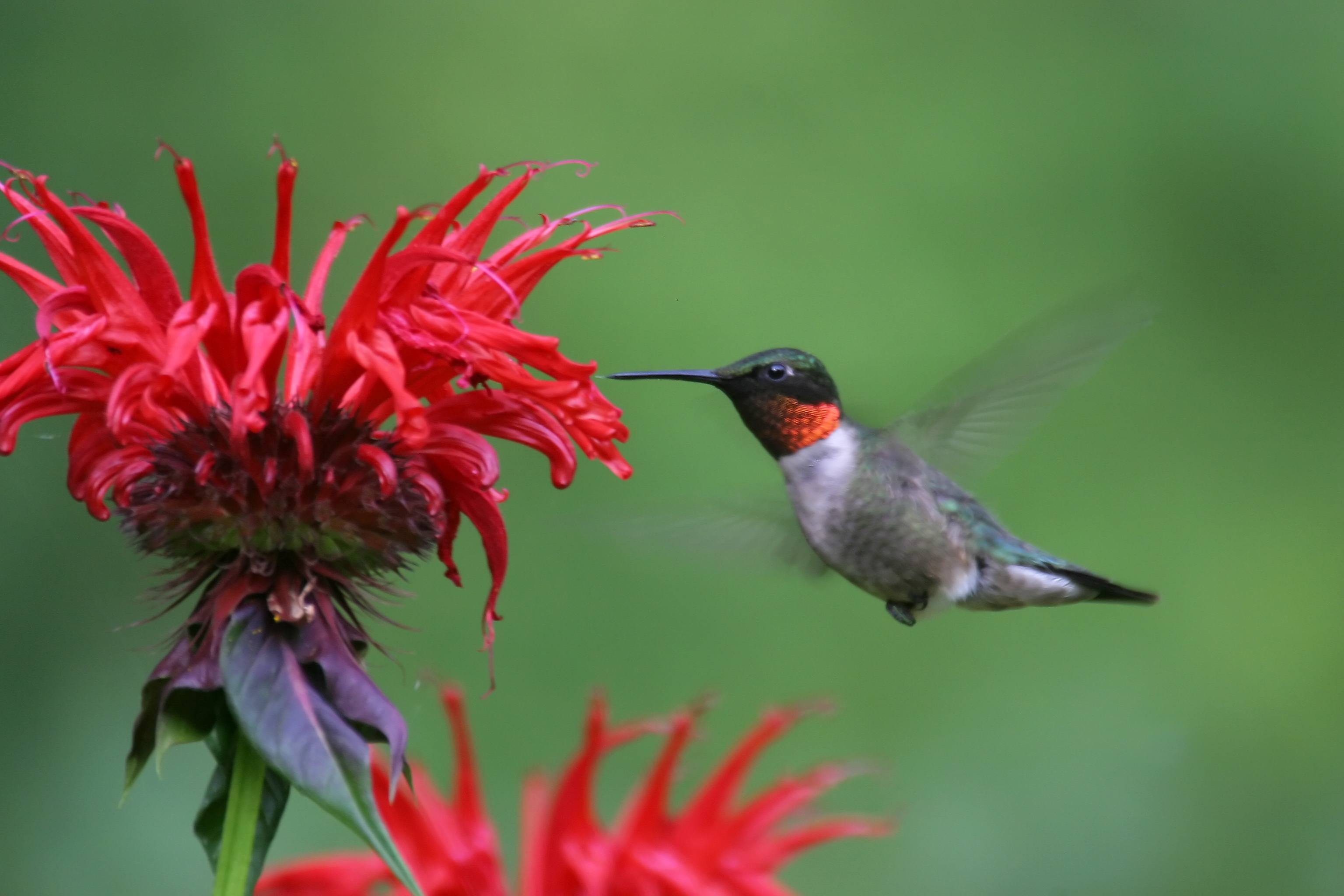
What type of symbiosis? Hummingbirds feed on nectar from flowers. The flowers are pollinated by hummingbirds as they move from flower to flower.
a)
commensalism
b)
mutualism
c)
parasitism
d)
predation
16.
Tree kangaroos live in the upper branches of trees in the rainforests of Queensland, as well as on the island of New Guinea. This is an example of the tree kangaroos ___.
a)
niche
b)
habitat
c)
community
d)
population
17.
What is the name of an animal that is hunted and eaten by other animals?
a)
producer
b)
prey
c)
predator
d)
decomposer
18.
The concept that predators can affect the size and distribution of other animals is known as
a)
predation
b)
herbivory
c)
tolerance
d)
limitation
19.
Groups of different populations that live in a given area and interact are called a(n)...
a)
Community
b)
Colony
c)
Population
d)
Ecosystem
20.
What is the term for each step in the transfer of energy and matter within a biological community?
a)
energy path
b)
food web
c)
trophic level
d)
food pyramid
21.
The energy at each trophic level in the pryamid of energy decreases by a factor of ____.
a)
10
b)
1
c)
100
d)
2
22.

diagram that shows the energy available to each trophic level in an ecosystem; 10% is passed on to upper levels, the rest is lost as heat
a)
succession
b)
cellular respiration
c)
energy pyramid
d)
biochemical cycle
23.
Study of interactions between organisms and their environment
a)
niche
b)
community
c)
ecology
d)
ecosystem
24.
Food webs are models that show
a)
one sequence of producers and consumers.
b)
complex networks of feeding relationships.
c)
stored energy in food chains
d)
only primary consumers in an ecosystem
25.

Rabbits and deer eat lettuce leaves from a garden.
What ecological interaction describes the relationship between rabbits and deer?
What ecological interaction describes the relationship between rabbits and deer?
a)
Mutualism
b)
Competition
c)
Commensalism
d)
Predation
26.

Which statement best describes the relationship between species A and B?
a)
Species A is the prey of Species B
b)
Species A is a parasite of Species B
c)
Species A is a consumer and B is a producer
d)
Species A and B has a mutualistic relationship
27.
Primary succession is...
a)
When a hurricane causes a river to flood its banks
b)
When a farmer ploughs his fields to remove all existing plant life.
c)
When fire burns through a forest and ills all vegetation less than 1m tall.
d)
When increasing temperature causes a glacier to recede from an area of rocky ground
28.
The secondary succession is
a)
lichens and mosses arrive on bare rock and begin to trap soil
b)
a complex, stable ecosystem is formed
c)
plants grow in an area devastated by a flood
d)
plants grow in a newly formed pond
29.
A key stone species is...
a)
the top carnivore.
b)
has the largest population.
c)
has the most specialized niche.
d)
determines numbers and types of other species.
30.
A human & a Tape Worm: The tape worm gets a place to live in the intestines of the human and food from the human. The human loses weight and nutrients from the tape worm.
a)
Mutualism
b)
Commensalism
c)
Parasitism
31.
What type of symbiosis? Hummingbirds feed on nectar from flowers. The flowers are pollinated by hummingbirds as they move from flower to flower.
a)
commensalism
b)
mutualism
c)
parasitism
d)
predation
32.
Starfish are probably the most important predator in the shallow ecosystem because they eat basically anything that they can come across. Their feeding activities control the whole ecosystem. This is an example of the starfish ___.
a)
habitat
b)
biotic factors
c)
tolerance level
d)
niche
33.
Tree kangaroos live in the upper branches of trees in the rainforests of Queensland, as well as on the island of New Guinea. This is an example of the tree kangaroos ___.
a)
niche
b)
habitat
c)
community
d)
population
34.
What is the name of an animal that is hunted and eaten by other animals?
a)
producer
b)
prey
c)
predator
d)
decomposer
35.

What is the order of succession shown in this figure?
a)
A, B, C, D
b)
B, A, D, C
c)
C, D, A, B
d)
D, A, B, C
36.
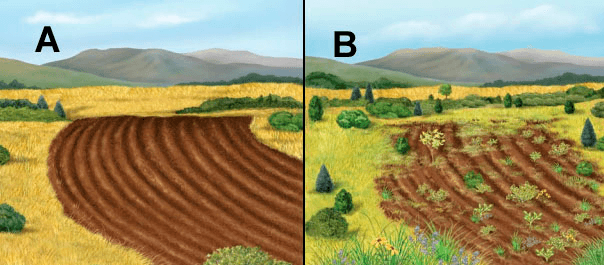
What type of succession is shown going from figure A to figure B?
a)
primary succession
b)
ecological succession
c)
secondary succession
d)
intermediate
37.
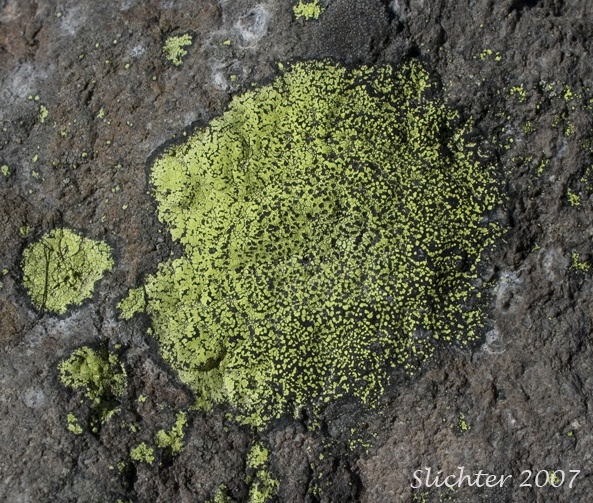
What is the name given to lichen or algae after a primary succession?
a)
pioneer species
b)
volunteer species
c)
founder species
d)
conqueror species
38.
What is the difference between a primary vs. secondary succession?
a)
secondary occurs where there was no previous community
b)
they are the same
c)
secondary occurs in an area that was only partially destroyed
d)
primary ocurs in an area that was only partially destroyed
39.
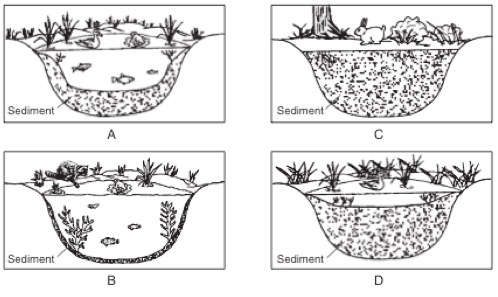
What is the correct order from oldest (happened first) to youngest (happened last) in this pond succession?
a)
A, B, C, D
b)
D, C, B, A
c)
B, A, D, C
d)
C, D, A, B
40.
___ states that two species cannot exist together if they compete for the same resources. One will either die out or migrate, or they will adapt to separate resources.
a)
Hardy-Weinberg Principle
b)
Limiting Nutrient Principle
c)
Competitive Exclusion Principle
d)
Tolerance Principle
41.
The concept that herbivores can affect both the size and distribution of plants is known as
a)
predation
b)
commensalism
c)
herbivory
d)
keystone species
Reset

