wayground logo

Free Printable Worksheets

Font size

S
M
L
XL
Worksheets

The Water Cycle Secondary Science

Total questions: 64

Worksheet time: 1hrs 6mins

Name
Class
Date
1.
What is the water cycle?
a)
the 3 forms of water
b)
the movement of water on, above, or below the surface of the Earth
c)
when water melts
d)
when clouds form
2.
What is the energy source for the water cycle?
a)
the sun
b)
the earth
c)
water
d)
the moon
3.
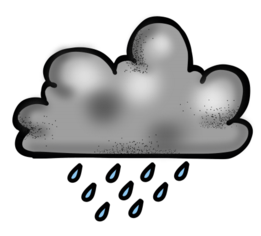
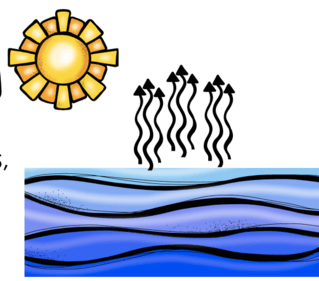
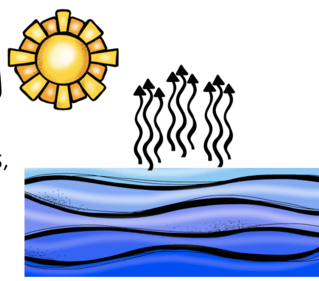
What part of the water cycle does this picture show?
a)
condensation
b)
precipitation
c)
evaporation
4.
What part of the water cycle does this picture show?
a)
condensation
b)
precipitation
c)
evaporation
5.
What part of the water cycle does this picture show?
a)
condensation
b)
precipitation
c)
evaporation
6.
What is evaporation?
a)
The part of the water cycle when the sun heats up water, turning it from a liquid into water vapor or steam. It rises from the ground into the air.
b)
The part of the water cycle when the water vapor in the air gets cold. The water turns back into a liquid and forms clouds.
c)
The part of the water cycle when clouds get heavy and can no longer hold the liquid water. This causes the water to fall from the sky to the earth as rain, snow, sleet, or hail.
7.
What is condensation?
a)
The part of the water cycle when the sun heats up water, turning it from a liquid into water vapor or steam. It rises from the ground into the air.
b)
The part of the water cycle when the water vapor in the air gets cold. The water turns back into a liquid and forms clouds.
c)
The part of the water cycle when clouds get heavy and can no longer hold the liquid water. This causes the water to fall from the sky to the earth as rain, snow, sleet, or hail.
8.
What is precipitation?
a)
The part of the water cycle when the sun heats up water, turning it from a liquid into water vapor or steam. It rises from the ground into the air.
b)
The part of the water cycle when the water vapor in the air gets cold. The water turns back into a liquid and forms clouds.
c)
The part of the water cycle when clouds get heavy and can no longer hold the liquid water. This causes the water to fall from the sky to the earth as rain, snow, sleet, or hail.
9.
When water condenses, the water vapor in the air gets ___________ and changes back into liquid.
a)
cold
b)
hot
c)
warm
d)
solid
10.
When water condenses, the liquid water forms ______________.
a)
water vapor
b)
steam
c)
air
d)
clouds
11.
Precipitation happens when clouds of water droplets are too ______________.
a)
cold
b)
light
c)
heavy
d)
hot
12.
Evaporation happens when the sun ___________ water and turns it into vapor.
a)
cools
b)
heats up
c)
freezes
d)
lights up
13.
Which of these is not an example of precipitation?
a)
rain
b)
clouds
c)
sleet
d)
snow
14.
Which of these is an example of precipitation?
a)
snow
b)
air
c)
clouds
d)
vapor
15.
Does evaporation happen before or after condensation?
a)
before
b)
after
c)
during
16.
Does precipitation happen before or after condensation?
a)
before
b)
after
c)
during
17.

Where is most water found on Earth?

a)

in glaciers

b)

in lakes

c)

in oceans

d)

in rivers

18.

What sources of energy evaporates the most water from Earth's surface?

a)

volcanoes

b)

lightning

c)

wind

d)

the sun

19.

What is water doing when it is changed to water vapor?

a)

freezing

b)

condensing

c)

evaporating

d)

precipitating

20.

What is water vapor doing when it changes to water?

a)

condensing

b)

evaporating

c)

freezing

d)

precipitating

21.

What controls whether water is a gas, liquid, or solid ice?

a)

the shape or size of the cup

b)

where it has been stored

c)

if it is being used for farming

d)

what its temperature is

22.

When does condensation occur in the water cycle?

a)

ocean water changing to water vapor

b)

clouds forming

c)

water flowing down a river

d)

underground water soaking into rocks and soil

23.

How can water vapor in the air return to Earth?

a)

it evaporates and is blown by the wind

b)

it evaporates and forms clouds

c)

it condenses then precipitates

d)

it sticks to any warm surface it comes in contact with

24.

On which kind of day would you expect the most evaporation from the surface or a pond?

a)

32oF and rainy

b)

50oF and sunny

c)

75oF and rainy

d)

98oF and sunny

25.

Which part of the water cycle is happening when water flows back into lakes, rivers, and ponds?

a)

Evaporation

b)

Runoff

c)

Condensation

d)

Precipitation

26.

Where is water evaporating into the air?

a)

4

b)

3

c)

2

d)

1

27.

Where is precipitation occurring?

a)

3

b)

4

c)

5

d)

6

28.

Where is water condensing?

a)

1

b)

2

c)

3

d)

4

29.
What is all the water that runs off the surface of the land and washes into rivers, streams, and other waterways called?
a)
Runoff
b)
Storm Drain
c)
Surface Water
d)
Tributary
30.
Why is gravity a factor in watersheds? 
a)
it causes the water to flow away from a watershed
b)
it causes the water to flow towards a watershed
31.
The water that fills lakes and rivers
a)
groundwater
b)
surface water
c)
water table
d)
saturated zone
32.
Water stored  in cracks and pores below the Earth's surface is called:
a)
Groundwater
b)
Bogs
c)
Water in the ground
d)
surface water
33.

When water soaks down into the soil.

a)

deposition

b)

erosion

c)

infiltration

d)

sediment

34.
What is it called when plants give off water vapor as a waste product?
a)
condensation
b)
evaporation
c)
sublimation
d)
transpiration
35.

All bodies of fresh water, salt water, ice, and snow that are found above ground

a)

Groundwater

b)

Surface water

c)

Runoff

d)

Swimming pool

36.
Snow, sleet, hail, and rain are all examples of  ________________. 
a)
evaporation
b)
condensation
c)
accumulation
d)
precipitation
37.

What does the picture shows?

a)

Evaporation

b)

Condensation

c)

Precipitation

d)

Transpiration

38.

What does the number 1 shows?

a)

Transpiration

b)

Evaporation

c)

Precipitation

d)

Condensation

39.
What is a place where groundwater seeps out of the ground called?
a)
Well
b)
Reservoir
c)
Aquifer
d)
Spring
40.
What do we call water that flows over the ground surface rather than soaking in?
a)
runoff
b)
discharge
c)
recharge
d)
tributary
41.
What mechanism controls the flow of water in runoff?
a)
gravity
b)
temperature
c)
permeability
d)
porosity
42.

Where is the largest drainage basin in North America?

a)

Alabama

b)

California

c)

Mississippi

d)

Florida

43.

Which statement will DECREASE the speed of a river?

a)

increasing the slope

b)

increasing porosity

c)

decreasing amount of water

44.

Which letter shows TRANSPIRATION?

a)

A

b)

C

c)

D

d)

E

45.

Which letter shows RUNOFF?

a)

B

b)

C

c)

D

d)

F

46.

Which letter shows INFILTRATION?

a)

B

b)

C

c)

D

d)

F

47.

Which letter shows CONDENSATION?

a)

B

b)

C

c)

D

d)

F

48.

Which letter shows PRECIPITATION?

a)

A

b)

B

c)

C

d)

D

49.

Which letter shows EVAPORATION?

a)

A

b)

C

c)

D

d)

E

50.

A river flows from __________ to ____________ ground

a)

lower to higher

b)

higher to lower

51.

The process by which water enters the soil and rock strata.

a)

Infiltration

b)

Insolation

c)

Saturation

d)

Base flow

52.
What is the water cycle?
a)
the 3 forms of water
b)
the movement of water on, above, or below the surface of the Earth
c)
when water melts
d)
when clouds form
53.
Which best explains why runoff is important?
a)
It returns water to other locations on Earth
b)
It increases the chance of flooding
c)
It makes evaporation occur faster
d)
It increases condensation
54.
What does groundwater do?
a)
It sends water to our buildings, houses, and water transplant places
b)
to the sky
c)
to the sun
d)
To the Earth's surfaces
55.

After the rain falls down onto Earth's surface, which of the following could occur? (select all that apply)

a)

water accumulates as surface water

b)

water infiltrates into the ground

c)

water immediately evaporates into the sky

d)

water freezes upon impact

e)

water runs across the surface

56.
When water _________, dew forms.
a)
Melts
b)
Evaporates
c)
Condenses
d)
Precipitates
57.
Rain, snow, sleet, and hail are examples of. . .  
a)
percolation
b)
precipitation
c)
condensation
d)
infiltration
58.
Water stored below the Earth's surface is called:
a)
Groundwater
b)
Bogs
c)
Water in the ground
59.
3% of all water on planet Earth is ...
a)
Fresh Water
b)
Salt Water
60.
97% of all water on planet Earth is ...
a)
Fresh Water
b)
Salt Water
61.
The process by which plants release water vapor through their leaves.
a)
Precipitation
b)
Transpiration
c)
Condensation
d)
Evaporation
62.

Water molecules __________ as they freeze.

a)

Expand

b)

Squeeze tighter

63.

What fuels the water cycle?

a)

Rain

b)

Solar Energy

c)

Water

d)

The Ocean

64.
Rain isn't salty because the salt does not evaporate.
a)
True
b)
False